



Russians are devastating Dobropillia in order to capture Sloviansk and Kramatorsk: soldiers from National Guard’s ’Rubizh’ unit told Ukrainian Witness about city’s defence and Russian tactics. PHOTO
Dobropillia in the Donetsk region is one of the key battlegrounds in the fight for the Donbas. Following the defence of Pokrovsk and Myrnohrad – which the enemy managed to capture at great cost – the front line has shifted here.
This is reported by Censor.NET, citing a report by Ukrainian Witness.
As noted, a scout and a combat medic from the National Guard of Ukraine’s ‘Rubizh’ Brigade told the Ukrainian Witness editorial team how the situation in Dobropillia has evolved and what is happening in the town now.
Dobropillia is clearly set to become the main battleground in the fight for the Sloviansk-Kramatorsk conurbation. On 22 September, the Russian Ministry of Defence claimed it had captured the town, surrounded it, and was advancing further. The 1st Corps of the National Guard’s "Azov" Brigade refuted this.
"If the enemy manages to capture Dobropillia, it will be able to advance northwards and, from there, form a left ‘claw’ around these towns. The occupiers were creating the right ‘claw’ in the Lyman area, but Ukrainian defenders from the Third Army Corps are methodically dismantling this plan as part of Operation ‘Vivaldi’, which is still ongoing. The capture of Dobropillia opens up the possibility for the enemy to move towards Oleksandrivka and the border of the Kharkiv region," the authors of the report emphasise.
Dobropillia is being defended by the 4th Operational Brigade of the National Guard of Ukraine, "Rubizh", alongside fighters from other units and formations. Two of its fighters – a combat medic from the 1st Battalion with the call sign Natsyk and the head of intelligence for the 2nd Battalion with the call sign Odesa – told the Ukrainian Witness editorial team how the situation in the town has changed and what the current situation is there.
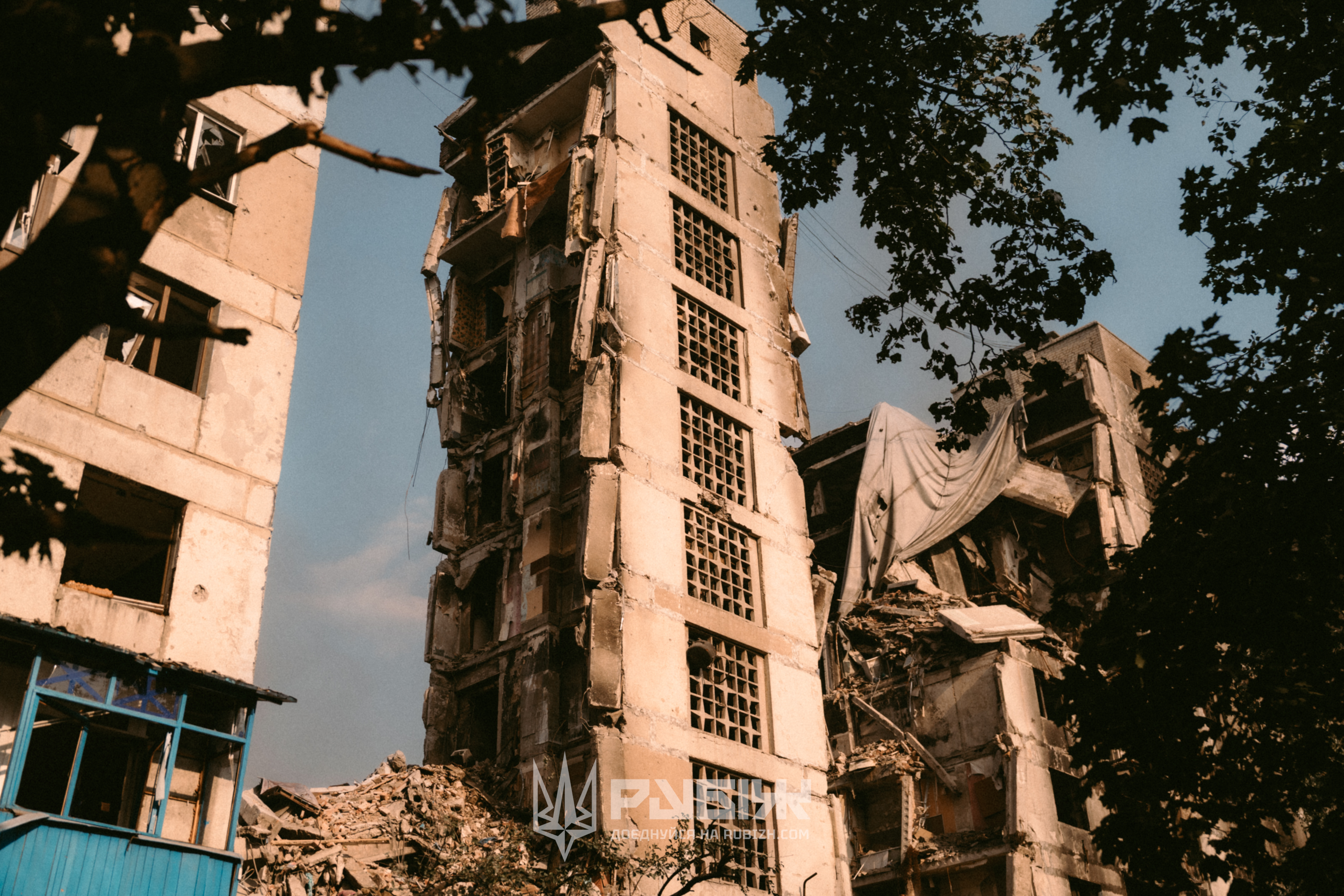
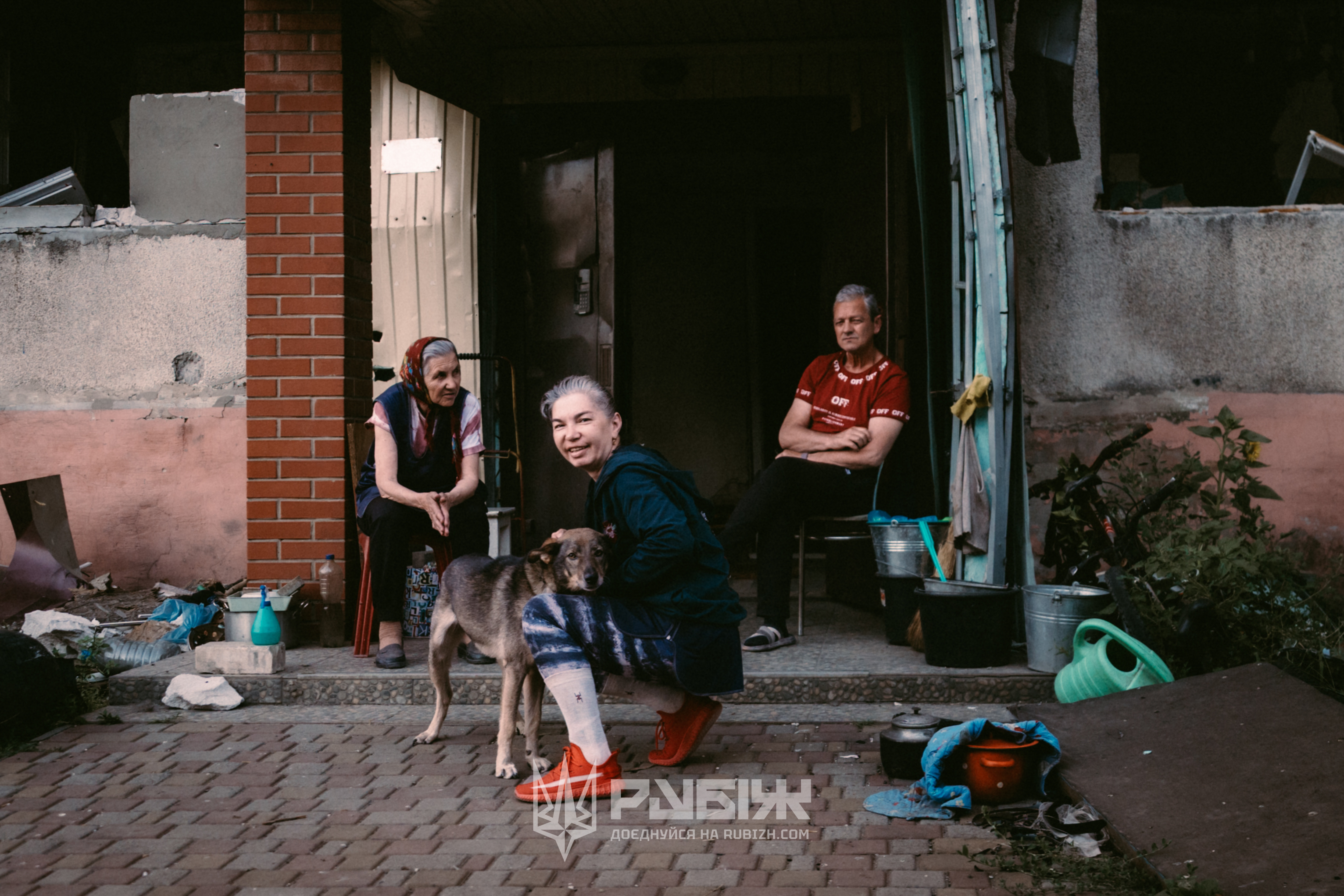
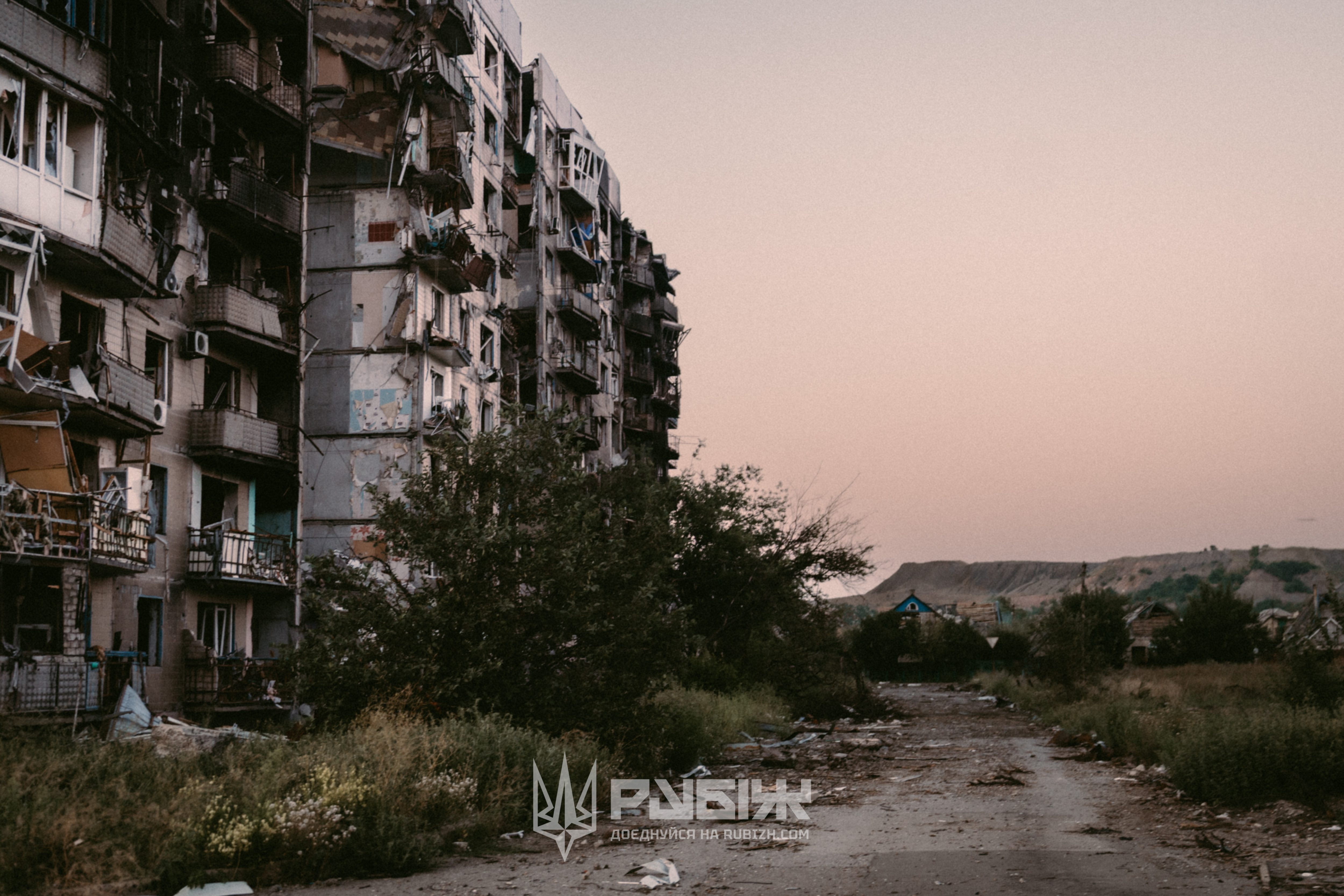
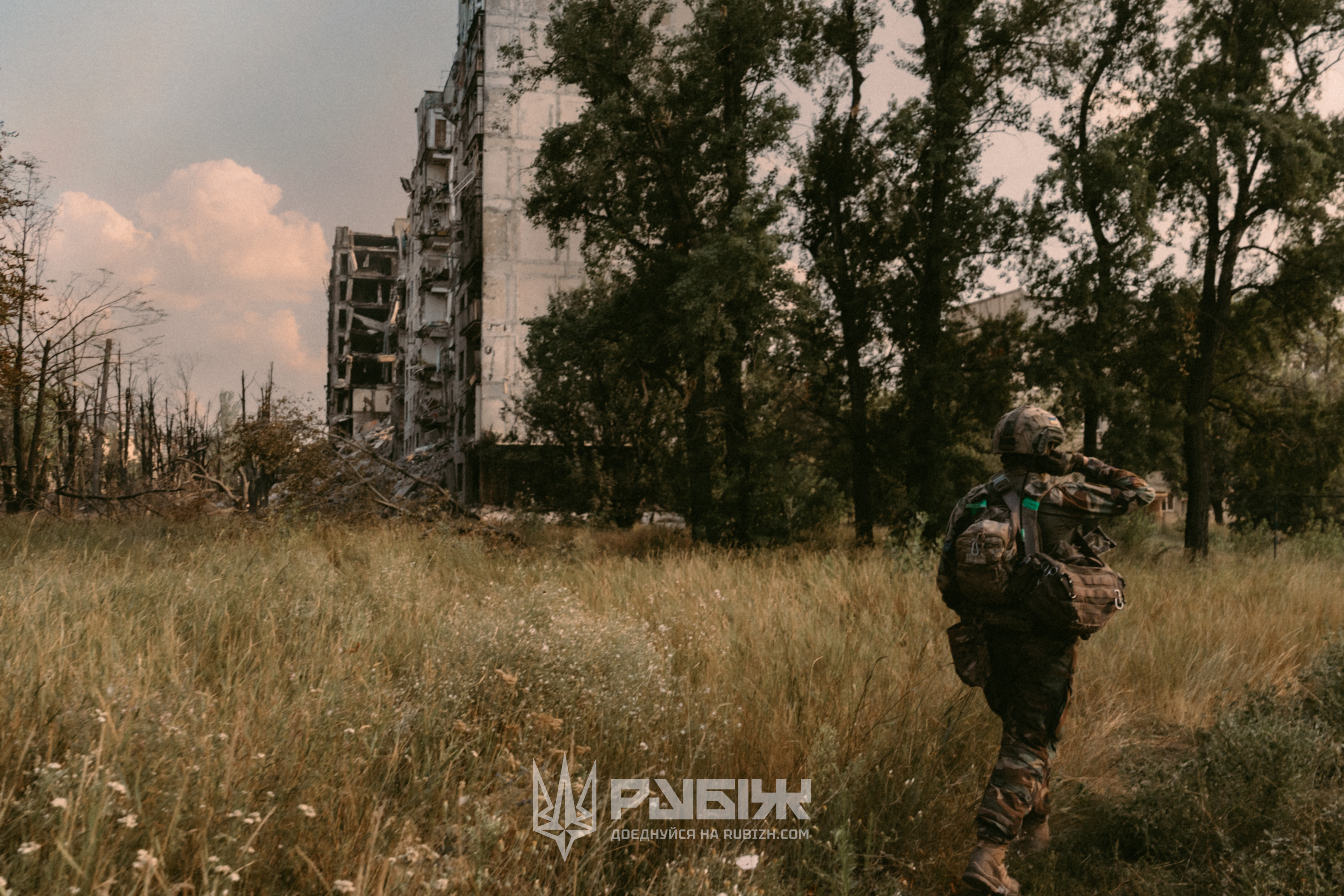
Almost a year and a half in Dobropillia
Individual units of the "Rubezh" brigade were deployed to the Dobropillia sector in May 2025, with the entire brigade following in July. In winter, the situation began to escalate. The town was changing rapidly before their very eyes – as recently as last summer, Dobropillia had served as the brigade’s rear area, where the soldiers lived and rested. In winter, everything here seemed fairly peaceful, if one can even say that about a frontline area. Odessa says that until then, the town had "seen no sign of war": there were plenty of civilians here, and the shops were open. The enemy was advancing quite rapidly, there was no clear line of demarcation, the areas of fighting were far from Dobropillia, the town wasn’t subjected to heavy attacks and felt quite safe.
In winter, it was possible to drive into Dobropillia.
"I could easily hop on my quad bike and ride to Krasnopodillia, towards Bilytske," says Natsyk. "Now, not only would I never get on it, I don’t even want to go near it. That quad bike is just sitting there; you can’t ride it anymore."
Odessa recalls that on the very day he and his comrades first arrived in the town, the Russians launched their first air strike on it. The reconnaissance team narrowly missed the aerial bombs in the centre by just a few minutes.
The bridges around Dobropillia have been destroyed, the roads are in ruins, and what remains of them is controlled by the enemy. Entering the town is extremely dangerous. Even going in on foot, says Natsyk, is a gamble.
"I spent 20 days at my post, and when I left, the tactics of the battle had completely changed," says the soldier. "Getting out and going anywhere is much more difficult. Everything’s been targeted, drones are flying, everything’s under control. You have to be like James Bond out there."
To hold back the enemy when they try to advance, the Ukrainian side needs to increase its own forces, as well as the number of reconnaissance and strike assets. To halt their advance completely, Ukraine needs echeloned reconnaissance; simply observing the front line is not enough.
Odessa says that reconnaissance drones must fly deep behind enemy lines. Last year, Ukrainian troops in the Dobropillia sector already encountered such situations. The area is supposedly in the rear, where troops are resting. But then it turns out that there are Russians in a neighbouring building. This happened because, at the time, it was assumed that the enemy could not infiltrate beyond the front line of the Ukrainian defences.
"This year, we realise that reconnaissance must be carried out from the very rear areas," says Odesa. "We have to start almost from the very places where soldiers are resting and preparing for other tasks. We need to start observing from there to identify unknown individuals moving around the area. Because the Russians may still be there from last year. It’s easy for the enemy if they can supply their forces in our rear."
The wisdom of fighting for major cities is becoming the subject of lively debate and controversy within Ukrainian society. This was the case, in particular, with Bakhmut, Pokrovsk and Myrnohrad. It is likely that the same can be expected with regard to Dobropillia, once the fighting comes right up to the city’s outskirts or takes place within it. Odesa argues that the city must not be surrendered, as this would create enormous problems for the Ukrainian army that would be extremely difficult to resolve.
Dobropillia is a large, densely built-up city. The enemy can hide many of its troops there and gradually bring in supplies, equipment, and artillery. Odesa explains the mathematics of urban warfare.
"Let’s say there are 400 high-rise buildings in Dobropillia. The enemy could station 50–60 soldiers in each one," he says. "To destroy a single building, we’d have to use an incredible number of FPVs, and even that wouldn’t guarantee the destruction of the cover beneath the building. Alternatively, we would have to use air power, but unfortunately, there isn’t enough of it for every building. This means the enemy could emerge from any point in the city. Consequently, we would need not just 4–5 ‘Mavics’ to monitor the area, but 20. And so on. It will be very difficult to drive the enemy out of the city."
How the Russians are fighting here
The Russians’ main objective in Dobropillia is to destroy it, to wipe out existing positions, and to prevent the Ukrainian military from gaining a foothold, whilst hindering the city’s preparations for defence. To this end, the enemy is constantly launching artillery and air strikes. Odesa says the Russians can afford to carry out up to several dozen sorties a day, each carrying 3–6 guided aerial bombs. This is a standard tactic of the occupiers: before entering a settlement, they render it unfit for defence and drive out as many Ukrainian forces as possible that may be in the area.
"That’s what happened with Pokrovsk and Rodynske. The enemy is now trying to do the same with Bilytske," says Odesa.
The Russians also traditionally rely on infiltration tactics.
"Last year, the enemy did not reach Dobropillia," says the scout. "This allowed us to clear large areas around Zolotyi Kolodiz and push the enemy back. This year, they are trying to establish a foothold in the town itself. All their movements are heading towards Dobropillia."
Russians infiltrating the town sometimes change into civilian clothes and pass themselves off as locals. They can live like this for months. Nazik says there are many of them.
"Once, whilst on a reconnaissance mission, we went into a house about 200–300 metres from our position," he recounts. "It was the very first house we entered, and there, hanging on a hook, was a Russian uniform. I was absolutely stunned – it was in pristine condition."
The main reason the enemy manages to advance towards the city and build up their forces there is their numerical superiority.
"This tactic is only viable because the enemy outnumbers our forces several times over," says Odesa. "It was the same last year. From spring, when the greenery starts to grow, they try to seep through. Towards the end of summer, we try to clear our rear areas, and by winter this line more or less stabilises. I think it’ll be the same next year."
Among the occupiers taken prisoner by the Ukrainian military, the majority are former convicts. The rest are people from the temporarily occupied territories and remote villages who have criminal records, are in debt and are unemployed.
"They’re constantly being pressured by the so-called military recruitment offices," says Odesa. "They’re told they have to undergo a medical examination. A person turns up, and they’re mobilised. Most of those who ended up with us were people from territories that have been occupied since 2014. They’re just like typical Russians, brainwashed from head to toe. You explain to him that, well, they told you at work to go for a medical examination to see if you’re fit to work on a farm. But you were forced into a car and ended up in captivity a week later. And yet he still says, ‘No, Putin’s a hero.’ These are people who have been brainwashed to the extreme. For the most part, they’ve all been heavy drinkers for a long time; they’ve got loans and run-ins with the law. And they realise that, as ‘heroes of Russia’, they can have their loans written off, and everyone will respect and fear them."
Locals remain
There are still quite a few local residents in Dobropillia. The soldiers say people are constantly in the crosshairs of enemy drones. Nazik says he has seen this happen more than once.
"A civilian is walking along with a trolley, pulling bottles of water. A drone flies by and hits him right on the head," recalls the soldier. "And once we shot down a drone right above the head of a local man. If it weren’t for us, he would have been killed. It’s a real-life safari there, just like in Kherson and as is now beginning in Zaporizhzhia."
Natsyk recounts how he and his comrades were on a reconnaissance mission and found a door in one of the houses wouldn’t open. When they couldn’t even break the lock with gunfire, the soldiers decided to blow up the entrance.
"We stormed into the house, I kicked down the interior door and shone my torch inside. And I saw some old lady standing there, staring straight down the barrel of my gun," says the soldier. "I said: ‘Who are you? Civilians?’" She says: ‘Yes, what’s the matter? Why are you shooting and making all that noise?’ I say: ‘It’s the f*cking census. Don’t you know there’s a war going on outside?’ But they say they’d already been trying to leave and there’s nothing to live on there. And someone in the family is disabled.’
The soldier recalls another story. In an area where the Russians were already seeping in, a shop had stayed open until the very end. One day, Natsyk and his comrades arrived there about 10 minutes after a KAB had struck.
"If we’d been there earlier, we’d have been hit by that KAB on the road and there’d have been nothing left of us, because the house next door was simply wiped out," he says. "And where the shop used to be, there’s a body. A local woman had been shopping, came out, and that was it."
Even injuries and tragedies unfolding before their very eyes fail to dissuade the locals. Natsyk tells of a man he treated: he dressed a wound on his head and bandaged it. When he visited him the next day, the man complained that fluid was leaking from his ear. The soldier explained to the man that he needed to be evacuated and see a doctor urgently, as this was a symptom of a closed head injury, and a combat medic, under these conditions and with the medicines available, would be unable to help.
"I told him he’d either die or end up in a vegetative state with this injury. But he kept saying, ‘No, no, no, I’m not going anywhere,’" the soldier recounts.
On one occasion, whilst evacuating a local woman, the soldiers came across a young 24-year-old man. Right before his eyes, the occupiers had killed his father with an FPV drone.
"He was standing there, shaking. I examined him and gave him a sedative," says Natsyk. "I said: ‘Let’s evacuate. Maybe you’ll want to serve, and then we’ll take you on. Come on, get out of here.’ He said he’d think about it. I went to see him the next day, but he refused."
The locals are burying the dead in their backyards. Nazik says there are many such burials.


