



Air evacuation of wounded from battlefield: Ukraine is testing StarGate drone, which transports soldiers on stretchers. PHOTOS
Drone Industry
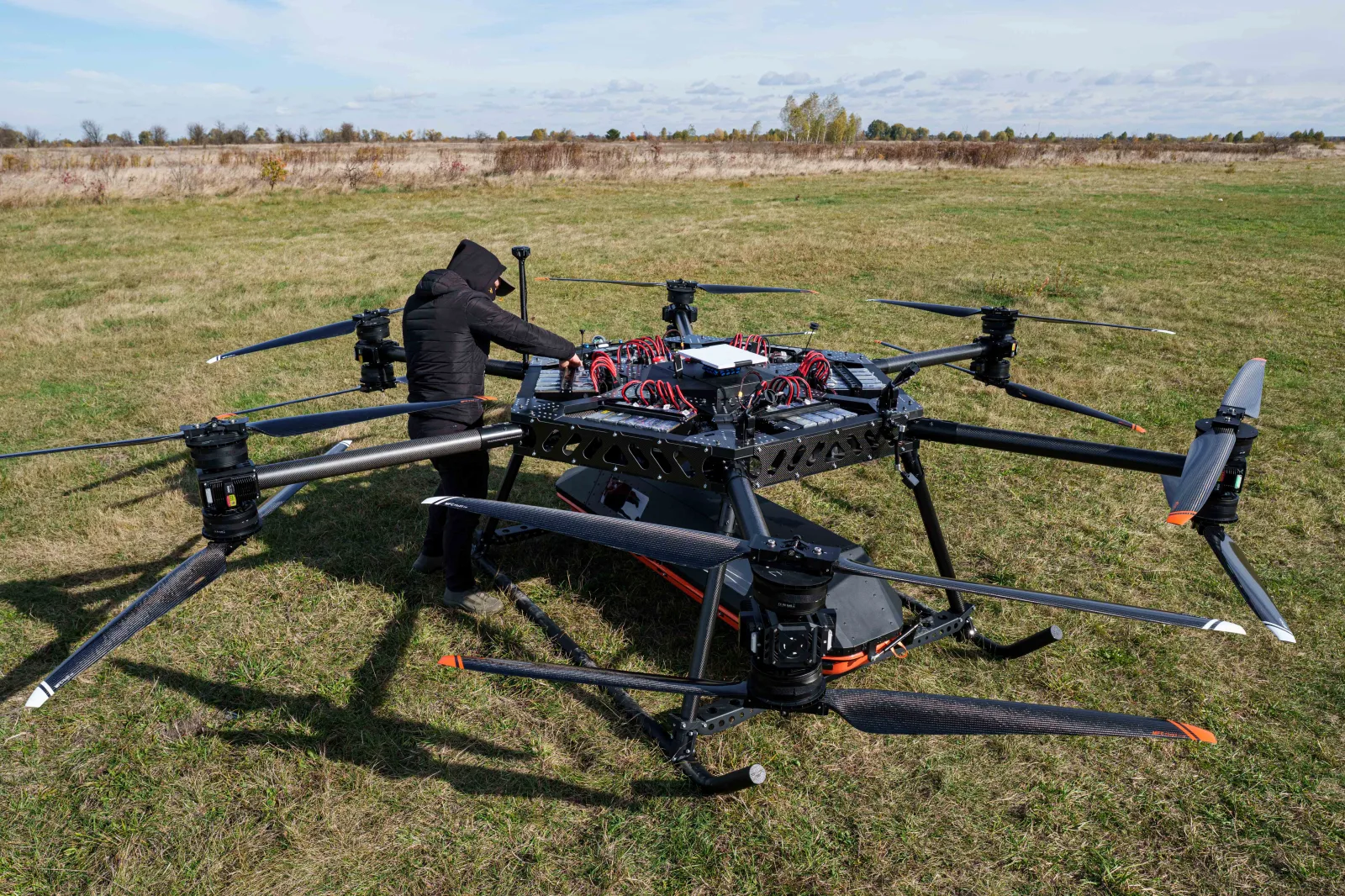
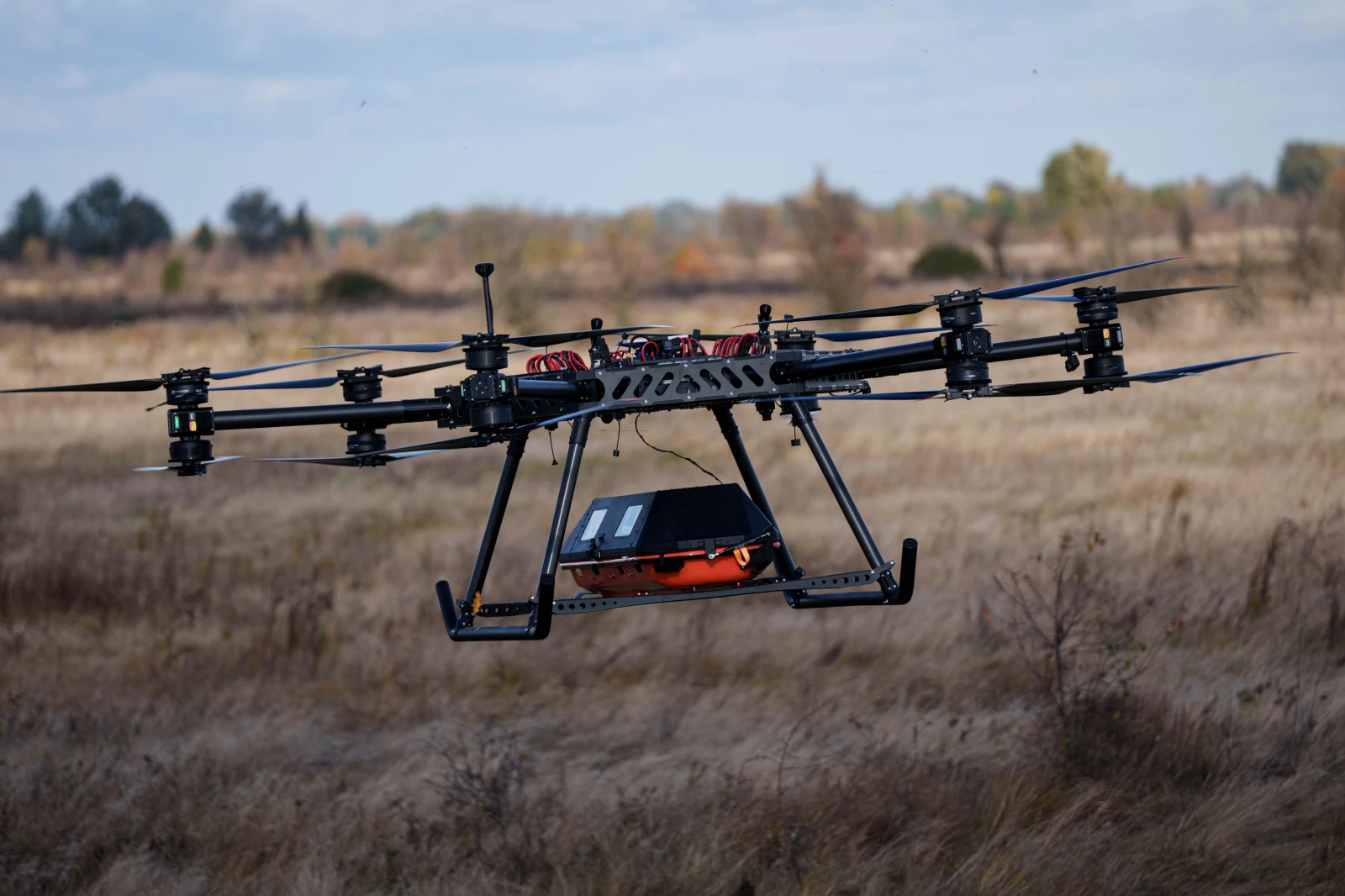
Ukrainian troops have begun frontline trials of a new aerial drone, StarGate, designed to evacuate wounded soldiers from areas that are dangerous or impossible to reach by ground transport. The aircraft can carry a soldier wearing body armour and equipment over distances of up to 15 km one way.
According to Censor.NET, citing the Associated Press, the drone developed by Ukrainian company SkyFall was delivered to a combat brigade this week for frontline testing. The agency's journalists were given exclusive access to demonstration trials of the drone.
Evacuation in minutes instead of hours
The idea for StarGate originated on the front line. Last year, the commander of the 475th Separate Assault Regiment Code 9.2, call sign Flint, approached SkyFall's founder with a request to develop a safer way to evacuate wounded soldiers from hard-to-reach positions.
Ukrainian troops currently use unmanned ground vehicles (UGVs) for such tasks. However, minefields, craters, mud, destroyed roads and Russian drones hamper their movement.
According to the commander of the Code 9.2 unit, call sign KVN, UGVs typically need two to three hours to reach a designated position.
"Covering 10 kilometres in a matter of minutes would radically change the situation on the front line," the military officer noted.
In some frontline areas, the so-called kill zone, where enemy drones and artillery operate constantly, extends for 10–15 km or more. Because evacuation is dangerous, severely wounded soldiers sometimes have to wait not just hours but days for help.
Intercepts enemy drones and can fly without GPS
StarGate is equipped with a dedicated medical module containing a stretcher. According to the developer, it has a payload capacity of up to 150 kg, a cruising speed of 65 km/h and a maximum speed of 105 km/h. Preparing it for flight takes about 10 minutes.
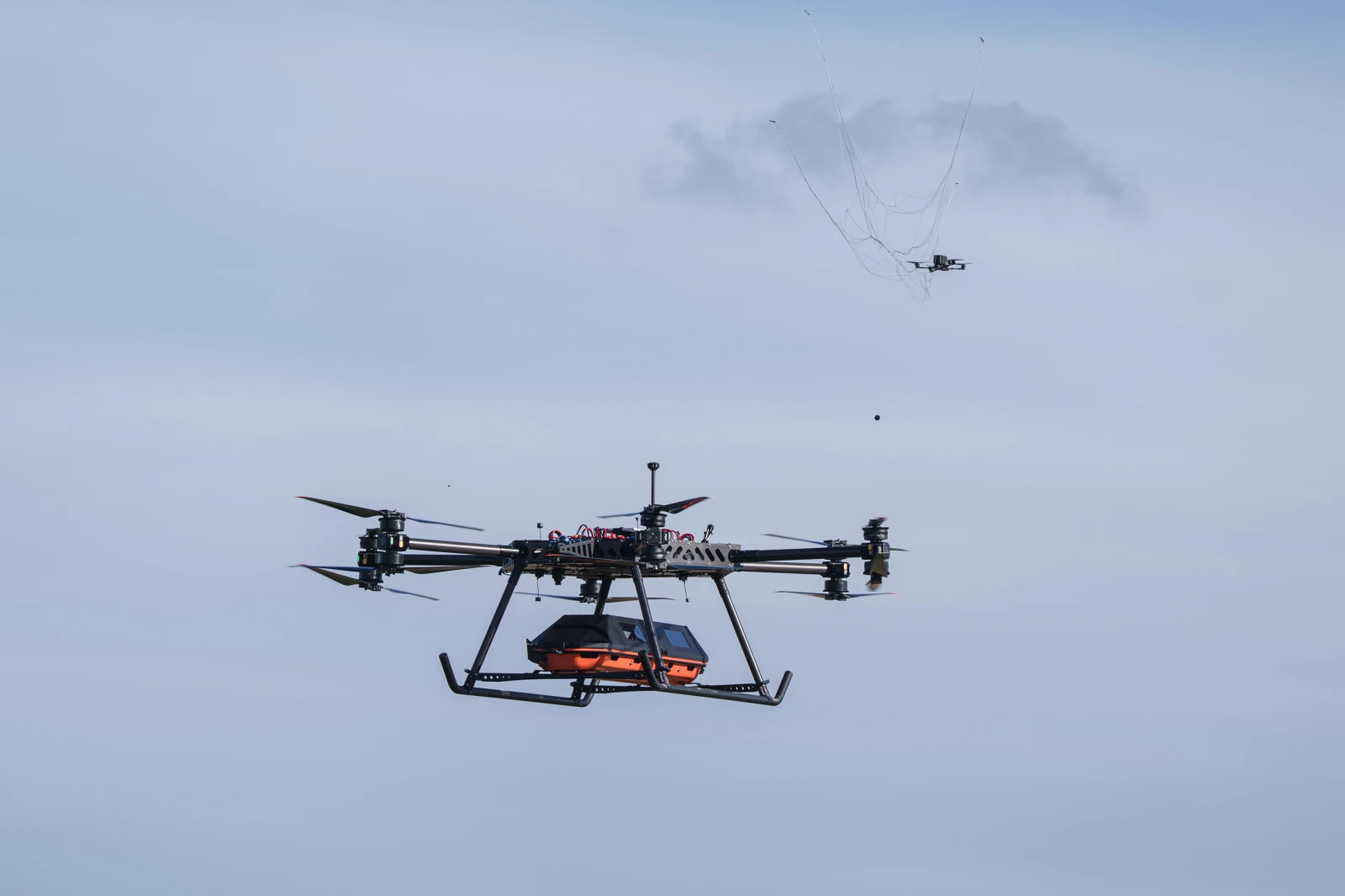
During a demonstration on October 14, the drone was tested under conditions approximating combat. FPV drones attacked it in the air while electronic jamming equipment operated on the ground.
When one of the drones approached StarGate, its defence system deployed a net that caught the attacking aircraft and knocked it off course.
For communications, StarGate uses the Starlink satellite system and the company's proprietary L-Link technology. AI-based features help control the drone when GPS is unavailable or under electronic warfare conditions.
According to a SkyFall representative, the drone is controlled by an operator but can independently plot a return route to a safe area if communications are completely lost.
The aircraft is designed to fly in rain and snow and is equipped with thermal imaging cameras for night operations. The developer also says StarGate can continue flying after losing one of its rotor arms. However, the company has not yet provided data on the reliability of this capability under actual combat conditions.
Prices start at $50,000: when will mass production begin?
According to SkyFall's preliminary estimates, a single system will cost at least $50,000, depending on its configuration. The company plans to increase production to 1,000 aircraft per month by the end of 2026.
However, military personnel stress that it is too early to draw conclusions about the effectiveness of the new evacuation method.
"This is a completely new method of evacuation. It is difficult to discuss its advantages and disadvantages in detail at this stage. We need to work with it more," said commander KVN.
He estimates that the unit will need at least a month of practical use of StarGate to gather data and assess its effectiveness. The company confirmed that frontline trials are underway but has not yet disclosed their results.


