


Second part of ’Carthage’ is just tip of iceberg. Darkest part still lies beneath surface, – NABU detective Abakumov
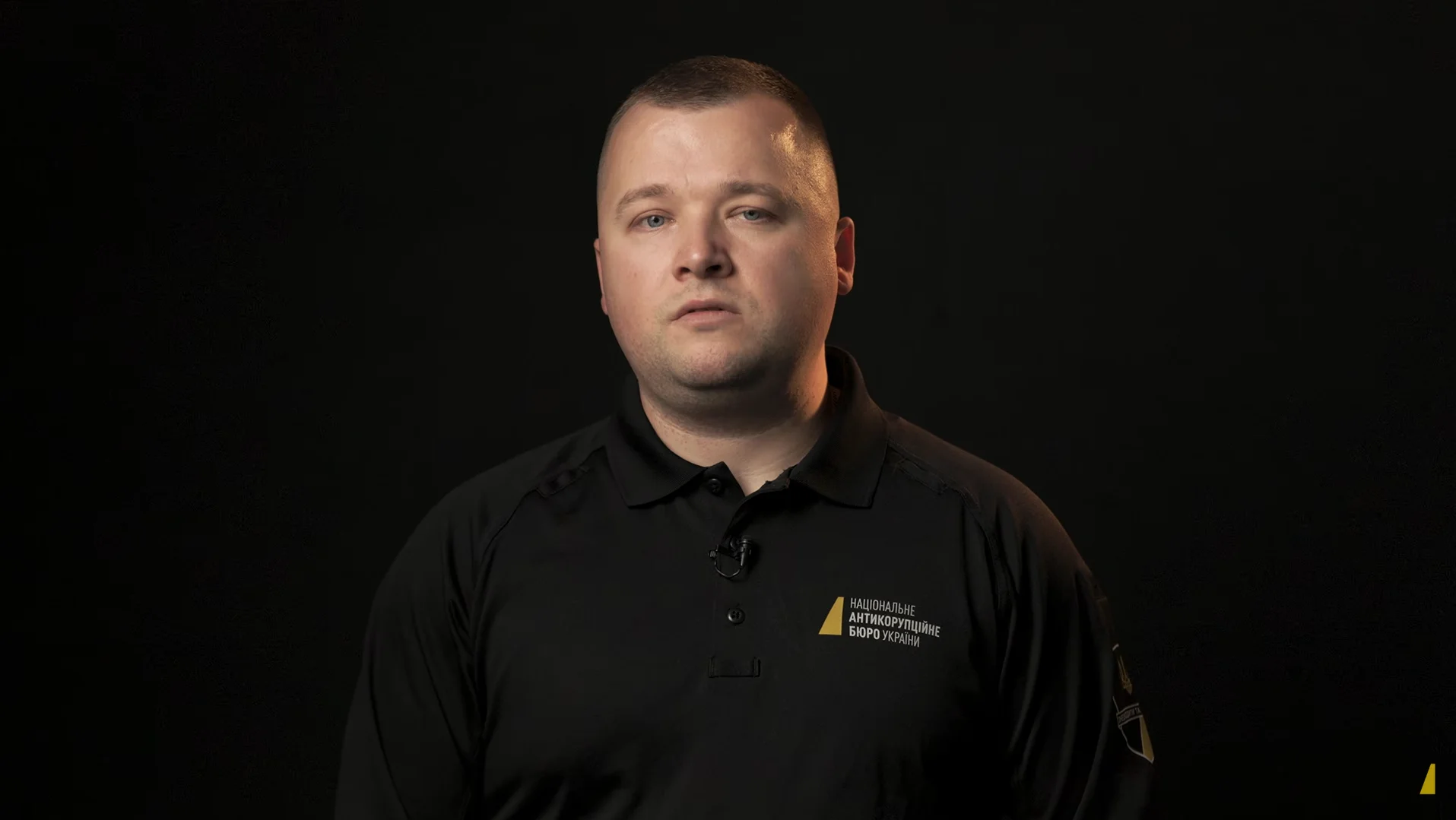
The materials released from the second stage of Operation ‘Carthage’ are merely the tip of the iceberg, and a significant portion of the evidence cannot yet be disclosed in the interests of the investigation.
This was announcedby Oleksandr Abakumov, headof the NABU detective unit, according to Censor.NET.
Details
"I understand that after watching the video of the second phase of Operation ‘Carthage’, many of you may have felt a very simple, almost physical urge – to go and wash yourselves.
To wash away all that filth you have seen. The cynicism, the cruelty, the matter-of-fact way in which people can discuss fraud, violence, kidnapping and the torture of others. The realisation that behind all this may lie those whose official duties are supposed to protect us from crime.
But I want to tell you one thing. What you have seen is just the tip of the iceberg," he emphasised.
According to Abakumov, NABU has revealed only what it could without jeopardising the investigation.
"A significant portion of the evidence cannot yet be made public. And believe me, the darkest part of this corruption iceberg still lies beneath the surface," added the head of the detective unit.
Abakumov also emphasised that corruption does not exist in isolation from society – it permeates it.
"It does not begin or end in the office of a high-ranking official who accepts a bribe. For it to exist, it requires tens, hundreds, and sometimes even thousands of people, each of whom plays their own small part in a vast criminal mechanism," he explained.
"The fight against corruption is not merely a matter of urgency. It is one of the conditions for the state’s survival. Because it is impossible to build a strong state if its institutions are being undermined from within by organised crime. It is impossible to ensure the safety of citizens if those who are supposed to protect them are working for criminal organisations. It is impossible to talk about the country’s future if we allow corruption to destroy that future day after day. ...
Operation ‘Carthage’ is ongoing. And for us, this is not merely the name of one of our investigations. It is a symbol of the work we must see through to the end.
We cannot allow ourselves to become accustomed to this filth, from which it is impossible to cleanse ourselves. We cannot accept it as an inevitable part of our lives. We cannot accept that crime and corruption will always be stronger than the state.
Because no one but ourselves will change our country. Carthage must be destroyed," he concluded.
NABU’s ‘Carthage’ operation
- Earlier, NABU reported that a senior SSU official was threatening to use a weapon and obstructing a search.
- Subsequently, the Bureau stated that NABU and the Specialised Anti-Corruption Prosecutor’s Office (SAPO) had uncovered a criminal organisation that systematically bribed senior officials of the SSU, the National Police and the Prosecutor’s Office in exchange for ‘protection’ of fraudulent call centres and other illegal businesses.
- NABU stated that, as part of the ‘Carthage’ investigation, a criminal organisationhad been exposed, whose members had established a systematic practice of bribing senior officials in law enforcement agencies to allow fraudulent call centres and other illegal businesses to operate unhindered.
- It was subsequently reported that the anti-corruption authorities had detained General Serhii Duka, the first deputy head of the SSU’s Department for the Protection of National Statehood.
- The head of the SSU, Oleksandr Poklad, dismissed two senior officials of the Service who are implicated in the NABU investigation as part of Operation ‘Carthage’. He also urged a suspect in the case, known by the alias ‘The Mexican’, to return to Ukraine and surrender to the law enforcement authorities.
- NABU and the Specialised Anti-Corruption Prosecutor’s Office (SAPO) have announced five charges relating to the cover-up of illegal business activities; those implicated include senior officials from the SSU and the National Police.
- On 5–6 November, the main suspects in the case were remanded in custody without the right to bail.


