



Is rise of machines near? What drone synergy is and how it affects war
Drone Industry
A vivid example of drone synergy is the sinking of the Russian cruiser Moskva. The decisive blow to the ship was delivered by two Neptune missiles, but at the time a Bayraktar TB2 UAV could have been drawing the cruiser’s air defences onto itself, or identifying the target, pinpointing its coordinates and cueing the coastal missile system. Thanks to drone synergy, the effectiveness of different types of weapons increases many times over, making it possible to achieve results that once seemed impossible.

Drones are quite an effective weapon in their own right. According to Robert "Madyar" Brovdi, commander of the Unmanned Systems Forces (USF), they account for just 2% of Ukraine’s military but deliver 35% of all verified strikes on the enemy.
For the fourth year now, Ukraine has managed to maintain parity in the war with an enemy superior in manpower and resources, owing in particular to drones. The drone component has become so important that NATO countries are rewriting their defence doctrines in a last-minute attempt to catch up in the modern arms race.
Read more: Europe is rearming through Ukraine: how €2 billion for drones is turning war into industry of future
"Drones are everywhere now. This phenomenon will be studied for a long time to come. But the key factor that set it in motion in Ukraine is the combination of decisive actions by two structures: the state and the grassroots initiatives of civil society," says Yaroslav Honchar, co-founder and head of the NGO Aerorozvidka.
Today, experts are already speaking about drone synergy, combining unmanned systems with one another and with other types of weapons, which multiplies the effectiveness of their use and makes it possible to achieve results that once seemed impossible.
A vivid example of such synergy is the sinking of the Russian cruiser Moskva in the Black Sea. The decisive blow to the ship was delivered by two Neptune missiles, but one of the possible, although unconfirmed, scenarios for how the attack unfolded is that a Bayraktar TB2 UAV either drew the cruiser’s air defences onto itself, or identified the target, pinpointed its coordinates, and cued the coastal missile system.
Recently, the British newspaper The Times published details of another unique operation in the Black Sea carried out by operatives of the Defence Intelligence of Ukraine. For the attack on Russian gas platforms, the forces used Katran naval drones that carried FPV drones. In addition, under each Katran there were underwater kamikaze drones – in effect, torpedoes with an 80-kilogram warhead.
"The enemy can no longer feel safe even where it previously considered itself out of reach," the directorate commented.
As part of the "Drone Industry" project, Censor.NET spoke to service members and manufacturers to find out how widespread the phenomenon of synergy is in the drone sector and whether this area has a future.
Robots are already fighting robots
One of the areas of synergy that is now developing rapidly is pairing UAVs with unmanned ground vehicles (UGVs). According to Denys Chumachenko, technical director at DEVIRO, for a while, these UGVs were actually dependent on aerial platforms, because everything came down to communications: they needed relay stations, were often accompanied by Mavics, and operators had to improvise various makeshift solutions. As a result, missions for ground systems were quite limited.
"Fortunately, Ukraine’s school of engineering is developing. We now have specialists who can build robust communications, relay networks, mesh networks and so on. When we recently came to some positions, we saw an UGV with a machine gun drive up and take out an enemy fibre-optic FPV "sleeper-drone". (Sleeper drones are FPV drones modified to operate in a low-power standby mode for extended periods - ed.note). We even joked that the rise of the machines is already near, because robots are now fighting robots," Chumachenko says.
In his view, this will only scale up and develop further. Ukraine has already learned how to build high-quality UGVs, but Chumachenko stresses, for synergy to work and for ultra-complex missions to be planned, you need high-quality communications – and that is expensive.

UGVs and UAVs still work as a pair and are interconnected, confirms Vasyl Duzhak, CEO of TechUnity, the company that produces the JARVIS onboard computer for UGVs. But their relationship is no longer as close as it was a year ago.
"At that time, a Mavic carried an analogue communications relay for unmanned ground vehicles. At ranges of 3–5 km, this was an acceptable solution. A Mavic was also often used to provide overwatch because the video quality over the analogue link was not sufficient to control the UGV at night using its own camera.
Once digital communications began to be actively rolled out on UGV, the need for airborne support dropped significantly, because the video quality now allows operators to control the platform confidently both by day and at night. However, UAVs have not disappeared from the process. Mavics are used as a backup if the digital link is lost or to help with navigation and orientation during missions at ranges of 10–15 km," he explains.
In Duzhak’s view, it is important to reduce the dependence of UGV movements on UAV support.
"On the other hand, if you have fixed-wing platforms or multirotor drones powered from the ground that can serve as airborne relay platforms for a group of unmanned ground systems for several hours, you get the opportunity to develop additional types of communications and diversify the links," the expert adds.
Mykola Kozlov, CEO of UNEX UGV, sees two scenarios for developing synergy between UAVs and UGVs. The first is coordinated action in the air and on land or at sea to allow rapid reaction when the situation changes, as missions are conducted simultaneously and in synergy. The second is building live maps or detecting targets and objects.
"Before the mission, or a few minutes ahead of it, a flying drone scans the area, generates a 3D map and streams it in real time to the UGV operator, thereby improving the quality of the ground mission," he says.
Like other experts, Kozlov does not rule out that surface and underwater drones will also take their place in this configuration. That would open up the possibility of full situational control in the air, on land and at sea.
"There is absolutely a need to deepen this kind of interaction. Here, as in civilian business, demand drives everything. The military describe their needs, and manufacturers deliver. But you have to have resources, time for the necessary development work and, of course, funding. There is no way around that," Kozlov concludes.
Is artillery no longer the "god of war"?
Today, synergy between UAVs and artillery plays a crucial role for the front, say the service members we spoke to.
"The UAV–artillery pairing has become critically important in 2025 and is, you could say, a must-have, because artillery without ‘eyes’ is blind, while drones without a ‘heavy fist’ have limited effect," explains Captain Roman "Fish" from the separate special purpose detachment Lasar’s Group.
According to Yaroslav Honchar, co-founder and head of the NGO Aerorozvidka, this synergy has been driven in particular by shortages of conventional weapons and, ultimately, by economics.
"Until very recently, people still thought of artillery as the god of war, as if it were some kind of endless ‘unlimited’ resource. Think back to the ATO period from 2014 to 2018. That was essentially an artillery war, and it showed economic costs that are simply unimaginable today. All of this came from Soviet World War II-era doctrine, when shells were delivered by the crate. A basic load of ammunition to smash a dugout, one and a half for a platoon strongpoint. The math is simple: out of 50 rounds, maybe one would actually hit that dugout. And that was all because there were no spotters, no drones. They were firing blind," he explains.
According to Honchar, this realisation only really began to sink in after the explosions at ammunition depots. The arrival of Starlink was the turning point. An order came down from the top not to fire unless the strikes were being adjusted off a live image.
"On the ground, artillery used to decide everything, but that era is coming to an end, in part for economic reasons, because it is expensive. But drones will not replace artillery. They do not fly in fog, some circuit board may turn out not to have been soldered properly, and electronic warfare also has an impact. Artillery is straightforward: you load, you fire, and the round flies, regardless of the weather. However, using drones to support artillery is crucial, because it changes the rules of the game by making the use of shells more efficient," says the head of Aerorozvidka.
DEVIRO’s technical director Denys Chumachenko adds that war in general is a very expensive business, and it has become too complex for linear thinking.
"Artillery shells are indeed expensive. FPV drones have effectively stepped into artillery’s role, but it is hard to say that they are a separate class of weapons. They are a tool for automating classic artillery. Yes, you may expend fewer FPV drones than artillery shells, and that is economically advantageous, but we should not forget that the war has become more complex and highly dynamic. Still, just pouring on artillery fire blindly is not the right approach," he notes.
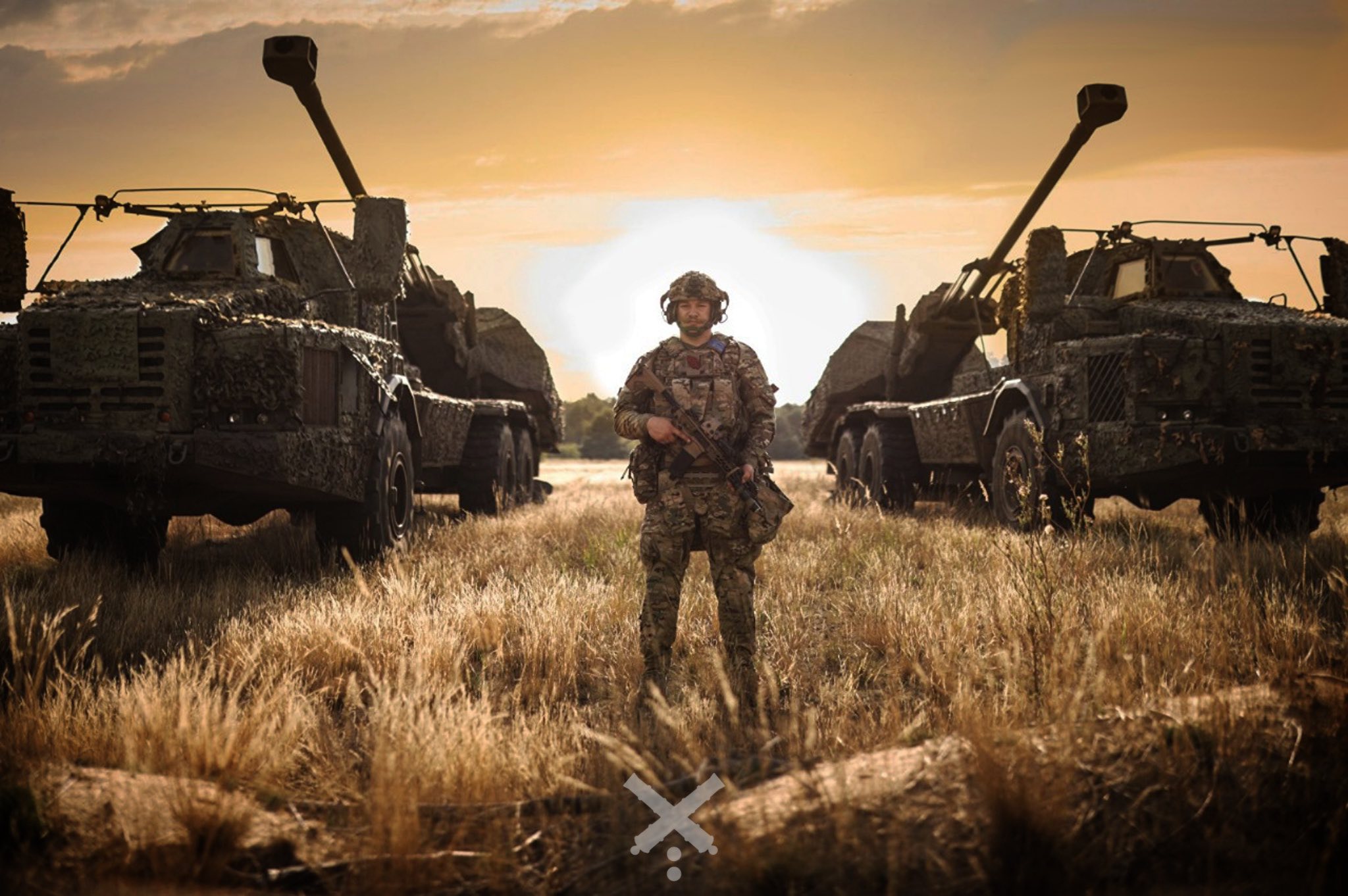
An officer from the 412th Nemesis Brigade of the Unmanned Systems Forces, with the callsign Son, notes that the problem now lies not so much with shells, there are some, as with the propellant charges needed to fire at longer ranges, because the artillery has had to pull back. When the situation was better, synergy between drone operators and artillery crews paid off, as it did in the Pokrovsk sector in September 2024, where Russian troop trains were being taken out.
"For example, the 55th Artillery Brigade covered us when we were striking enemy guns. Regular Ground Forces brigades also provided cover within their engagement range, using whatever assets they had. It worked well, for about six months this kind of synergy was running quite smoothly for us," Son recalls.
Now, he says, artillery units are feeling a shortage of charges for firing at medium-depth targets.
"In practice, this means they can either hit the forward line, or fire deep to around 40 kilometres — where our drones don’t usually go. If the state produced, or our partners supplied, more medium-range charges, we could go back to working as a combined team. Today, the enemy is almost doctrinally required to post two snipers or designated marksmen around each gun specifically to counter drones," the 412th Nemesis Brigade officer explains.
Synergy between drones and artillery needs to be restored and developed further, the service members say.
"First, we can see how effectively this kind of pairing works for the enemy. Second, the accuracy of an artillery shot determines how many shells you need. And that accuracy is made possible by objective observation from UAVs. Right now, the ideal model is when a UAV becomes part of the fire-control system for artillery, rather than an external tool," stresses Roman "Fish" from Lasar’s group.
According to our interlocutors, one problem with this kind of synergy is that it is driven by individual units rather than embedded in a clear system.
"It would be very good if this practice were written up as a tactic, then passed down through the General Staff, circulated and recommended for use. That way it could spread and become more effective. But again, there is the risk that these materials will end up in the enemy’s hands. Although they more or less understand it anyway — on their side our tactics are probably written up much better, given their systematic approach to studying our actions and developing countermeasures to everything we do," Son says.
Roman "Fish" suggests similar solutions. In his view, it is necessary to:
- introduce standardised "fire link-ups" at a level above ad hoc arrangements between a UAV crew and an artillery crew;
- centralise the control system, with maps, layers and the ability to manage everything in just a few mouse clicks;
- automate coordinate processing and decision-making on whether to engage a target.
"Ideally, data would be transmitted automatically to the gun or mortar after a single click by the UAV operator," he adds.
DEVIRO technical director Denys Chumachenko recalls that before the full-scale invasion, the term "Ukraine’s paper army" was widely used — all because of bureaucracy and military officials’ reluctance to take responsibility for change.
"Initiative starts at the unit level and only then filters upwards. To think that the General Staff will now come along and say: ‘Here is a document, a doctrine with proven employment options and a list of manufacturers whose products are good’ — let’s be realistic, that is not going to happen. The initiative comes from below, from brigades that are interested. They themselves reach out to developers when they already have a real case. They present it, help the manufacturer push it further up through the General Staff and scale up their experience. Will that be fast? Unfortunately, no. No one here is willing to take responsibility. And I don’t see that changing any time soon," he says.
Minimising the human factor
In discussions about drone synergy, artificial intelligence also ranks high among the focus areas. Today AI is a cutting-edge technology that has penetrated almost every segment of civilian life and which the average user mostly employs for generating images and searching for information.
In wartime, however, artificial intelligence is used for a wide range of tasks. These include reconnaissance and object recognition, data analysis, as well as work in the fields of cybersecurity and disinformation. AI is integrated into command-and-control systems and mission-support tools, and is used for operational purposes, in particular, to control unmanned platforms and stationary systems.
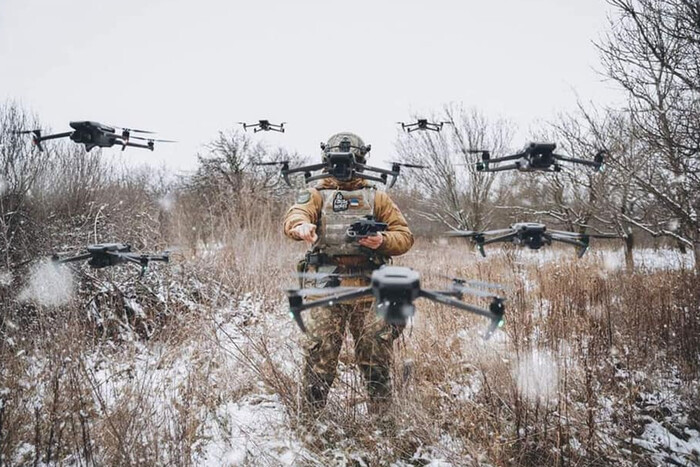
However, Denys Chumachenko stresses that we currently have a distorted understanding of artificial intelligence. When people talk about this technology, most imagine something like R2-D2 (the fictional character from George Lucas’s Star Wars franchise, a droid equipped with countless tools that allow it to serve as a starship mechanic and computer interface specialist), a machine that moves on its own, makes decisions, communicates and almost lives a full-fledged life, with recharging instead of sleep.
"AI itself is not the problem; the problem lies in automation. Equipment really does need to become simpler and more intuitive for service members. But we are still a long way from full autonomy. That is definitely not something for the near future. I don’t see any way we could shift everything to artificial intelligence that would handle it all on its own," he explains.
Read more: In two years, drones will get artificial intelligence. But not all of them
"Humans have been fighting for as long as they have existed. There is not a single year in Earth’s history when there hasn’t been a war somewhere. So it’s weapons, weapons and more weapons, everything is moving in that direction. First there was artillery, then came the constellation of GPS satellites, which gave rise to precision-guided weapons. All of that drives prices up; high-precision weapons are extremely expensive. The defence industry is a very difficult market to begin with. But all these unmanned, robotic systems are high-precision by design. And they are cheaper than shells. That changes the paradigm of high-cost systems. Missile units will be paired with drone units; there is no way around it now," adds Yaroslav Honchar.
However, he notes, people often get carried away with technology and consider it a so-called "game changer".
"When torpedoes appeared, people said: that’s it, the navy is finished. And yet it still exists. It’s the same with unmanned systems — they have been turned into weapons and are being scaled up. It’s obvious they will penetrate everywhere. And in my view, cybersecurity will be the critical issue, because it could prove to be the Achilles heel of these technologies," the head of Aerorozvidka points out.
***
The Russian-Ukrainian war is often described as the first drone war. It is clear that unmanned technologies will continue to evolve, further reducing the human presence on the battlefield. The only question is whether these technologies will one day be able to make decisions about starting new conflicts. For now, though, humans are still handling that task all too well themselves.
As of 2024, there were 59 wars underway worldwide, the highest number in the past half-century, according to data from Uppsala University in Sweden, which tracks armed conflicts that claim more than a thousand lives a year.
In Europe alone, there are seven conflicts. In addition to Russia’s full-scale invasion of Ukraine, researchers include Nagorno-Karabakh, Transnistria, South Ossetia and Abkhazia in this group.
At the same time, Swiss researchers emphasise that Russia’s full-scale invasion of Ukraine did not change their classification of armed conflicts in the region, because under the criteria of international humanitarian law a conflict between Russia and Ukraine has existed since 2014, when Russia violated Ukraine’s sovereignty and territorial integrity by occupying Crimea.
"What has changed since February 2022 is the intensity of the violence and its impact on the civilian population," the researchers stressed.
Synergy between drones and cutting-edge technologies offers a response to violence and can help ensure that aggressors have no chance of pulling off another blitzkrieg. After all, it was the combination of garage-built drones and the courage of Ukraine’s defenders that stopped the advance of the Russian horde on Ukrainian soil. And the losses that the Defence Forces are inflicting on the occupiers may yet form the foundation for a peace agreement on acceptable terms.


