



Here we go again with referendum. Why Trump and Zelenskyy are tossing ball back and forth
The latest meeting between the presidents of Ukraine and the United States, held as part of the peace talks, left ordinary Ukrainians with optimism, pessimism and a thick fog of uncertainty in roughly equal measure.
Let’s set aside the clown show launched by the Kremlin (and gleefully backed by Trump) — the claim that Ukraine attacked Putin’s residence on the night of December 29. This piece is about what happened in Florida, not in Russia’s Nizhny Novgorod region.
From the more optimistic takeaways of the Mar-a-Lago meeting, let’s single out the possibility voiced by Donald Trump that the U.S. Congress would vote on security guarantees for Ukraine. No wonder Volodymyr Zelenskyy is happy to talk about this option: guarantees ratified (we hope) by the legislature of the world’s most powerful country are not the same as the declarations of a single person, even if that person is the president of that very country.
On the downside, nothing outdid the serving U.S. president himself. The line about Russia wanting Ukraine to succeed will go down as one of the most jaw-droppingly blasphemous howlers in everything Trump has said about Russia’s war against Ukraine. So will his remark that Putin "was very generous in his feelings about Ukraine’s success," including "supplying electricity and other things at very low prices."
Runner-up was Trump’s line about an "interesting" Putin who wants peace. These Trump one-liners reliably infuriate Ukrainians who are living under bombardment and without electricity.

And what about the fog? Beyond the eternal "And what will the Kremlin say about the next new saga in the next peace plan?" there was plenty that analysts and all sorts of bloggers will be chewing over during the New Year holidays. And one of the most important new sagas is a theme voiced by both presidents: that at some stage, the draft peace plan will have to be either approved in a nationwide referendum or put to a vote in the Verkhovna Rada of Ukraine.
REFERENDUM, REFERENDUM, THE RADA, REFERENDUM AGAIN
First, the quotes. President Zelenskyy at a meeting with journalists on December 11:
"I believe the people of Ukraine will answer this question. Through elections or a referendum, but there must be a position of the people of Ukraine."
Donald Trump at Mar-a-Lago on December 28:
"They’ll probably have to approve the plan in parliament or in a referendum. Some territories could be lost over the next few months, so it’s better to make a deal now. … I offered to speak to the Ukrainian parliament if that helps. I’d like to make a deal, and I don’t necessarily have to go to Ukraine. But if it helps save 25,000 lives a month or whatever it is, then of course I’d be willing to do it."
"
President Zelenskyy at Mar-a-Lago on December 28 (quoting BBC News Ukraine’s report "Zelenskyy said on the plane what he is returning from Trump with" — BBC News Ukraine):
"At the same time, the Ukrainian president once again stressed the importance of a referendum among Ukrainian citizens on possible territorial issues.
"Yesterday, we discussed this with European leaders. Giorgia Meloni backed me up in a really strong way. She said: ‘Look, the most important thing is not even when this war ends, but how it ends. It is very important that the Ukrainian nation accepts this peace and supports this plan. That’s why a referendum is a powerful thing. Ukrainians, who have suffered more than anyone in this war, must feel happy about the end of this war and about the format of this deal. That is what a just peace is about,’" Zelenskyy told journalists.
He also stressed that, in his view, Russia would do everything to obstruct the possibility of holding such a referendum.
"A referendum requires security, security infrastructure. What does that mean? It means a ceasefire is needed. But the Russians do not want to give us a ceasefire even for as many days as it would take to hold a referendum. And for us, that is 60 days. Yes, of course, this is a very difficult issue. Russia wants to keep pressuring us. And with what? By continuing the war, with missiles, artillery and so on," Zelenskyy believes.
Finally, Volodymyr Zelenskyy, on December 29, speaking with Ukrainian journalists, in response to a question from RBC-Ukraine www.rbc.ua:
"The president said that if Russia refuses the deal and continues the war, the United States, together with Europe, will continue to support Ukraine. And Ukraine believes the 20-point plan should be enshrined in a referendum, as this is the strongest form of legitimising such a decision, through the will of millions of citizens.
At the same time, the security guarantees must be:
▪️ approved by the US Congress
▪️confirmed by Ukraine’s parliament
▪️ backed by European parliaments within the "coalition of the willing".
So the idea of a referendum as a way to vote on socially sensitive issues entered President Zelenskyy’s key messaging roughly three weeks ago. Recently, it became part of a kind of fork: when speaking about a referendum, Zelenskyy also mentions ratification (provided partners deliver security guarantees) of the peace plan by the Verkhovna Rada. But he talks about a referendum more often.
In Ukraine’s political circles, the topic is interpreted in different ways. Informed people sympathetic to Volodymyr Oleksandrovych see his moves as manoeuvring under pressure from the U.S. administration and Donald Trump personally. The argument goes that at this stage it is important to buy time, and the referendum or parliamentary vote narrative helps do that by mimicking vigorous organisational activity.
"Trump is pressuring Zelensky: ratify my peace deal, no matter how, in a referendum, in parliament, even in your bedroom," says a person loyal to the President from the Servant of the People faction in a conversation with Censor.NET. "The president says: I can do it anyway, Donald, I'm trying. Well, in reality, neither option is really viable, especially the first one. And if anything happens, Zelenskyy will say: Donald, what can I do? That's how the people voted. Or that's how the parliament, elected by the people, voted..."
Politicians and bloggers critical of President Zelenskyy interpret his actions in a straightforward way: despite the security risks, they say Zelenskyy is stirring up the referendum topic in order to dump an unpopular decision on the Ukrainian public, one he does not want to make himself.
They say so directly or through thinly disguised rhetorical questions.
"Today, Zelenskyy and Ukraine’s negotiating team have important and difficult meetings. Of course, the country wishes them luck and success. At the same time, we are categorically against attempts to shift the Guarantor of the Constitution’s responsibility for preserving the state’s territorial integrity and sovereignty onto the people, through an unconstitutional referendum. Elections during wartime are impossible. Ending the war for just 60 days to run a campaign is a Kremlin trap. Elections in Ukraine were not held on time precisely because of Putin, and Putin will not dictate to an independent Ukraine when and how we should run a presidential and parliamentary campaign. And it is up to Zelenskyy and his government, and this is entirely their responsibility, to ensure that post-war elections are democratic."
"The main outcome of the Mar-a-Lago talks is that Zelenskyy agreed to hand over a large, impregnable fortified area in Donbas in exchange for security guarantees.
That is what both presidents’ public statements point to, as does Trump’s buoyant mood after achieving his goal: pushing Ukraine toward capitulation on Putin’s terms.
Notably, while fully aware of the horrific price of handing over the last bastion shielding Kharkiv, Zaporizhzhia, and Dnipro, Ukraine’s president is dodging responsibility for such a decision and proposing to put it to a referendum.
Unfortunately, the outcome of such a referendum is predictable. The peace at any price camp would win, defeating the minority who understand the consequences of handing over an impregnable fortified area and pulling the Armed Forces of Ukraine back into open steppe.
I want to believe these arrangements are just Zelenskyy’s game to avoid angering Trump. Because the consequences of pulling out of Kramatorsk, Sloviansk and Kostiantynivka would amount to LOSING the entire left bank of the Dnipro.
Just as after the loss of Avdiivka we have already lost a great deal and will lose even more, losing the Kramatorsk agglomeration would be a harbinger of far GREATER LOSSES.
Getting guarantees from the United States in exchange for pulling out of Donbas is an utterly worthless promise backed by NOTHING!"
And what does the Constitution of Ukraine say about this issue-driven fork?"
Let's take a look.
Ukraine’s Constitution: no referendums. A parliamentary vote? Possibly.
Under the Constitution, the president and the Verkhovna Rada have the power to call a nationwide referendum only in one specific case. The president does so when the Verkhovna Rada passes a law amending Section I, "General Principles," Section III, "Elections. Referendum," or Section XIII, "Amending the Constitution of Ukraine," and that law must then be put to a nationwide referendum.
(Let us note right away that the Verkhovna Rada has not passed such a law.)
For its part, the Verkhovna Rada has the authority to call a nationwide referendum on one and only one issue: changing Ukraine’s territory. Nothing else, only a change to Ukraine’s territory. But (note!) such a referendum cannot concern a reduction of Ukraine’s territory, otherwise it would violate both Article 2 ("Ukraine’s sovereignty extends throughout its entire territory. Ukraine is a unitary state. The territory of Ukraine within its existing border is indivisible and inviolable") and Article 157 ("The Constitution of Ukraine shall not be amended if the amendments provide for the abolition or restriction of human and civil rights and freedoms, or if they are aimed at eliminating Ukraine’s independence or violating its territorial integrity. The Constitution of Ukraine shall not be amended under martial law or a state of emergency.").
So this would only be about expanding our territory. But since that is unlikely in the near term, this option falls away as well.
To sum up, it appears there are no grounds for holding a referendum under the Constitution and the current state of affairs. I say "it appears" because the serving Guarantor of the Constitution himself has been talking about a referendum nonstop lately. Maybe there is some special version of the Constitution on his desk that the rest of us do not know about?
But when it comes to any international treaty of Ukraine that the president concludes and that requires parliament’s consent to be binding, the mechanism is clearly laid out. Constitution of Ukraine, Article 106, Clause 3: "The President of Ukraine… represents the state in international relations, directs the state’s foreign policy activity, conducts negotiations and concludes international treaties of Ukraine."
Let’s pay attention to this wording. In other words, the authority to conclude international treaties is the president’s prerogative, and he is not obliged to coordinate this with anyone.
At the same time, parliament grants consent for an international treaty to be binding (Article 85, Clause 32 of the Constitution of Ukraine). The Verkhovna Rada gives such consent by adopting the relevant law. And under Article 9(1) of the Constitution, not every international treaty in force is part of Ukraine’s national legislation, only those whose binding nature has been approved by the Verkhovna Rada of Ukraine.
And here we have to ask again: what, exactly, is a nationwide referendum for in this situation?
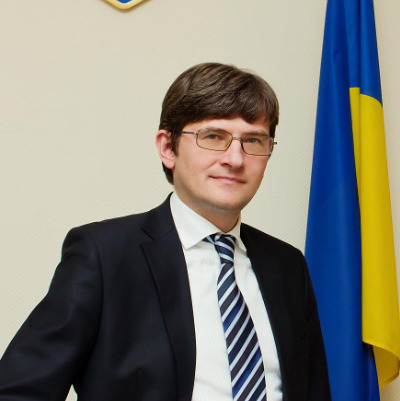
"A referendum would make no convincing impression on Europe either, because it still remembers referendums in Nazi Germany and in Belarus," adds Andrii Mahera, a former deputy head of Ukraine’s Central Election Commission, to the arguments we have already set out. "To them, it means nothing. The president simply wants to shift his own responsibility onto someone else."
- So you think the same? Because that is what many in the opposition believe.
- Well, that is how all experts see it, not just the opposition. It is a way to shift responsibility and to do so unconstitutionally. Besides, beyond the legal risks, there are also domestic political risks.
- Namely?
- First, under the Law on a Nationwide Referendum, turnout is mandatory. Our state voter register lists 34.2 million voters. So for a referendum to be valid, at least 17.1 million people would have to take part. If more than 50% of voters do not participate, that means the referendum did not take place, regardless of the outcome for or against. But even if turnout is sufficient, imagine this: in one region, the referendum question gets support, and in another it does not. What happens then?
- You mean it would push the nation toward discord and infighting?
- That would be an open field for the aggressor state to exploit, to stoke separatism in Ukraine with renewed force… Again, in my view, a referendum in this situation is a dangerous venture both legally and in terms of national unity
- As an experienced professional, what did you think when you read that both Zelenskyy and Trump were, in sync, talking at the talks about a resolution of ‘a referendum or a vote in parliament’?
- I thought about the fact that, by law, the Verkhovna Rada gives consent for an international treaty to be binding. That is a normal mechanism. But such a treaty must not conflict with the Constitution of Ukraine. Article 9(2) of the Constitution says: ‘The conclusion of international treaties that contradict the Constitution of Ukraine is possible only after the relevant amendments are made to the Constitution of Ukraine.’ In other words, it does not work like this: first the treaty, and then amendments to the Constitution. No, first amendments to the Constitution, and only then the treaty. But amendments to the Constitution cannot be made while martial law is in effect. So in any case, it all comes down to the fact that there cannot be wartime conditions at the stage of amending the Constitution," Mahera concludes.
AND WHAT DOES PARLIAMENT THINK ABOUT ALL THIS?
While experts in constitutional and electoral law are torpedoing the idea of holding a referendum, lawmakers in the Verkhovna Rada are mentally adjusting to the possibility that they may have to take part in an extremely hard vote, one that will be written into the country’s history forever.
After several years in which the country’s top legislature has had sharply diminished agency, MPs may have to make a choice that will be etched into the biography of every lawmaker for the rest of their lives, even the quietest ones.
And the fact that there is confidence neither in any point of the future "peace plan" nor in whether it will have to be voted on at all does not make things any easier. Because already now, many MPs feel personal responsibility for their vote.
"Everyone understands this: if both Washington and Brussels lean on us, we will ratify this deal," a Censor.NET source from the Servant of the People faction says. "Otherwise, we will be left without financial and military support. So if I were the opposition, I wouldn’t be rolling a barrel at the president, saying he is shifting responsibility onto others. In this situation, the president is doing exactly what he is supposed to do under his mandate. But each of us will have to assume responsibility. And the critics should even thank Zelenskyy for the fact that this idea, holding a referendum, was not rejected outright. I mean, the idea is bad, of course, but it’s obvious that, from a purely self-interested point of view, MPs would be better off if it were not us who had to decide this."
At the same time, judging by remarks from several Servant of the People MPs in informal conversations with Censor, a synchronized vote on a signal from Bankova should not be expected. This reflects both the current political climate (general apathy within the faction and corruption scandals erupting close by) and some lawmakers’ clear understanding that voting on such a peace deal is the kind of situation where decisions must be made using one’s own judgment.
"The situation is difficult, but I believe politicians should make the decision," one MP from Zelenskyy’s faction said. "There is no need to shift it onto the shoulders of the people of Ukraine. That will not add political stability… At the same time, everyone understands that such a vote will be one of the hardest acts in their life. It’s for life. And if you have noticed, the faction’s reaction to the talks has been restrained. Why? Because everyone is waiting for clarifications from the president. Note this: not instructions on how to vote, but more information. Yes, there are people who say, ‘Of course we should vote for peace!’ But I wouldn’t call it a chorus. People are tense and waiting."
"I don’t think anyone in our faction will agree to giving up territory," a fellow faction member says. "Everyone will scrutinize every letter and demand as much information as possible. As for me, there are a number of things I won’t vote for, even if it means problems for me with the country’s leadership. Trump said he would come to Ukraine and speak in the Verkhovna Rada if that was what it took to sign the agreement? Well then, let him come and we’ll see…".
Yevhen Kuzmenko, Censor.NET


