



Torture by handbook: what happens to civilian Ukrainians in Russian penal colonies and why military are marked with brilliant green
The Supreme Court has upheld the first-instance court’s ruling sentencing Denys Kulykovskyi, the commandant of the Russian torture site "Izoliatsiia" in occupied Donetsk (nicknamed "Palych"), to 15 years in prison. The update was reported on Facebook by lawyer Oleh Horbachov, who represents journalist Stanislav Asieiev, who was held there.
"Izoliatsiia" itself, law enforcement says, continues to operate. It is one of the most horrific prisons, but not the only one where Ukrainians are held. As the Main Investigative Department of the National Police told Censor.NET, since the start of the full-scale invasion, 2,130 civilian citizens of Ukraine have been held in Russian captivity. Some people have been freed, but as of early February 2026, another 678 civilian Ukrainians remain in places of unlawful detention, both in the temporarily occupied territory of Ukraine and on the territory of the Russian Federation.
To do this, Russia has set up hundreds of places for the unlawful detention of civilians (basements, temporary holding facilities, filtration camps, torture chambers, and permanent places of detention, temporary detention facilities, pre-trial detention centres, and penal colonies). Crimes committed by Russians at 13 of the largest hubs — penal colonies and pre-trial detention centres in Mordovia, Kursk, Taganrog, Kamyshin, Bryansk and Belgorod regions, as well as in the temporarily occupied territories of Ukraine — are being documented and investigated by detectives from the Main Investigative Department of the National Police. These are permanent facilities with standardised approaches to detention regimes, systematic violence, and torture.
We managed to speak with the head of a department within the War Crimes Documentation Directorate of the Main Investigative Department of the National Police, who has, for many years, been systematically investigating crimes against civilians who ended up there. We began our conversation with the events of 2014, which changed both his life and the fate of the country.
"BEING IN AVDIIVKA CHANGED OUR WORLDVIEW"
At the time, Ihor Karamyshev worked in the Donetsk Regional Directorate for Combating Organised Crime, investigating ordinary criminal offences. Recalling the seizure of Donetsk by pro-Russian forces, he describes how one special forces officer, when militants began attacking the main headquarters of what was then the police, was wounded but managed to pull two colleagues out of the line of fire. He himself was killed. He stresses that what was happening in 2014 shaped the worldview of many people.
"On orders, we went to Sloviansk. Another group headed to Mariupol. As we were driving in, Girkin’s militants were leaving. We were literally travelling in opposite lanes," he says, adding that they were pulled out on orders in July, but by then he was leaving not from Donetsk, but from Toretsk. "You drive, you look at all of it, and you think: 'Why weren’t they shot?'"
Speaking about those days, he recalls that after Sloviansk, he was sent to serve in Mariupol, where he was appointed head of the operational directorate of the regional police headquarters.
"Back then, the head of the regional directorate was Viacheslav Abroskin, and he said that leadership had to set an example for the personnel. So we took shifts at checkpoints and bridges to stop sabotage and reconnaissance groups from getting into the city. That’s how we stood duty there every night," he continues. "That’s when another special forces officer was killed. A sabotage and reconnaissance group. He was shot in the head. Two of his teammates were also shot, but fortunately, they survived.
After some time, we were sent to Avdiivka. It was right before the ceasefire. We went on rotations, two weeks at a time. I was the senior in the group.
In Avdiivka, we saw Grad multiple rocket launchers firing for the first time. I thought it was some kind of horror. It was terrifying.
When we first arrived at the district police station, it was minus 20 degrees Celsius, and there wasn’t a single window left in the building; everything had been blown out by a direct hit. There was no heating either. There was a basement, that’s where the attached forces were concentrated.
I told my guys that I would stay on the second floor with my partner, we had radios, and we would block the windows with sandbags. The others stayed in the basement.
There was no mobile phone service there; we could communicate only by radio."
– What tasks were you carrying out at the time?
– We had to patrol the city and help the local population because the shelling was constant.
Once we walked up to a shop next to some shattered houses. Two women were standing there, neatly dressed, clearly educated. They said to us: "Boys, could you please lend us 50 kopecks? We don’t have enough for bread." It hit us so hard. We gave them our own field rations and asked volunteers to bring food.
That scene is still in front of my eyes. That was when we realised what the value of life is, what bread is worth.
There were fatalities every day. Today you patrol and talk to people, and tomorrow you go out, and there are three dead bodies.
Once, a woman came into the district police station. She was shaking all over and could not process what had happened. She said that she and her husband had gone out to meet their son, and then there was mortar fire, and half his head was blown off.
Being in Avdiivka changed our worldview. We became completely different people. Our attitude towards others changed. Everything changed.
When I came to Kyiv after Avdiivka, I could not understand how it could be like that: there, death; here, concerts.
On the one hand, I was glad people did not know what war was, but the thoughts of why it was happening would not let go.
Then, in 2020, I began documenting "Izoliatsiia". For the first three days, while carrying out investigative actions, I could not sleep and kept waking up. My wife said I was talking in my sleep. Probably, I was still talking to the victims.
The victims, all of them, are heroes. People stood up for our statehood, and for that, they were detained and tortured.
I will never forget the victims’ reaction when we identified the perpetrators and showed them photos. How happy they were. They did not expect that this scum would be held accountable. The people who abused them in "Izoliatsiia" wore balaclavas, hid their faces, and gave completely different names. They never suspected they would be documented.
And when I saw that reaction, I realised: I will not back down. I will deal with precisely these kinds of cases. How can I stop when people are still being kept in prisons and tortured?
Overall, we have already identified and documented more than 40 perpetrators involved in the unlawful detention and torture of our citizens.
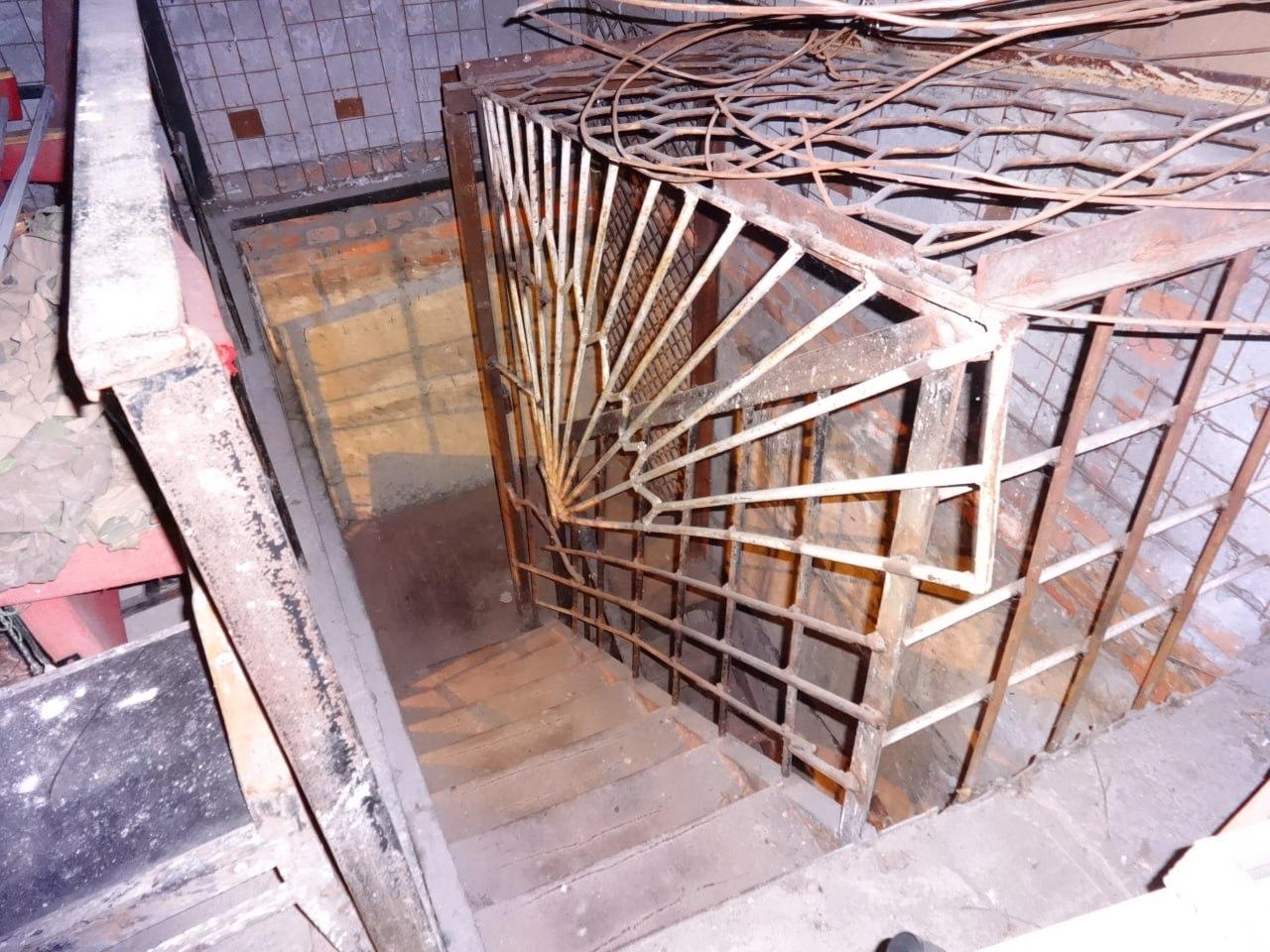
– Over time, other places where civilians were held began to appear. Was this process coordinated by someone? In other words, were prison staff instructed on what exactly to do: under what conditions to keep people, how to torture them?
– Now, almost everywhere, these are permanent detention facilities. Unfortunately, "Izoliatsiia" still exists as well.
As for how systematic it is, it has been coordinated by the FSB from the very beginning. There is a single handbook used in such places of deprivation of liberty.
– What is this method? What processes does it cover?
– The first task is to break a person as an individual, to show that anything can be done to them. That is why the first stage is the so-called "intake". New arrivals are forced to pass through a "human corridor". This is when penal colony staff stand on both sides and repeatedly beat captives with rubber batons, metal rods, PVC water pipes, rifle butts, metal flails, stun guns, wooden mallets, and with their feet and hands to different parts of the body, and set dogs on them. There were cases where dogs bit captives.
At the same time, people are told: "Your goal is not to fall." If you fall, they will beat you to death. Recalling this, people who returned to Ukraine in prisoner exchanges say: "Our goal was not to fall." But not everyone endured it, and there were people who died at the "intake" stage.
– In interviews, the guys said you have to run through this "human corridor". And you cannot see where you are going because you are blindfolded or have a bag over your head. How are you supposed not to fall?
– It really is very difficult. A person is shoved and made to run. And when captives, after passing through the "human corridor", rush into a building, guards push them into walls, causing head injuries.
In some penal colonies, the "intake" was carried out indoors. After the beating, captives were forced to crawl on the floor while the assaults continued. People sustained multiple injuries, including broken ribs, dental injuries and joint damage, kidney injuries, head and facial injuries, and, in some cases, loss of leg function due to spinal injury.
– Is there any difference between how the "intake" is carried out for women and for men?
– No, it is the same. Perhaps women are beaten slightly less.
– How long does the "intake" last?
– From 40 minutes to an hour and a half. It is not measured by distance, but by what happens. You have to run to a table, undress there, and get down on your knees. And you can be made to stay like that for hours. And the whole time you are being beaten.
There were cases when the guys were kept kneeling from evening until morning. Because, as I said, at the very beginning, Russians need to "break" a person so that there is no further resistance and no thoughts of it.
– Did they manage to do it? What do those who returned say?
–There were cases, for example, in "Izoliatsiia", when people asked to be killed because they could not endure the abuse. After all, the "intake" is only the beginning of torture.
The very next morning, people who had been brutally beaten the day before were made to stand and sing Russia’s national anthem. After that, if someone entered the cell, they had to assume the so-called "star pose" — legs spread wide, arms raised, palms twisted outward, face down. They had to remain like that while they were asked questions. They were allowed to sit down only when eating. And not in all penal colonies — in some, they were forced to stand constantly. One man said he stood every day from six in the morning until ten at night. He could sit down for dinner, and then it was lights out.
In another penal colony, immediately after lights out, they would announce wake-up and force people to stand for another seven hours. They were given only one hour to sleep. This went on for several months. And when the prison staff saw that people were exhausted, had lost 20 to 30 kilograms, and their legs had swollen so much they could not walk, the pressure eased somewhat. They shifted their focus to new captives who were brought into the colony.
Such testimonies confirm that the occupiers use torture in a comprehensive and systematic way, following a standardised method that, by its nature, resembles NKVD practices. The methods of psychological pressure and physical violence are almost identical across all places where Ukrainian citizens are unlawfully held. Despite the vast geography — from Donetsk to the Urals, over thousands of kilometres, the approaches and the "handbooks" remain strikingly similar. That was the case in 2014. The same is happening now.
– Apart from forcing them to stand, did they leave them alone?
– Every month, the special forces units in the penal colonies rotated. New ones would burst into the cells and beat the hostages with batons and use stun guns. Many of them constantly had multiple burn marks on their bodies. For the special forces, it was all entertainment.
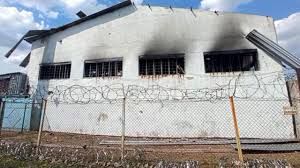
"EVERY 'AZOV' FIGHTER WAS MARKED WITH BRILLIANT GREEN — ON THE SHOULDERS AND BACK"
– What other systematic steps followed after the "intake"? What was the next stage?
– Representatives of the Investigative Committee and the FSB would come and interrogate prisoners of war and civilian hostages. And if people did not say what they wanted, they would tell the special forces: "Work on them." They would leave, the special forces would beat the person, and then the investigator would come back.
One civilian spent 4.5 years in "Izoliatsiia" and a pre-trial detention centre. His son served in Azov. The father was detained by the "Ministry for State Security" back in 2018. They said they knew his son was a serviceman. He was severely beaten as a result, with his ribs broken and his head smashed.
A nurse saw this and called a doctor. The medical staff still took him in and treated him. But those who had abused him somehow learned that he had survived; they took him away and brought him to "Izoliatsiia", where he was tortured and forced to sign certain documents. He refused.
Then they brought his wife and daughter to "Izoliatsiia" and explained what they would do to them in front of him. He could not endure it and signed. He was kept in "Izoliatsiia" until trial. But the judge told a representative of "Ministry for State Security" that the case had been "cooked up" and refused to convict the man. That was the first time it had happened. And I have not heard of judges behaving like that again.
– What did they accuse him of?
– Allegedly, he had been storing ammunition. But the main issue was that his son was serving in Azov at the time. And we know how they treat "Azov fighters".
For example, when Russians distributed those who came out of Azovstal among penal colonies, during the "intake" they marked every "Azov fighter" with brilliant green — on the shoulders and back. And when prison staff saw such a mark, those men were tortured almost continuously.
– One of the "Azov fighters" told me in an interview that they were treated slightly better in Olenivka than in Taganrog, where it was sheer hell.
– There were three torturers in Olenivka. They have been identified and served with notices of suspicion in absentia.
Only they were allowed to abuse the captives. The others did not touch them.
Overall, the penal colony in Olenivka had previously been mothballed and was not ready to receive people in 2022. And when our boys and girls were brought there, there were no conditions for holding them. In barracks designed for 200 people, 600 were placed. People slept on the concrete floor and on the stairs. The same applied to food. Breakfast could be at 2 p.m., lunch at 11 p.m., and dinner at 3 a.m.
Water was also a major problem. It was pumped from a reservoir using a fire engine.
But they really were beaten less there than later in other penal colonies — though not all of them. Those who got out of Olenivka in prisoner exchanges told me there were cases when people died at the "intake" stage.
– Was it there as well?
– Not at first. This stage was added later. This once again confirms that the method is the same everywhere. And at this stage, people are simply beaten to death, regardless of who they are or where they served. For instance, during the "intake", one marine died from severe beatings. A man who witnessed it recalled that the special forces officers discussed it among themselves. They said they did not even know who exactly they had killed, or what his surname was.
There were also cases in Olenivka where people were tortured to death.
But the worst places are Taganrog, Kizel, Mordovia and Biysk. They say Kizel was worse than anywhere else. Taganrog does not have as harsh a regime as Kizel.
– Was that facility also prepared for Ukrainians?
– At first, it was a penal colony for Russians convicted of criminal offences. And when the first captives arrived there, they asked the guards what they could and could not do. The guards themselves did not know. But over time, a harsh system of treatment for Ukrainians who ended up there began to take shape. They were tortured and beaten far more severely than in Taganrog. People who had been held in both colonies spoke about this.
They say food portions in Kizel were slightly larger and they were given slightly more medicine, though not often. But treatment was mostly like this: if one of the guys complained of pain, they would use a stun gun on him. He would fall and lose consciousness. When he came to, they would ask: "Feeling better?". He had to confirm it; otherwise, they could simply kill him.
Kizel is one of the places where people had to stand almost constantly: sitting or lying down was forbidden. Even going to the toilet was only allowed on command. At night, they were not allowed to get up. If people could not endure it, they relieved themselves and slept in wet clothes.
During cell inspections, captives were forced to crawl along the floor, after which guards would examine their clothing. If they noticed dust, they would take the entire cell out and beat them with hands and feet, rubber batons, and stun guns.
Interrogations were also conducted throughout the day and, as a rule, involved physical violence, torture with electric current, and stun guns. They were constantly forced to sing the anthem of the Russian Federation and patriotic Russian songs. If they refused or did not perform properly, captives were beaten and forced to do strenuous physical exercises, for example, 3,000 squats. Sometimes they were made to sing Russian songs from breakfast until dinner.
– How did the guards know that someone in the cell was doing something not the way they had ordered? Were they watching them somehow?
– Yes, there is 24/7 video surveillance in the cells. And if you want to say something, you use a loudspeaker. You were not allowed even to speak to each other.
– You said that during the "intake" people run up to a table and undress. Are they given any clothing in exchange?
– Sometimes they were given nothing for a full day. Or they were given a sheet to wrap themselves in. Their own clothes were sent for "heat treatment".
– And what if it was winter and cold?
– It did not matter. In general, in winter, they could be taken out for a walk in slippers and light clothing in minus 20 degrees Celsius.
– Were they allowed to wear Ukrainian Army uniforms?
– I do not know about everywhere, but for example, in Olenivka, it was allowed, and when people were taken out from there, the uniforms were confiscated. In exchange, they were given prison workwear and shoes one or two sizes too small. They gave whatever they had.
In some penal colonies, the rules required people to wear headgear both in winter and in summer. There were no caps, so even in summer, they wore winter hats. Imagine how hot that was! But they were not allowed to take them off, because it was considered a breach of the rules. This was also a form of abuse.
– Were people who arrived in the penal colonies with amputations given any medical care?
– Hardly any. There was a case where they took crutches away from a man who had lost a leg and told him: "Run." He explained that he could not. But they insisted: "Prison is life-giving — run." He hopped forward and fell. What else could he do?
– Did they give the crutches back?
– They did, but not immediately. Another civilian who managed to return home said there was a serviceman in their cell who had lost both arms and both legs. The guys carried him to the canteen and fed him because they were not allowed to bring food into the cell.
– How did they get through the winters? Was it very cold in the cells, for example, in the colony in Kizel that you mentioned?
– 15 to 16 degrees Celsius. But you were not allowed to complain about the cold, because they would immediately open all the windows. And this is the Urals. It is very, very cold there.
– If someone developed pneumonia in such conditions, were they treated?
– They say they were given some pills, but they did not explain what exactly they were. If it got worse, there was no response. The bodies of those who died were not taken away immediately, either.
– What was the situation with women like? From interviews with those who returned, we hear that they were raped and tortured.
– There was no particular difference in how men and women were treated. Food and medical care were the same. They were not even given toilet paper or hygiene products.
– Was it possible to wash?
– In some penal colonies, people were not taken to the shower for as long as six months. Generally, they were allowed to wash once a week, with the time strictly limited. Around two to three minutes per person. In some colonies, the water was very hot, while in others it was only cold.
One woman said that in one of the colonies, they were issued one comb for 70 people and a 50-gram piece of soap.
– Were they allowed to brush their teeth?
– When volunteer parcels were allowed, toothpaste began to be issued. Toothbrushes were worse. Usually, there was just one for everyone held in the cell.
– What consequences of captivity do you document?
– Death, limb amputations, shrapnel wounds (Barrack "200", Volnovakha Penal Colony No. 120, "Olenivka"). Weight loss of 20 to 50 kg; some lost about 50 percent of their body weight. Skin diseases (eczema, scabies, ringworm), diabetes, cardiovascular conditions, and others.
70-80% of people have dental problems. For some, their teeth were simply filed down with a file.
– Why?
– A form of torture. What is frightening is that the consequences for a person’s psychological state can be delayed and may surface several years after release. For example, one of the men I spoke to some time after he returned home said he cannot go outside without his wife. He says he cannot be in public, does not understand why he is here, so his wife leads him by the hand.
Some people died a few years after release. Unfortunately, the consequences of captivity can "catch up" with a person years later, and health problems can "flare up" in different ways.
– How do Russians treat Ukrainian law enforcement officers who end up in captivity?
– If they were unarmed, they are considered civilians.
– Do the management and staff of the penal colonies decide on their own how to treat captives, or are they instructed?
– 80 to 90% is instruction. They are told what the "intake" is supposed to look like and how to treat prisoners of war and civilian hostages going forward. But there were cases when guards themselves chose which cell to enter and torture people in. And if someone from the management walked by, they would rush out of the cells.
– Is there a systematic pattern in the use of torture? Are the methods essentially the same?
– Yes. For example, torture during the "intake" exists in every penal colony.
In addition, the so-called "calls" are widespread. This is when a wire is attached to an ear and an electric current is applied.
A metal ruler was also often used. People were beaten with it so severely that it caused serious wounds that took a long time to heal. This was one of their favourite forms of torture.
Sexual violence is also part of the torture. Men are raped with various objects.
Another form of abuse is denying people drinking water. Sometimes they are given none for a full day.
– The guys who returned in prisoner exchanges say the quality of the water and food was horrific.
– Rotten fish and cabbage, porridge mixed with sand. There were cases when the kitchen orderlies first gave the porridge to a dog, and what it did not finish was then given to people. The guys found nails and pubic hair in the food.
Such testimonies confirm that the occupiers use torture in a comprehensive and systematic way — following a standardised method that, by its nature, resembles NKVD practices. The methods of psychological pressure and physical violence are almost identical across all places where Ukrainian citizens are unlawfully held. Despite the vast geography — from Donetsk to the Urals, over thousands of kilometres — the approaches and the "regulations" remain strikingly similar. That was the case in 2014. The same is happening now.
– How do you sleep after speaking with victims and hearing everything they describe in detail? Overall, how emotionally difficult is all of this? You said that when you were investigating the "Izoliatsiia" case, you could not sleep.
– Yes, but over time, the psyche adapts somewhat. As for my overall state, I will put it this way: in four years of the full-scale war, I have not taken a single day of leave. Because every time, listening to victims and taking in what they say, I think about the fact that people were in captivity for years. Not taking leave cannot be compared to that. This is a conscious and principled stance. My task now is to identify everyone involved in crimes committed against our people.
Every time I speak with people, I ask their forgiveness for the fact that they will have to relive painful memories, and I explain that we are collecting materials for the International Criminal Court and, without these memories, unfortunately, we will not be able to do anything. I ask them to help us. And they give testimony, understanding that, in essence, we are doing this together.
After each prisoner exchange, Ihor Karamyshev visits hospitals and rehabilitation centres not only to document the testimony of those released about what happened in places of deprivation of liberty, but also to show them photographs of people listed as missing in action in the combat zone, to find out whether they saw any of them in Russian prisons. He says there were cases when it was possible to establish where servicemen were being held and inform their relatives.
In the course of the investigations, he and his colleagues also identify those who torture Ukrainians. He understands that those served with notices of suspicion in absentia are currently in Russia, but insists this work must be done so that victims know the time will come and their torturers will be held accountable for what they have done.
Tetiana Bodnia, Censor.NET
Photos provided by the National Police of Ukraine


