



TAF Industries CEO Volodymyr Zinovskyi: It is impossible to create complete radio silence. Neither for us nor for enemy
Drone Industry
TAF Industries is a leading Ukrainian military tech company that develops and manufactures defence technologies. Since 2023, it has been creating solutions to enhance combat superiority and protect the lives of military personnel and civilians.
The company has its own R&D center, a network of production sites, and an engineering team.
TAF Industries currently produces more than 30 products, most of which have been certified by Ukraine’s Ministry of Defence. The company’s products include strike drones, reconnaissance systems, relay platforms, electronic warfare systems, remote-control systems, and AI-enabled solutions.
In early 2026, the company was headed by Volodymyr Zinovskyi, who had set ambitious goals to develop the business, scale up production, and create new products. Censor.NET journalists, as part of their "Drone Industry" project, asked him about the company’s work, what is driving the sector today, and where unmanned technologies are headed. They also did not shy away from the sensitive issue of arms exports, which has been on the agenda since at least late 2024.
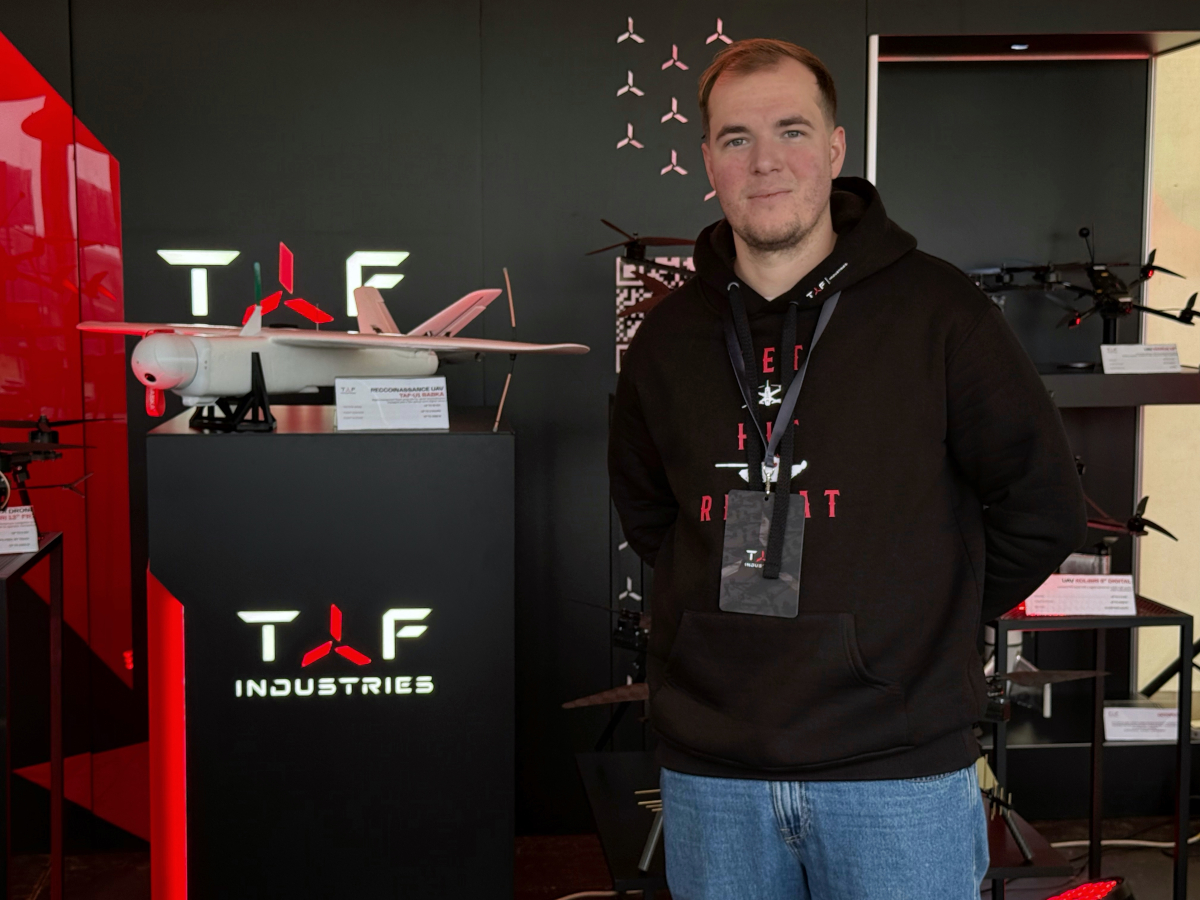
– There has recently been a change in the company’s management. What’s the reason for it? And how will it affect operations?
– Oleksandr Yakovenko, the company’s founder who headed it until recently, wants to focus specifically on the strategic development of our business on the international stage. That includes partnerships, additional capitalisation, and so on.
On the other hand, TAF Industries now needs more systematisation, which Oleksandr is not particularly fond of. First and foremost, he is a very effective "driver", especially when something needs to be developed quickly, and risks have to be taken.
Over the past year, the company has more than doubled in size. Even at the beginning of 2025, it was no longer accurate to say we were a small company. We have set a goal to double again this year. So we understand that we need to become more structured.
Overall, one of our key tasks right now is to fully systematise the growth we have achieved and maintain the pace.
– You mentioned development on the international stage. What exactly do you mean? Exports are closed, for instance. (On February 8, President Volodymyr Zelenskyy announced that Ukraine is opening drone exports. This interview was recorded before Zelenskyy’s statement, – ed.).
– Officially, it is not closed.
– But it doesn't work.
– Yes, that would be more accurate. It is not banned; it simply does not work. But we have great examples of deals such as Quantum Systems and Frontline Robotics. This is an excellent precedent, and we are working with some companies along a similar track. That precedent has been a very positive signal, in the sense that we understand it is possible to do this.
And as Oleksandr Yakovenko has repeatedly stressed, Ukraine could miss out on a great many opportunities because foreigners are here anyway. One way or another, they gain access to these technologies and the solutions we use. So if we have an opportunity to formalise this officially and have Ukrainian companies become co-owners, while developing and promoting Ukraine in this way on the international stage, then it is worth doing.
Read more: It all comes down to exports: What does Ukraine’s defense industry need in 2026?
On the state’s side, we are seeing more and more positive signals. The state is genuinely interested in companies developing and strengthening their positions on the international stage. But here is the issue: while in previous years Europeans were ready to allocate funds directly inside Ukraine, they are now primarily interested in expanding their own production. Even though they have certain commitments regarding how much money they must spend to support Ukraine, the best option for them is to spend it at home to manufacture products that they will ultimately supply to Ukraine
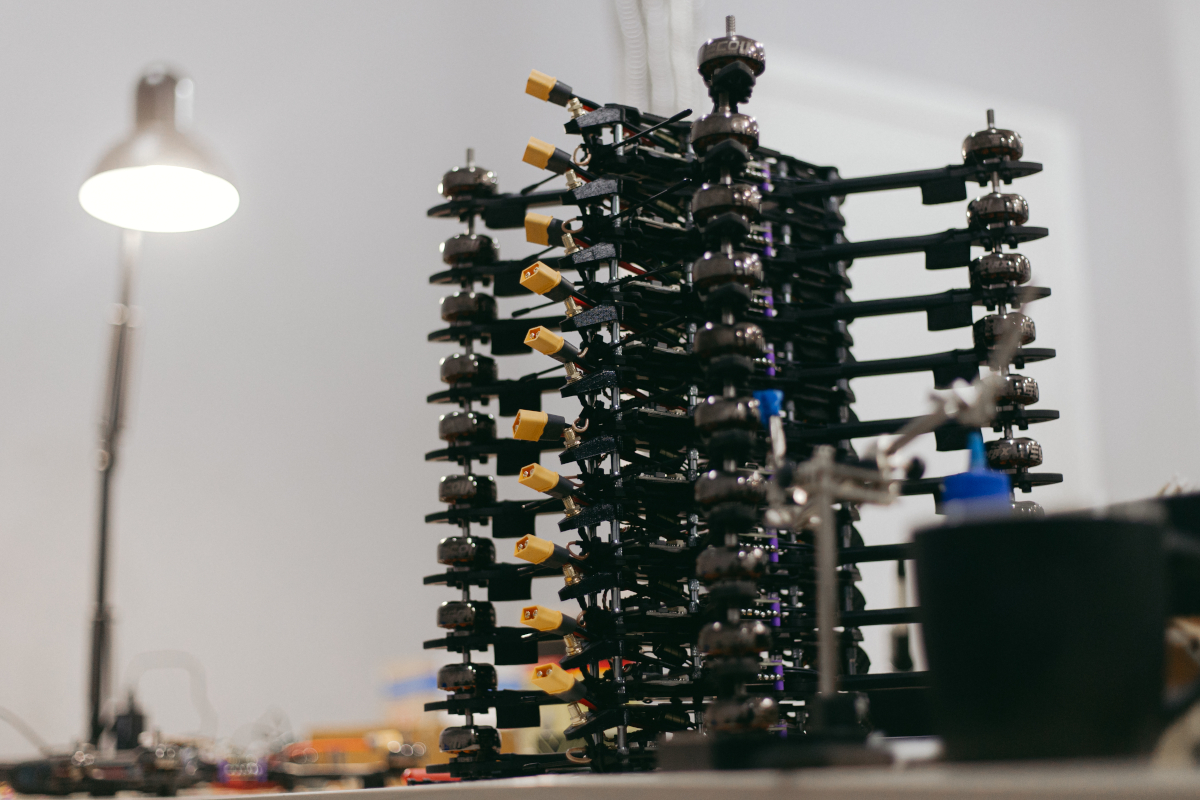
– What priority tasks have you set for yourself as head of the company, Volodymyr?
– First and foremost, a fully digitised system and all processes brought into order, every function documented, every function backed up, no reliance on any single person, and no situation where one person performs five adjacent functions simply because that is how things evolved.
In other words, we are building a properly run, system-based company that does not just put out fires, but can plan and make more measured decisions. The larger we become, the higher the cost of every mistake.
– How confident does TAF Industries feel in the market today?
– Quite confident. One confirmation is a recent event where awards were presented both to service members from specific units and to manufacturers who took part in the "Army of Drones.Bonus" programme (the so-called "e-points", ed.). We received an award there as one of the most effective assets on the battlefield.
Speaking more broadly about the company’s development, our initial springboard was large state orders that no one else could fulfil. We took the risk, assumed those obligations, and delivered. At that time, we were focused on executing those major state contracts.
Other manufacturers, who did not have such obligations, spent more time engaging with brigades in order to sell their products directly to units. We only began doing that in late 2024 and early 2025, which created a certain gap. But throughout 2025, we immersed ourselves in this kind of cooperation as much as possible.
That is why we are now a company that, on the one hand, can and continues to deliver large state orders, while also working closely and staying in constant contact with units of Ukraine’s Defense Forces. In addition, with the development of DOT-Chain Defence and Brave1 Market, we are working through decentralised procurement and direct contracts.
– What do you think of DOT-Chain Defence overall? How important is this model for manufacturers?
– It is an excellent practice. It has made the environment more market-based and forced manufacturers to compete: some have to lower prices, others have to improve product quality or relevance. Most importantly, it enables a more efficient supply for units and end users. An extra link is removed from the chain, where we deliver to a centre that then distributes the equipment.
However, you cannot say that 100% of procurement should move to DOT-Chain, because it creates a lot of risks. It is harder to control, and a force majeure situation can occur where someone does not receive a delivery, and a unit ends up with a shortfall of equipment, and so on. At such moments, a unit can be backed up by the Logistics Forces of the AFU, which have a certain reserve and can cover that shortfall
Coming back to your question, I can say that we have a very positive view of DOT-Chain. It clearly makes our military more effective and gives us, as manufacturers, room to develop, because we receive much faster feedback on how the product needs to evolve. And this is happening at scale: when many units request certain upgrades, we understand there is strong demand for the system and that we need to steer the performance characteristics in that direction. Even in centralised procurement, we can see the value of implementing the same change; then a drone supplied to a notional central hub will remain relevant for longer.
There is a trap that both manufacturers and the Defense Forces have fallen into: under centralised procurement, a specific configuration was supplied that was relevant at the time the contract was signed. Those systems then sat in a warehouse for six months, and by the time they reached a unit, they were no longer relevant. That is why we even launched the TAF Lab programme, under which we modify drones at our own expense by replacing certain components to bring the systems up to date so the Defense Forces can use them.
That is why DOT-Chain addresses this problem: a unit receives, as quickly as possible, the system that service members were counting on and that they actually ordered
– Service members often complain that nothing flies or works out of the box, and that almost everything has to be brought up to scratch. How common is that?
– Quite common. At least it used to be. That is also linked to the fact that what flies on one section of the front may not work at all on another.
Once, we arrived at a unit with humanitarian aid — our drones. They were loaded into a vehicle, but we kept one box aside to hand over to the guys and do a report. We opened the box and saw that it contained drones of an older modification. We closed it and moved it aside, and the troops asked what was wrong. We started explaining that these drones used older control frequencies and would not fly, but the guys took a look, and it turned out everything flew. They had an ideal radio horizon there. Later, they sent us drone feed footage of strikes carried out with those drones we had assumed would not fly.
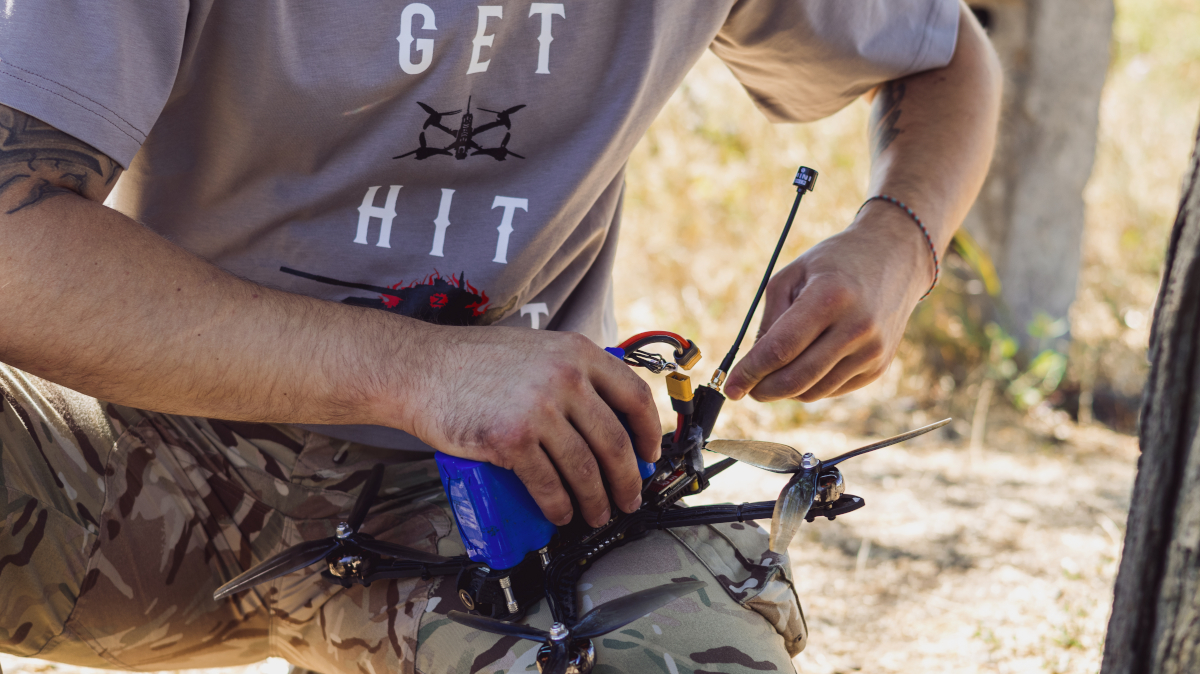
This was definitely a real problem. But one of TAF Industries’ goals for 2026 is to ensure that every one of our drones can be used straight out of the box.
On the one hand, it is a technical challenge to make a more universal system that meets as many needs as possible. At the same time, it is about effective communication with units, so that each one receives a drone with the characteristics they actually need.
– Recently, the Ministry of Defence codified all modifications of the "Kvazar 3M" electronic warfare system. What are you working on now? What is your flagship product at the moment?
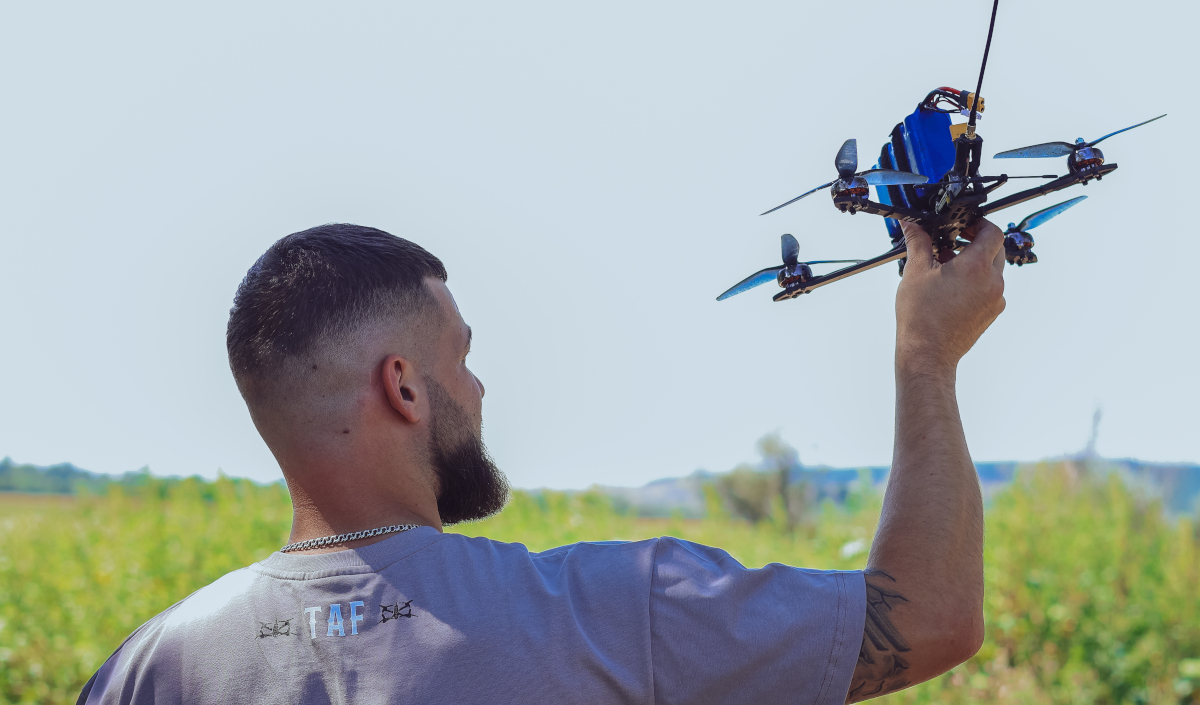
– FPV drones remain our most widely produced product. There is currently a lot of focus on fibre-optic drones. We are entering into a partnership with one of the fibre-optics manufacturers. We will bring them into our structure and scale up their production. Their task, in turn, is to maintain the quality they deliver now while scaling.
In addition, our goal for the year is to scale up our "Babka" reconnaissance drone as much as possible; demand for it is enormous. The enemy is increasingly shooting down our reconnaissance fixed-wing UAVs. A low-cost reconnaissance drone that can meet reconnaissance needs, and that units are not afraid to lose because it is affordable and easy to repair, is exactly what is needed.
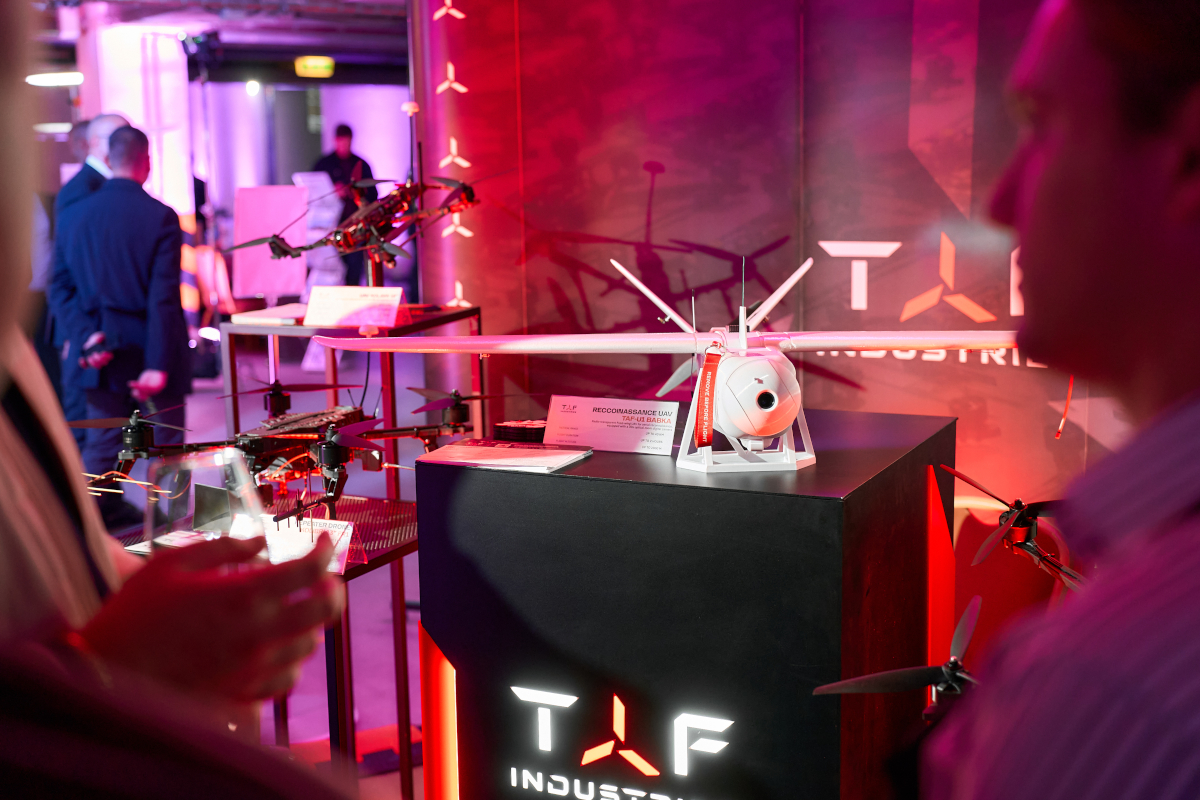
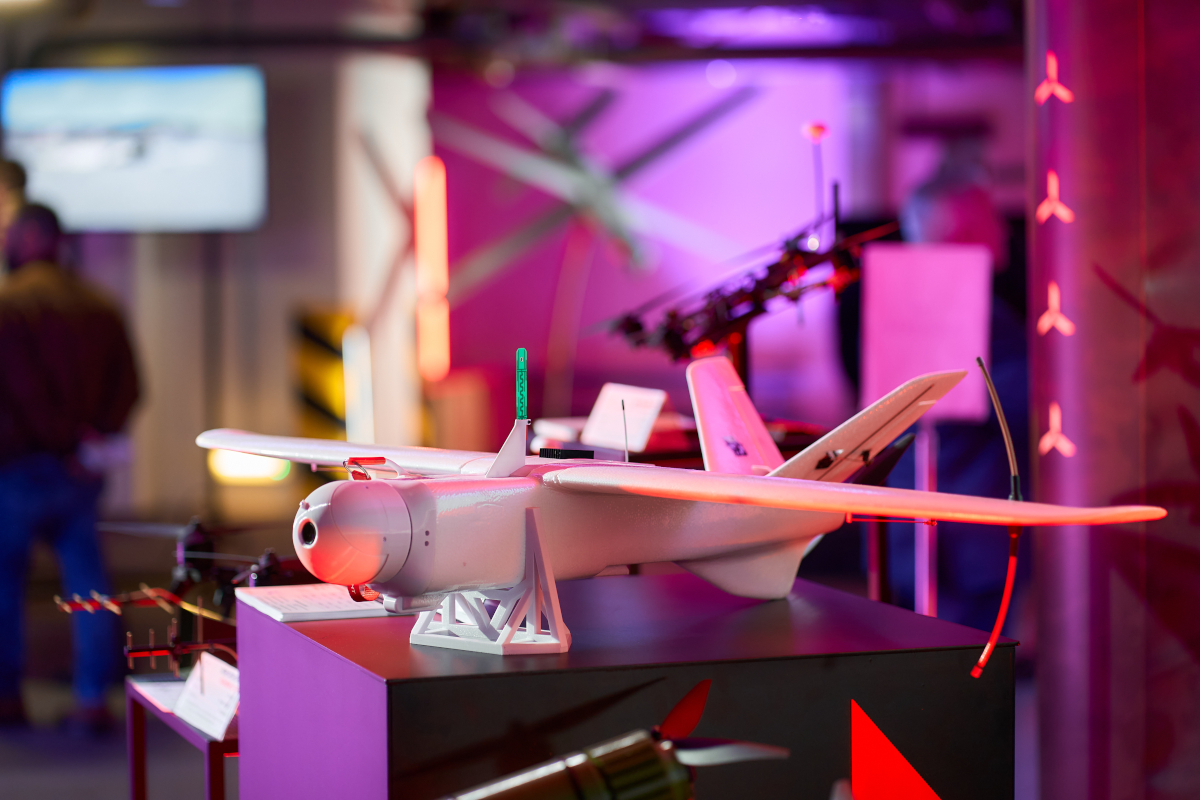
We started with two-aircraft kits, but the standard package now includes four. If one of them crashes, it can be used as a source of spare parts to repair the aircraft that are still in service.
We are now preparing a new generation of the "Babka", trying to keep it just as affordable. Yes, it will be slightly more expensive, but technically better: it will fly longer and farther, while maintaining the same philosophy — so units are not afraid to fly even in poor weather conditions because they can afford it without fearing they will lose the airframe.
We also continue working on electronic warfare systems. Our EW system, designed to suppress digital communications, is expected to be released soon.

– You mentioned a fibre-optics manufacturer. Is it produced in Ukraine?
– First and foremost, I mean the production of spools. It seems like a simple process, but in our experience, it is far more complicated. We tried every spool manufacturer that could supply at least some volume, and ultimately validated only three of them for our needs.
Winding fibre-optic cable is not that straightforward. And it is critical for us that the spool is high-quality, with as few breaks as possible. No matter how good the drone is, if you attach a spool that snaps, that great drone will crash and will not make it to its destination, and the mission will fail.
– What problems and challenges do you face as a manufacturer of modern weapons?
– The biggest challenge, probably, is that everything keeps changing rapidly. And when you are producing not in the hundreds or thousands, but in the tens of thousands, any change, given the logistics lead time, becomes a risk you sometimes have to take without being certain it will ultimately be effective. If you do not take that risk, you can end up no longer being relevant.
– How long does a change cycle take now? Last year, experts said it was about five weeks, and by then, it would be almost a completely different product.
– The issue is more that most frequency bands are already covered. One way or another, we continue to work primarily on communications. But we have to understand that the logistics lead time is about two months. We plan in quarters.
– What happens once all frequencies are covered?
– We will be able to understand which frequencies work here, change them, combine them, continue using fibre-optics, work on digital communications that are much harder to jam, and use Starlink and LTE. There is still plenty to work on. Creating complete radio silence is not possible yet — neither for us nor for the enemy.
But even if such conditions were created, our service members would be unable to operate just as effectively as the enemy. That is why we are also working in parallel on autonomous drones. Even though AI is a hyped topic, these are technologies we have worked on, are working on, and will definitely continue working on in the future.
If it all started with simple terminal-guidance systems, where the operator has to lock onto and designate the target, and the drone then continues its terminal guidance even under electronic warfare, the work now is moving toward a UAV identifying the target on its own and prompting the operator, and in certain scenarios possibly not asking the operator for permission to engage the target, on the understanding that there is no link to the operator and the drone is in an area where only the enemy can be present for sure.
– What has changed on the state side in terms of drone production since the start of the full-scale war?
– First and foremost, the state has moved toward decentralised procurement. The state is now collecting a lot of information on how different systems are used, and in the future, procurement requirements will be automated as much as possible. They will be shaped on the basis of statistics and data on how these systems are employed.
Right now, requirements are collected manually: units submit information on what systems they need. The state processes it all, gathers capacity data from manufacturers, understands which systems can be supplied and which cannot, and therefore where alternatives are needed.
Partial decentralisation, where units can purchase products themselves using an allocated budget, diversifies the risk of incorrectly defined requirements.
But when it comes to centralised procurement, an automated system will improve and increase the efficiency of purchasing exactly the systems our military needs.
– What does such automation mean for manufacturers?
– Again, it means working to make your system as effective as possible. If it is effective, the system signals that more of it should be purchased. If it is not effective, you simply will not make it into centralised procurement. All these initiatives are aimed first and foremost at making our military more effective.
– But not everyone will be able to compete. If we had 500-plus drone manufacturers, would that number start declining soon?
– Absolutely, the number will keep declining. We have to understand that this ‘menagerie of drones’ was an advantage for us at one point, because the enemy did not know what was about to hit them. It allowed us to roll out a lot of different innovations.
Read more: How can Ukraine tame "menagerie of drones" and should it be done?
But for the state, this is a major problem. When you plan any operation, you have a list of capabilities you can use with specific performance specifications, and so on. The more different systems you have, the harder it is to build an overall employment concept, write scenarios, doctrines, and so forth.
In any case, the market is consolidating. Larger manufacturers simply need to implement the best experience from teams that do not have the resources to scale it. This way, the state gets a more predictable and manageable system.


