



"Busification", sanctions for draft evaders, and TCR reform: what MPs and military are proposing
While the Verkhovna Rada debates potential restrictions on the rights of draft evaders and seeks ways to curb the scandalous "busification" (A colloquial Ukrainian term describing individuals transported to recruitment facilities by van - ed.) and the Ministry of Defence develops a comprehensive mobilization reform, the information space is rocked almost daily by new videos from the streets. These depict confrontations between staff of the Territorial Recruitment Centres and the police with men of conscription age, scuffles, bystander interference, and the escape of individuals on the wanted list.
Sometimes such conflicts escalate into brawls and, in some cases, unfortunately, have lethal consequences.
Fierce public debates surround these events. Some consider such actions inevitable in wartime conditions and emphasize the need for tougher mobilization. Others see this footage as proof that the system requires immediate changes and clear rules. The commander of the K-2 Battalion, Kyrylo Veres, who has been fighting since 2014, explains the situation bluntly and without sugar-coating:
"If mobilization is forced, it means there is a war in the country. What kind of justice and nobility can there be then? What is this? Someone is smart, and someone is handsome? Like, you have three sons, and you have to choose which one of them goes to fight? How is it that someone gave their all, while someone else just shouts, 'Open the borders!'?! Mobilization and war cannot be pretty. War is not about nobility or duels; it is sweat, blood, tears, and shit."
President Volodymyr Zelenskyy has also finally addressed "busification," announcing that he has tasked the new Minister of Defence, Mykhailo Fedorov, with solving this problem. Therefore, the Ministry of Defence (MoD) must now propose solutions to streamline the mobilization process and make it effective. Fedorov himself assured that the Ministry is already working in this direction and preparing a comprehensive reform. Despite this, Members of Parliament are discussing their own proposals. Some suggest tightening restrictions for those evading service, for example, freezing their bank accounts and banning them from driving. Others, conversely, call for an end to the pressure on draft evaders and the elimination of "busification" as such.
Last week, Serhii Hryvko, an MP from the "Servant of the People" party, registered a bill to amend the Law "On Mobilization Preparation and Mobilization." The document provides for the formalization of the process for serving summonses and checking citizens' military registration documents. In simple terms: no more forced detentions.
POSITION OF THE BILL’S AUTHOR, SERHII HRYVKO
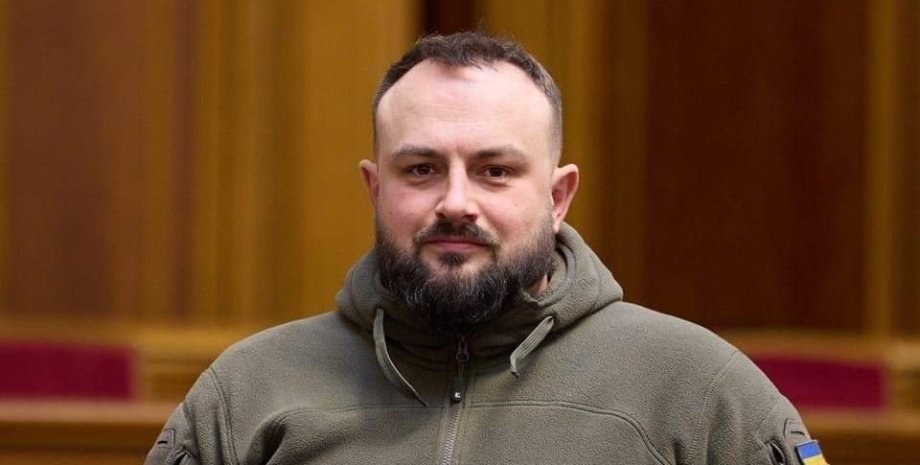
- Every MP communicates with a certain number of voters, hears about their problems, and tries to solve them. I fully support the President and Mykhailo Fedorov on this matter. But at the same time, I was simply articulating the vision and the dialogues I had when communicating with people regarding the current situation. That is, the draft law was developed based on citizens' appeals and an analysis of court rulings. People arranged meetings with me where they recounted rather unpleasant moments. Yes, I am well aware that the staff of the Territorial Centres of Recruitment and Social Support (TCR & SS), the police, and Ukrainian citizens are emotional people. I repeatedly approached the Ministry of Defence regarding this issue (the "busification" — O.M.) even before Mykhailo Fedorov’s arrival. They noted that these were isolated cases they were trying to rectify. However, there are still difficulties in this story. Therefore, a path to regulate this process must still be found. I proposed one of the options that could help achieve this. Of course, the state must be protected. All Ukrainian men of conscription age are liable for military service. At the beginning of the full-scale invasion, we saw many patriotically-minded people who reported to the TCR & SS for mobilization measures. Now, the situation is such that this process needs improvement, as it causes me personal concern. We have bad examples of mobilization measures being carried out. Fortunately, these are isolated. However, they are in the public domain — readily accessible. Information platforms operate on algorithms. The more you watch videos that, for example, have a destructive nature, the more such content is recommended to you. This, by the way, is something the enemy exploits. Such things cause anxiety and fear among the people. This must be eliminated through open and honest dialogue. There should be more informational examples of brotherhood, support, respect, and proper treatment of military personnel, among other things.
My draft bill outlines a mechanism for interaction between the TCR & SS and Ukrainian citizens subject to mobilization. For example, TCR staff encounter a person liable for military service who has, in some sense, violated mobilization rules, and they explain his rights, duties, and opportunities. This means providing full information, engaging in communication, and explaining the purpose of mobilization and mobilization measures, the necessity of defending the state. In turn, they listen to the person. Thus, they conduct a dialogue during which the time for reporting to the TCR & SS is agreed upon. Afterward, the individual has three days to report to the TCR & SS. During this period, he can mobilize independently via the 'Reserve+' app for a suitable position among available offers or go through the recruitment system. This allows him time to pack his belongings, speak with his family, and choose the unit he wishes to join. For instance, one of the appeals I received involved a man who worked in construction. As circumstances turned out, he did not receive the exemption from mobilization. He was also a mechanic by his second degree. When meeting with the TCR & SS, he mentioned he had the opportunity to join a tank unit. However, he was mobilized into a different branch of the military. As a result, the individual did not realize his potential, where he could have been more effective. Ultimately, if the person fails to report to the TCR & SS within these three days, they remain on the wanted list, and only then can the police deliver them to the recruitment centre, acting strictly within the framework of the law.
Globally, all institutions are aimed at protecting the rights and interests of citizens. However, there is the human factor, where an individual decides for themselves whether to act within the framework and limits of the law or to deviate from it and harm others. To be frank, this exists in any country. Currently, our citizens sometimes exaggerate problems, while the enemy simultaneously highlights them, which leads to consequences. This is why I say that it is necessary to build a dialogue and search for solutions that maximize effectiveness rather than driving the situation into a destructive state. Failure to do so will play into the enemy's hands.
Will this not reduce the percentage of mobilized personnel? I believe that human dialogue yields better results than forceful coercion. In other words: I respect you, I treat you as a citizen of Ukraine, I understand your rights, and I know that my rights end where yours begin. This is precisely why the state exists. Of course, there is a problem, but it is multifaceted and does not converge at a single point. Many military personnel approach me. I am aware of the difficulties that exist in the army. Therefore, I am trying to find a solution. I will soon have a series of additional bills to address this issue. We must talk about this. To reiterate: yes, the state must be protected, but people must also be treated humanely. I have never seen anyone start working more effectively after force has been used against them.
Discussions are also ongoing regarding the blocking of bank cards and driving bans, but I believe there are other ways to solve this problem. Ideological work must be conducted with the people: explaining and demonstrating the brotherhood and support present in the Armed Forces, and the prospects that will emerge after service once demobilization occurs. A vast array of opportunities will then open up for every individual who has served in the Defence Forces. In this case, people will be more patriotically inclined. We must cherish every individual, because every person, every warrior, is a unique world. For the state, this also represents economic development. Every life must be fought for. The President also speaks about the need to protect people. Everyone must have this understanding: stop the enemy by any means, but preserve the people. There was a Prussian general, Carl von Clausewitz, who even before the First World War emphasized the necessity of maximizing the preservation of human lives.
Currently, my colleagues and I are engaged in a very heated discussion regarding my initiative. There are various opinions and concerns, for example, that such a process might harm mobilization. My proposal is: here is a particular vision; we could try to take this path and find a common solution. I am looking for ways to strengthen the mobilization process and improve the treatment of those liable for military service. Clearly, there are specific situations where a firm hand is needed. But globally, a balance is required. I have not discussed my bill with the Ministry of Defence. They are developing their own proposals, and I have put forward mine.
DOUBT WITHIN THE "SERVANT OF THE PEOPLE" REGARDING THE PROSPECTS OF SUCH AN INITIATIVE — WORTH WAITING FOR THE MOD'S DEVELOPMENTS
Hryvko's faction colleague, Yurii Mysiahin, Deputy Chairman of the Verkhovna Rada Committee on National Security, Defence, and Intelligence, predicts that this document has no prospects:
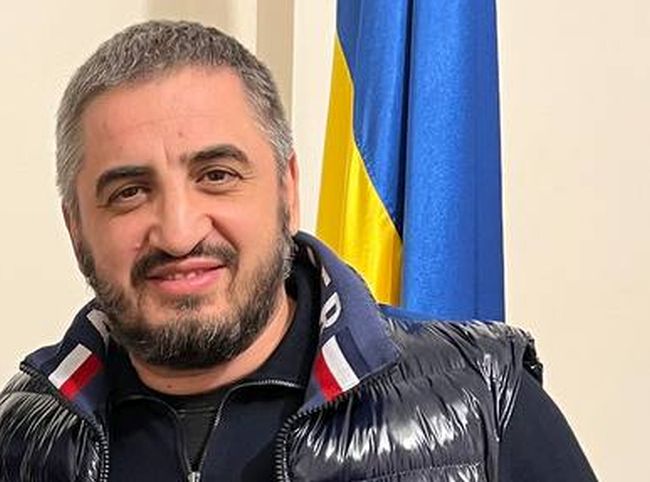
- Our Committee has not considered this draft law because it has only just appeared on the Verkhovna Rada website. Why do such proposals arise? I have no answer to that question. All legislative initiatives coming from MPs during wartime should first be discussed with the leadership of the Ministry of Defence and the Defence Forces of Ukraine, as well as members of the relevant committee, who will later discuss and make decisions on them. In this case, nothing of the sort was done. I believe that this bill will simply not reach the floor for consideration in the session hall. Generally, I would advise everyone to take a short pause and wait until the Ministry of Defence presents its own developments, which are currently being worked on.
About a week ago, Minister of Defence Mykhailo Fedorov met with our Committee along with his team. He arrived a bit late as he was at a meeting with the President, so we began the conversation with his team. When he arrived, he spoke for quite a long time about the developments. He then left for a meeting with the Prime Minister, and we continued the discussion with representatives of the Ministry. Overall, the communication lasted more than two hours and was conducted under a closed procedure, so it falls under the Law on State Secrets; therefore, I cannot disclose details. The only thing I can say is that Mykhailo has, shall we say, very interesting and revolutionary views on how to try to radically resolve those painful issues regarding mobilization, rotation, exemption from mobilization, the cancellation of the mobilization exemption, the future of the TCR & SS, 'busification,' as well as many other problems related to this topic.
As I said, we need to take a pause. These issues are very global, so we must give the Minister and his team time. Eventually, they will present all the legislative and organizational actions they propose to radically change and implement. The Committee will then decide whether to support these developments or not, what to add or remove. As of today, many members of the Committee and I very much liked what we heard at that meeting.
Throughout my entire parliamentary term, I have not heard anything like this from any head of the MoD. During this period, he is the sixth Minister of Defence, four of whom have served during Russia's full-scale invasion of Ukraine.
"EUROPEAN SOLIDARITY" WILL DECIDE WHETHER TO SUPPORT THE BILL AFTER ITS INCLUSION ON THE AGENDA
Iryna Friz, an MP from the "European Solidarity" faction and a member of the Committee on National Security and Defence, notes that at this meeting, Minister Fedorov presented his own general vision for changes without discussing specific bills meant to regulate the new approaches:
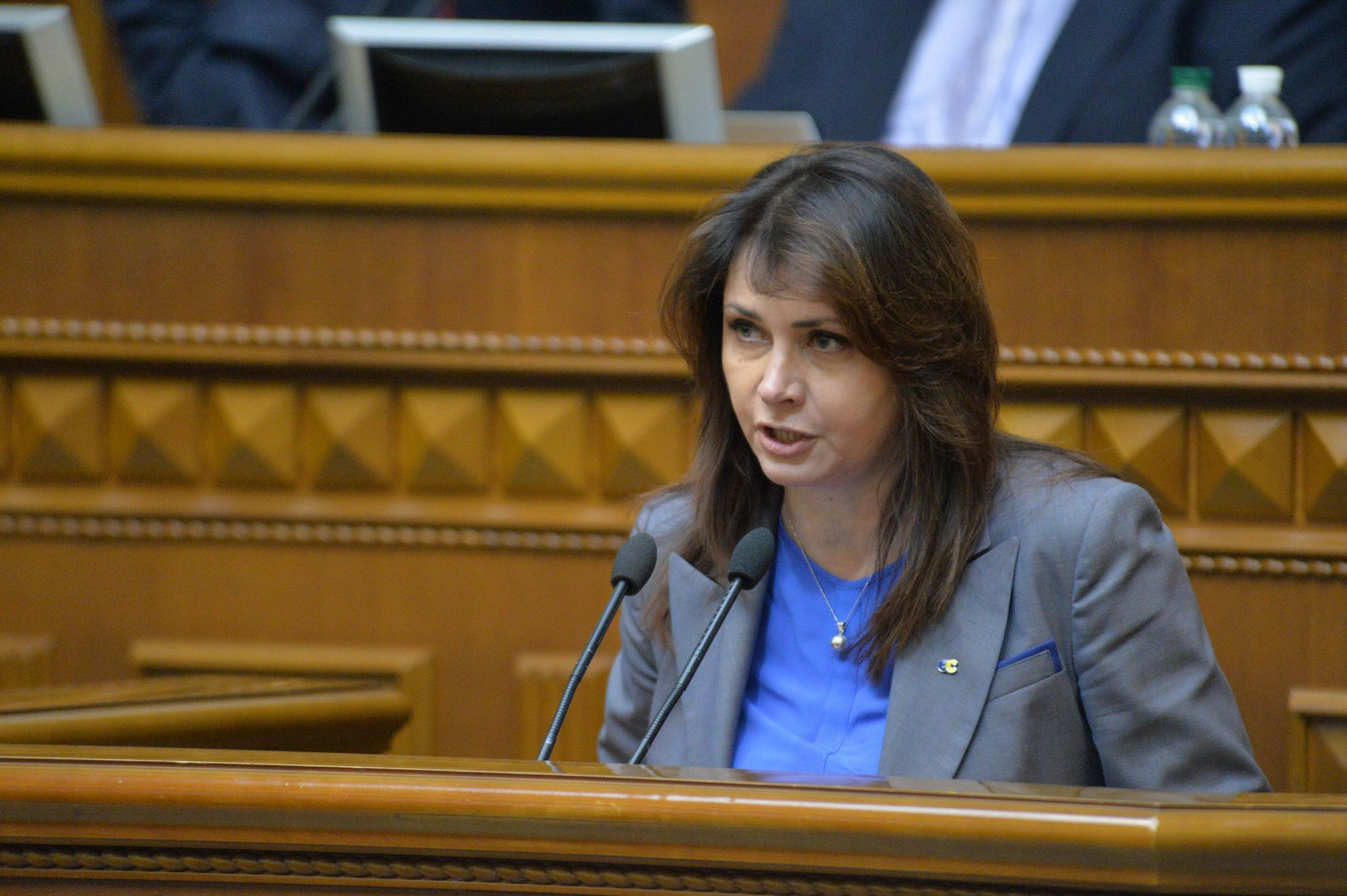
- Therefore, we expect their submission in the near future, preferably with preliminary discussion in the Committee before registration. Generally, I, like the 'European Solidarity' faction, advocate for a fair approach to mobilization; in the event of law violations, those guilty must truly face appropriate sanctions, and responsibility must be inevitable. On the other hand, service members want to see a fair approach toward themselves. The authorities must finally realize that the primary tool for replenishing the army must be motivation, not coercion. Under conditions of coercion alone, we will see a backlash, along with the discredit of the military, onto whom the authorities have shifted the unpopular issue of mobilization. I consider this unacceptable and constantly emphasize it.
Hryvko’s bill essentially codifies what should already be functioning under the existing regulatory framework. Indeed, there are certain gaps in legal regulation in this field, and they lead to the inconsistent application of norms and the emergence of conflict situations between citizens and the TCR & SS. An analysis of the norms included in the bill shows that it proposes to regulate the powers of the TCR & SS by establishing a direct ban on the forced delivery of individuals to the TCR & SS who have not committed administrative offenses and are not on the wanted list. In my opinion, such an initiative could be considered if it is not once again blocked at the National Security Committee level due to the position of the General Staff. As for whether to support Hryvko’s bill, the faction will make a decision after it is included on the agenda. As of now, there is no point in discussing it.
It is a regrettable fact, it is no secret that there is a certain 'rate' for getting out of a TCR & SS 'van,' and mobilization often occurs with violations specifically due to the corruption component. A separate issue is the passing of the Military Medical Commission (MMC), where we also see corruption on a mega-scale. The public would have far fewer questions about active 'field' mobilization measures if such precedents did not occur constantly. Therefore, the work of anti-corruption and law enforcement agencies in this direction must be conducted much more actively.
The authorities and the government know what needs to be done to ensure greater motivation for military service, and our faction systematically demands the practical implementation of effective approaches, first and foremost, motivational ones. Establishing clear terms of service could be a real step toward increasing the number of those ready to join the army and reducing negative sentiments. After all, it is specifically uncertainty that is destructive in this regard.
The next solution is raising the salaries of service members, as throughout the years of the full-scale war, there has not been a single indexation or increase. Inflation and rising prices have eroded about half of our defenders' wages. I reached out to the Cabinet of Ministers of Ukraine (CMU) with relevant proposals regarding salary indexation, and we submitted amendments to the 2026 State Budget, but the authorities continue to squander money on various cashbacks, the distribution of 'winter thousands,' fuel cost compensation, and 3000 kilometers on 'Ukrzaliznytsia' instead of finally raising the financial support for defenders.
Next—training and supplies. All of these are also key factors in the issue of mobilization. After all, when training is falling short and supplies erode a portion of service members' salaries, it also affects perception and attitudes. The war has entered a protracted format, so without changing approaches and adequately assessing problems, it is difficult to expect comprehensive reform.
"IT IS ABNORMAL WHEN TCR STAFF ARE FORCED TO CATCH SOMEONE. THIS IS ALSO A SETUP FOR THEM"
Serviceman and former MP Ihor Lutsenko also points out that even without additional legislative decisions, coercion cannot be committed during mobilization measures today:
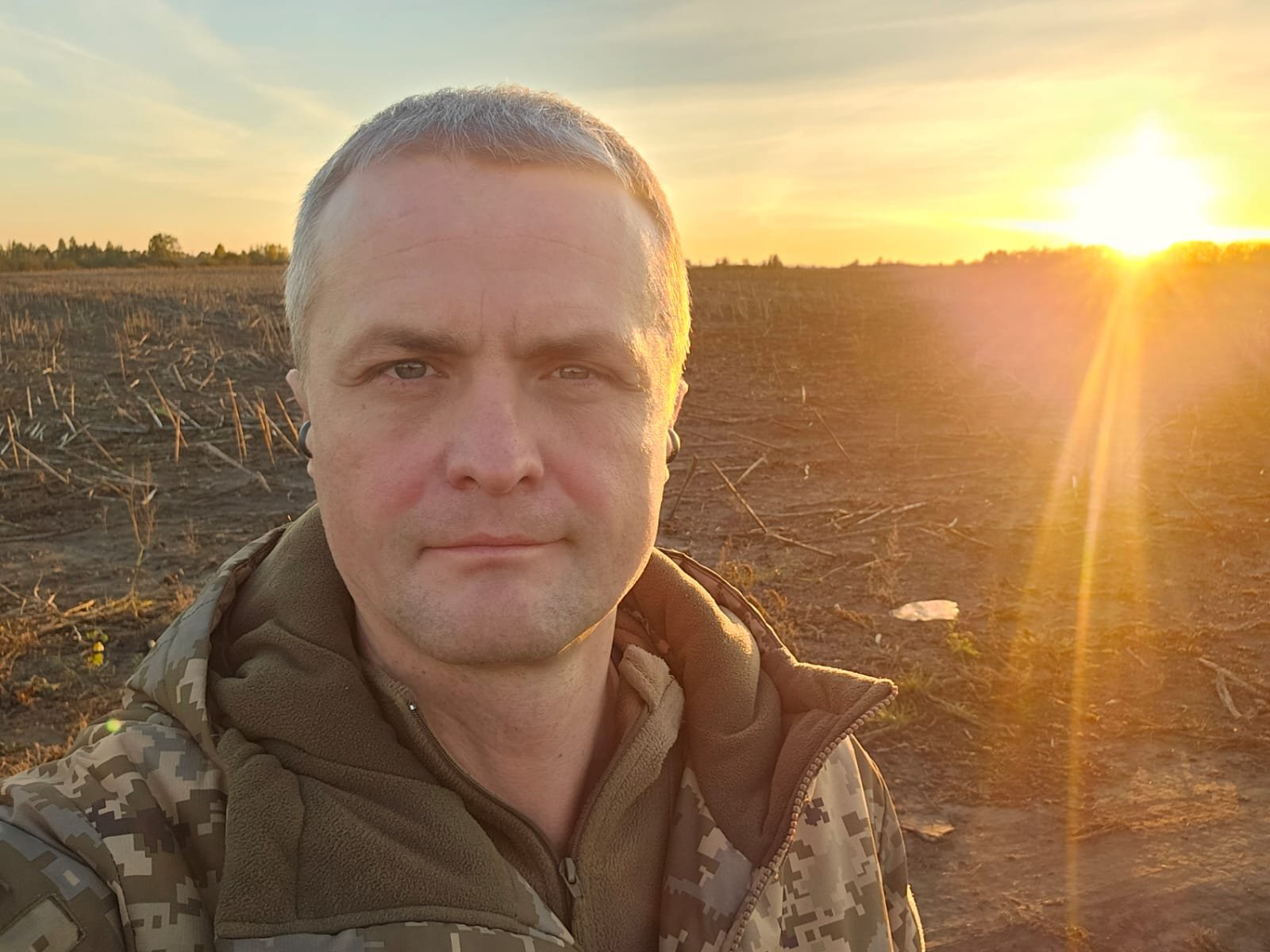
- This bill states: 'Unjustified use of force is prohibited.' But it is already prohibited even without this document. Even if MPs repeat this three times legislatively, it will not change anything. Thus, we see a manifestation of such legislative naivety.
Regarding the essence, there are two things here. One, I understand; the other, not entirely. First, they are effectively trying to abolish 'busification.' When they approach you on the street and check something, if you are not on the wanted list, you are given three days to report to the recruitment centre. That is, they will not be able to take you there immediately. And this is a very 'powerful' proposal indeed. Of course, in a normally functioning state with a normal police force and an adequate search for citizens, perhaps this is how it should be. Obviously, it is abnormal when TCR & SS staff are forced to catch someone. This is also a setup for them, that they have to forcefully twist someone and take them somewhere. It shouldn't happen this way. There must be responsibility and control. In many countries, even during the Second World War, draft evasion as a phenomenon did not exist. Under the Soviet regime, it was different: if you didn't show up, a criminal charge, you were sent to Siberia, and from there, to a penal battalion, and you're done for. So it was better to show up. And how is it here? The police are not busy with this; they are not looking for anyone. Crimes against military service should be handled by the SBI (State Bureau of Investigation), but we see that it is merely a sham here. Therefore, very expanded expectations and de facto powers to forcefully detain people are placed on a single structure, the TCR & SS. But, I repeat, it should not be this way!
This proposal, with three days to gather oneself, seems correct in words, but it is one-sided. What will happen if it is implemented? I think about 60-80 percent of draft evaders will simply go on the run during this time. Let's then figure out how to make it impossible to escape. Once a summons arrives, if for some personal reasons you intentionally did not receive it, that's it: sanctions up to criminal liability are applied to you. How many millions do we have on the wanted list? Fedorov recently said two. And how many have been caught?! They have all adapted in one way or another to such a life and just live their lives.
Such initiatives can once again complicate the mobilization process. It turns out like this: if a person has committed an administrative offense, they now need to be processed 25 more times before measures like being put on the wanted list can be applied, which makes it equally difficult. Such things generally need to be proposed as a comprehensive package. Let the police, for example, receive such mechanisms and duties that no one can run away anywhere. Involve the border guards, the tax authorities, and other relevant structures, and orient them in such a way that it would be simply impossible to hide anywhere. But this is an unrealistic story. It is easier to randomly grab someone on the street. But then they flee from the training centres. In our country, 'busification' provides the lion's share of army reinforcements, and this initiative will 'tie their hands.' This will mean that we will have even bigger problems with conscription. Yes, they need to be solved, but not quite in this way. Of course, 'busification' shouldn't exist either, but in combination with other measures, we need to find a way to recruit people. 'Busification' is an evil, but many of the 'busified' ultimately fight well afterwards. So a serious discussion is needed here.
I haven't met with Fedorov yet, although this meeting is planned. I would like to talk to him about this. Does he have anyone sane who is capable of solving this problem at all? That is, to approach this issue comprehensively and competently and work out some plan: what we can do with the TCR & SS, and what we cannot. A single Minister of Defence will not solve this problem. He does not have enough authority for this. As I said, we need a complex—the TCR & SS, police, border guards, tax authorities, working under a scheme where people would be afraid to be draft evaders. I would propose more actively punishing those who maliciously evade or go AWOL (Absent Without Official Leave). Of course, there are different cases. There are some who go AWOL whom I am ready to justify. But there are also those who deserve the harshest punishment, yet this is not happening now. With draft evaders, the story is even worse, because there are 300 thousand AWOL, and officially two million on the wanted list, although in reality, there are many more. If there is a real punishment, the situation will change. But as it is, it results in a complicated life: a person lives, carefully walks certain routes, etc. I support the idea of blocking their accounts and banning them from driving. But this will not be enough. We need to act fairly. Such people should be deprived of their civil rights, for example, voting rights. There might be problems with the Constitution, but a solution can be found. We have had precedents when presidents introduced norms that were not very 'friendly' with the Basic Law, but then the Constitutional Court later overturned them. In the current situation, if someone had the political will, they could simply say: no draft evader votes, runs for office, or gets employed. A comprehensive program restricting the rights of these people is needed. Why the hell did one die, while another evaded, and will later be elected to the Verkhovna Rada or vote for the same jerks?! Why do we need this?! We must fight this. So, deprivation of rights and blocking accounts, that's good, but it's a trifle. We need more. Why is Zelenskyy instead 'flirting' with draft evaders? Because we have 'two presidents': one who doesn't run away, deals with Trump, and so on, and a second one who sanctions the flight from the country of young men aged 18-22, which is sabotage against our defense capability. Obviously, different people give him advice, which leads to such consequences.
"THE MINISTER OF DEFENCE NEEDS CONSULTATIONS WITH SUCCESSFUL AND RESPONSIBLE COMMANDERS WHO ARE DIRECTLY FIGHTING"
Mykola Kolesnyk, commander of the 422nd separate unmanned systems regiment "Luftwaffe," is against MPs independently making decisions regarding the mobilization process without involving the Ministry of Defence:
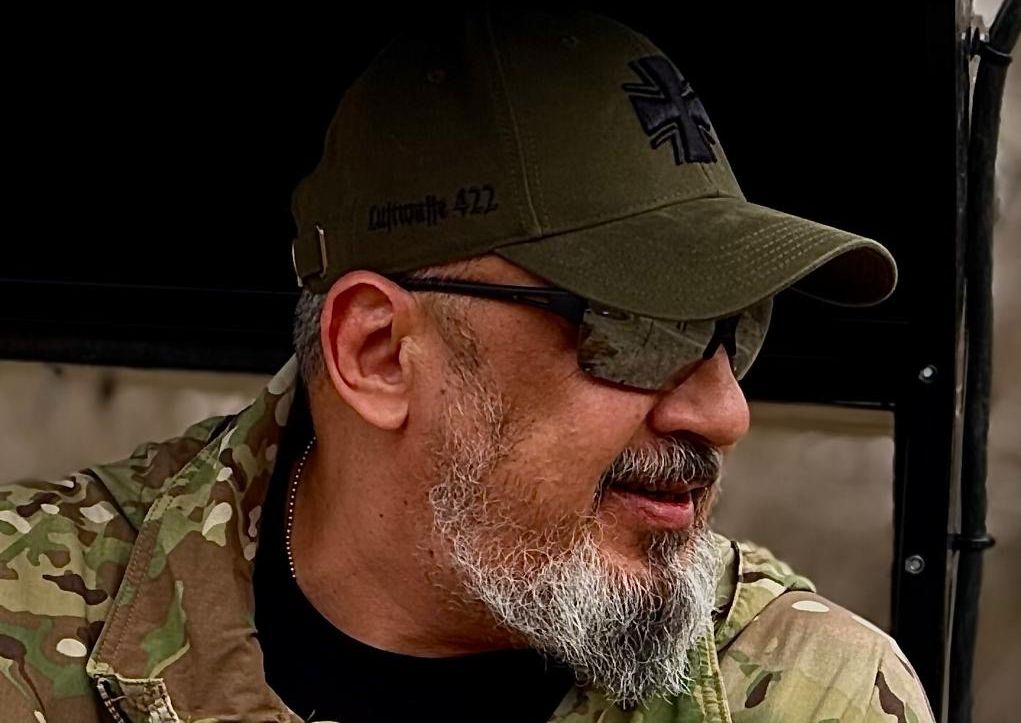
- If such a responsible mission, to establish this system, is entrusted to the Minister of Defence, he does not need to turn to MPs for advice. There are different people in parliament, but they are mostly detached from the real life of a warring country, and many of them also have a trail of corruption. Not to mention the presence of a Russian fifth column there, representatives of the OPFL (Opposition Platform — For Life). Mobilization is one of the pillars on which the country's security, its defense, and its future rest. I do not want those who should not touch such sensitive topics at all to staff my regiment for me. I have experience interacting with Fedorov, I reported at one of the meetings and received very good feedback. I trust this person. He has people to rely on and consult with. Consultations are needed with successful and responsible commanders who are directly fighting, have experience in staffing their units, and live the war. They know all the 'undercurrents' and problems, and can provide the Minister with feedback and help create an effective mechanism. All this will be developed, and then the MPs will put everything in order within the legal framework, vote, and move forward!
Personally, I support restricting the rights of draft evaders. They are breaking the law. Such a person cannot enjoy all the benefits of civilization. Therefore, a state reaction is needed here. Today it turns out like this: someone has been fighting since 2014, while someone else makes up horror stories about the TCR & SS and does nothing to defend the country. This confrontation is highlighted everywhere and is additionally amplified by Russian PSYOPs with the participation of their special services. We ourselves 'pour water on the mill' of their propaganda. But the lawbreaker is determined not by the TCR & SS. Law enforcement agencies, the police, should deal with this. There is a law! Whether they want to or not, they have to execute it. I, too, at 59, want to go home and be with my grandchildren, but I am fighting! The legislation clearly defines the zones of responsibility. There is no double interpretation or anything else. And yet it turns out that the police have taken a convenient position: stand aside while the TCR & SS does their job. That is, the unpopular topic was dumped on the service members of the Territorial Centres of Recruitment, which is why we see what happens later on video. You could already shoot a TV series about it. Moreover, there were cases when entire organizations were detained that involved 'titushky' [hired thugs], who, performing the functions of the TCR & SS, caught people and then let them go for money. There are countless examples of how people profit from this topic, starting from MMC millionaires, ending with border crossing schemes. This is already a business on the Forbes level, a parallel economy in the state worth billions of dollars. The majority in the TCR & SS themselves are normal people. Many of them have been through the war. And behind their backs hide dealers with massive scams. There are millionaire military commissars. How so?! A telling example is Borysov (former head of the Odesa TCR & SS – О.М.). The dude is an order bearer with some villas, helicopters, and a fleet of cars like a sheikh. This is a nightmare! And then, because of such dealers, service members of the TCR & SS are attacked, beaten, and their cars are overturned. They did not deserve such treatment, to fight, get wounded, return, and find themselves in a situation where all the negativity is broadcast onto them.
One more thing: it has been repeatedly emphasized in our country that there is a large number of AWOLs. But punitive measures will not solve anything and may backfire. We need to come up with a mechanism that will allow returning people to the ranks. This is our main proper resource, thanks to which the quality of the army can be improved. Reasons for going AWOL vary; you cannot paint everyone with the same brush. But, I repeat, these people need to be returned.
All these voiced issues need to be resolved. But this should not be dealt with by MPs, who mostly look like aliens and, by their actions, let down their leader and the Supreme Commander-in-Chief. He is already forced to make statements that if they do not work in the Verkhovna Rada, they will go to the army. Personally, I wouldn't take a single one of them into my regiment (except for those who have fought or are fighting, or are genuinely connected to the war), because I don't need them even with their fortunes. Because here you need to fight, not have conversations.
Olha Moskaliuk, "Censor.NET"


