



Head in clouds and shower from Papperger: Whether Ukrainian arms manufacturers will conquer global market
Will Ukrainian drones conquer the global market and shift the balance of power in wars? Over the last month, Ukrainians have experienced yet another emotional rollercoaster—from an extraordinary amount of positive coverage of Ukrainian products in Western media, purportedly on the verge of being exported to the Middle East, to a dismissive assessment of Ukrainian production capacities by Rheinmetall CEO Armin Papperger, who labeled Ukrainian manufacturers as "housewives."
So, are Ukrainian companies capable of entering global markets, and will their own state allow it? After all, the issue of opening exports in Ukraine remains essentially unresolved.
Over a year ago, Ukrainian arms associations began discussing the necessity of opening exports, as state procurement orders do not allow Ukrainian manufacturers to scale their production capacities.
Ukraine finds itself at the center of a paradoxical situation: the combined production capacity of partners cannot satisfy Ukraine's needs in this war, yet funds are so catastrophically insufficient that developing Ukrainian manufacturers is only possible through selling products abroad.
Previously, President Zelenskyy announced the opening of exports starting from the beginning of the year, but in reality, one can only speak of a few joint ventures that have been established recently.
Recognizing that this exit is not unrestricted, many companies have registered abroad and are operating from there. The President himself recently mentioned that 10 factories producing interceptors are operating abroad.
Volodymyr Zelenskyy also stated that Ukraine is preparing for a "proper opening of arms exports" to Middle Eastern countries. According to him, Kyiv plans to supply partners not only with interceptor drones but also with defense lines, software, EW systems, and more.
However, it is necessary to clarify the general mechanics of exports and the actual obstacles facing Ukrainian companies.
Schrödinger’s export
The situation regarding arms exports in Ukraine since the full-scale invasion resembles the story of Schrödinger’s cat.
In fact, exports were never officially banned, but a number of bureaucratic barriers exist that restrict or prevent them in specific cases.
During the inter-agency coordination of export permits, the State Service of Export Control of Ukraine (SSECU) must send inquiries to key agencies, including the Ministry of Foreign Affairs (MFA), the Ministry of Defense (MOD), the Security Service of Ukraine (SSU), the Main Intelligence Directorate (HUR), the Foreign Intelligence Service ( FISU), and in some cases, the Ministry of Economy.
The Ministry of Defense currently plays a decisive role, because if they oppose the export, the permit is not granted.
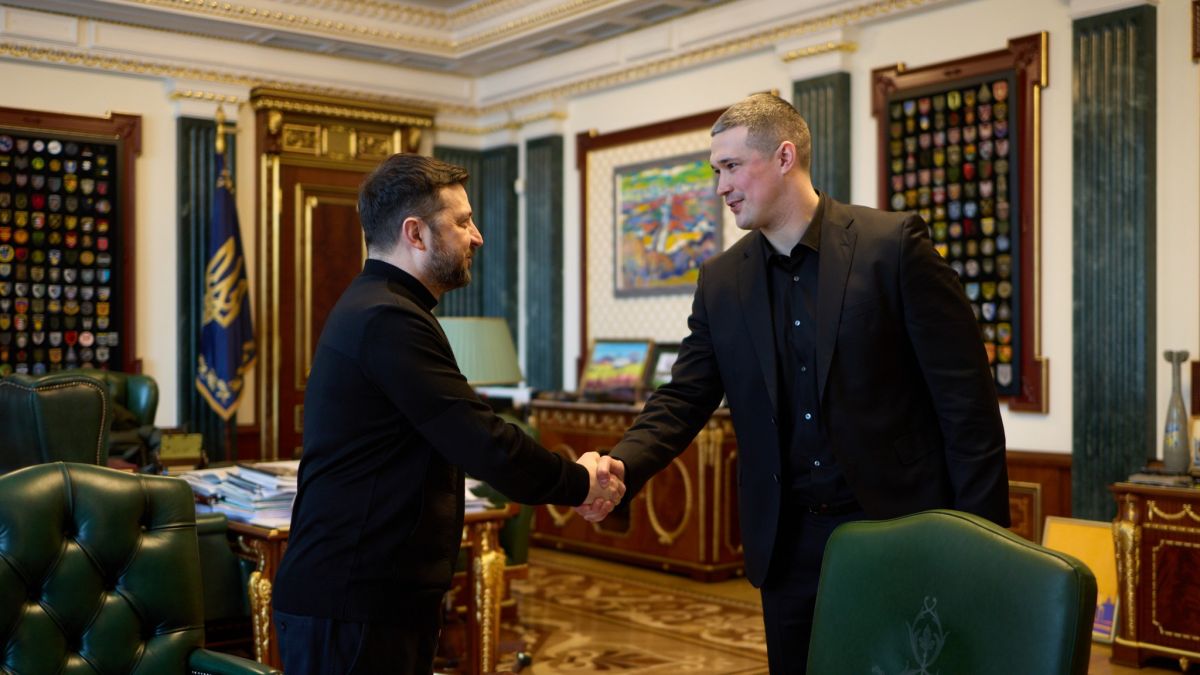
The Ministry of Defence must receive a joint report from the General Staff of the Armed Forces of Ukraine. If the General Staff states that there is a need for the goods in question, the Ministry of Defence will unequivocally issue a negative opinion.
The MOD must receive a joint report from the General Staff of the Armed Forces of Ukraine. If the General Staff states that there is a need for these specific products, the MOD will invariably issue a negative conclusion. "The problem is that the military has unlimited needs that no one in the world can ever cover financially. The core question is: if a manufacturer is not failing domestic orders and has the capacity to produce more, but the MOD cannot purchase more, will the MOD grant approval to export such excess capacity?" says an interlocutor for Censor.NET within the arms market.
"For example: there are reconnaissance drones, without a warhead, which can be produced in quantities far exceeding what the MOD orders. But if an export application for such reconnaissance drones is submitted now, the General Staff may again say, 'Yes, there is no money, but the need is great; we oppose the export', and this will lead to a bureaucratic deadlock," he adds.
To provide context, according to Presidential Advisor Oleksandr Kamyshin, the capacity of the Ukrainian defense industry reached $35 billion last year, yet only $12 billion could be put under contract (though no one can specify how these figures were aggregated).
What could we potentially export? Anything where there is excess capacity: anti-tank missiles, reconnaissance drones, interceptor drones, naval drones, and unmanned ground vehicles (UGVs).
We even have a surplus of mines, which are no longer in high demand by the General Staff. However, it is unlikely they will be cleared for export; therefore, manufacturers are already considering how to repurpose them into other useful products.
Exports to the Persian Gulf countries
Naturally, with the onset of the military conflict in the Middle East, Ukrainian companies expected the export issue to gain momentum. They hoped that through demand from countries in the region, they would be able to enter the global market.
In early March, company founder Oleksandr Yakovenko told the Financial Times that the UAE had requested 5,000 drones and Qatar had requested 2,000, while Kuwait also expressed interest in purchasing such systems.
Eduard Baiev, founder of Strix Air, stated that Middle Eastern countries have already shown interest in their Air Baby drone, specifically the United Arab Emirates and other states in the region.
However, almost simultaneously, the "Oboronka" publication reported on a letter stating that as of March 2, the State Service of Export Control of Ukraine (SSECU) had suspended existing permits for Ukrainian defense manufacturers to export arms and military equipment to the Middle East and the Persian Gulf, and would cease reviewing new license applications.
Later, Ihor Fedirko, head of the Council of Arms Manufacturers, explained in an interview with Suspilne that this was a directive from the SSU.
"With the outbreak of the war between the US, Israel, and Iran, many of our manufacturers attempted to enter this market independently. The Security Service of Ukraine took preemptive action, notifying both us (the Ukrainian Council of Defence Industry (UCDI) — ed.) and the producers on the very first day of the war in Iran that such direct operations with Gulf countries are impossible. This is because it would constitute a violation of the regulations governing the import and export of dual-use and military-grade goods," Fedirko noted.
Currently, the state leadership aims to conduct exports to the Gulf countries centrally, following the "government-to-government" principle.
Oleksii Melnyk, Co-Director of Foreign Policy and International Security Programs at the Razumkov Centre, suggested that Ukraine is prohibiting drone manufacturers from selling directly to the Middle East because the state seeks a comprehensive solution involving the exchange of interceptor UAV technologies for weaponry and investment.
In late March, President Volodymyr Zelenskyy stated that Ukraine is preparing for a "proper opening of exports" of weapons to Middle Eastern countries. According to him, Kyiv plans to supply partners not only with interceptor drones but also with defense lines, software, EW systems, and more.
He also reported that Ukraine has received 11 requests from Iran’s neighbors, European nations, and the US regarding security support in countering Iranian "Shaheds" and other similar challenges.
The mechanism for limited arms exports was announced and restored not as a system for direct export, where we manufacture here and sell there, but specifically through the creation of joint ventures. This is what is called 'Build with Ukraine.' Our top military and political leadership believes the future of our defense industry lies in this integration with foreign partners," says Fedirko.
"We need to enter Western markets and understand how they operate, and how we can work within them together. Therefore, such joint ventures are the priority. I believe that moving forward, we will see announcements of four to five such agreement signings per month. The President explained that Ukraine will only establish such ventures with countries with which we have security agreements. There are 29 such countries, with Romania being the latest to sign such an agreement," he added.
At the same time, Presidential Advisor Oleksandr Kamyshin stated in an interview with Forbes that to begin exporting, a company must secure a contract from a foreign government.
And here, a vicious circle emerges.
Joint Venture or Article 333 of the Criminal Code
In order to sign a contract, a company must possess an export license.
This license is issued by the state. And the core question currently posed by arms manufacturers is: will this be a transparent set of rules for everyone, or a narrow bottleneck reserved only for the favored few?
Those who suspected the latter, or simply preferred not to deal with the state at all, established their factories abroad from the start. Consequently, the issue of exports no longer interests them.
A Ukrainian enterprise can currently establish a joint venture (JV) abroad.
"But if an enterprise wants this JV to produce military-grade products originally developed in Ukraine, the company must apply for a technology export permit. Because if blueprints are simply transferred via email or on a flash drive, it would already constitute a violation of Article 333," says an interlocutor among the arms manufacturers.
"And the issue is that the Ukrainian political leadership holds a very negative attitude toward technology exports. Effectively, this makes the establishment of joint ventures or subsidiaries abroad impossible," another adds.

As a result, Kamyshin's plans and the capacity volumes he articulated in dollar equivalent exist alongside actual market trends.
Option 1. This is the story of the production of the Octopus interceptor. In November 2025, the Ministries of Defense of Ukraine and the UK signed a licensing agreement for the production of this interceptor drone. Production began in January, and by March, media outlets were already speculating that they could be supplied to the Middle East.
Currently, the Ukraine Facility Platform proposes a concept of engaging the most interested European countries in adopting Ukrainian experience through the creation of joint ventures capable of covering shared needs; this would be formalized at the bilateral government level as a broader defense strategy.
Olha Khoroshylova, Head of the Defense Track at the Ukraine Facility Platform, believes this is the most successful cooperation model to date.
"We have not lost the ability to produce in Ukraine; we have increased our production capacity, including mass production, by establishing manufacturing in the UK. At the same time, we receive what is produced in the UK back in Ukraine, thereby enhancing our defense capabilities. However, we also have the capacity to scale up, and if there is a surplus, it can be exported," Khoroshylova stated in a podcast.
"Moreover, when it is exported, it will also yield certain dividends for Ukraine, as we hold the intellectual property rights. And it will be a joint export, as I understand it. Otherwise, the license simply wouldn't work. Therefore, this approach to planning and a certain degree of diversification is one of the options," she emphasises.
Option 2. This is the scenario involving former Google CEO Eric Schmidt and the production of Merops drones.
In essence, Ukraine has become a testing ground here, allowing these drones to be rapidly tested and refined. Yes, the product is supplied to Ukraine, but it belongs to the United States.
And this is why US President Donald Trump says that he does not need Ukrainian drones.
"But this is still a relatively positive case, because here we at least received the product, even though it belongs to the US," says an interlocutor in one of the arms manufacturing associations.


Option 3. Left empty-handed. "There was a case, I won't specify the company, where partners from a friendly country arrived, simply examined the product, signed nothing, and provided no financing, yet a year later, we saw a comparable product of theirs at an exhibition. Essentially, the idea was stolen," recounts the same interlocutor.
This concerns merely the consequences of interaction. But there is also the interaction itself.
A few weeks ago, I had the opportunity to attend an arms forum. The discussion between Ukrainians and representatives of the Baltic states, to put it simply and setting aside the rhetoric of friendship and gratitude, looked like this: Ukrainians do not want to build facilities there because it is deemed even more dangerous than in Ukraine. Representatives of the Baltic states, meanwhile, are interested in acquiring intellectual property rights.
"We negotiated with partners from the Baltics. It was quite sluggish; they inquired about our production capacities. The volumes they request are so low that we simply cannot properly deploy a production line there. Therefore, it is more advantageous for us to have the joint venture located here; in that case, we would also serve as the exporting entity," an arms manufacturer says off the record.
But this is not everyone's position. For example, Vadym Yunyk, the former head of the Technological Forces of Ukraine, is already building such cooperation with the Estonians.
"The joint venture system is dozens of times more complex than direct exports. By no means do all companies understand exactly how to reach an agreement with partners. There is no stock market in Ukraine, so foreign partners, for example, do not understand what it means to buy a share in an LLC. Questions arise regarding the protection of intellectual property, among many others," Fedirko admits.
Consequently, cooperation in this format proceeds with considerable difficulty.
"We are literally trying to solder a first-generation USB to a Type-C. As an acquaintance told me: 'We will invent adapters.' And it is true. This adapter is the Europeans' interest in our technologies, and ours in entering their markets," adds the head of the Ukrainian Council of Defence Industry.
In an interview with Forbes, Kamyshin acknowledges that in order to sell a product, one must first create a philosophy. However, while export rules are being discussed at the level of customs duties, this concept is not being developed at all. At the state level.
And without this, we will not succeed. This will be the focus of the final subsection of the text.
Currently, the Ukraine Facility Platform proposes a concept of engaging the most interested European countries in adopting Ukrainian experience through the creation of joint ventures capable of covering shared needs; this would be formalized at the bilateral government level as a broader defense strategy.
Without this, advancement will be difficult, and here is why.
Are we even welcome on the arms market at all?
The arms market is very tough and even ruthless. Once, US representatives brought a tank to an exhibition, and it failed to fire because their competitors had a hand in it. And no, not from Russia.
Ukrainians currently possess the most extensive combat experience in using drones, but this does not automatically grant us carte blanche to enter this market segment. Furthermore, everyone understands that the majority of components in them are still non-Ukrainian.
Therefore, last month, Ukrainians lived in dreams of how our drones would conquer the world, only to receive a cold shower by late March from the CEO of Germany's Rheinmetall, Armin Papperger.
In an interview with The Atlantic, he stated that Ukrainian developers are "playing with Lego" and are not producing innovations.
Journalist Simon Shuster countered this by noting that Ukraine is the largest manufacturer of drones and mentioned the Ukrainian defense companies Fire Point and Skyfall.
To which Papperger replied that they are "Ukrainian housewives. They have 3D printers in their kitchens, and they produce drone parts. This is not innovation." And that his company will continue to manufacture its own products.
Papperger's words outraged both Ukrainian manufacturers and Ukrainians themselves, so much so that the Rheinmetall arms concern even apologized for comparing Ukrainian drone makers to housewives.
However, from these words by Papperger, as well as Trump's statements, one can conclude that no one is waiting for us in this market with open arms.
Rheinmetall has earned tens of billions of euros supplying ammunition to Ukraine, both within the framework of International Technical Assistance (ITA) and directly through the Defense Procurement Agency (DPA).
Therefore, Papperger is correct in his assertion that he will continue to manufacture the same items, because artillery shells can sit in warehouses for decades. Drones cannot.
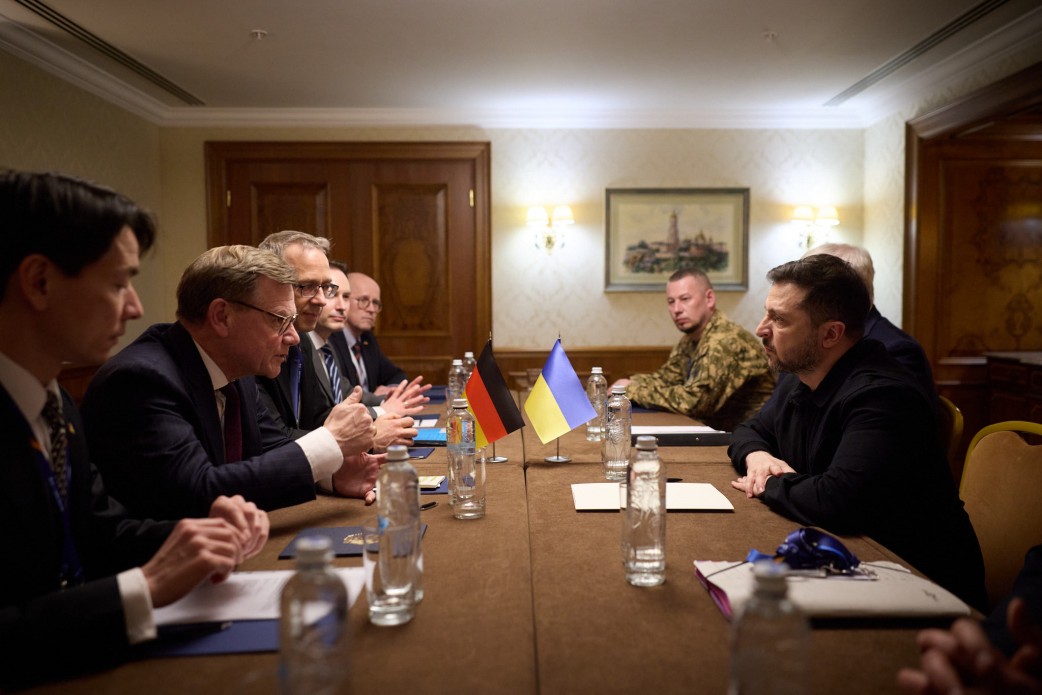
Meanwhile, Rheinmetall itself is not standing still. The German parliament has received a proposal for approval regarding the procurement of FV-014 loitering munitions from Rheinmetall for €25 million. Should the company's drones successfully pass the qualification phase by April 2027, an order worth nearly €300 million will be executed.
Prominent showman and head of a charitable foundation, Serhiy Prytula, stated that Ukrainians could have been in this position had exports been opened.
However, it is not quite that simple. NATO countries are developing their security systems based on capabilities and large-scale programs.
For instance, France plans to spend an additional €8.5 billion on ammunition procurement by 2030, as announced last week by the country's Prime Minister Sébastien Lecornu in an address to parliament on Wednesday.
France plans to create a platform called France Munitions, which will act as a wholesale supplier of ammunition for the French armed forces, allies, and export clients. The goal is to place large wholesale orders with manufacturers to accelerate the modernization of industrial capacities and increase ammunition production in France; funding will come from both the government and private investors, Lecornu added.
In other words, the country is building an entire system from the ground up to secure its status in the market.
Ukraine can also build a well-designed system for entering this market, or it can remain a testing ground.
Tetiana Nikolaienko, Censor.NET


