



Restrictions instead of deregulation: Should prices for sore throat lozenges be regulated?
A year ago, Ukraine significantly tightened regulation of the pharmaceutical market. The authorities said this was necessary to curb rising prices and ensure transparency in pricing. However, at least some of the new regulations have done less to help consumers save money than to create problems for manufacturers, primarily Ukrainian ones.
How medicines were ordered to become cheaper
In early February 2025, President Volodymyr Zelenskyy said that medicine prices in Ukraine were "absolutely inadequate" and instructed that measures be taken to bring them down.
At the same time, the Cabinet of Ministers capped the maximum pharmacy markup on the sale of medicines and banned payments for marketing services related to their promotion. In turn, Ukrainian manufacturers committed to lowering ex-factory prices first on the 100 most popular medicines, and later on another 200 products.
Meanwhile, the Verkhovna Rada adopted amendments to the Law "On Medicinal Products." In particular, mandatory price declaration for all medicines was introduced, along with the creation of a National Price Catalogue.
Manufacturers and importers were required to declare wholesale ex-factory prices for medicinal products. Based on these, the Ministry of Health set a maximum allowable price, taking into account all markups and taxes, above which medicines cannot be sold in pharmacies. The declaration requirement applies to both prescription and over-the-counter medicines (the so-called OTC group — products that patients mostly purchase for self-medication).
For some medicines, the price declared by the manufacturer must also not exceed a ceiling reference price determined with regard to the cost of similar products in neighboring countries.
Declared prices in the catalogue may be changed or revised only in a limited number of cases:
- at the request of the manufacturer or importer (no more than once every six months);
- in the event of a significant (more than 5%) fluctuation in the hryvnia exchange rate;
- by a separate decision of the Ministry of Health.
It was expected that these measures would make pricing more transparent and protect consumers from unpredictable spikes in medicine prices. However, a year later, it became clear that price declaration had not directly affected retail prices in pharmacies, while gaps in procedural regulation have created additional bureaucratic problems in the pharmaceutical market.
The nuances of Ukrainian-style price declaration
Over the past year, Ukrainian pharmaceutical companies and authorized representatives of foreign manufacturers have gradually declared prices for all medicinal products sold in Ukraine. By the end of last year, they had also begun submitting updated price declarations for medicines.
Manufacturers and importers usually try to declare a price with some buffer built in from the start. As practice shows, in a country living through a full-scale war, many risks can materialize over that period, from electricity shortages or sharp fuel price spikes to the destruction of or damage to warehouses and production facilities by Russian occupiers.
In particular, Russian strikes in October and December last year destroyed huge pharmaceutical warehouses belonging to the largest medicine distributors in Ukraine. As a result of just those two attacks, stocks of medicines and medical devices worth about UAH 10 billion were lost. Most of these losses were borne by manufacturers that had supplied products to distributors for sale with deferred payment.

At the same time, massive attacks on energy facilities resumed in the autumn of last year, causing disruptions in power supply. Meanwhile, amid a severe shortage, electricity prices for industry in Ukraine in February were almost twice as high as in neighboring European countries.
Do declared prices affect the cost of medicines in pharmacies?
A review of the wholesale ex-factory price during the declaration process, for example, by 10% or 20%, does not at all mean that the retail price of the medicine in a pharmacy will rise by the same amount.
This is confirmed by a study conducted by Proxima Research International. According to its Executive Director Serhii Ishchenko, price declaration currently has virtually no impact on the market: the average declared price is about 27% higher than the actual retail price, as manufacturers hedge their risks in this way. In other words, pharmacy prices are significantly lower than the ceiling prices provided for in the National Price Catalogue.
At the same time, according to calculations by the State Statistics Service, even taking into account revisions to declared prices, the overall cost of essential medicines in pharmacies has not increased over the past year. On the contrary, according to official data, prices for pharmaceutical products, medical goods, and equipment in February 2026 were 0.7% lower than in February last year. By contrast, the cost of outpatient services increased by 13.2% over the year.
Thus, when declaring wholesale ex-factory prices, manufacturers and suppliers built in room for adjustment to account for unpredictable costs, since a price entered in the National Price Catalogue can only be revised after six months, explains a senior executive at one of the medicine importing companies. He notes that declared prices do not directly affect the cost of medicines in pharmacies, as they are mostly sold below the maximum price calculated by the Ministry of Health. However, during the re-declaration process, manufacturers and suppliers tried to include a certain buffer so that they would have an opportunity to at least partially offset losses in the event of unforeseen damage.
However, after submitting their applications, most of them immediately received letters from the state enterprise State Expert Centre of the Ministry of Health (SEC) demanding that they provide a detailed justification for the increase in the ceiling wholesale ex-factory price, along with the relevant financial and economic calculations and documentary proof.


"No one understood what to do, or why exactly 20%."
This came as a surprise to participants in the pharmaceutical market, says a senior executive at one of the companies that serves as the authorized representative of several foreign manufacturers and imports medicines into Ukraine.
"No one understood what to do, or why exactly 20%," he told Business Censor.
This is because the Procedure for Declaring Prices for Medicinal Products, approved by the Cabinet of Ministers, provides that an applicant submits to the Ministry of Health only an application in the prescribed form and a document confirming its authority. The government resolution separately states that "the above list of documents is exhaustive."
However, according to the executive, after receiving the letter from the SEC, many manufacturers and importers, although they did not receive detailed explanations, still tried to submit applications below that threshold, even if the production cost of some products had risen by more than that.
"No one wants to end up in a situation where your application to declare a price change is simply not registered or is returned an unknown number of times," he explains.

In a recent interview, SEC Director Edem Adamanov acknowledged that for most over-the-counter medicines, a company formally has the right to declare any price, but his institution may "ask many, many times" about the reasons for such changes.
"Under the law, there is a group of medicines whose prices are referenced, meaning we compare prices across different countries (prescription medicines + the National List of Essential Medicines – ed.). There the sanction is clear: if you submit a price higher than the referenced one, you are removed from the National Catalogue and cannot sell your products in Ukraine. In other cases (over-the-counter medicines not included in the National List – ed.), a company has the right to declare any price. We can only insist and ask many, many times why they are changing the price so drastically," Adamanov said in an interview with ZN.ua.
At first glance, there appears to be a contradiction between the Procedure approved by the Cabinet of Ministers and the SEC’s demands, says Yevhen Skurativskyi, a lawyer in the white-collar crime, compliance, and investigations practice at Miller Law Firm. However, from a legal standpoint, there is no direct conflict between these documents, he explains.
 According to the lawyer, Clause 9 of the Procedure does indeed establish an exhaustive list of documents required for submitting a price declaration application.
"This means that the Ministry of Health cannot refuse to register the application itself solely due to the absence of economic calculations. However, once the application is accepted, the examination stage begins, which is carried out by the SEC of the Ministry of Health. The Law ‘On Prices and Pricing’, which has higher legal force than a Cabinet of Ministers resolution, requires that all state-regulated prices be economically justified. Therefore, SEC experts are obliged to verify compliance specifically with the requirements of the Law, as well as to check against reference values, which (given that this is an application to update a price) are already contained in the National Register," Skurativskyi explains.
He notes that in its requests, the SEC asks applicants to provide justification or to "revise the application and submit a new one." In this way, the SEC does not violate the approved Procedure by requiring additional documents for the acceptance of the application, but merely indicates that without them it is impossible to issue a positive opinion for price approval.
"In such a case, the Ministry of Health will simply not make changes to the register. The grounds for refusal will not be the failure to submit documents, but the conclusion that the price is not justified or exceeds reference values. In practice, the SEC conducts its own assessment of medicine prices and turns to the declarant for cooperation. This does not guarantee a refusal in every case, but it is a significant basis for one," Skurativskyi says.
New regulation instead of deregulation
At the same time, these processes are already creating additional problems for manufacturers and importers.
In addition to the need to submit repeated applications and a vast number of calculations, 56% of pharmaceutical companies point to systemic problems with the application of the National Price Catalogue, according to a survey by the European Business Association (EBA).
In particular, requests for additional explanations often arrive with significant delays, while current legislation does not provide for a defined procedure for price revision or transparent criteria for making the relevant decisions, the EBA says.
"In practice, applicants may be required to provide additional financial and economic justifications that are not explicitly provided for by the current procedure. As a result, technical and operational disruptions arise in supply chains, and in some cases, product sales are blocked or procurement is delayed," the business association stressed.
According to EBA member companies, applications for including medicines in the catalogue or for changing prices may be processed for two months or more, without explanation and without a clear understanding of their review status.
These issues are also confirmed by Ukraine’s largest pharmaceutical manufacturers.
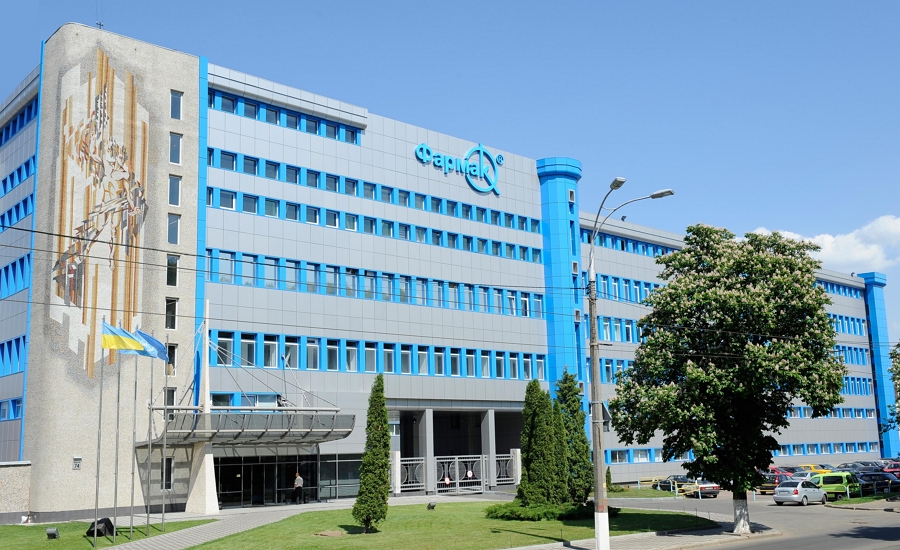
"Difficulties in the price re-declaration process were related to the absence of a legally established timeframe for the regulatory authority to review applications and the lack of a procedure for approving a certain percentage increase in prices. In our view, it would be advisable to set a maximum timeframe for reviewing such applications, as well as to provide for a silent consent mechanism in the case of a price increase, for example, up to 20%," the press service of the pharmaceutical company Farmak told Business Censor.
The company clarified that it had submitted requests for price revisions in the range of 5% to 20% relative to those previously declared in the National Price Catalogue.
"The price increases we declared for certain items are linked to rising costs of raw materials, logistics, wages and energy, as well as inflation and exchange rate fluctuations," Farmak said, noting that re-declaration of prices has now been completed for most of the applications submitted by the company.

The press service of another major Ukrainian pharmaceutical manufacturer, Darnytsia, said it had submitted requests for price revisions of up to 18% relative to those previously declared.
At the same time, the company stressed that these refer specifically to the regulatory price level and do not imply an automatic change in actual ex-factory prices or alter existing commercial sales terms.
Darnytsia also cites a similar set of factors driving the need for price revisions.
"Businesses operate in real economic conditions, where production costs are affected by exchange rate fluctuations, as some raw materials are purchased abroad, as well as by the cost of electricity, fuel and other production resources. We take these factors into account while maintaining a balance between the affordability of medicines and the stability of their production," the company told Business Censor.
Why are Ukrainian manufacturers losing out to foreign ones?
While foreign manufacturers can partially offset wartime losses through sales in other countries, the situation is more difficult for Ukrainian producers. They depend largely on the domestic market and are forced to operate under much more challenging conditions.
This is already affecting production volumes and revenues. At the same time, the share of imported medicines on the Ukrainian market is growing.
According to estimates by Proxima Research International, the share of domestically produced medicines in 2025 amounted to 60% in volume terms (by number of packs sold) and 35% in value terms, compared to 62% and 37% respectively a year earlier. For comparison, in 2018, the share of Ukrainian-made medicines reached 72% in volume terms.
At the same time, manufacturers in Ukraine are having to bear additional costs. For example, the pharmaceutical company Acino spent around UAH 500 million on restoring operations at its Ukrainian plant, Pharma Start, which was damaged as a result of a series of strikes in 2025.
In addition to restoring damaged facilities or compensating for losses caused by shelling, significant funds are required for investment in autonomous energy equipment, as well as in the development of new medicines and the conduct of clinical trials.
This is particularly important in the context of European integration, as in a few years Ukrainian manufacturers will have to compete with European companies, traditionally among the strongest in the world.
Moreover, starting next year, Ukrainian manufacturers will have to begin re-registering most of the medicines familiar to consumers that were registered before 2013. This requires confirming their characteristics in line with European rules — a lengthy and costly procedure, but otherwise they will eventually no longer be allowed to be produced.
Should prices for lozenges be regulated?
Several companies in the Ukrainian pharmaceutical market are reluctant to publicly criticize the new regulation, fearing a repeat of last year’s situation, when, under political slogans about lowering medicine prices, the market ended up facing a series of strict and burdensome restrictions.
At the same time, they generally voice several key proposals:
- establishing clear requirements and simplifying procedures for declaring changes to ceiling wholesale ex-factory prices for medicines;
- introducing a "silent consent" principle when revising ceiling prices upward, for example, up to 20%;
- abolishing state regulation of ceiling prices for over-the-counter medicines, whose final cost depends less on restrictions and more on competition among manufacturers.
"There are dozens of over-the-counter medicines on the market with similar mechanisms of action — nasal or eye drops, or lozenges for sore throats — across different price categories and for any budget. Even now, consumers can choose a product at a suitable price. What is the point of regulating their prices?" says a representative of a medicine importing company.
This approach is shared by Yevheniia Piddubna, Director of Corporate Communications at Farmak and co-chair of the healthcare committee of the Union of Ukrainian Entrepreneurs.
"A possible solution could be partial deregulation of price controls under the National Catalogue — for example, excluding over-the-counter medicines, where competition is already intense (products ‘for headaches’, ‘for sore throats’ — there are hundreds of them in every pharmacy, for every taste and budget). This would allow manufacturers, without harming consumers, to better balance their margins and maintain the financial health of the company, with the ability to invest," she notes.
At the same time, state control over prices for medicines that are truly essential for Ukrainians — prescription and life-saving drugs — should remain in place.
Piddubna also proposes expanding the "Affordable Medicines" state programme with patient co-payments, so that consumers feel a reduction in the price of the medicines they actually need. After all, the main problem with access to medicines is not inflated prices, but significantly lower incomes compared even to the poorest EU countries.
"Moreover, the price referencing mechanism with the EU has shown that, in the vast majority of cases, medicines in Ukraine are cheaper than in neighboring EU countries. So medicines are ‘expensive’ in Ukraine not because they are objectively costly, but because Ukrainians have very low purchasing power. Therefore, the ‘treatment’ for the problem should match the ‘symptoms’," she adds.
At the same time, the importance of deregulation and support for Ukrainian manufacturers is more often discussed in the government and the Presidential Office than implemented in practice. At least, this was the focus of a meeting of the Council for Entrepreneurship Support, chaired by Head of the Presidential Office Kyrylo Budanov, in early April.
"Ukrainian business is already operating in conditions of gradual entry into the Western market, with new rules, standards and requirements — and, unfortunately, new challenges. Our task is to ensure that this process opens up new opportunities for business rather than creating additional barriers," Budanov emphasized.
"I call on everyone to join in joint efforts on deregulation and the creation of additional opportunities for business. For its part, the government is ready to work substantively and engage," Prime Minister Yuliia Svyrydenko said at the meeting.
However, the example of Ukrainian pharmaceutical manufacturers shows that, despite the loud statements, in practice, Ukrainian business is receiving new restrictions and barriers instead of the promised deregulation.
P.S.: BusinessCensor requested comments from the State Expert Centre of the Ministry of Health and the ministry itself, but neither the SEC press service nor the Ministry of Health responded to the request.


