ENG




12880 visitors online
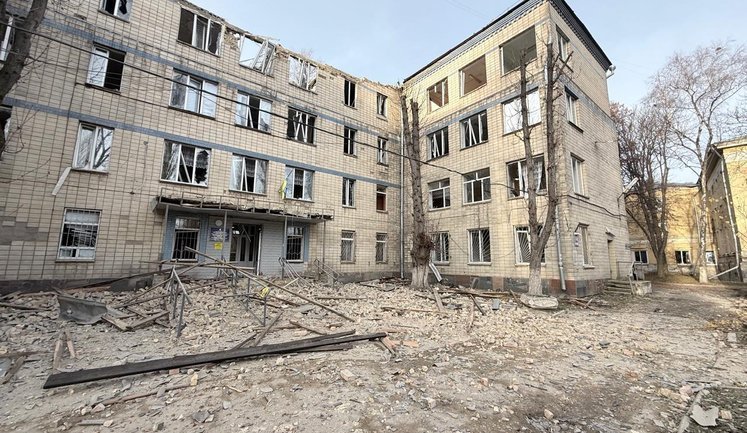
The Ministry of Health plays a pivotal role as Ukraine faces severe challenges due to the full-scale invasion. The healthcare system has faced repeated blows, with over 2,384 facilities damaged, impacting critical health services across the nation. Recent reports illustrate the dire situation, including a repeat missile strike on Kyiv resulting in the tragic death of emergency medic Serhii Smoliak. Additionally, Russian attacks have severely damaged key institutions like the Institute of Otolaryngology. In response, projects are underway to ensure long-term care for veterans, while international collaborations, such as European Union funding, help restore affected medical facilities. The Ministry remains committed to maintaining service continuity and supporting health personnel.
What impact has the invasion had on Ukraine's medical infrastructure?
The invasion has caused significant damage, with over 2,384 medical facilities affected and 308 completely destroyed, impacting healthcare services' availability and quality. The Ministry of Health is actively working on restoration efforts.
How is the Ministry of Health addressing the health needs of war veterans?
The Ministry, in coordination with the Ministry of Veterans Affairs and the National Health Service of Ukraine, has launched a project aimed at providing long-term medical, psychological, and social support to veterans requiring ongoing care.
What steps are being taken to rebuild Ukraine's healthcare sector?
Rebuilding efforts include international aid like EU funding to restore damaged facilities. The Ministry is also implementing strategic initiatives to enhance healthcare resilience and ensure continuity of care during the conflict.
Can Ukrainian civilians receive medical treatment abroad due to the conflict?
Yes, Ukrainian civilians injured by the war can access free treatment in clinics across Europe and worldwide. This initiative addresses the urgent healthcare needs of those severely affected by the conflict.
How has the Ministry responded to the threat of mobilization exemptions being removed?
The Ministry is coordinating with the Ministry of Defense to manage the lifting of military exemptions for medical personnel, ensuring that staffing needs of the Armed Forces Medical Units are adequately met without compromising civilian healthcare services.
What was the outcome of the SSU and National Police's prevention of the planned attack on the First Deputy Minister of Health?
The Security Service of Ukraine (SSU) and National Police successfully thwarted a plot to assassinate the First Deputy Minister of Health by detaining the offenders, enhancing the security of Ministry officials during these volatile times.
What is being done to address PTSD cases among Ukrainians during the conflict?
The Ministry of Health has addressed the growing number of PTSD cases by facilitating access to mental health services. Strategic efforts aim to provide psychological support to prevent long-term mental health challenges among citizens.
News Ministry of Health
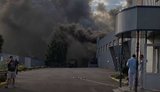 Russians destroyed ’Kusum’ pharmaceutical factory in Sumy: one worker was killed In Sumy, the "KUSUM" pharmaceutical factory was destroyed as a result of a Russian attack on 4 October. One of the company’s employees was killed. 1 600 11 Previously in trend: Shelling of Sumy Russian attacks on business
 There is currently no drug shortage due to Russian attacks – Health Ministry Ukraine currently has no shortage of medicines following missile attacks on pharmaceutical warehouses. Pharmacy chains and distributors are restructuring their logistics and changing how they store medicines. 1 152 9 Previously in trend: Attack of drones
 15.3 million UAH in salaries for ’ghost employees’: five female staff members at Ministry of Health sanatorium in Prykarpattia region have been notified of suspicion. PHOTOS In the Prykarpattia region, under the procedural supervision of the Ivano-Frankivsk Regional Prosecutor’s Office, a scheme has been uncovered whereby a state-run sanatorium received budget funds for years to pay salaries to people who did not, in fact, work there. 1 528 5 Previously in trend: Embezzlement of funds
 Russian repeat strike on Kyiv kills medic Serhii Smoliak During an overnight missile attack on Kyiv, Russian troops killed emergency medic Serhii Smoliak. He died at the scene after a repeat strike when he arrived with his team to rescue people in a residential area. 3 405 11
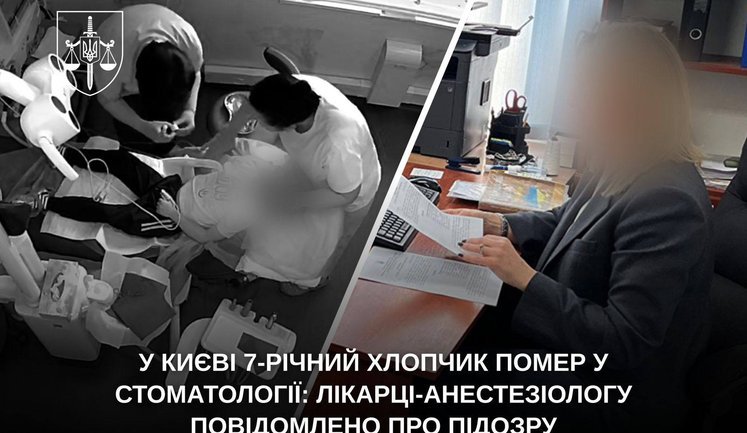
 In Kyiv, 7-year-old boy died in dental clinic: anaesthesiologist has been notified of suspicion. PHOTOS Juvenile prosecutors from the Sviatoshinsky District Prosecutor's Office have charged a 39-year-old anaesthesiologist with improper performance of professional duties, resulting in the death of a child. 5 554 73
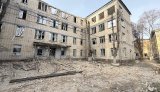 Massive attack by the Russian Federation on Kyiv: Institute of Otolaryngology and Consultative and Diagnostic Centre damaged, - Ministry of Health. PHOTOS As a result of Russia's night attack on Kyiv, healthcare facilities suffered significant damage - the Prof. O.S. Kolomiichenko Institute of Otolaryngology of the National Academy of Medical Sciences of Ukraine and the Consultative and Diagnostic Centre of the Podilskyi district of Kyiv. 3 508 5 Previously in trend: Missile and drone attack on Kyiv
 Ukraine to launch project providing veterans with long-term medical care The Cabinet of Ministers of Ukraine has approved a joint project by the Ministry of Health, the Ministry of Veterans Affairs, and the National Health Service of Ukraine on long-term medical care for veterans of the Russian-Ukrainian war. The program aims to provide continuous care and... 959 5 Previously in trend: aid to veterans AFU veterans
 EU approves funding for restoration of Ukrainian hospitals after Russian attacks, - Health Ministry The EU has agreed to allocate additional funding under guarantees for a joint project between the Ukrainian Ministry of Health and the World Bank, "Strengthening the Health System and Saving Lives" (HEAL Ukraine). 545 2 Previously in trend: Financial assistance to Ukraine Restoration of Ukraine
 Russian attack on Strazhesko Institute of Cardiology: departments on three floors damaged, patients transferred, - Ministry of Health. PHOTO The Academician M.D. Strazhesko Institute of Cardiology continues to operate normally and accepts patients. 2 392 1 Previously in trend: Massive rocket attack
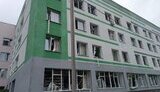 Three medical facilities were damaged as result of Russian attack on Kyiv - Ministry of Health. PHOTOS During Russia's nighttime combined strike on Kyiv, three medical institutions were hit in one of the districts. 2 916 3 Previously in trend: Shelling of Kyiv Missile and drone attack on Kyiv
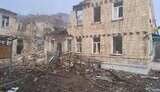 Russian Federation damaged and destroyed more than 2384 medical infrastructure facilities in Ukraine, 308 of them completely destroyed - Ministry of Health Since the beginning of Russia's full-scale invasion, 2,384 facilities in 781 healthcare institutions in Ukraine have been damaged or destroyed. 418 1 Previously in trend: Attacks on medical facilities
 445 MSEC’s decisions on establishing disability for officials have been cancelled. Inspection is ongoing - Ministry of Health 445 decisions of the MSEC on establishing disability for officials were cancelled. The inspections are currently ongoing. 13 383 26 Previously in trend: MSEC’s decision on fictitious disability
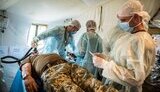 Assignment of medics to non-specialized military roles banned – Ministry of Health Starting June 12, 2025, medical personnel, pharmacists, and rehabilitation specialists can no longer be appointed to non-specialized positions in the Armed Forces unless they give their voluntary consent. 2 788 12
 MoD: Request to Ministry of Health on lifting exemptions from military service for medics concerns only targeted complete staffing of AFU Medical Forces units The request submitted by Ukraine’s Ministry of Defence to the Ministry of Health concerns only specialists in critically undersupplied medical fields who have undergone training in military occupational specialties and are needed to complete staffing of Armed Forces medical units. 1 545 24 Previously in trend: mobilization Reservation of medics
 Ministry of Health preparing lists of medical personnel to lift exemption from military service: request received from Ministry of Defence and Armed Forces The Ministry of Health has received a request from the Ministry of Defence and the Command of the Medical Forces of the Armed Forces of Ukraine to lift the military exemption status of certain medical personnel. 21 637 186 Previously in trend: mobilization Reservation of medics
 Former POWs will be able to receive disability status and state support - Ministry of Health In Ukraine, people who survived illegal detention and torture during the war will now be able to receive disability status and appropriate state aid. 954 4
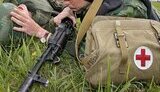 Ministry of Health discussed mechanism for removing mobilization exemption from certain doctors The Minister of Health of Ukraine, Viktor Liashko, together with the Deputy Minister of Defense of Ukraine, Serhii Melnyk, and the Commander of the Medical Forces of the Armed Forces of Ukraine, Anatolii Kazmirchuk, discussed the mechanism for removing the mobilization exemption of medical... 5 999 23
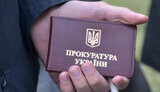 Out of 78 prosecutors in Khmelnytskyi region, only one has disability confirmed, 55 more to be examined - Ministry of Health The Ministry of Health checked the medical records of prosecutors in Khmelnytskyi region. Currently, out of 78 prosecutors in the region, six are not recognised as persons with disabilities. 15 127 90
 First deputy head of Ministry of Health Dubrov was planned to be killed: SSU detains offenders. PHOTOS The SSU and the National Police prevented the murder of the First Deputy Minister of Health. Two criminals who wanted to kill the official in the near future were detained. 7 046 35
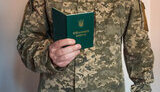 Ministry of Health refutes fake reports about alleged mobilization of people with disabilities from January 1 The Ministry of Health has refuted the information about the alleged mobilization of people with disabilities from January 1. 3 160 14 Previously in trend: mobilization
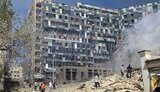 Since beginning of full-scale invasion, Russia has damaged 1938 and destroyed 297 facilities of Ukrainian medical institutions - Ministry of Health Since the beginning of the full-scale invasion, as of the end of December 2024, Russia has damaged 1938 facilities in 715 Ukrainian medical institutions and completely destroyed 297 facilities in 114 medical institutions. 444 0 Previously in trend: War
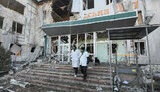 935 medical institutions restored in Ukraine during war – Ministry of Health Since the beginning of the full-scale invasion in Ukraine, 935 institutions have been restored as of today. 408 0 Previously in trend: War
 Almost 1.7 thousand officials will have their disability decisions checked by MSEC - Healthcare Ministry Almost 1700 officials will be checked for the validity of their disability. 2 171 20
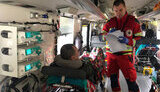 Ukrainians injured as result of war can receive free treatment in clinics in Europe and world - Ministry of Health. PHOTO Citizens of Ukraine who were injured as a result of shelling, have cancer or rare diseases can receive free treatment in clinics in Europe and around the world. 3 084 9
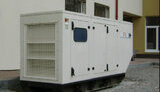 11.8 thousand generators installed in medical institutions for uninterrupted power supply of critical equipment, - Ministry of Health Medical institutions in Ukraine are preparing for possible power outages in winter. 426 1
 Current heads of MSEC will not be allowed to work in new system of medical commissions - Ministry of Health The current heads of medical and social expert commissions (MSECs) will not be able to take positions in the updated system of medical commissions. 2 995 26
 Ministry of Health plans to reform work of MSEC The Ministry of Health proposes to reform the work of disability determination agencies (MSECs). 3 901 14
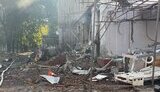 Ministry of Health about attack on hospital in Sumy: 10 wounded are in serious condition, among them - doctor and nurse On the morning of September 28, 2024, Russian troops attacked the city of Sumy with "Shaheds". Damaged health care facility. There are dead and wounded. 1 451 1
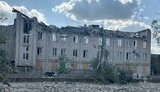 Liashko: Russia has caused $7 billion in damage to Ukraine’s medical infrastructure Since the beginning of the full-scale war, Russia has caused at least $7 billion in damage to Ukraine's medical infrastructure. 624 2 Previously in trend: War
 In first half of August, more than 26 thousand patients with COVID-19 have already been registered in Ukraine, - Ministry of Health In August, more than 26 thousand cases of COVID-19 were recorded in Ukraine. 1 580 13
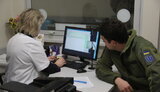 Ministry of Defence is working with Ministry of Health to introduce electronic referrals to MMC through "Reserve+" The Ministry of Defence of Ukraine and the Ministry of Health are developing a mechanism for introducing electronic referrals to the military medical commission through the "Reserve+" application. 10 353 31
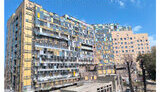 Healthcare Ministry appeals to law enforcement agencies for additional checks of tender for reconstruction of Okhmatdyt - Liashko The Ministry of Health has asked law enforcement agencies to "conduct additional checks" on the tender for the repair of the "Okhmatdyt" children's hospital in Kyiv, which was damaged by a Russian missile attack on 8 July. 4 731 20
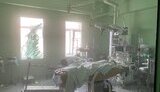 As result of Russian attacks in Ukraine, 1642 medical facilities were damaged, 214 more destroyed completely - Health Ministry Since the beginning of the full-scale war, Russia has been systematically shelling Ukraine's civilian infrastructure, including medical facilities. As a result of these attacks, 1,642 medical facilities in 676 healthcare institutions were damaged, and 214 facilities in 99 healthcare institutions... 396 0 Previously in trend: Russian aggression against Ukraine War
 Ambulance crew comes under enemy fire in Kharkiv region: three civilians are wounded, ambulance is damaged. PHOTOS An ambulance crew came under enemy fire in Kharkiv region. 2 030 3 Previously in trend: War
 23 thousand people in Ukraine have official diagnosis of PTSD - Ministry of Health In 2023, more than 20,000 people with post-traumatic stress disorder were registered in the electronic health care system. 4 316 5
 Ukraine received 40 ambulances from South Korea. PHOTO Today, Ukraine received 40 ambulances from the Korean Red Cross. 5 213 19
Health Ministry: 510 medical infrastructure facilities damaged by Russian shelling have been fully restored in Ukraine Despite systematic attacks by the Russian army in Ukraine, 510 Ukrainian medical facilities have already been fully restored, and another 355 have been partially rebuilt or are in the process of being restored. 643 3
 Inspection of MMC in Kyiv is completed - Ministry of Health The Ministry of Health checked the work of 10 freelance military medical commissions at territorial recruitment and social support centres in Kyiv. 12 527 33
 Number of patients with PTSD is growing in Ukraine. In 2023, 12,494 cases of disorder were recorded, - Ministry of Health In 2023, 12,494 cases of PTSD were recorded in Ukraine, almost four times more than in 2021. 7 689 17
 Birth rate in Ukraine has been falling by 7% per year since 2013 - Ministry of Health According to the Ministry of Health, the birth rate in Ukraine has been falling by about 7% per year since 2013. 4 035 64
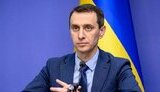 Cryobanks will not dispose of frozen biological material of fallen soldiers - Ministry of Health The Ministry of Health has stated that cryobanks will not dispose of biological material from the dead military. 7 141 53 Previously in trend: War
Since beginning of full-scale war, Russia has completely destroyed 195 medical institutions, damaged more than 1500 - Ministry of Health In Ukraine, since February 24, 2022, Russia has damaged 1501 medical facilities, and destroyed 195. 599 1 Previously in trend: War
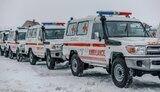 Ukraine to receive 50 ambulances from UAE. PHOTOS The Government of the United Arab Emirates donates 50 ambulances to Ukraine. 6 602 20 Previously in trend: Aid to Ukraine
 Ukraine received two more armored ambulances from United24. PHOTOS Ukraine has received two more armored ambulances purchased with funds raised through the UNITED24 initiative. 1 235 2
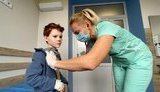 As result of attack on Kyiv, children’s hospital in Dnipro district was damaged, it continues to receive patients, - Ministry of Health As a result of the night attack on Kyiv, a children’s hospital in the Dnipro district was damaged. 3 158 7
 Ukraine wants to create strategic stockpile of medicines for emergencies. EU will help Ukraine, together with its European partners, is building a capable emergency response system. 1 094 14
 Bacterial resistance to antibiotics complicates treatment of wounded, - Ministry of Health The Ministry of Health of Ukraine announced difficulties in treating wounded soldiers due to the resistance of some bacteria to antibiotics. 3 705 36
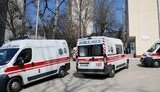 Outbreak of hepatitis A in Vinnytsia region is recognized as emergency situation at regional level, anti-epidemic measures are being strengthened, - Ministry of Health The outbreak of hepatitis A in the Vinnytsia region has been identified as an emergency situation at the regional level, anti-epidemic measures are being strengthened. 6 634 23
Page 1 of 9
more news