



Battalion commander, call sign Luka: "Russians continue to rely on manpower, whilst we rely on unmanned systems"
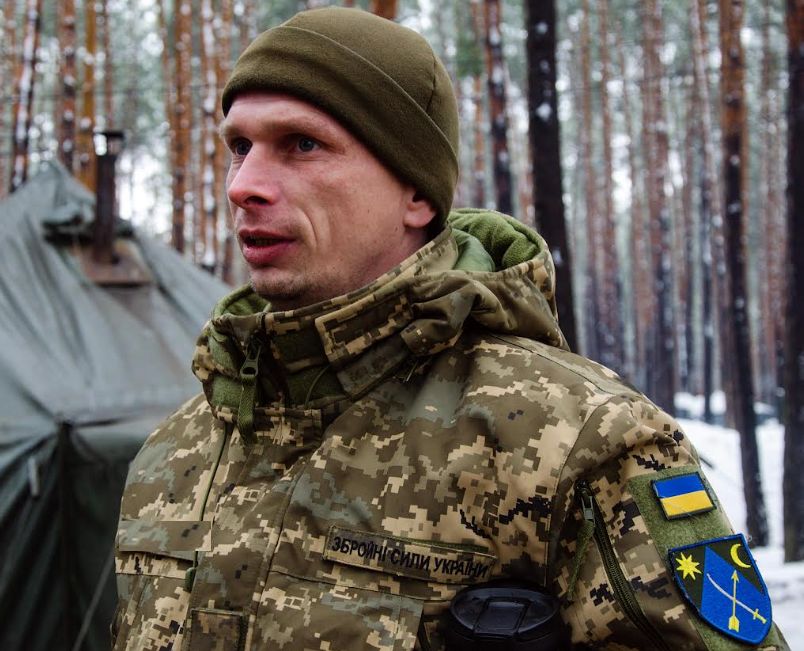
Volodymyr, whose call sign is Luka, began his service even before the full-scale invasion; he served in the ATO, trained at the Kharkiv National University of the Air Force, and fought for Sieverodonetsk (now Siverskodonetsk), Lysychansk, and other hotspots along the front lines. Today, he commands the unmanned systems battalion of the 151st Separate Mechanized Brigade, which not only repels Russian assaults but also successfully targets enemy equipment, including the latest "Malva" artillery systems.
In this interview, we discussed the evolution of drones, the selection and training of pilots, the advantages of Ukrainian drone units over the enemy, the characteristics of the modern battlefield, and why people remain the greatest asset of any Ukrainian unit.

- Let’s start at the beginning: tell us, how did you end up in the war? Was it already a full-scale invasion, or had you served before?
- I enlisted before the full-scale invasion. In January 2017, I began my service as a driver in an anti-aircraft missile platoon of the 39th Anti-Aircraft Missile Regiment. I then took part in the ATO as part of that unit.
The following year, I was offered a place at the Ivan Kozhedub Kharkiv National Air Force University, in the Air Defence Faculty of the Ground Forces. I accepted. I officially graduated in June 2022, by which time a full-scale war was already underway. I received my first officer’s rank, that of lieutenant, in March. After that, I remained in Kharkiv for a while – we were defending the city. Then we were deployed to different units – I was assigned to the 115th Separate Mechanised Brigade. I started out as a platoon commander. We were in Sieverodonetsk and Lysychansk. After that, we had a temporary period of rest and recuperation. After that, we were deployed to the Avdiivka sector twice. Following that, we had another period of rest, and then we were sent to the Kharkiv sector. From there, I transferred to the 151st Separate Mechanised Brigade, with whom we fought in Zaporizhzhia, Pokrovsk and Kurakhove. We’ve now been operating in the Kharkiv region for over a year.
- How did you start flying?
- A new company was formed in the 115th Brigade, and I was offered a transfer there. At the time, there was only one deputy commander for moral and psychological support there, who had been promoted to second lieutenant the day before. He’d been called up from civilian life. Together, we gradually began to form the company – selecting personnel, sending them for training, and getting to grips with the work ourselves. I personally went to learn how to fly an FPV drone. I then undertook advanced training courses at the Korolev Military Institute in Zhytomyr, which I successfully completed and received the relevant certificate.
That is how our first company in the brigade was formed. From there, I transferred to the 151st Separate Mechanised Brigade, where I also began forming a company as a platoon commander, and was subsequently appointed its commander. Subsequently, our company was expanded into a battalion, where I took up the post of chief of staff. A further five months later, I took command of this unit. In August, it will be two years since I took up the post of battalion commander.
- Over this time, the field of UAVs has developed and changed rapidly. We are hearing more and more that a ‘drone war’ is already underway. What would you say about this evolution?
- You have to keep up and adapt. If you don’t, you won’t get results. That’s why rapid adaptation is so important, both for the command staff and for our pilots. We try to train them to fly more than one system, so they don’t get fixated solely on, say, FPV or heavy bombers. Our pilots are interchangeable. We try to refine and develop everything new that emerges and to which we have access within the unit, so as not to fall behind. Fibre-optic cables became available – we started working with them. We saw new solutions on Starlink – we’re developing in that area too. We’re constantly engaged in the process of training, adapting to the new realities of warfare and honing our pilots’ skills.
- How do you select pilots? What do you look for first and foremost?
- I’m the one who talks to most of them. When we were selecting people for the battalion, I personally travelled to the selection events. Sometimes I’d walk past a line of recruits, just look at the people, and choose only three. Occasionally, there were already certified pilots among them.
You know, it all starts with a conversation. I introduce myself, tell them who I am and what we do, and explain the specifics of our work in a few words. I look them in the eye and I can tell everything – probably thanks to my experience: whether the person is interested, listening to me carefully, looking at me, or whether their mind is wandering. If they don’t know what they want to do, I might ask: ‘Can you solder?’ ‘No.’ ‘Are you any good with computers?’ No, not really. ‘What can you do, then?’ Nothing. I can’t help someone like that, who doesn’t even want to engage. I don’t have time to teach from scratch without them showing any initiative of their own. Everything here happens very quickly and dynamically. You have to adapt to this pace of life.
Without the desire, nothing will happen. My pilots even ring me themselves and say: ‘Commander, look, we’ve seen such-and-such. We want to sign up for a course, is that OK?’ Of course! ‘Can you send us somewhere for extra training?’ Yes, we can. When there’s interest, there’ll be results. It doesn’t work any other way.
- And who adapts best? Who finds it easier – gamers, techies or military personnel who’ve simply retrained as pilots?
- Speaking from experience: some people who’ve never done this before, but whose lives have brought them into contact with unmanned systems, can achieve things they never expected of themselves. When a person picks up a controller or sits down at a simulator, they discover new possibilities for themselves. Human beings are creatures capable of adapting to anything, if they set their minds to it.
Gamers have an advantage – they’ve already developed their hand-eye coordination. Tech-savvy people also approach this from their own angle – with a better understanding of the technical side of things. Civilians or former military personnel, if they’re interested and can see how it works, also adapt very quickly. The main thing, I’ll say again, is desire. This is one of the most important factors influencing their work and future development.
- If you had to compare, which is more important right now: the quality of the drones or the pilots?
- The quality of the pilots plays a very important role. Because, as we know, a drone isn’t always of the highest quality – something might break or not work properly. We have lads who can assemble a working drone on the spot from several others. Because they understand how everything is put together and how it’s supposed to work. That’s why I believe that the quality of the pilots still comes first.
- Under the current circumstances, working on the front line is very difficult. How do you tackle pilot burnout or fatigue?
- First and foremost, we try to ensure that work is carried out according to schedule. Our pilots understand that there might be a delay of a day or two, but no longer. We cannot afford any more than that, because we realise that a pilot becomes less effective over time – when they fly for long periods, their eyes start to ache, and fatigue and exhaustion set in. How can we keep them in their posts after that?! So we try to carry out rotations as planned. But we will carry out these rotations in any case and replace these crews so that people can rest peacefully, spend time with their families, and so on. We want people to feel safe and to see that they are being looked after.
- In my interview’’ , Andrii Hitt, Chief of Staff of the Third Border Guard Detachment, said that they send the lads at their posts whatever they want. If they fancy varenyky, they deliver them by drone. How do you handle this?
- We’ve been working like this for a long time. We have a special kitchen within the brigade that prepares shashlik, pelmeni, varenyky – anything at all. It’s all vacuum-packed, and every night heavy bombers make logistical deliveries according to orders to infantry and pilot positions. Whatever anyone needs. So, as well as carrying out our internal tasks for our own crews, there’s also work coming from higher up.
- And a soldier from the Third Army Corps, Klever, told me that they’re delivering to the lads "gifts" and orders with UGV …
- UGV is great too, but it’s quicker for us to deliver, shall we say, by ‘small air’. We picked up two or three parcels, flew over a couple of locations, dropped them off to the lads – they came out, collected them, waved, and we flew on. We reloaded and took off again for another delivery. It’s not only faster, but it also allows us to work during the hours of darkness.
- What drones do you use most often in your work? These are FPV and bombers?
- We work with both radio-controlled and fibre-optic FPVs, as well as heavy bombers of various types, which the enemy calls ‘Baba Yaga’. We have at least three types. We used to have five, but some have simply gone off the market. Incidentally, we’re now bringing in some slightly heavier, larger ones. But we’re still in the process of getting to grips with them.
For situational awareness, of course, we use the ‘Matrice’, ‘Mavic’ and ‘Autel’. In other words, we work with everything from the smallest to the largest.
We’re also currently introducing strike and reconnaissance drones. The brigade already has a couple of such crews, but we want to introduce them into our own battalion as well.
- Do you remember that back in 2022, the then Minister of Defence, Oleksii Reznikov, referred to "Mavic" wedding drones?
- If they’re properly adapted to the realities on the ground, they work brilliantly at the front and deliver results.
- What is the situation with the enemy’s drones in your sector?
- In terms of situational awareness, and delivering firepower via FPV drones on fibre-optic cables and heavy bombers, we have a significant advantage. We can easily deploy 10–15, or even 20, fibre-optic-guided drones on a single priority target, if necessary, whilst also combining them with radio-controlled ones. They do not have that capability. If they’ve struck a target once, it’s by no means certain there’ll be a follow-up. In other words, they cannot fly in, monitor and finish off the target. This is an indication that their logistical support isn’t up to scratch.
Everyone realises that we’re monitoring them, and they’re trying to monitor us. So we know that some sort of logistics convoy is on its way to them, and that they want to deliver them some "birds". We’re more or less aware of their routes, and we intercept them to ensure nothing reaches their positions.
- But they don’t have any bombers, do they?
- Not as heavy as ours, anyway. They mainly use their own homemade drones – small ones or FPVs.
- The military told me that the Russians were collecting the wreckage of our "Vampire" to try and build something similar. But, thankfully, they didn’t manage to make anything of it. Have you seen anything like that?
- Yes, we’ve seen them trying too, and we’ve heard in intercepted communications that they’ve found something. But what are they going to do with it? They don’t have a base to maintain it, let alone repair or refurbish it.
We, on the other hand, work directly with various manufacturers. We fly the "Vampire", the "Heavy Shot" and the "Nemesis". We’re also converting the "Vampire" for use with Starlink. Previously, we also operated the "Magura" and the "Kazhany". We’re now gradually introducing the "Pegasus".
For a battalion within a separate mechanised brigade, our support and operations are at a fairly decent and high standard. This is thanks in part to our command, which pays close attention to us and never refuses us anything within reason and in line with our needs. They listen to us, know what problems we face, understand our requests, and provide us with comprehensive support. This is a huge advantage. Because there are brigades where the attitude towards unmanned systems isn’t quite at the same level, and this has a noticeable impact on their operations.

- You’ve seen the enemy both during the ATO and during full-scale war. How would you describe them? What are they like?
- Serious. Some people say they’re all a bit odd over there, not very clever and so on, but I wouldn’t put it that way. There’s a logic to their actions. But their commanders don’t spare their men – they drive them forward. In principle, that works in our favour. We’d rather launch five FPVs to stop them reaching our position, to prevent them from engaging in combat here.
I can’t describe them as somehow inept. They have ‘Sudnyi den’ and ‘Rubicon’, which cause us problems, particularly logistical ones. We’re fighting them, locating their positions and taking them out. And they’re trying to find us. We’re countering their pilots. This is crucial. When we cut them off, that’s it – we have more open supply routes, and we can bring in, deliver and replace more. In other words, there’s a window of time when relative calm will prevail, and we’ll get all this done.
I assess the enemy by their actions – by what I see. They are a significant, formidable force. But we can see how many of them have already been eliminated. I can assure you, these figures will continue to rise. For them, this will be a catastrophic loss of manpower, no matter how many they recruit. This is because they continue to rely on manpower, whilst we rely on unmanned systems, on developing various areas, stepping up our efforts, and so on. They cannot yet match our level. In terms of manpower, yes, but in terms of resources, no. We would rather invest in development than lose our own people.
- A year ago, soldiers from your brigade reported that the enemy was carrying out "meat carousels" – heavy armoured vehicles were deployed, and they even used bicycles to transport ammunition, sparing no manpower. As I understand from what you’ve said, has their approach not changed?
- They don’t spare their personnel, but there aren’t any assaults on that scale anymore. In January, in bad weather, they tried to storm us like that, but it didn’t work out. They even brought in African-Americans. They advanced from three different directions. We took them out in about four hours.
Nowadays, it can sometimes be the case that they don’t even come out; we don’t see them. But we know roughly where they might be, so we work in advance. And when they do advance, they take the same paths as before. Even though they can see their predecessors lying there, it doesn’t stop them. I know why: they realise they have a better chance of survival here if they make it somewhere, and will eventually be relieved there. Because if they flee and turn back, their own people will kill them immediately. That’s why they take the very same routes that we’re monitoring. 85 per cent of them don’t even make it to their first rendezvous point, where they’re supposed to regroup and then take further action or move on.
- And what tactics do they use? Small groups?
- Yes: two to four soldiers, no more. So they’ve sent a ‘two’ over there, then another ‘two’ somewhere else – and we take them out. They’ve been there a while, sent out about the same number again, and in some places even a ‘four’. Because they think we’ve concentrated all our forces and resources on one side. So they come from the other side, but the same thing awaits them there, because our crews are strategically deployed across their areas of responsibility. We don’t have a situation where, if someone is attacking from one side, the other is left unguarded. We have our ‘eyes’ and strike forces in every direction.
- Do they no longer launch assaults on motorbikes?
- They’ve probably run out of motorbikes here. We gave them a proper thrashing last year. We even found their underground depots.
I reckon we took out their last quad bike back in late autumn. After that, there were a couple more motorbikes that they managed to find and repair, and that was it. We haven’t seen any more of them here since.
- Overall, what are your top priorities at the moment?
- Ranking our objectives by priority is a secondary concern. We’re focusing on preventing the enemy from breaking through to our positions, so that the lads are safe and have as little contact with the enemy as possible. That’s the main thing. We’re working to ensure our infantry are constantly protected and know that we’re here, that they don’t need to worry. Even if someone somewhere on the radio says there’s movement in their direction, they hear that we’re already on our way. That’s the most important thing.
And the priority of targets arises, for example, when we’ve already assessed the situation, they’ve gone quiet, gone into hiding, and stopped moving. Then we start working on their ‘rear area’: searching the woods where their equipment is stationed, and whatever we find there, we strike – whether it’s vehicles, depots or personnel. In other words, the first thing that comes our way.
- Speaking of strikes. Recently, your brigade destroyed two Russian ‘Malva’ artillery systems. Are these new systems?
- Exactly. They entered service in 2024. The enemy has a total of between 20 and 40 of them.
- Did you damage two more as well?
- Yes.
- How did you manage that? They’re not that easy to hit, are they?
- They’re not that easy to hit, and they don’t display or use them very often. They keep them for specific tasks.
We found one ‘Malva’ whilst on a ‘free hunt’. We spotted a large caponier. At first, we thought there might be a couple of lorries parked there. We started to ‘probe’ it. We noticed something at the back that looked like a gun. We wondered if it might be a self-propelled gun? We flew in once or twice, ‘exposed’ it – and it started moving. We went after it. We caught up with it, stopped it and finally finished it off with heavy bombers.
We heard about the second one via intercepted communications: apparently, something interesting was due to arrive. We assumed it would be a tank or a ‘Grad’ – something large. We sent drones to that section of the front line, added some ‘eyes’ and spotted movement and rather familiar silhouettes. But ‘Malva’ met the same fate as its predecessor.
As for the two we damaged, they were a little further away. We flew in there at the very limits of our capabilities and damaged them. But when we flew back in again, they’d either been towed away or had driven off. I don’t think they’ll be appearing here any time soon.
- However, it seems there are at least four "Malvas" were sent to your section of the front…
- They didn’t know we’d find them there. Perhaps they weren’t expecting it. Especially as they were keeping them in what was effectively the rear. They didn’t reckon we’d get that far. But we did.
- They also have some fairly powerful systems "Solntsepyok". Have you come across them?
- No, I haven’t come across any here, for better or worse. As for specific targets, we had ‘Malvas’, ‘Grad’ and the infamous T-90M ‘Proryv’ tank, which was simply driving along in flames, knocking down trees, with no one left inside. We spotted it, hit it once, hit it twice – until it came to a complete halt and was destroyed.
- And where did you find it?
- It was hidden. Then, when it fired a shot, we spotted it. They don’t use all this equipment very much, as they realise they’re being watched. Because in this sector, we’ve destroyed a great many guns of various types – from small to large. We’ve had more than one ‘Msta-S’ here, as well as various other guns and so on. They handle them with care. But when they come into our line of sight, we mark them: if we spot any smoke or a flash – that’s it. We focus on that spot straight away, fly over, look and see. We ‘flush them out’, drive them from cover, and straight away a whole bunch of their men rush over, and they pack everything back up. And that gives us another job – to destroy that gun and the crew who were operating it. Then it’s been a really good day. This sort of thing happens to us regularly. But they have their own objectives: whether they like it or not, they need to fire at least once or twice. And when they do, in most cases we spot them and inflict fire damage that prevents them from operating any further.
- How do you make decisions regarding particularly risky missions?
- Everything is decided through discussion. I always talk to the personnel. All the servicemen in our battalion, which I currently command, can ring me at any time. Whether it’s a soldier or an officer – it doesn’t matter. They know this, because we’re in constant contact with them.
This is how it works: I set out the task. We might sit down to discuss it, or they might say: ‘Commander, just tell us in what way to do it, and we’ll get it done.’ There’s complete trust and mutual understanding between us. With most of them, we started out in a platoon, then moved up to a company. I was the one who selected them and taught them the basics. If they say, ‘Commander, we can’t do that there’ or ‘We need to think about it’, then we look into it in more detail; I also consult with higher command to see how we can facilitate this so it can be carried out, even if it involves risky actions. That’s how we work.
- What’s the hardest part of being a commander?
- Losing soldiers, because I know each and every one of them. Whenever possible, I visit them at their positions; I’ve worked there alongside them. And if something happens to one of them, it’s incredibly painful, because you knew him not just as a soldier or a pilot, but as a person. Because you’ve had coffee with him many times, chatted about all sorts of things – not just the war or work, but life in general. It’s such a painful story. The worst thing that can happen. Our people are everything to us.
- You said you went out to the front lines with the soldiers. Do you fly?
- The last time was last autumn. I spent two or three days there. I was at one position, then at another. I worked with the lads. Nowadays, I can only fly around here somewhere.
- What do you enjoy flying most?
- My first flight was on an FPV. So it's remained my favorite. Now I'm also drawn to heavy bombers. You can get a proper job done with them even in bad weather. After all, an FPV can’t fly everywhere because of its weight, the wind and so on. But bombers significantly improve our situation and position.
- Do you ever think about when the war will end?
- I don’t think so. The main thing today is not to miss what we have and to keep moving forward in the same direction. We’ve already turned the tide in many respects. If we continue to develop this system, I believe the hostilities will reach some sort of logical conclusion.
Every war ends at the negotiating table. That’s the case everywhere. We’re currently undergoing rapid development. You can see what we’re doing on their territory — at what ranges, on the ground, and in the "little sky". I think everything will change radically soon, and we’ll be the ones dictating the rules.
- I suppose that’s why the Russians have put the negotiation process on hold – they’re trying to work out what to do.
- But those negotiations make no sense to me. There’s nothing to discuss with a man who’s been in power for nearly 30 years, who’s constantly on the lookout for internal and external enemies, and whose empire is built on war. People were born under his rule and died in war under his rule.
- Speaking of internal enemies, by the way. Do you believe there is internal destabilisation in the Russian Federation? In particular, thanks to our ‘help’.
- It does exist, but only to a minimal extent. Everything is done very quietly. The people there are slaves to the system. They have no freedom of speech. You see, they simply step out with a blank sheet of paper, and they’re immediately put in handcuffs. That’s why, I think, there will be discord amongst their so-called elites, who are losing vast sums of money. Firstly, business is coming to a standstill. Secondly, funds are also being allocated for the war. It’s known from open sources that he (Putin. – O.M.) was collecting them, asking for money. I think they won’t put up with that. It’ll all come from the top. Not from the bottom. People are intimidated, ‘brainwashed’ by television – the three channels. They’re currently being cut off from the global internet, so there’ll be just that one ‘truth’ from the telly, the priest, and that’s it.
- Andrii Biletskyi, commander of the Third Army Corps, stated: "We need to identify areas where we can improve our positions and take control of strategic points. Only then can we talk to the Russians about a truly stable ceasefire’’ – from a position of strength, not weakness." What do you think?
- I fully agree with Mr Biletskyi. The rules are dictated by whoever is stronger. Full stop. There are many turning points today. The Russians are thinking about negotiations, but anyone who is a realist understands: they will lead nowhere. Because if we take the strategic initiative now, those negotiations and their freezing line will no longer be of interest to us. Why would we need it if we’re moving forward?! If we break their rear lines, they won't have any supplies, and chaos will ensue. We won’t want to talk about any kind of ceasefire anymore – we’ll be thinking on a much bigger scale. And when they reach a critical breaking point, that’s when they’ll accept any terms.
Olha Moskaliuk, "Censor.NET"
Photos provided by the battalion’s press office


