



"Going to MMC?" Everything you wanted to know about military medical commissions but never had chance to ask. Interview with head of Central MMC
Among the currently crucial acronyms of modern Ukrainian wartime reality — the AFU (Armed Forces of Ukraine), OP (Office of the President), SSU (Security Service of Ukraine), NABU (National Anti-Corruption Bureau of Ukraine), TCR & SS (Territorial Centre of Recruitment and Social Support), DIU (Defence Intelligence of Ukraine), etc. — the MMC, the Military Medical Commission, stands apart. As an entity that conducts medical examinations to determine fitness for military service, service during a special period, or to establish the causal link of diseases and injuries, the MMC, in the 5th year of the full-scale war with Russia, determines the fates of millions of Ukrainians.
That is why Censor.NET had accumulated a great many questions for Dmytro Miroshnychenko, head of the Central Military Medical Commission, across dozens of thematic clusters. We also asked Ukrainian service members, our previous interviewees, to submit their own questions.
Not all of the questions were politically correct — these are not the times or circumstances for playing at propriety. To the credit of the 39-year-old Mr. Miroshnychenko, he responded to the most audacious questions with understanding and patience.
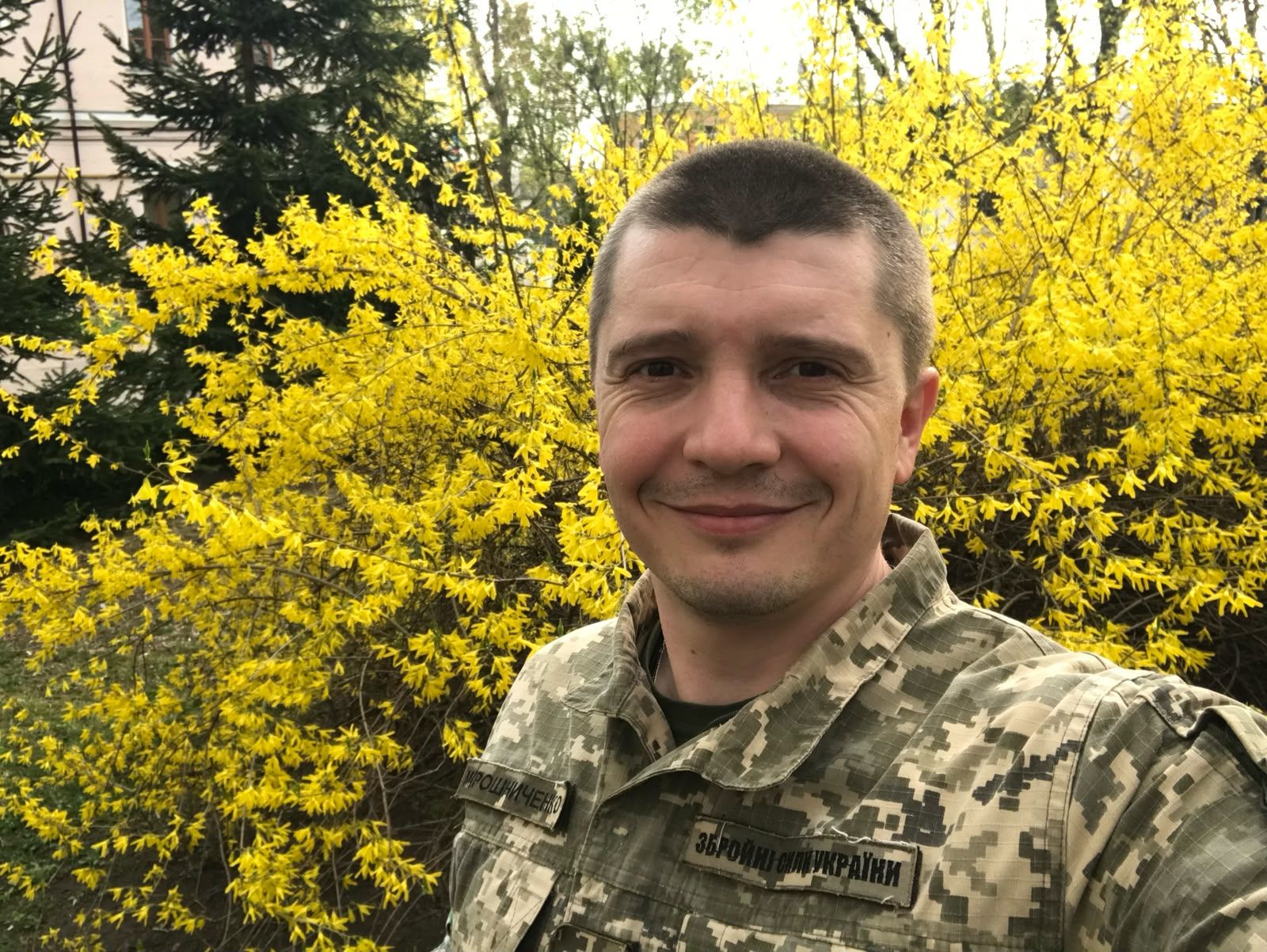
And he had to be patient from the very beginning.
- Dmytro, today we had to postpone our meeting because you had an urgent meeting at the State Bureau of Investigation this morning. What did you discuss? And was this communication related to the searches carried out in early June by the National Police as part of a case involving suspicions of illicit enrichment and the submission of false information by certain MMC representatives?
- I do not really track all the searches taking place across Ukraine.
- Well, this was still a large-scale operation: 58 searches in 16 regions of Ukraine...
- Yes, but the question is: whose premises were searched? Civilians? What kind of MMCs are these? Look, we have MMCs attached to the TCR and SS (Territorial Centres of Recruitment and Social Support). We have MMCs in hospitals. There are MMCs in civilian hospitals. We have standing commissions. Which of them are we talking about? These involve different people, and the procedure for their work and the groups they deal with also differ somewhat.
As for cooperation with law enforcement agencies, it is ongoing. We maintain the relevant relations both at the official level and through personal communication at an unofficial level. But there are state-level tasks. There is the decision of the National Security and Defense Council of September 2023, which assigned law enforcement agencies and us the task of checking the legality of declaring a large number of young men unfit (starting from 2022 to the present), who were removed from the register at the TCR and SS. The question has now arisen of reviewing those actions. As part of this, various law enforcement agencies — the National Police, the SBI, and the SSU — have opened criminal proceedings, conducted searches, seized medical documents that served as the basis for declaring persons liable for military service unfit, and sent them to us for review. We review them and make a decision: whether the ruling was adopted correctly at the time and whether it should be cancelled.
This work has been under way since 2023. During this time, we have received more than 70,000 cases involving such persons liable for military service. We have already reviewed 50,000 of them. Roughly every fifth one is cancelled.
- And who exactly carries out this review?
- A working group created to implement the NSDC decision. It includes officers from the Central MMC and officers from our regional military medical commissions.
- 70,000 cases? That has to be checked from morning until evening...
- That is a very large number. For them, it really is from morning until evening. They do nothing else; they deal only with this issue. That is why a separate working group was created — so that this state-level task would remain under control.
- Are there any other figures on these cases? So, you have cancelled every fifth one...
- Yes, and in total, about 14,000 rulings have already been cancelled. We also have another 20,000 under review, and new cases are brought to us almost every week. Searches are continuing, procedural actions are continuing, documents are being seized. I think that, within the next year or two, we will probably reach 100,000 cases.
This is a very labour-intensive expert process; it takes a lot of time. One also has to take into account that after we cancel these decisions, all these persons liable for military service start suing us. Almost everyone whose decision we have cancelled goes to court — we currently have about 500 court cases on these issues alone at the Central MMC, where they are trying to prove that we unlawfully cancelled these decisions.
And here is the issue: there are probably people who are genuinely ill and who, for one reason or another, ended up within the framework of these criminal proceedings, and their documents were seized. Well, if we have provisionally cancelled the decision concerning them, then please go and undergo a new medical examination. If they have nothing to lose, if they are genuinely ill, they simply go, complete it, receive their unfitness determination — and the issue is closed. But where there are nuances, they start suing us, hiring lawyers, trying to prove in another way that everything we did was wrong. Although, one would think, it would be easier simply to go, undergo an MMC examination — and close the issue.
- I know that you are not particularly eager to disclose statistics on the number of MMCs across the country — partly because this is a figure that is constantly changing. And that, in general terms, you operate with an approximate figure of 1,000 MMCs. But are there statistics on how many people are involved — permanently or temporarily — in the work of MMCs?
- There is no great secret here. The logic is very simple. A military medical commission that examines service members in hospitals or civilian medical facilities must include at least six mandatory doctors who are required to examine the patient. So, roughly speaking, each commission has between six and eight doctors and about one or two members of mid-level medical staff. That means that, in the notional 1,000 MMCs across the country, approximately 7,000 doctors and about 2,000 members of mid-level medical staff are working.
Then one has to take various components into account. One manager involves a large number of people and then simply rotates them: today one traumatologist is on the MMC, tomorrow it is another. Another manager, by contrast, has no such resource, and those six people work there permanently. In other words, it also depends on the capacity of the medical institution. They have the minimum capacity, and they can create an MMC because they have the necessary set of specialists and the means for laboratory and instrumental diagnostics to conduct examinations. So they meet the minimum list of requirements. Can there be more? It can be expanded indefinitely, but that depends on capacity.
- Everyone knows the pressure — physical, psychological and informational — that TCR and SS employees are under. What is the situation with MMCs? What typical unpleasant situations do you and your subordinates across the country have to deal with? What do people complain about, and how do they express their dissatisfaction?
- We all understand that the country is at war. To be frank, we are not seeing queues outside TCR and SS offices now. In 2022, the situation was completely different. People came on their own to defend the Motherland, to defend the country. Now everything is entirely different. People do not come on their own; only a few do. That is why mobilisation measures are being carried out. If a person does not want to do something, and they are forced to do it, of course they will be dissatisfied.
A person ends up in the army. It so happens that he does not want to fulfil his constitutional duty and wants to leave the army by any means. How can this be done? We open the law and look at the grounds for discharge: having a disability, minor children... and one of the grounds is health condition. If we take the average age of a person liable for military service who is being called up now, it is about 45. We understand that at 45, it is quite difficult to find people who are completely healthy, given our way of life, the urbanisation of society and all the harmful environmental factors, right?
- To a large extent, yes.
- Of course, once he ends up in the army and has such grounds for discharge as health condition, he tries to use them. He comes to doctors and starts telling them that he has a much more serious diagnosis than what they are writing down for him. Although he himself understands nothing about it. He is not a doctor and cannot assess himself objectively. He has simply read something on the internet, looked something up somewhere — and starts talking.
And this is our everyday work and the most scandalous moments we deal with every day. Because people who are fit or fit with limitations want, by any means, to be declared unfit. There are different cases, of course, but the typical one is when professional doctors are being told that they are wrong, even though the applicant himself understands nothing about it.
The second issue is active service members who, in one way or another, have gone through this path since 2022, who have been fighting in trenches for four years. They burn out, they get exhausted. Especially since the average service member is a mobilised person who had never served in the army before, except perhaps for compulsory military service. He has lived half his life, and then he is taken into such conditions and circumstances. Given direct participation in hostilities, time spent in trenches, age and health characteristics, of course he becomes exhausted. He tries to receive treatment and rehabilitation. Doctors refer him when there are indications, and we review all of this. But then the same question arises: I came, I fought for four years, I ruined my health... But according to medical indications, he is not unfit.
At the same time, many of them have stress disorders related to the war, so they may try to prove their point to doctors using means that should not be used against doctors. They come with grenades, with knives... Thank God, through personal communication, through explaining things to the person, we have managed to reach a conclusion, to prove that the main problem is not here. And that there is no need to kill anyone here, because it will not solve anything; it will only make the situation worse.
Complainants come every day. A mother comes in: her son was mobilised unlawfully, give him back to me. He is 42 years old, he has been living successfully in the country, working somewhere, he has a family and is raising children. He knows that the Motherland must be defended, but he very much does not want to do it. Yet mobilisation caught up with him somewhere. We have to listen to this every day.
Alongside this, our standing commissions, such as the Central MMC, have the function of establishing the causal link between wounds and diseases that led to the death of a service member. It is difficult to communicate with the relatives of fallen warriors who gave everything most precious — their life and health — for one reason or another, not always medical. Every death, every case is subject to an investigation in the unit. The reasons why it happened must be established. At certain stages of this investigation, there may be a human factor: someone wrote it up incompetently, failed to take everything into account, and this then entails the corresponding decisions on our part. Because the circumstances of a service member’s death, what happened to him, critically affect our ruling.
- In what sense?
- It is one thing if he was in a trench and a shell hit. That is how it happened: the person was killed by enemy action. The documents were provided, everything is clear. No one will even conduct an investigation.
It is a different matter when a dead service member is found near military positions with no signs of violent death. Then it is necessary to establish what happened.
And the third issue is when a person dies somewhere on what is, relatively speaking, peaceful territory, also for other reasons, for example in a road accident. We should not dismiss another category in our society: people with addictions, who in certain ways also end up in the army. Not only those with severe addictions that make them unfit, but there are, shall we say, people who like to use all these substances.
- According to statistics, because of the full-scale war, the structure of reasons for discharge on health grounds has changed somewhat...
- Yes, because there is a war. It is logical that injuries and wounds are now in first place. Cardiovascular diseases are in second place. Why? Because these are the most common diseases in the world, including in Ukraine. Like it or not, if not for the war, they would be in first place.
- And in third place?
- Mental and behavioural disorders. Why? Because this is stress. War. Imagine a fighter in a trench, a shell lands nearby — and his brother-in-arms is blown to pieces. Can everyone withstand that? No.
- A fairly large part of society already has an established internal stereotype about MMCs: they say that commissions receive a clear percentage from above of the total number of citizens examined by the commission who must be found fit. In other words, that this percentage must be ensured at all costs. Are you aware of any such figures handed down from above?
- How many people must be found fit? There is no such figure, there has never been one, and there never will be. That is, the state, of course, has a mobilisation plan; I mean that every month military enlistment offices receive a quota for how many people they must provide to the Armed Forces of Ukraine. But that is not an MMC issue; it is the overall mobilisation plan. As for how many should be found fit and how many unfit, there is no such thing, there has never been one, and there never will be.
- A civilian is referred to an MMC and examined. Do commission staff have an official duty to proactively identify certain health problems in that person? Or is providing such information entirely the responsibility of the person being examined?
- In general, the scheme is as follows. When you come to a doctor — not an MMC, just a doctor — what question does the doctor ask you? The obvious one: "What are your complaints?" For a doctor to look for something, he has to understand what to look for, to proceed from the patient’s complaints.
The Regulation on Military Medical Examination in the Armed Forces of Ukraine (hereinafter Order No. 402) defines a mandatory list of tests and examinations (what must be examined in a patient without exception). This is done for everyone. Everything else, in greater depth, depends on the complaints and diseases the patient has. If he complains about his eyes, ears, heart, and so on, supports this with medical documents, and the doctor puts a stethoscope to him and hears that the heart is not working properly, then there are grounds to look into it.
But if a person says: I am ill all over, my heart has basically stopped, and the doctor listens to him, examines him physically, that is, with his hands and eyes, does an ECG, and there is nothing there — then what grounds are there at the MMC stage to investigate this issue further? If the doctor has checked everything and found no abnormalities? Perhaps the person believes there is something there. But objectively, it is not confirmed.
- Is there a transparent protocol or set of instructions and recommendations for MMC staff that the person examined, as well as their family and loved ones, could read in order to more or less understand the logic behind the decision made by the MMC leadership?
- Of course. Military medical examination is carried out on the basis of Order No. 402. It contains clear rules. But it is a complex medical document. To understand it — specifically the diseases, the essence of what is written there — you have to be a doctor.
- But on the basis of this document, each doctor is given separate clear recommendations, aren’t they?
- No. What clear recommendations? We have the International Classification of Diseases, which contains, roughly speaking, 16,000 diseases. All these 16,000 are classified by categories: eye diseases, heart and vascular diseases, lung diseases. And this is how they are set out in the regulation. Accordingly, fitness or unfitness depends on the development of the disease the person has. That is, if hepatitis C simply exists but does not manifest itself in any way, the person is fit. If hepatitis C has certain clinical manifestations that limit the person’s ability to perform military duty (they have to take medication constantly, cannot tolerate physical exertion because of the disease, have other pronounced symptoms, and so on), they may be fit for rear units. But if this hepatitis has progressed to the point where it has caused liver cirrhosis, ascites and other serious complications, then in that case the person is declared unfit.
These rules are set out in Order No. 402. But they should be read by a doctor, because they are written in medical language — with diagnoses and all the nuances. In principle, the order contains two main parts. The first is the general rules, and the second is these applied medical tables, which essentially set out what is what and how it works.
The general rules can be read by relatives, lawyers, and citizens subject to medical examination themselves: how a medical examination is conducted, which doctors must be involved; what types of commissions exist in general; how to examine persons liable for military service, how to examine service members; aquanauts, SSO personnel, paratroopers; how to establish a causal link, what documents are needed for this, and so on.
It is another matter if a person without medical education takes their diagnosis and says: yes, I have peptic ulcer disease. They open Order No. 402, look up what it says about ulcers, and see that they may be either fit or unfit. But to understand this, one has to understand what is written there. It is not just one table. There are also explanations to it... The thing is that a very big mistake people make is that they open this table, Appendix 1, where it says that this will be a) unfit, b) fit for rear units. And they look only at that. But the table does not work on its own, because there are also explanations to it, which state for each article what exactly must be assessed and what indicators there must be for the person to be either fit, fit for rear units, or unfit.
I gave the example of an ulcer, but in general, almost every disease may involve different degrees of fitness. It all depends on how advanced it is. That is the problem: people do not know how to read it. And they should not have to, because it is not written for them, but for doctors.

- Many readers will say: this is exactly where the grounds for corruption emerge. The so-called human factor: the doctor decides on his own what and how to do.
- No, the doctor does not decide on his own. What is a military medical commission? It is a group of people, a collegial body that makes decisions by a simple vote, by majority vote. Like in the Verkhovna Rada: hands are raised. An executor is assigned to each patient — that is, the doctor who is handling the case. He is also the one who presents this patient for examination by the military medical commission. He brings the patient into the room where the commission is sitting. The patient has already been examined, all diagnoses are available, and the attending physician proposes to the commission: based on the established diagnoses, the person is not to be declared unfit.
- That was not how it happened in my case. I brought the documents and materials to the head of the commission myself. I was told: you have collected everything from the doctors — now take what you have collected to that office over there.
- I understand. I am telling you about the classic procedure, the standard. But with the workload military medical commissions are facing now, it may happen that way as well. This, however, does not cancel the commission meeting and the vote. But if the case is not very complicated and everything is clear from the documents, then perhaps the doctor will not call the person in. There may be different options. Nevertheless, overall, a vote is held, and the decision is made by a majority of votes.
But. You are talking about the corruption component. Say, a doctor, for an unlawful benefit, established a diagnosis that falls under unfitness — and is trying to fit the person into that diagnosis. But the diagnosis has to be confirmed! If he puts a stamp saying "severe ulcer" — that means there must have been probing, fibrogastroscopy, where an endoscopist examined that ulcer and gave his conclusion as a specialist. The attending physician cannot ignore this. If it says there is no ulcer, and the doctor writes that there is one, then this is document forgery, the establishment of a false diagnosis, and so on. This entails criminal liability. And here it must be taken into account that all decisions on unfitness have to be approved by us. And we check whether the doctors wrote the truth or not. We check this through the additional examinations they conducted. After all, simply inventing a diagnosis for a person is one thing, but substantiating it is another. Substantiating it specifically through additional methods of examination. If a person not only needs to be given the correct diagnosis, but also needs all the examinations falsified so that they confirm this diagnosis, then doing that is very difficult.
- That is exactly what I wanted to ask: do corrupt links occur in military medical commissions, such as between the attending physician and the person conducting the examination? Specialists who, after reaching an arrangement with a person, provide an unreliable verdict on their state of health — do such things happen often?
- They do happen. They are investigated by law enforcement agencies. And all those searches you mentioned to me are carried out precisely in the context of these things. And taking into account the practice of law enforcement agencies and the number of verdicts already handed down, people at the lower level are thinking twice. What in some places used to be running like a conveyor belt no longer works that way. Because there is very close attention to this, including from law enforcement agencies. And control.
- Nevertheless, corrupt actors in military medical commissions continue to devise schemes. Before our conversation, I typed the word MMC into the search on Censor.NET — and here are the news headlines it immediately gave me:
"In Odesa region, officer demanded $23,000 to 'resolve issue' with MMC, - Prosecutor General's Office";
"MMC doctor suspected of arranging fictitious pregnancy to have servicewoman discharged from service";
"Lubinets demands punishment for TCR and MMC officials over mobilisation of man with mental disorder who shot dead two instructors in Chernihiv region";
"National Police conducts large-scale Aesculapius operation: MMC officials suspected of illegal enrichment";
"For $5,000, promised to influence MMC and transfer mobilised man to rear: lieutenant colonel exposed in Ternopil region";
"Scheme to sell fictitious disabilities exposed in Kirovohrad region: head of MMC and his accomplices detained in Kropyvnytskyi".
These are only the latest headlines, and if you look deeper into the news feed, there are many reports about the exposure of heads of military medical commissions — usually for attempts to take bribes.
It is clear that good news in this field rarely appears in the media, so everything looks somewhat tendentious. Nevertheless, the corruption vector is obvious. To what extent do you analyse these cases and draw conclusions in order to make the work of corruption schemes more difficult in the future?
- The risk of corruption schemes will always exist. There is supply. And when there is demand, there will always be someone who provides that service. That is one thing. To exercise better control and have levers of influence, the rules of the game must be set out as clearly as possible. What I mean is that when the guiding document people rely on is worded vaguely, mechanisms for manoeuvring are set in motion. But if there are clear criteria, they have to be followed because they will not be approved "from above". Why were there so many amendments to Order No. 402? Because, first of all, the legislation changed: "limited fitness" was removed from the law, and subordinate regulatory legal acts had to be brought into line with it. And all the other changes, including medical ones, were aimed at providing more clear criteria so that the decision-making process of subordinate MMCs could be controlled more precisely.
But the problem is that medicine is not an exact science. It is not mathematics. Not all existing diseases have been studied sufficiently to provide clear criteria for them. Psychiatry, for example. A broken bone can be clearly identified through fairly simple examinations. An X-ray is taken — the bone is broken. Everything is clear. But how do you identify schizophrenia? Only if a psychiatrist sees it. And what does he rely on? His own knowledge, tests, observation of the patient, the patient’s behaviour, and so on. Therefore, in order to place people within clear boundaries and control their decisions as part of an MMC, clear criteria have to be created. Where it was possible to do this, clear criteria have essentially been created. Where this is impossible for objective reasons, there remain areas for manoeuvring.
- As the character in a well-known Soviet film said: "The head is a dark object and is not subject to study."
- Something like that. The establishment of criteria provides a clear vision for decision-making and ensures better control. But at the same time, if a person wants to provide the relevant service, they will find a way to forge an X-ray image or a doctor’s conclusion. They may even make some conclusion in Photoshop, which will then give doctors grounds to make a decision. In other words, to mislead doctors.
- And what can be made in Photoshop?
- Diseases have to be confirmed. If a person is receiving treatment in hospital, upon discharge they are given an extract from their medical record stating that they were treated during that period. But it may have been Ivanov who was treated, while Petrov was not. But Petrov needs it, so they forge it. You cannot make X-rays in Photoshop, because that is film. But anything on paper can be made. Our documents are being forged. I already have a whole collection of forged documents — rulings on unfitness, protocols of standing MMCs, which people take to their military unit — and they are discharged.
- Forged documents with your surname?
- Yes. But it is not a valid document. Because if you read it, there are many lapses that immediately show it is a fake. But I have to read it, or a doctor who can understand it professionally. Because if a unit commander looks at it, he often "does not care". It says "unfit", there are a lot of stamps — and that is it.
- Then how are these fakes uncovered?
- We detect them. For example, a person who has already been discharged from service comes to a TCR and SS — they need to be removed from the register, since they are unfit. They bring a document. The head of the TCR is experienced, looks at it and sees that the document is somewhat dubious. He thinks: let us write to the body that issued it: Central MMC, here is a copy, please confirm whether you issued this or not.
- Yes, yes, they send it to you, and what do you do?
- We look at it and reply: we did not issue it, the person has never been here, it contains signs of falsification.
Then he involves the National Police and the relevant authorities — and they start working the person: where did you get it, who made it, how much did you pay? So this, unfortunately, is often detected retrospectively. But sometimes it is detected at the implementation stage. Then we respond accordingly: we involve representatives of the authorities at our level. But documents are forged. In the era of high technology, sometimes they are forged very well, indistinguishably. In skilled hands, it is frightening!
- If we look at the violations by MMC representatives that you know about, what is there more of: intent or incompetence?
- Intent, of course, the ordinary corruption component.
- In what proportion?
- Very roughly, I would say 90 to 10. Compared with the corruption component, incompetence is negligible on a nationwide scale. You see, if a doctor makes incorrect decisions, that doctor can be replaced on the commission with someone more qualified. They can ask us for assistance; we can invite the doctor and explain: these are the kinds of decisions coming from you, and we are not approving them. You are making a mistake here. You are not examining this issue, you are not substantiating this point...
This work is also ongoing. But the question is what an MMC doctor wants. Does the doctor want to enrich themselves through corruption, or do they want to achieve a certain level of professional mastery, understand all these issues, and do the job properly? If it is the latter, we will help. We have never refused anyone. But if their mindset is focused on corruption from the outset, nothing will change their mind. Until law enforcement officers catch them red-handed, they will continue doing it. Money changes people dramatically.
And here I would like to say something. I am against corruption and have zero tolerance for it. But in my opinion, professions such as doctors (and teachers as well) should receive decent remuneration, among other things so that they are less vulnerable to such temptations. If a doctor in Kyiv earns, say, UAH 20,000, they will not even be able to live on that properly. And since there are hungry mouths waiting at home to be fed every day, they start looking for ways to earn more. A law-abiding doctor takes on extra work, perhaps at a private clinic, to increase their income. Others choose a different path.
- A decent salary does not stop everyone from engaging in corrupt schemes.
- There has to be a balance. First, comprehensive support. Second, oversight. If a doctor is paid a high salary and given decent working conditions, then they can also be held properly accountable.
- By the way, have you personally ever been offered bribes?
- Of course. But I cannot go into details yet because the pre-trial investigation is ongoing.
- At least tell us how it happens. At the level of the scheme.
- A person comes to a public official and starts asking questions, trying to steer the conversation in a certain direction: what if we did it this way; what would it take for him to be declared unfit; perhaps you could help?
- Are they asking about specific individuals?
- As a rule, yes. How else could it be? We work with specific people.
- How many MMC cases end up in court? What do the statistics look like?
- There is a pre-trial procedure for appealing MMC rulings. And there is a judicial appeal process. The pre-trial procedure ends at the level of the Central MMC of the Armed Forces of Ukraine. For example, the MMC at the Solomianskyi TCR and SS makes a decision. The person disagrees. The next level is the Kyiv City TCR and SS, followed by the Central MMC of the Armed Forces of Ukraine. That is the pre-trial appeal process. If the person does not achieve the desired result, they may go to court. There, they file a claim depending on what they want — to be declared unfit, to establish a causal link, or to have our decision overturned.
As of today, the Central MMC alone is handling approximately 1,000 court cases. Of those, around 450 concern draft evaders whose decisions were overturned. Another 300 or so concern causal links. A person's condition has been recognised as related to military service, but they want it recognised as related to the defence of the Motherland because that affects state compensation. We do not establish such a link because there are no legal grounds, so they sue us.
The remaining cases concern the degree of fitness. A person was found fit or fit with restrictions. They believe they are unfit. They exhausted all appeal procedures and then went to court. Those are the three main categories of cases in which we are sued.
- If a citizen or their relatives suspect or accuse MMC staff of rude treatment, incompetence, or deliberately ignoring the person's actual health condition, where should they turn within the Central MMC?
- Under the law, our function is to review documents and approve or reject an MMC ruling. An MMC ruling is a short statement: fit for military service or unfit for military service. What can be appealed before us is precisely that decision — fit or unfit — as well as the causal link. Diagnoses, whether they were established or not, or a doctor's behaviour are not really matters that can be appealed to us. More precisely, people do appeal them, but we cannot do anything fundamental regarding that doctor.
- Why?
- Let me explain. If an applicant complains about the actions of my direct subordinate, that is, a doctor serving on the Central MMC of the Armed Forces of Ukraine, then they are right to address us, because the Central MMC is a military unit staffed by service members. As their commander and a serviceman myself, I have disciplinary authority over them. I can order an internal investigation, determine whether the doctor is at fault, and impose disciplinary measures (such as issuing a reprimand), and so on.
Now let us take another situation. A civilian liable for military service undergoes an MMC examination at a district TCR and SS. An MMC operates there on the premises of a municipal healthcare institution. That MMC consists of civilian doctors who examine the person liable for military service. Suppose one of them is rude to the patient. What is the issue with the MMC itself? None. No ruling has yet been made, so there is nothing to challenge. The issue concerns the individual doctor's conduct toward the patient as a physician. Medical ethics, deontology, the establishment or failure to establish diagnoses.
That doctor works at a hospital. They have their own supervisors — the hospital director and the medical director. They are responsible for their staff. In other words, if a doctor provides poor treatment, it is the medical director who should deal with that. They are responsible for clinical work and should take appropriate action.
If a doctor is rude or behaves inappropriately, they have a head of department, a medical director, and the head of the healthcare institution, all of whom have disciplinary authority over them. I do not have such authority over a civilian doctor.
Therefore, if there is a complaint about an MMC ruling, it should come to us. But if a person is complaining about the individual actions of a doctor — that the doctor established or failed to establish something correctly, was rude, or threw them out of the office — such complaints should first be filed with the same healthcare institution. That will be the most effective approach.
- In May, draft law No. 15243, "On the National Defence Model Based on the Principle of Total Reserve," was submitted to the Verkhovna Rada. Among other things, it provides that basic military training will become mandatory for Ukrainian citizens. Under the proposal, citizens would have to undergo training exercises at least once a year for a minimum of one month. What do you think about this draft law? Were you consulted on whether such measures are advisable?
- What does that have to do with the Central MMC?
- The question concerns the medical examination of these citizens and whether it will place an additional burden on MMCs, which are already overloaded.
- It depends on the rules of the game. My question is: will the law, or the Cabinet of Ministers resolution adopted pursuant to it, provide for a mandatory medical examination before people are sent there? If it does, then amendments will also be made to Order No. 402, and we will conduct them.
- If such amendments are introduced, how much will the workload of MMCs increase?
- I have no idea. I do not know the specifics, so how could I calculate it? I have not even read the draft law.
- So your position is that if the law is adopted, then you will respond?
- The law, if adopted, will establish only the general framework. It will not specify how many times a person must undergo an MMC examination, where it should take place, or what documents they must bring. Most likely, it will be followed by a Cabinet of Ministers resolution that will set out the detailed rules. Amendments to other regulations will then depend on that resolution — to our Order No. 402, personnel regulations, and so on. Whenever something new appears at the state level, all relevant authorities have to bring their own regulations into line with it. So in this case, I suggest waiting to see whether the law is adopted. That is not a certainty yet.
- Tell us about the digitalisation of MMC procedures. Can it really not only speed up the process but also reduce corruption? Or will medical examinations always involve real doctors and therefore inevitably remain subjective to some extent?
- Medical examinations will always involve real doctors. Shall we start diagnosing you remotely? Would you agree to that? Of course not. Neither would I. So examinations will remain. Besides, as far as I know, no one is making artificial intelligence responsible for medicine because there are too many non-standard decisions that cannot be calculated mathematically. You have to rely on your knowledge, sometimes on intuition, and sometimes simply on luck. That happens. Medicine is not an exact science.
In my opinion, digitalisation has long been necessary. This issue became especially urgent after the start of the full-scale invasion. But for various reasons, including bureaucratic procedures, it had not developed before those events.
What is good about digitalisation? A great many things. I can log into the system and view any certificate issued by any MMC in Ukraine (provided it has been completed). It is essentially a database of MMC rulings. I can see whether all the doctors have signed it. A clear digital trail remains — who signed it, when, and at what time. These are qualified electronic signatures, meaning that every action leaves a digital footprint. So it is no longer possible simply to remove one sheet of paper and replace it with another. And even if someone somehow managed to do so, it would be clear who did it and when. From a control perspective, that is extremely useful.
- Are there any digital innovations in MMC operations expected in the near future?
- I cannot announce any one particular thing because digitalisation is an ongoing process. Since 1 April last year, all final MMC decisions have already been issued electronically. Persons liable for military service are referred to an MMC through an electronic referral generated via Reserve+. A person submits a request saying, "I want to undergo an MMC examination." The head of the TCR and SS reviews it and decides whether it is necessary. If the applicant is of interest, they receive a referral. If not, they are told they are free to go, and that the issue will be revisited later.
Digitalisation has not yet been completed. Unfortunately, the medical component still involves a considerable amount of paperwork that is difficult to digitise for the time being.
Another major issue is interoperability between information systems. Civilian institutions have their own systems, while we in the military have ours. But this work is necessary, relevant, and progressing. These are planned processes that are moving forward. Improvements are being made, the system is being refined, and IT specialists are continuing to work on it so that our work becomes easier and we have better statistics. But part of the process is still paper-based.
Digitalisation is a very large and complex reform. It cannot be completed in a single step. You have to eat this elephant one bite at a time. The Ministry of Defence, as the governing authority, is overseeing the process. Gradually, step by step, in cooperation with other stakeholders, we are bringing the system closer to a digital ideal.
- Statements have been made in the Verkhovna Rada that Ukraine plans to officially regulate the procedure for military medical examinations for foreign volunteers serving or wishing to join the Armed Forces of Ukraine. How close is this idea to becoming a reality?
- Military medical examinations are regulated not only by Order No. 402. Their legal basis lies at a higher level. Amendments have to be made to the law. There is the Law of Ukraine "Fundamentals of Ukrainian Legislation on Health Care". Article 70 provides the general concept of military medical examinations — that such examinations exist, that they are conducted by designated commissions established in a prescribed manner. Below that come subordinate regulations, including Order No. 402, which contains more detailed provisions. Under the current legislation, military medical examinations determine the fitness for military service of conscripts, servicemen, persons liable for military service, and reservists. Four categories of citizens. Which of those categories do foreigners belong to? None. They are not registered with TCRs and SS because they are foreigners. They are neither conscripts, nor reservists, nor servicemen. Under the current legal framework, a foreign national who has no military registration status in Ukraine cannot undergo a military medical examination. Once amendments are made to the law and foreigners or stateless persons are included, the corresponding cascade of amendments will be made to the governing regulations, and they will then be able to undergo military medical examinations. As far as I know, the bill has already reached the voting stage or something close to it. Its purpose is precisely to allow them to undergo military medical examinations. At present, however, we are restricted by the law. If, somehow, that foreign national has been entered into the register of one of our TCRs and SS, then they fall within the system because they have already acquired the status of a person liable for military service. But how they could end up there is a question we will leave outside the scope of this discussion, because that is not for me to answer.
- Let us move on to the topic of MMCs and servicemen. I asked active-duty and demobilised servicemen to submit questions for you. These questions vary greatly in both substance and tone; the only thing they have in common is the MMC and the process of going through it.
So, the author of the first question asked to be introduced as follows: Sergeant Vitya Ukho, UAV operator, discharged from the Armed Forces of Ukraine for health reasons and currently unemployed.
Here is his account of navigating different MMCs: "My case is pretty straightforward: I have eight screws in my spine, and under all the regulations I should be declared unfit. I go through the MMC, see all the doctors, get an X-ray. Then the traumatologist says: that's not for me, that's for the neurologist. The neurologist says: that's not for me, that's for the traumatologist. In the end, I go back and forth twice, and then they send me to a neurosurgeon. He writes: unfit. I come back, and again they say: no, that has to be written by this doctor; no, it has to be written by that doctor. In the end, neither of them writes anything, and the MMC's conclusion is: requires additional inpatient examination. They admit me to another hospital, where I go through another MMC. Again I take tests, again I get an X-ray (even though only two weeks have passed since the previous one). Again I see ENT specialists, ophthalmologists, the whole damn circus — even though I have no health issues in any of those areas, but apparently everyone has to sign off on paper. And once again they write: requires additional inpatient examination in Lviv. They send me to Lviv, where I go through the MMC for the third time. Again I take tests, again I get an X-ray, again I see ophthalmologists, ENT specialists, and so on... That's what frustrates me most: you're 100% unfit, but the doctors are either afraid or simply don't want to deal with all the paperwork. Or maybe their bonuses get cut. It's extremely difficult. And if you have heart disease or some neurological disorder, getting discharged is almost impossible. They'll simply declare you fit with restrictions — that's it. We had one guy whose foot had been half torn off. He has no heel at all, only the big toe and the next toe remain on one side. He cannot put any weight on the foot and walks only with a cane. Didn't matter: fit with restrictions. He also spent six months in the army, then kept requesting leave to attend the MMC, travelled through all these commissions for months, and only barely managed to get discharged."
Your comments?
- As I understand it, that serviceman was not discharged because of his leg; he was declared fit with restrictions. Order No. 402 states that an amputation at the Chopart joint or above means unfit. That is all.
- And what about this back-and-forth between different MMCs?
- If an MMC cannot fully assess a person's health condition, it has the right to decide that the issue cannot be resolved on an outpatient basis and that the person should be admitted for inpatient examination. They exercised that right. I am not going to justify them. If there really were screws in his spine, as he says... I cannot verify that because I have not seen the records.
In my view, the situation is as follows. They could legitimately make such a decision. Whether they could have resolved the matter locally or whether they needed another hospital with more experienced specialists, I cannot say at this point. But in principle, I do not see any violation in this case. Yes, he was transferred from one hospital to another. Perhaps there was some subjective factor involved; perhaps a doctor did not want to take responsibility... Unfortunately, I cannot answer specifically. I have not seen the documents. I do not know whether they had enough information at the time to make a decision.
- Masi Nayyem, lawyer, serviceman, demobilised after a severe injury, who now advocates, among others, for veterans: "The question concerns remote MMC fitness assessments for wounded servicemen receiving treatment abroad. De jure, the procedure for such MMC examinations has been established, but de facto we are unaware of a single case where it has actually taken place. Have you encountered any real cases of remote fitness assessments in your work? Given that the procedure is not functioning in practice, are any amendments being planned?"
- My answer is this. Under a Cabinet of Ministers resolution, remote medical examinations without the patient's physical presence are currently permitted in only one case — when a serviceman has been officially sent abroad for treatment and needs to continue long-term treatment.
The legislature established two important provisions in the Law on Social and Legal Protection. First, continuous treatment with continued salary and material support may last no longer than 12 months. In other words, a person may remain in a military hospital for continuous treatment for, say, two years, but they will receive salary payments for only 12 months. That is what the law provides.
The law further states that no later than after four months of continuous treatment, it must be determined whether the person requires prolonged treatment. Prolonged treatment means another four months. Such people are entitled to continue receiving salary payments. Most importantly, if they have a certificate confirming the need for prolonged treatment, are receiving treatment abroad, and their injury is related to the defence of the Motherland, they will also continue receiving the additional combat payment of UAH 100,000 for the entire period of treatment. At present, this is the only legally regulated situation in which an MMC examination may be conducted remotely. All other cases require an in-person examination.
Unfortunately, there are also cases where a person is physically unable to return from abroad because the journey itself would be fatal. The Cabinet of Ministers resolved that such people may be examined remotely and have their fitness determined. In other words, the Cabinet resolution established the general framework. But the detailed rules are set out in Order No. 402. At present, Order No. 402 states that every serviceman must be examined by at least six doctors and undergo mandatory examinations. If a person is receiving treatment abroad, there is no guarantee that all those examinations and consultations have been completed. So under Order No. 402 as it currently stands, the person must be physically present here; otherwise, fitness cannot be determined. In practice, that is impossible because they are abroad.
What should be done? We have already prepared proposals for amendments to Order No. 402. We already know how this will work. But those amendments still need to be adopted. The Ministry of Defence is responsible for introducing amendments, specifically its Healthcare Department. They need to issue the order, register it, and then it will take effect. That is all. We are waiting for the amendments to Order No. 402 on this issue.
- A question about equality between men and women in the army. Senior soldier, call sign Bond: "As far as I know, women undergoing an MMC are required to see a gynaecologist. Why? This is a discriminatory provision, because people in the army do not fight with their sexual organs, and men are not required to see an andrologist (the male equivalent of a gynaecologist). And why a mammologist for women over 40? If a woman needs to see these doctors, she will do so herself. Making visits to such doctors mandatory reduces a woman's role to her reproductive function. This is a relic of Soviet thinking and a patriarchal attitude toward women. It is another matter that the state must ensure that every servicewoman has access to consultation with such a doctor if needed — but under no circumstances should this examination be mandatory. Mandatory examination by an endocrinologist — for both men and women, given the stress and working conditions in the army, especially during wartime — would be far more appropriate and useful."
- Is this person trying to build their own system and tell us, doctors, who should examine whom? Such rules existed, and in my view, they are objective. First, breast cancer must be taken into account. Preventive examinations are necessary for women — they themselves should be running to a gynaecologist once a year in order to live and to preserve their reproductive function. The situation is similar for men, but there is a different specialist and a different tumour. To say that it is unfair that a woman in the army must be examined by a gynaecologist... why not? This is still the rule in force, and it is mandatory. Can she go somewhere other than the MMC? Of course. Just as men can go to andrologists or urologists, women can go to gynaecologists — wherever they want. The principle is the same. You come in, you have complaints? Please. A routine preventive examination is another matter. People can and should seek medical care if there is a need. But for now, I would not take this issue any further. The book currently says that there must be a gynaecologist, so there must be a gynaecologist. If the book says something different, it will be different. I do not see gender oppression here.
- The rules of the game are clear. But what is your view as a citizen?
- I am a doctor first and foremost. So I am in favour of preventive medicine, so that every person sees doctors at least once a year.
- Do you have the same view regarding mammologists?
- This is a specialist in mammary glands. How much younger has breast cancer become? Much younger. That is why all these mandatory examinations after the age of 40 — ECGs, eye pressure checks — exist because certain diseases may appear at that age and people may face risks of oncology or other serious pathological conditions. These measures were introduced to detect them in time, treat them, and prevent people from dying. If it is established that men over 40 have a very high risk of prostate cancer, then men over 40 are told: go to the doctor once a year, get checked, this is your health, you are the one who may later die from it, and who will then complain that they were not treated? Did you go to the doctor when the disease was at an early stage? Once it has grown and spread metastases, it is too late to cry over spilled milk.
- Again, Viktor, call sign Ukho: "The second typical problem is that the MMC itself has no way to redirect you to another MMC. That is, if your unit gave you a referral specifically here, then this is where you have to undergo it, and, as they themselves say, they can do nothing about it. It would be very good if MMC examinations were conducted strictly at the place of residence. Well, at least within one's own region. I had this situation in 2023: I am from Dnipro, but I ended up with a bastard chief medical officer, and he says: everyone here goes to Kharkiv, so you will go to Kharkiv. Then you arrive in Kharkiv — and of course no one will admit you to the hospital because there is a catastrophic shortage of beds. So you have to rent accommodation somewhere. And it is obvious how much that costs... By the way, later, when I was undergoing the MMC in Dnipro, there were guys there who were furious, because some were from Kharkiv region, some from Vinnytsia region, but they were being sent to Dnipro because the command had decided so..."
- Military medical examinations are conducted according to the territorial principle. There is an order of the Minister of Defence that divides Ukraine into six regions. Each region has a large hospital, for example the Main Military Clinical Hospital (Kyiv), a large (regular) MMC, and four or five regions for which it is responsible. All these rulings flow to it, and it either approves or rejects them.
Medical examinations are conducted according to the same territorial principle. If a unit is located in Kharkiv region, stationed in Kharkiv, no one will send the serviceman to an MMC in Lviv. Because there is a hospital and there are other medical facilities. The person does not leave the area where their unit is located. Their commander can control them. The person will not disappear, will undergo the MMC, and return to duty. The person will not migrate between healthcare facilities. If we take, say, 500,000 servicemen and ask them: where do you want to undergo an MMC? Half will say: I want to do it in Kyiv, at the main hospital. I just want to. And then the main hospital would be completely overwhelmed, while what about the others? Would they sit idle? Just because people want to come here.
Where to send a person for a "scheduled" MMC examination is actually decided not by the person, but by the unit commander. And the commander refers them according to the territorial principle: where is our nearest hospital? That is where they go.
Now, regarding referral to another MMC. He himself gave the previous example. It said: requires inpatient examination followed by re-examination by another MMC. There you have an MMC ruling that allows one MMC to redirect a person to another healthcare facility and have them examined by an MMC there. Through our rulings, we can decide that a person requires treatment or rehabilitation and specify the exact facility where this should take place. This is the legal way to transfer a person between hospitals. He probably did not read that part carefully enough, even though he refers to that document. He says: I was transferred to one hospital, then another. An MMC can redirect a person, but by issuing a ruling. Not just informally, as in: he comes in and they say, no, this is for us, but we do not want to deal with it, so go there. No. But if they issued a ruling, then there is no problem. That is possible.
- Another question from Masi Nayyem: "At present, the deadlines for approving certificates of illness are increasingly exceeding 30 days. The deadlines for reviewing complaints to the Central MMC are also not always met. The same applies to posthumous MMC cases, where relatives wait six months or more for conclusions. What is causing this, and are there ways to solve the problem?"
- As for certificates of illness, we have already resolved this issue. When I took office, there were major backlogs in this area. Because there were no people. If there are no people — two people for 10,000 documents — when are they supposed to process all of that?
At present, we have brought certificates down to zero. We review them within five days, as required. At the same time, posthumous documents are a priority. A person has died. The family is waiting for benefits and guarantees because they have lost their breadwinner. So if a person has died, the documents are reviewed as a priority — at the top of the pile. Below them are the documents of the living.
Complaints — yes, they exist, we all know that. There is the Law of Ukraine on Citizens' Appeals, which sets the deadlines for review. But. For example, last year the Central MMC registered 46,000 complaints. The complaints department consists of four officers and one soldier. I cannot give them more resources, because other people deal with posthumous cases, approval of certificates from TCRs and SS, approval of certificates from healthcare institutions. In other words, the areas of work are separated. There is also flight medical assessment for pilots; they need it too. Other units as well. So there are not enough resources for such a volume. And you cannot simply come and say: "I want 10 more positions on my staff" — that is not how it works in the army. Since the start of the aggression, we have more than doubled the size of all military medical commissions. But demand is even greater. Especially for complaints. There is a problem with causal-link cases involving living service members. Those cases can take quite a long time. Because the dead come first, and then the living. If we had enough resources, we would process them in parallel. But when resources are insufficient, priorities have to be set. There is no other way — for objective reasons. We work almost around the clock. And people do not have the physical capacity to review all of this. But the situation is improving year by year. The issue is under control. We will get it sorted out.
- Electronic queue for MMCs for military personnel. Many complain that although chief medical officers have the option to use it, it has not made access to MMCs easier for soldiers. Has this reform failed, or what obstacles are preventing it from being fully implemented?
- The electronic queue was introduced to fight physical queues. Yes, a person has a ticket saying they should come at 11:30. But a hospital does not deal only with MMCs. Its main task is to treat patients. Patients come not only for MMC examinations, but also because they have a sore throat, a cough, and so on. They all go to the same doctors. Because the same person is both a general practitioner and an MMC member. One person comes in for an MMC, another comes in for a regular appointment. So the MMC queue is essentially an "electronic queue for the outpatient clinic".
- Is it not the case that on one day a doctor works only with the MMC, and on another day sees regular patients?
- Let us start from resources. Take a small hospital: according to the staffing table, or in practice, they may have only one ENT specialist. That doctor treats patients, conducts MMC examinations, and sees outpatients. How can you separate these functions if there is only one person?
If there are resources, if the hospital is large, that is exactly what they do: this ENT doctor conducts MMC examinations, and that one sees patients. But everything depends on whether there are enough people. The electronic queue was introduced to bring order, to determine a fixed number of appointments, allocate slots for them, so that people would not stand and wait but would come at a specific time. Does it work perfectly? No. Is it manipulated? Yes. On both sides. Slots open in the electronic queue — and the unit chief medical officer has already booked 40 people, even though there are not 40 people who need an MMC. But the slots are there, so he books everyone. Then they start cancelling or sending other people. That happens.
There are also clever hospitals that do not open all available slots, but slightly fewer. Overall, however, the experience with the electronic queue is positive. It needs to be improved. The queue itself needs to be scaled up and properly controlled — and it will produce results. It is already doing so. But many of our problems come down to the availability of doctors. We do not have a full complement of doctors. And there are also shortage specialties.
- Which ones exactly?
- Neurologist, otolaryngologist, ENT specialist. That is quite a shortage specialty. Because if someone is a good operating ENT specialist and works at a private clinic, will they go into the army?
- Only out of exceptional patriotism.
- Exactly. And they cannot be drafted because they have a reservation, so where are we supposed to get them? Training a doctor takes about 10 years: six years of study, then internship, then their own experience before they can practise independently. You cannot churn them out quickly. There is simply nowhere to get them from.

- And the third question from Masi Nayyem: "Referral to ECPFA (expert teams for assessing a person's everyday functioning) to establish disability as a power of MMC chairs: in early 2025, a larger percentage of MMC chairs refused to issue such referrals (although they were legally allowed to do so) and referred people to their attending or family doctor instead. What caused this? What should a person do if an MMC chair refuses?"
- Let us spend at least one day in the shoes of an MMC chair. I invite you — you will see the volume of work involved. And I am the chair of what is, in effect, a "paper-based" MMC, meaning that the main form of work is handling documents. But if we go down to the level of a garrison hospital, where they work with patients, and take that MMC chair, it is like in the joke: the only thing left is to glue a flashlight to his forehead so he can keep working at night without electricity.
What is a referral to ECPFA? You have to take the person's documents, scan them simply into PDF format, and upload all of that into the ECPFA electronic system. This takes an enormous amount of time. If he refers patients to ECPFA every day, he will not be able to do his work as MMC chair. He will have no time left.
I have spoken with doctors who have already become very well trained in making ECPFA referrals. They say that, given certain specific features and possible system disruptions, it takes at least an hour per patient to scan everything and send it. So what was done? In principle, the right things. For example, here at the hospital, a separate doctor was assigned to handle this. Everyone is referred to him, and he does it. He does nothing else. That is normal. Because if you look at the duties of an MMC chair, he does not have much time to prepare these referrals.
So if an MMC chair does not refer a person to ECPFA, I would start, first of all, with his superior. Not with me as head of the Central MMC. Because if he is in a hospital in Lviv and I am here in Kyiv, I can call and ask — and that is all I can do. In the alternative scenario, the patient goes straight to the chief medical officer and says: look, he has an obligation, I went to him, and he refused. The chief medical officer picks up the phone and speaks to that doctor. This is resolved locally. Even though, under Order No. 402, the MMC chair is required to issue the referral.
Why that particular chair did not issue the referral, I do not know. So a complaint can be filed, but one should start with the local management of the hospital or military hospital where the patient underwent the MMC. That is the most effective route. Eighty percent of issues are resolved at that level...
- Throughout this interview, I have mostly asked you about critical issues in the work of MMCs across the country. But here is the view of Yevhen Rohachevskyi, senior combat medic, demobilised after being wounded, and in civilian life a respected musician who, before the war, was the guitarist of the band VV. This is not a question so much as a comment with words of support:
"The MMC issue is not simple," Yevhen says. "It consists of two components. The first is the processing of new arrivals, that is, troops. And the second is MMCs for servicemen. They work differently. In the first case, it works the way it works, and I cannot comment on that. Because the army has to be replenished, and I do not know how fair or correct the mechanism is. It works as it works. Yes, it is extremely imperfect — but the need to replenish the army is even more urgent. Accordingly, it works in such a way that people who come to the war with health problems deal with those problems once they are already there. As for MMCs for servicemen, everything works adequately there. There are examinations, there are qualified specialists who genuinely determine the need for treatment, rehabilitation, and, well, fitness. So I have no questions about MMCs; I respect the work those men and women are doing."
That is his comment. How do you assess it?
- At least something positive, more or less. In my opinion, that is a fairly balanced assessment.
- Eight or ten years ago, under someone like Yanukovych, I would have expected to see a stout, grey-haired system veteran in your position. How did you become the head of the Central MMC at the age of 37?
- After university, I first attended the Ukrainian Military Medical Academy. Then I served in a combat unit, an artillery brigade, now one of the largest in Ukraine. I spent five years there as chief medical officer. Later, a mobile hospital was being formed here in Kyiv, and they were looking for someone to organise it all. I was invited, and I became the head of a small mobile hospital. I worked there for two and a half years and lost some of my health because it was a field hospital that the Armed Forces leadership was training very intensively at the time: three exercises a year, with 700-kilometre marches, setting up hospital tents in the middle of a field in Kherson region, connecting electricity and water, receiving patients — everything had to function.
From there, I found support and was transferred to a junior position at the Central MMC, simply to work.
That was in 2021. I dealt with specialised matters. Then, in 2022, the full-scale invasion began. I was pulled in by the leadership because I had performed relatively well in my previous positions.
- Do you ever encounter condescending attitudes from colonels, along the lines of: who is this young guy telling me what to do?
- At first there was something like that. Although not directly. Because people are educated and professional, and they understand that whoever holds the mace holds the authority.
I am never ashamed to ask my subordinates if I lack specialised experience. That is how I built the service: the key positions — department heads and deputy heads — are held by exceptionally experienced experts. There are things I have to learn from them myself. Being a manager is one thing; expertise and professional knowledge are another. Until you have personally worked through 10,000 case files on establishing causal links, you will not become a good expert in medical and social assessment. And the same applies to every area.
- How often do you encounter this kind of attitude toward your position: "The MMC? They're all taking bribes. And the man at the top of the Central MMC is the biggest bribe-taker of them all..."
- When I first took up the position, people said that quite often. But then we took certain measures... Besides, the Armed Forces — and our society in general — are like a small village: as soon as you do something, everyone knows about it, especially if it is something high-profile that makes national news...
There have been all sorts of things. I had only just taken up the position when people came to me wanting to turn me into someone they could control, someone who would make only the "right" decisions.
- And what were the "right" decisions?
- The decisions that suited the people who would later bring me money for them.
Yevhen Kuzmenko, "Censor.NET"


