ENG




7394 visitors online
The Military Medical Commission (MMC) in Ukraine has become a focal point for numerous investigations and reforms. Recent exposes reveal serious issues, such as the arrest of a Dnipro nurse involved in a $12,000 scheme to falsify medical diagnoses for soldiers seeking discharge. This highlights ongoing concerns about corruption within the MMC system. In response, the Ukrainian authorities, including the National Police, are intensifying their efforts to combat such fraudulent activities. Notably, 76 TCR heads are under suspicion, and nearly 2,500 medical deferments have been scrutinized. Meanwhile, the Ministry of Defense of Ukraine is actively working on reforms to improve the selection process, enhance MMC functions, and address mobilization challenges. These steps aim to rectify existing flaws and ensure that individuals fit for military service are correctly identified. Additionally, nationwide efforts are underway to digitize and reform MMC processes, providing a transparent and efficient system.
What are the main challenges facing the Military Medical Commission in Ukraine?
The Military Medical Commission in Ukraine faces challenges including corruption, fraudulent medical diagnoses, and inefficient processes, resulting in scrutiny from authorities and demands for systemic reform to ensure fair and accurate assessments of military fitness.
How are Ukrainian authorities addressing corruption in the Military Medical Commission?
Authorities in Ukraine are tackling corruption within the Military Medical Commission by investigating fraudulent schemes, arresting involved personnel, and scrutinizing thousands of suspicious medical deferments. These actions aim to restore integrity and transparency to the MMC's operations.
What reforms have been proposed for the Military Medical Commission in Ukraine?
Reforms for the Military Medical Commission in Ukraine include improving the selection process and digitizing MMC functions to enhance transparency and efficiency. These measures aim to address existing flaws and ensure an effective mobilization process.
What steps is the Ministry of Defense taking to improve the military mobilization process?
The Ministry of Defense of Ukraine is advancing reforms to refine the mobilization process by overhauling the Military Medical Commission's procedures, focusing on accurate assessments and eliminating fraudulent practices to ensure a capable and ready-to-serve military force.
What are the recent legal actions against fraud in Ukraine's Military Medical Commission?
Recent legal actions against fraud in the Military Medical Commission include multiple arrests for bribery and document falsification, involving both MMC officials and external actors, with ongoing investigations into over 2,500 scrutinized medical deferments.
How are fraudulent mobilization schemes being uncovered in Ukraine?
Fraudulent mobilization schemes in Ukraine are being uncovered through joint operations by the National Police and State Bureau of Investigation, targeting dishonest practices in issuing medical certificates and identifying corrupt MMC and TCR officials involved in such activities.
News Military Medical Commission
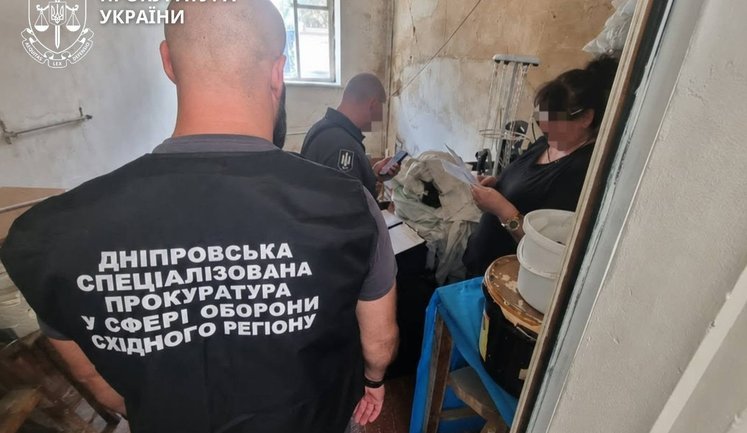
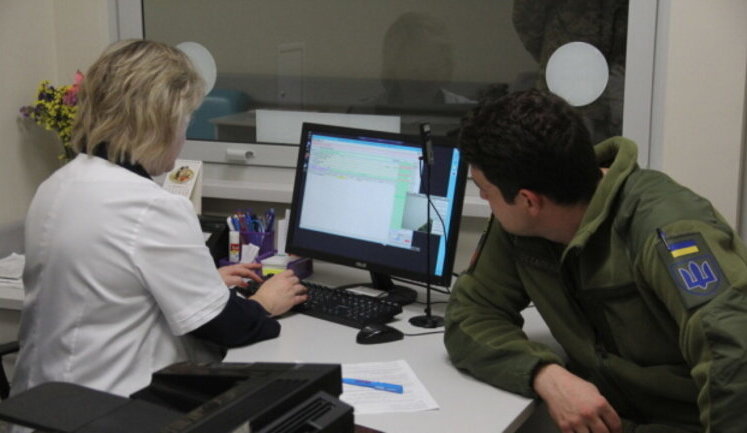
 $12,000 scheme: nurse in Dnipro was caught falsifying diagnoses to ’discharge’ soldiers. PHOTOS Under the procedural supervision of the Dnipro Specialised Prosecutor’s Office for Defence in the Eastern Region, a female employee of the Eastern Region Military Medical Clinical Centre has been served with a notice of suspicion under Part 3 of Article 369-2 of the Criminal Code of Ukraine. 1 452 16 Previously in trend: Evasion of military service
 76 charges against TCR heads and thousands of medical examinations cancelled – Tsutskiridze spoke about fight against evasion of mobilisation The National Police are stepping up their investigations to combat abuses within the TCR system, as well as in the process of issuing deferrals and the MMC’s findings. To date, 76 heads of TCR at various levels have been placed under suspicion; the legitimacy of deferrals granted to nearly 2,500... 10 720 74 Previously in trend: Corruption in TCR
 Man who had suffered stroke was drafted in Poltava region: Lubinets has appealed to Ministry of Defense and is demanding investigation Ombudsman Dmytro Lubinets is calling for an investigation into the mobilization of a man in the Poltava region who was drafted into the Defense Forces despite having suffered a stroke and suffering from chronic illnesses. 5 949 82 Previously in trend: violations during mobilisation
 Defense Ministry outlines mobilization reform: steps being prepared to change selection, military medical commissions and training The Ministry of Defense of Ukraine is working on a systemic solution that should correct mistakes made during military medical commissions and improve the quality of the mobilization pool. 9 707 49 Previously in trend: Mobilisation in Ukraine Reforms in the army
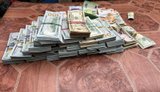 Head of MMC detained in Zakarpattia: about UAH 11 million in cash seized – SBI. PHOTOS Officers of the State Bureau of Investigation, together with the National Police and the Security Service of Ukraine, have detained the head of a military medical commission (MMC) at the Berehove district Territorial Center of Recruitment and Social Support in Zakarpattia region. 5 145 38 Previously in trend: Grafters Forgery of MMC documents
 SBI detains MMC head Pauk on bribery charges in Zakarpattia - nearly $500,000 found – media Law enforcement officers have arrested Volodymyr Pauk, a dermatologist and head of the military medical commission (MMC) at Berehove Hospital in Zakarpattia, on bribery charges. 8 207 50 Previously in trend: Grafters
 Media have analyzed market for evading mobilization: how do these schemes work, and how much do they cost? Oleh Kolomiets, a military servicemember at the Bucha District Territorial Recruitment and Social Support Center, declared gold bars worth 7.7 million hryvnias, as well as $43,500 and euros in cash, for the past year. Meanwhile, his official annual income was 366,000 hryvnias. 9 648 71 Previously in trend: Corruption and mobilisation
 Scheme involving "fake" medical certificates to evade military service exposed: former head of MMC in Kharkiv region notified of suspicion, – Office of Prosecutor General. PHOTO A scheme to forge medical documents, which enabled conscripts to evade military service and travel abroad, has been uncovered in the Kharkiv region. The former head of the military medical commission at one of the departments of the District TCR and SS has been notified of the charges against him. 2 137 18 Previously in trend: Forgery of MMC documents Evasion from mobilization
 Official at military hospital organised scheme to forge certificates for exclusion from military registration, - Office of Prosecutor General At the National Military Medical Clinical Centre ‘Main Military Clinical Hospital,’ a scheme was uncovered whereby an official from one of the departments organised the issuance of forged medical documents to obtain conclusions from military medical commissions (MMC) on unfitness for service. 2 041 4 Previously in trend: Evasion from mobilization
 Relatives of three prosecutors and former member of Vinnytsia MMC own elite apartments "Glacier" in Bukovel, - media. VIDEO+PHOTO Among the investors in the luxury apartment complex "Glacier Premium Apartments" in Bukovel, which officially opened on the first day of 2026, there are many officials of various levels. In particular, relatives of three prosecutors, as well as close associates of a number of officials. 10 628 54 Previously in trend: Owners of Bukovel apartment complex
 Lubinets reported numerous violations during MMC: over 1,700 complaints were received during year During 2025, the Office of the Ukrainian Parliament Commissioner for Human Rights received more than 1,700 complaints from Ukrainians regarding possible violations during the military medical examination process. The most common complaints were about formal medical examinations and the lack of... 1 607 16 Previously in trend: Applying for MMC Mobilisation in Ukraine
 SSU found $300,000 on head of Military Medical Commission in Dnipropetrovsk region: she issued fake medical certificates. VIDEO&PHOTOS. VIDEO&PHOTOS In the Dnipropetrovsk region, during a search of the head of the MMC at the local TCR, $300,000 was discovered. 11 069 83 Previously in trend: Corruption and mobilisation
 MoD plans to shorten list of diseases that determine unfitness for service – Reshetylova Ukraine’s Ministry of Defense has prepared changes to the criteria that determine citizens’ fitness for service in the Armed Forces of Ukraine. 17 735 104 Previously in trend: partially fit individuals
About 7% of "limitedly fit" are declared completely unfit for service - Ministry of Defence Among the "limitedly fit" citizens who have already passed a second MMC, only 7% have been declared unfit for military service. 4 013 78 Previously in trend: Applying for MMC
99% of those previously deemed "limited fit" are now found fit for service after repeated MMC – "Servant of People" Venislavskyi As of today, more than half of those previously classified as "limited fit" have undergone a repeat military medical commission (MMC). 15 730 142 Previously in trend: Applying for MMC partially fit individuals
Extension of term of MMC for those with limited fitness is not foreseen yet, - Ministry of Defence By 5 June, all citizens recognised as limitedly fit for military service must undergo a military medical commission again. 4 366 24 Previously in trend: Applying for MMC
 Electronic referral for MMC can now be generated without signature of TCR office head – Defense Ministry The government has simplified the procedure for undergoing a military medical commission (MMC) and strengthened citizens’ rights. 2 826 13 Previously in trend: Digitalisation of MMC’s work
 Cabinet of Ministers amends procedure for conscription during mobilization The Cabinet of Ministers has introduced amendments to the Procedure for Conscription of Citizens for Military Service during Mobilization in a Special Period. 10 724 13 Previously in trend: Mobilization deferral Procedure for conscription during mobilization
All partially fit individuals must undergo repeat MMC by June 5 – Ministry of Defense By June 5, 2025, persons who have the status of limited fitness must re-pass a military medical commission (MMC). 8 010 87 Previously in trend: partially fit individuals
First stage of MMC reform is coming to end: from now on, conclusions will be created online The first stage of the reform of military medical commissions is coming to an end. Starting from 1 April, all MMCs will have to issue their conclusions in electronic form. 3 394 22 Previously in trend: Digitalisation of MMC’s work
 Rada supports draft law on criminal liability of TCR and MMC employees for violations during mobilisation The Verkhovna Rada of Ukraine has adopted draft law No. 12442 in the first reading, which provides for criminal liability for violations of the legislation on defence, mobilisation preparation and mobilisation committed by heads of territorial recruitment centres (TCR) and members of military... 7 161 124 Previously in trend: violations during mobilisation
 $12,000 for demobilisation: military unit official detained in Odesa. PHOTOS In Odesa, a military unit official was detained for offering to influence members of the Military Medical Commission (MMC) and help individuals to military discharge in return for a bribe. 1 747 0 Previously in trend: Forgery of MMC documents
 Date of arrival for medical examination in "Reserve+" has been added to referrals for MMC - Ministry of Defence Electronic referrals to the MMC in the "Reserve+" app now contain the date of arrival for a medical examination. 7 102 12 Previously in trend: New options in Reserve+
 In Lviv region, TCR military officer was attacked and wounded while escorting conscripts to MMC On Monday, February 17, in the city of Zhovkva, Lviv region, unidentified persons attacked a military officer of the TCR when he was accompanying two mobilized citizens to undergo a military medical commission (MMC). 15 798 239
 Cabinet of Ministers has banned referral of persons with disabilities to MMC The Cabinet of Ministers has imposed a ban on referring persons with disabilities to the Military Medical Commission (MMC) for medical examinations. 7 596 17
VR has extended deadline for ’limitedly fit’ persons to undergo MMC until June 5 Today, on February 12, 2025, the Verkhovna Rada voted to extend the period for undergoing MMC until June 5, 2025 for persons who previously had the status of limited fitness. 2 854 11
Rada to consider term of MMC for "limitedly fit" in near future - "servant of people" Venislavskyi At its upcoming meetings, the Verkhovna Rada may consider a bill to extend the period of MMC (Military Medical Commission) for "limitedly fit" citizens for three months in order to avoid bringing them to administrative responsibility. 2 263 12
Draft law on postponement of terms of passing MMC is not yet ready for consideration in Rada, - "servant of people" Fedienko The Verkhovna Rada will not consider the draft law on postponing the timing of passing the MMC in the near future, as it has not yet passed all instances in the parliament. 4 639 24
 Deadline for passing MMC for those with limited fitness will be postponed until 5 June. Draft law is at final stage of consideration in Rada, - Ministry of Defence The draft law that provides for the extension of the period of military medical commission for persons with limited fitness for military service is currently at the final stage of consideration in parliament. 2 655 16
TCR will not impose fines on persons liable for military service who fail to undergo MMC by February 5 - Vereshchuk Citizens liable for military service who fail to undergo a Military Medical Commision (MMC) by 5 February 2025 will not be fined or put on the wanted list. 11 551 74
Period for undergoing MMC for persons with limited fitness may be extended for another four months - Vereshchuk In the near future, the Defense Committee of the Verkhovna Rada will register a bill with amendments to the MMC (Military Medical Commission) for persons with limited fitness. 7 015 55
Electronic referrals to MMC in "Reserve+" will be launched on January 31, - Chernohorenko Starting January 31, electronic referrals to the Military Medical Commission (MMC) will be available in the Reserve+ app. 3 958 21
Electronic referrals for MMC are being introduced in Ukraine, - Shmyhal Continuing the systemic digitalisation of the state, today, on 28 January 2025, the Cabinet of Ministers gave the "green light" to electronic referrals to the MMC for persons liable for military service. 10 263 42
 Chief psychiatrist of Armed Forces of Ukraine, Druz, who became rich by more than $1 million and bought real estate and luxury cars during invasion, is detained - SSU. PHOTOS The Security Service of Ukraine, with the assistance of the Minister of Defence and the Commander-in-Chief of the Armed Forces, detained the chief psychiatrist of the Armed Forces, who is the Deputy Head of the Central MMC and decides on the fitness of military personnel for service. This is... 21 737 114
"Limitedly fit" individuals have to undergo MMC by February 5 and comply with the provision of law. There is no conflict, - "Servant of people" Venislavskyi Citizens liable for military service who have previously received the status of "limitedly fit" must re-undergo a military medical examination (MMC) by February 5 to comply with the law. Otherwise, they will have to pay a fine of 17 thousand hryvnias. 11 051 109
"Limitedly fit" individuals who fail to undergo MMC by February 5 will be fined. Fines range from UAH 17,000 to 25,500 - Cherkasy TCR and SS Persons liable for military service who previously had the status of "limited fitness" must undergo a military medical examination (MMC) by February 5 this year. 37 663 132
Reform of MMC will be held in three stages and will start working at end of February - Ministry of Defense The reform of Military Medical Commissions (MMCs) will take place in three stages. The first of them will begin on February 28, 2025. 4 805 17
 "Servant of People" Kravets left Ukraine due to fears of a scandal over false conclusion of MMC - media Roman Kravets, the "Servant of the People", who is also known as the owner of the "Joker" Telegram channel, left Ukraine on 26 October 2024 and has been in Europe since then. Kravets left the country after a correspondence with a Hromadske journalist, who soon published an extensive... 33 232 89
 You no longer need to apply to TCR, you can undergo medical examination in convenient place – Umierov on reform of MMC The Ministry of Defense of Ukraine, together with the Ministry of Health, has launched a reform of military medical commissions (MMCs), which allows people to undergo a medical examination in any civilian healthcare facility of their choice. 9 513 40
 Institutions that carry out MMC are to be inspected, - Defense Ministry spokesman Lazutkin The Ministry of Defense of Ukraine plans to initiate inspections of institutions that carry out military medical commissions (MMCs). 3 041 11
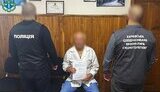 Head of MMC in Kharkiv region helped 15 draft dodgers to go abroad by falsifying data. PHOTO The head of the Military Medical Commission (MMC), who facilitated the departure of 15 people liable for military service abroad, was exposed in the Kharkiv region. 4 032 10
 General Sodol resigned from AFU through MMC, - "servant of people" Bezuhla "Servant of the People" MP Mariana Bezuhla said that the former commander of the Joint Forces of the AFU, General Yurii Sodol, resigned through the MMC. 29 366 154
 Ministry of Defense has developed model of digital MMC: medical certificate can be obtained in any hospital. VIDEO The model for the digital reform of the MMC has already been developed. Draft amendments to the regulations are currently being developed. 10 482 41
 SSU and National Police dismantle three more schemes for draft dodgers: 225 fake "students" exposed in one of universities. PHOTOS The Security Service and the National Police dismantled three more corrupt mobilization evasion schemes operating in Kyiv, Cherkasy and Zakarpattia. As a result of complex measures, all organizers of the fraud were detained. Among them are the heads of two private higher education institutions... 5 729 7
 General Staff on innovations in mobilization mechanism: "Volunteer will not enter TCR at all" The General Staff of the Armed Forces of Ukraine spoke about innovations in the mobilisation mechanism that allow military unit commanders to call up persons liable for military service and reservists for military service during mobilisation without the participation of the TCR and SS. 16 543 24
 MMC doctor in Dnipropetrovsk region demanded UAH 20 thousand bribe for changing fitness for service category - prosecutor’s office. PHOTO In Dnipro region, a doctor of the military medical examination board was detained for demanding a bribe from a serviceman for changing the fitness for service category. 6 058 12 Previously in trend: Grafters
 Zakarpattia Regional TCR denied searches of head of Khust military commissariat Zubatov and stated that they were actually checking MMC The Zakarpattia Regional Territorial Center for Recruitment and Social Support called the information about the alleged searches in the Khust Regional Territorial Center for Recruitment and Social Support and its head Vasyl Zubatov false and groundless. They say that they were checking the... 3 132 9
 In Zhytomyr region, doctor of MMC demanded $1500 from wounded soldier for confirmation of disability - National Police In Zhytomyr region, law enforcement officers detained a doctor of the MMC (Military Medical Commission) on bribery, who extorted money from a wounded soldier for assigning a disability group. 4 294 20 Previously in trend: Grafters
Page 1 of 2
more news