



Third of Russia’s oil refining capacity has already been destroyed. Will pace of middle strikes be enough to push Russia’s fuel crisis to brink
Drone Industry
Trident Group is developing modular onboard autonomy for strike drones, including target tracking and recognition in electronic warfare conditions. The company’s products include AI modules for tactical-level UAVs, interceptors, and middle- and deep-strike drones, which have already undergone combat testing with units of the DIU, the NGU, the SOF, and the Airborne Assault Forces.
Middle strikes are increasingly being referred to as a new phase of the war: this class of drones, capable of striking targets up to 300 km away, bridges the gap between tactical FPV drones and strategic UAVs and missiles. Together, middle and deep strikes have already taken a third of Russia’s oil refining capacity out of commission. How far can Ukrainian middle strikes reach—and who will feel their impact first: Russia’s military machine or its economy? BusinessCensor discussed this with Yurii Humenchuk, CEO of Trident Group.

Blows to Russia's economy: logistics, fuel, Crimea
– This spring and summer, Ukraine sharply intensified its strikes against the enemy’s nearby logistics infrastructure: oil depots, transshipment points, and transportation hubs within 150–250 km of the front line. What is the real bottleneck in this campaign: the refineries themselves or the delivery system from the plant to the consumer—and what role do middle strikes play here?
– Strikes must be sustained to have maximum effect. Russia is a large country with significant resources, and if the intensity of the strikes is inconsistent, it will simply adapt. We’ve taken 25–30% of the oil refining industry out of commission—that’s a lot, but it’s far from everything. And this is precisely where middle strikes play a key role: they allow us to simultaneously put pressure on both production and logistics—cutting off the arteries through which petroleum products flow from refineries to consumers. Without this, the enemy simply redistributes what remains and stabilizes. The greater and more sustained our pace, the harder it is for them to adapt.
We need to pursue two approaches in parallel: increasing the number of assets and increasing the effectiveness of each strike. If we increase the effectiveness of deep strikes by 10%, that alone will yield significantly better results with the same number of drones. But the best option is to pursue both approaches simultaneously.
At the same time, we are not operating haphazardly. We understand where the enemy’s most critical points are—those that can trigger either major economic problems, supply disruptions on the front lines, or internal social unrest. When we strike targets in the Moscow or St. Petersburg regions, we are also significantly increasing social tension within the aggressor nation.
At the same time, we need to work on logistics to ensure this effect isn’t neutralized. But not everywhere—Russia is a large country, and in many places it simply doesn’t make sense. We’re talking about specific arteries that sustain the system precisely in those areas where we’re already operating.
– You say that the strikes are focused on specific arteries that supply the system in certain areas. One such artery is the so-called "Novorossiya" route, which connects Russia with occupied Crimea and also runs along the front line in the south. If we focus specifically on it—who will feel the impact first: the residents of Crimea or the Russian Armed Forces in the south?
– Let’s put it this way: the residents of Crimea themselves are unlikely to hold any strategic value for the Kremlin. In Russia, only the Moscow and St. Petersburg regions are critical. The rest—including Crimea—is not particularly important to the authorities in this regard.
Therefore, the main objective of operations along this route is Russia’s military potential. Crimea is a massive logistical hub for the Russian Army. Disabling this logistical artery is, first and foremost, an effort to reduce its combat effectiveness.
How Russia is adapting—and why it won't help
– With the widespread use of middle strikes, quite a few videos have appeared online: Russians are painting trucks in zebra-stripe camouflage and covering fuel tankers with wooden planks. Clearly, this is an attempt to fool computer vision systems specifically—so that an AI-powered drone won’t identify the vehicles as military targets. To what extent do such methods actually threaten the effectiveness of your solutions?
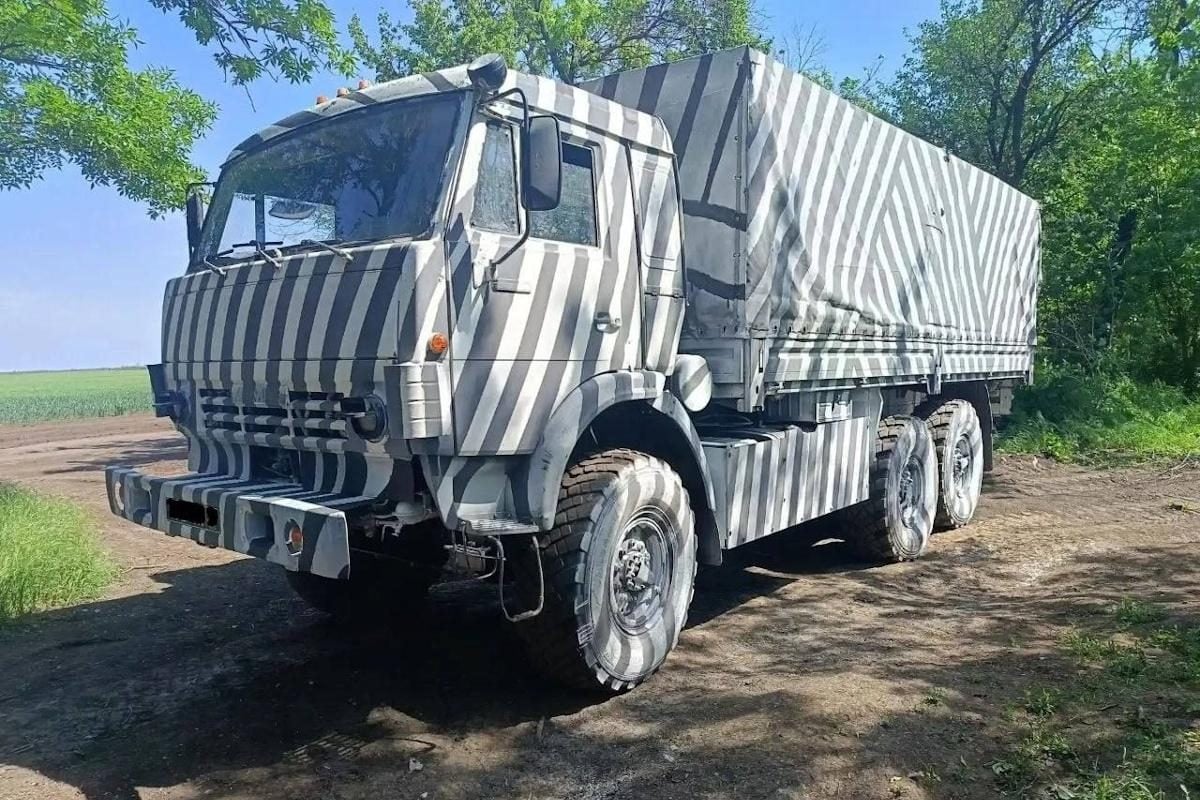
– That’s exactly the point: the situation is changing very quickly. If you take a relatively simple tracking algorithm that isn’t adaptive, it will have a hard time handling such scenarios. But what we’re seeing now is no longer systems based on simple algorithms. For more complex models, the task of recognizing camouflaged targets is entirely realistic.
Thanks to the foundation and expertise we have, we can say this: today they paint it to look like a zebra, but we add the necessary functionality—and that zebra will be of no concern to us. We simply solve this by having the ability to adapt the system to a specific problem.
In addition to exotic animals, the enemy is actually trying to camouflage fuel tankers in other ways. Of course, they will continue to look for ways to defend themselves. But the fact that we can adapt our solutions quickly is unlikely to help them much.
– After Ukraine began using FPV drones on a large scale in 2023, Russia recognized their effectiveness and relatively quickly ramped up its own production. Is the same scenario possible with artificial intelligence: they saw that our AI solutions work—and simply copied them?
– It’s hard to say, because most of the development work remains invisible until the finished solution is released. I really hope Russia hasn’t been working on this intensively. And if they now decide to move in this direction, seeing how effective the Ukrainian side’s solutions are—assuming they lack the necessary foundation—it will take them at least several years.

There is a fundamental difference between a drone and an autonomous system. A drone is much easier to copy—it’s a matter of hardware and manufacturing. An autonomous system cannot be reverse-engineered: you can’t take it apart, look at the components, and reassemble it the same way. It is developed in close collaboration with military users, tailored to specific scenarios, and requires constant evolution. Even if you were to copy a ready-made system, you would gain practically nothing—because it would be merely a snapshot, not the ability to evolve. And it is precisely this evolution and the ability to quickly adapt to different scenarios and platforms that are key here.
– It’s well known that most components for Ukrainian drones are manufactured in China. But this dependence also applies to AI modules: many computer vision solutions use the Chinese Raspberry Pi microcomputer. If China tightens export restrictions—how much would this specifically impact the AI component of middle strikes, and are there already ready-made alternatives?
– The situation here is quite pragmatic. If we can currently source a sufficient quantity of components from China at a reasonable price, that’s what we do, because it allows us to produce more products and achieve greater results. But responsible companies need to be working on an alternative plan at the same time.
Raspberry Pi, for example, can be sourced both in China and elsewhere—they’re simply more accessible and cheaper in China. If the situation changes, we’ll buy more from British plants. Delivery times will be a bit longer, and the price will be slightly different, but it’s not a major issue.
There are also alternatives, such as Nvidia products—they’re in a slightly different class in terms of performance and price, but they’re suitable for a number of scenarios.
Diversification poses fewer problems for AI solutions. The bigger issue is components for drone manufacturers themselves. In this area, we’re still largely dependent on China, and there are a number of components that we haven’t yet been able to source locally.
A new phase: from FPV to autonomous vehicles
– There’s a lot of talk in the media right now about a new wave of weapons evolution. Just as FPVs once changed the game on the front lines, systems equipped with artificial intelligence are now emerging. How do you assess this transition overall?
– This is precisely the stage of evolution that should take us to the next level. At first, there were no drones; then they appeared—that was a leap from conventional weapons to unmanned systems. Now comes the next logical step: the transition from simply unmanned systems to fully autonomous ones.
So far, AI is being used in a fairly limited and basic way. But even this is yielding significant results on the front lines. By 2026, we as a country plan to produce about seven million drones. The effectiveness of these drones is still low—at best, two million of them actually reach their targets. We could scale up the quantity—increasing production from seven to ten or fifteen million—but that would require additional components, production capacity, engineers, and operators. It would make much more sense to improve the effectiveness of the fleet we already have. Autonomous AI systems are precisely what enable us to boost that effectiveness.
So far, we’ve realized only a very small percentage of the potential for autonomy. If we were to increase efficiency by 5–10% right now, that would already be a huge gain—one that would be both visible and noticeable. But we need to increase it not by 5–10%, but by 50% or more. The road to realizing the full potential of autonomous systems is still quite long. We’re just getting started.
What's next: from the mother drone to full autonomy
– How realistic is the scenario often described in Western media: a reconnaissance drone identifies a target, transmits its coordinates to a mother drone, which then launches an FPV?
– This isn’t science fiction. And such a scenario is much closer to reality than many people realize.
If we break it down into stages—target detection by the reconnaissance drone, launch of the strike asset, its navigation to the target, final guidance, and damage assessment—guidance is arguably the most complex, yet also the most critical part. If guidance is handled effectively, many other stages in this chain will already be resolved or close to being resolved.
– What is the main restriction for high-quality guidance now—a lack of training data, or underpowered onboard computers?
– It’s not a question of data, nor is it a question of underpowered computers. A system that actually works in combat conditions requires time, resources, a systematic approach, and expertise to develop. It simply couldn’t have been done well before — that’s all.
What we’re seeing now — the solutions that are beginning to emerge — is the result of work that has been carried out "behind the scenes" for several years. They weren’t released until they were ready. Now they’re ready — and they’re starting to come out, with ever-improving quality and effectiveness.
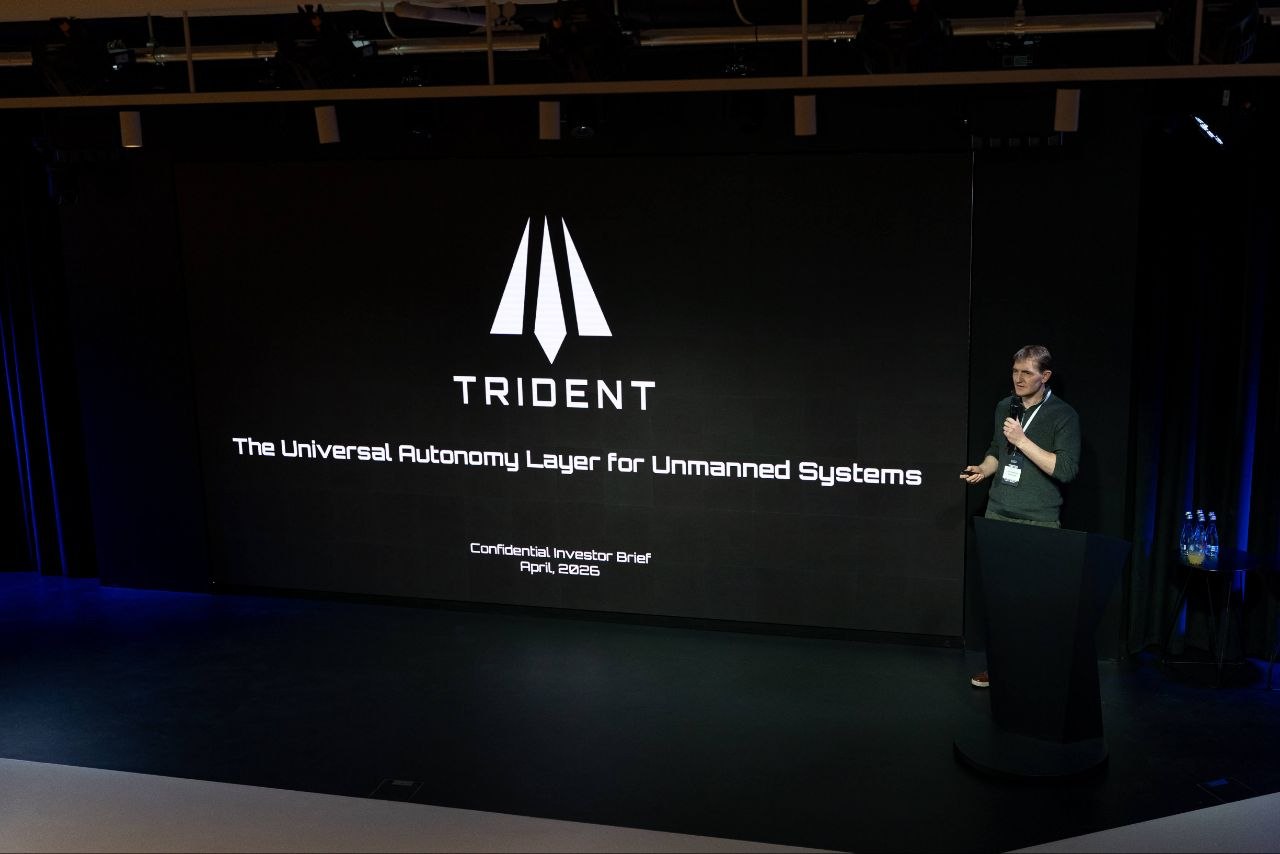
– Your company is a participant in the Defence Builder defense startup accelerator and works closely with combat units. What kinds of requests regarding AI are currently coming in from the front lines?
– At the start of the full-scale war, expectations were somewhat exaggerated—ranging from "smart bullets" to practically Terminators. Then came a long period of trial and error, disappointment, and a certain degree of skepticism. Today, our military personnel have a good grasp of the technology, and their expectations have largely aligned with the systems’ actual capabilities.
In terms of specific requests, they fall into two categories. The first is the automation of analytics: we collect enormous volumes of unstructured data from various sources, and it is physically impossible for human resources to process this massive amount of data effectively. Much critically important information is either lost or arrives too late. AI effectively solves problems of this scale.
The second area is the automation of strikes. Three components are required for drones to operate: the drones themselves, reliable communications, and qualified operators. The drones are in relatively good shape, but communications are always a priority target for the enemy, and there is a physical shortage of operators—the pace of drone production is outpacing our ability to train personnel.
Both problems are solved by autonomous navigation, detection, and guidance systems that operate directly on board and do not rely on a stable connection with the pilot. Moreover, high-quality autonomy can control a drone as well as the best pilots—which radically lowers the skill requirements for operators and allows for a much larger pool of candidates.
– How do you expect AI to develop in warfare between 2026 and 2028?
– I expect very rapid development. No serious technology is created in a matter of days — it requires years of painstaking work. But once the foundation has been laid and we have the first successful results on the battlefield, further evolution happens much faster.
Today, we’ve finally moved from the "quiet development" phase (prototyping, testing, and endless preparatory steps) to the phase where finished products are actually beginning to reach the front lines. For us and for the enemy, this means one thing: new solutions will emerge at an ever-increasing pace.
In the coming years, there will be a significant increase in the capabilities, quality, and, accordingly, the number of autonomous systems. And this goes beyond mere terminal guidance during the final stage of engagement. We will witness a revolution in high-quality target detection, autonomous navigation in conditions of complete communication blackout, and the automation of reconnaissance operations. Taken together, all of this will fundamentally change the rules of the game, and this is extremely important for our victory.


