



"If son-in-law is in mood, he’ll bring your boys back in trunk," sister of 155th Brigade commander’s wife said after brothers’ abduction
Roman and Maksym Moseichuk, who had been taken from their home, were found murdered and buried on the grounds of the 155th Brigade’s training area. After their bodies were exhumed, 15 bullets were found in one brother’s head and eight in the other’s. They were "dealt with" because the brigade commander’s wife, who grew up in the village of Kalynivka in the Rokytne settlement community of Kyiv region, was disturbed by… the sound of motorcycles on the road.
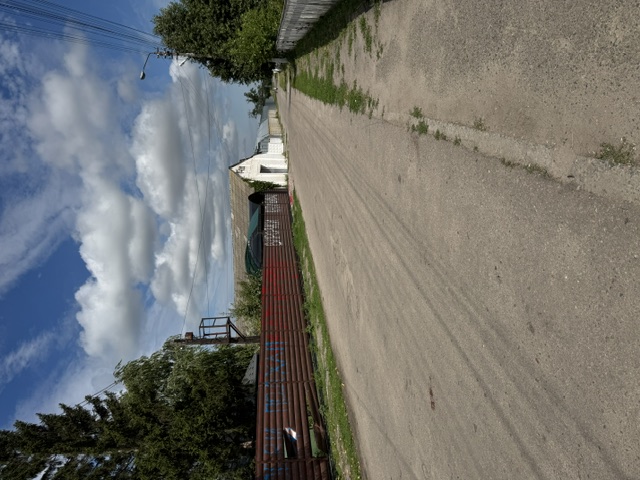
Similar stories have been described in Ukrainian literature, with people prepared to kill not only their neighbours but even their own relatives over a patch of land or a pear tree on a property boundary. But what happened in the village of Kalynivka in Kyiv region involves a great many aggravating circumstances. In a country at war, a brigade commander sends subordinates from the front to "deal with" neighbours his wife has complained about. And they go. They search for those responsible. They abduct people who are later found murdered and buried at the brigade’s training ground… Having spoken with friends, neighbours and acquaintances of both the victims and the family at the root of this settling of scores, I realise that many more unexpected details of this case will emerge during the investigation and trials.
But first things first.
About the village
The village of Kalynivka lies between Bila Tserkva and Kaharlyk and is part of the Rokytne community. It is a very small settlement with neither a school nor a church. There is only a small shop and the homes of its residents, who number 468 according to Wikipedia. But it seemed even smaller to me.
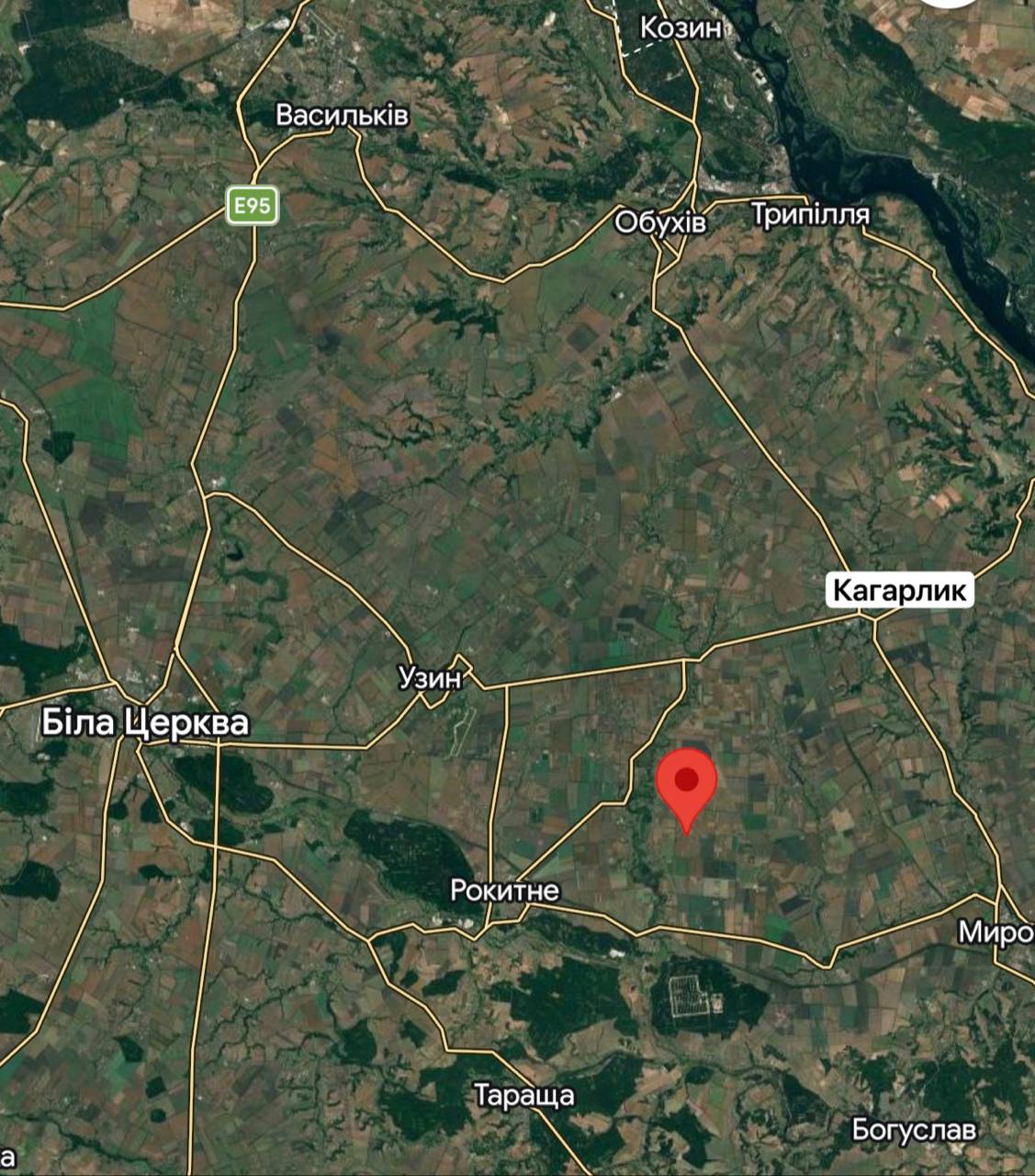
When I arrived on Monday afternoon, the village was bustling with activity: grass was being mown, and bushes cut back along the roadside, while people travelled by bicycle, small electric vehicle, and motorcycle along what turned out to be the main road. The large number of children here was striking.

All those involved in the horrific events lived on the same street. The gates of two houses are now covered with the words "executioners," "murderers," and "drop dead," while the driveway leading into the yard of the home where the brigade commander’s wife’s family lived has been splashed with red paint. It is chilling. No one comes out of these homes, although the wife’s aunt is said to remain in the village. The windows of her house are slightly ajar. Despite the bright daylight, the lamp at the entrance was on. A note requesting the gas meter reading had been wedged beside the gate handle. There were also traces of smashed eggs thrown at both the fence and the house itself.
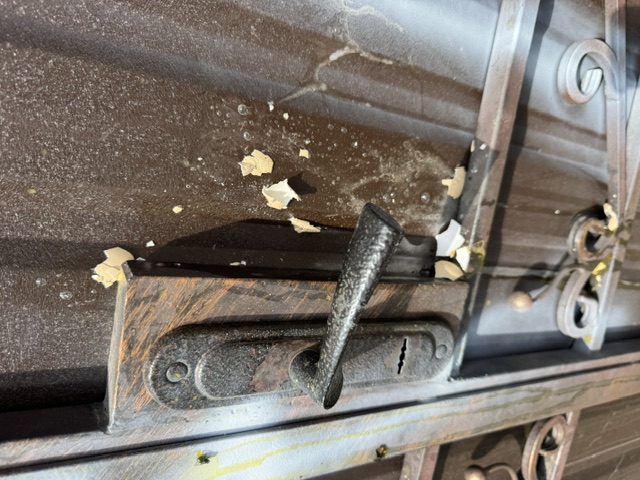
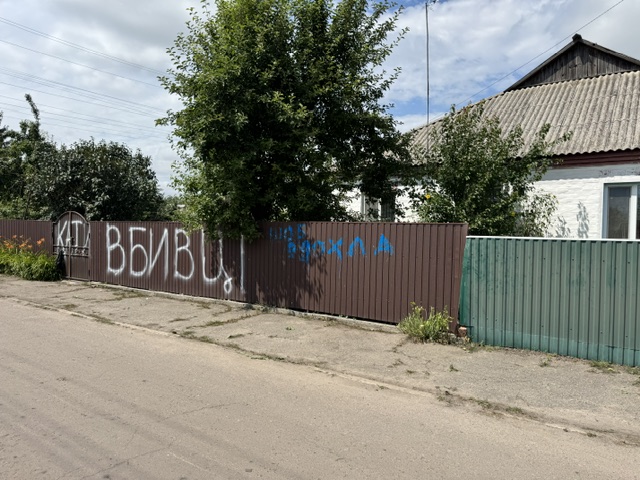
The gates of the aunt’s house stand directly opposite the house from which the brothers, Maksym and Roman Moseichuk, were abducted. The property where the aunt lives is divided into four separate entrances and four yards. Her neighbour, who is also her co-godparent, arrived at the property just as I approached it. She arrived on a moped. In this village, I paid particular attention to the modes of transport, because they were what led to the tragedy.
Less than 100 metres from the aunt’s house and that of the murdered brothers, on the same Molodizhna Street, is the family home of the parents of the wife of Stanislav Luchanov, commander of the 155th Brigade. There are no buildings opposite it, only a football pitch and a single-storey building that locals call the community centre. Two benches stand by its entrance.
Two houses down from the property whose gates are also covered with the words "executioners," "murderers" and "drop dead" and splashed with red paint, there is a small shop around the corner.
I cannot even say where the centre of the village is; it is so small. Everything is close by. Everyone is in full view of everyone else.
A farm stands immediately beside the home of the brigade commander’s wife’s parents. Almost everyone in the village once worked there; now, only some residents do. Villagers now look for work in Rokytne and farther afield.
The disappearance of the Moseichuk brothers
The arrival of strangers in the village is met with watchful eyes and heightened attention. After we began talking with locals, I was told that someone had photographed my car’s licence plates. Just in case. But it was precisely this vigilance among local residents that helped identify those who had taken the Moseichuk brothers from the village.
– "I was the first person the servicemen approached while searching for people on some strange list", says Vasyl, a friend of the Moseichuk brothers. "They stopped near me because I was standing outside my house. They were dressed entirely in black and were armed. They gave the first and last name of a fellow villager, asked for his address, and wanted to see a photograph of him. It was all very strange. Of course, I did not tell them anything. They then went to the shop. They showed the shop assistant a list of seven people. It was a message on a phone, and they asked her to give them the people’s addresses. But she immediately realised that one of them was 17 years old and therefore a minor, so she also became suspicious and told them nothing. We later learned that these servicemen had gone to the district police department in an attempt to obtain photographs of the people on the list. But no one helped them there either. Incidentally, my first and last name were on that list. The shop assistant told me that afterwards. These men did not know what the people they were looking for looked like. They had simply been sent a list of names."
Vasyl discreetly photographed the car in which the strangers had arrived. This later greatly helped investigators identify the perpetrators of the horrific murders. It was a black KIA, which is commonly described as being "on foreign plates." It may have been a volunteer-supplied vehicle brought in from abroad for the military…
– "On the evening of 27 June, I was supposed to be with Maksym and Roman in their yard", Vasyl continues. " But my plans changed during the day, and I went to the lake for an overnight stay. If I had been with the Moseichuks, they would have taken me too!"
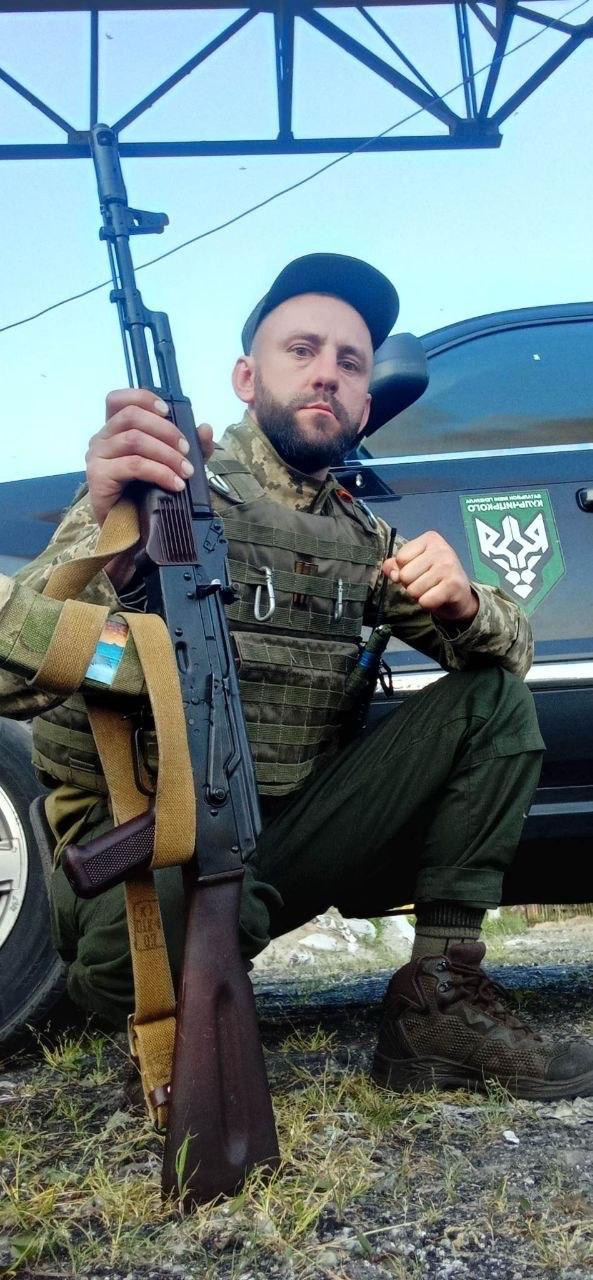
Maksym Moseichuk served in the National Guard of Ukraine for two and a half years.

Photo: Roman Moseichuk

The brothers’ father died in 2023.
– The day before, a drone flew very low over the village, says Halyna, a neighbour of the abducted men. I even asked my mother whether she could hear it and whether she could see that the drone was practically brushing against the branches of our trees. It was literally peering into every yard. And it was surveying the yard of the house opposite, where Maksym and Roman lived.
– What do you think those operating it wanted to see?
– The best way to enter the yard. They were not locals and did not know their way around. The brothers had CCTV installed. The intruders entered their yard from the other side, where the camera was not working.
– It is impossible to see from a drone that a camera is not working…
– We think the attackers were told about this by the aunt of the brigade commander’s wife, who lives opposite the brothers’ yard and is my neighbour, or by her daughter Maryna.
– But why did they take Roman and Maksym specifically? They were not on the list of people the strangers were looking for, were they? And why, then, was the drone flying specifically over their yard?
– "The wife’s relatives could have directed them and told them whom to target", Halyna believes. "To be honest, we do not understand why they took Maksym and Roman if it was their brother Serhii who was on the list. He does not live in the village; he lives in Rokytne."
"After those servicemen went into the shop, several other men and I were standing nearby, talking about the strangers," Vasyl adds. "They had just come out after speaking with the shop assistant. One was eating ice cream, and the other was drinking Pepsi. Daryna’s father, old Pshyk, drove past them. He slowed down beside them, said something, and they drove their car straight towards us. A coincidence? Could he have pointed us out, including me, since I was on the list? He could have. We immediately scattered in all directions."
Late in the evening of 27 June, the abductors entered the Moseichuk brothers’ yard not through the gates but from the side, where the fence is concealed by bushes. Some neighbours heard gunshots. One of the brothers was shot in the leg. Balaclavas were pulled over both men’s heads; they were dragged into the car, and the CCTV equipment was ripped out and taken away. The abductors then drove off.
Around 2 July, when it had become clear that Maksym and Roman were missing and had most likely been abducted, Maryna, a cousin of the brigade commander’s wife, walked through the village streets and brazenly told people: "If the son-in-law is in the mood, he’ll bring your boys back in the trunk." She said many other things that the village will never forgive her for. Moreover, everyone believes that she, like the brigade commander’s wife’s family, knew full well what was happening to the men. She was also heard saying at the time: "Look for their graves"…
Roman and Maksym’s brother Serhii filed a missing-person report with the police. This was when the photograph of the car with foreign licence plates proved useful.
– "Last week, investigators conducted investigative procedures in the Moseichuks’ yard with the same servicemen who had been searching for the people on the list," Vasyl says. "That was how we realised that Maksym and Roman were no longer alive, although no one had yet told us so directly. That same night, the words "executioners" and "murderers" appeared on the family’s fences, because that is what they are. The following week, a Hromadske film crew arrived, and rumours spread that Maksym and Roman’s bodies had been found buried at the 155th Brigade’s training ground in Poltava region. Information about this later appeared online, as did reports that servicemen from the brigade implicated in the abduction and murder of the Moseichuks had been detained."
That day, the parents of Daryna, the brigade commander’s wife, disappeared from the village. The brigade commander himself had been reported AWOL, as he too had fled his duty station. Daryna and the children also vanished. The aunt appears to be at home but does not leave the house.
About the motorcycles
It is impossible to believe that complaints about the noise of motorcycle engines caused the conflict that led to the abduction and murder of two men. As we spoke on Molodizhna Street in Kalynivka, local residents rode past us on motorcycles dozens of times. A lawnmower was rattling away somewhere nearby as well. Drive into any village today, stop and listen. You will hear sawing somewhere, mowing somewhere else, and someone driving past. Is that now grounds for abducting and killing people?
– Halyna, your house stands right beside the road, and there are children in your yard. Did the motorcycles bother you as well?
– "No one bothered me because no one deliberately raced along the street, did wheelies or held races," the woman says. "Someone would ride past from time to time, and that was all. I will say more: I am surprised my son was not on that list because he also has a motorcycle… My neighbour, Daryna’s aunt, called the police on the brothers twice over allegedly loud music coming from their yard."
– Was the music really that loud?
– No, not really.
– "I was friends with Daryna’s brother for many years, until they became wealthy and distanced themselves from the entire village," Vasyl says. "I visited their home, and we spent time together. Here is the thing: Vadym also has a motorcycle that he rides; it does not just sit in the yard. After Daryna married that brigade commander, four quad bikes appeared in the yard. And they are not electric. But apparently they are allowed to own and ride such vehicles, while everyone else is forbidden."
– "You know, as soon as this family acquired wealth, they immediately began complaining about their neighbours: that children sat on the benches near the community centre and listened to music, that children played at the stadium. The aunt would say that children had scattered sweet wrappers near her yard, then complain that the motorcycles were too loud for her as well," Halyna adds. "And all of this was accompanied by: "Never mind, the son-in-law will deal with everything." He dealt with it…"
About Daryna’s family
– "Daryna’s parents have lived in Kalynivka all their lives," Halyna says. "I am the one who arrived here about ten years ago. By then, Daryna’s aunt was already living on the other side of the wall; our house is divided into four sections. Daryna and Maryna grew up before our eyes. The entire village realised that Daryna had married well when her family’s financial circumstances began changing rapidly. Daryna’s parents had a corrugated metal fence, as did her aunt, but then they installed automatic gates and replaced the fence with a taller one. Vehicles carrying construction materials kept arriving at their home, and agricultural machinery stood outside the yard…"
– "Daryna always wanted more money and the power to punish others," Mykhailo says. "She once dated a police officer, and there were times when she told fellow villagers, "My boyfriend will come and deal with you." Both Daryna and Maryna caused plenty of trouble in the village. When Daryna married Stanislav Luchanov, all her relatives began encouraging others to join Skelia, saying they would have it good there and the money was good. They would have to pay for that kind of "mobilisation," but their service conditions would be good."
"Daryna’s relatives began telling people they disliked: "Just you wait, they will deal with you yet: where you served and why you are not serving now." And yet Daryna’s aunt’s husband is somehow not fighting in the war. My neighbour boasted a great deal about her son-in-law. She was delighted with the wealth the family had acquired," Halyna says.
– Did many men from your village go to fight?
Halyna’s answer stunned me:
– My husband is missing in action. He was attached to the 95th Air Assault Brigade… Families who have also lost relatives in the war live near us, and others have relatives currently serving at the front.
As is known, the Moseichuk brothers’ father died in 2023. One of the brothers continued fighting in the National Guard for another year after that.
– Do you know how Daryna met her current husband?
– "She joined the military and crossed paths with this Stas somewhere during training," Halyna replies. "They have been married since 2023. She gave birth to his two children, who were supposedly the ones disturbed by the sound of motorcycles on the road."
– "Everything was fine until this family came into money," Vasyl adds.
After Luchanov appeared, both Daryna and her brother deleted all their social media accounts. Their friends noticed this as well.
– Did Daryna live here with the children permanently?
– "No, she only visited from time to time. As far as we have heard, she and Luchanov own apartments in Rokytne, Obukhiv and Kyiv. Incidentally, Daryna, her father and her brother are all active-duty members of Skelia," Mykhailo adds. "People in the village even joked that they would soon enlist their children in Skelia as well."
This makes the unit’s post all the more strange and paradoxical: do not drag our regiment into this story, it said, because Luchanov now serves in another brigade. I hope that everything about the "assault troops" from Luchanov’s wife’s family will also come to light. Unfortunately, there are plenty of examples of relatives of unscrupulous officers being listed as members of combat units and even receiving pay under combat orders as though they were permanently deployed on the front line. Not all such cases are known. But this is also important to establish.
– Have you ever spoken with Stanislav?
– "I have not," Mykhailo replies. "But I witnessed him speaking to a teenager. He once walked out onto the road just as the boy was riding past on a motorcycle. That brigade commander stopped him. He was absolutely plastered."
– You mean he was drunk?
– "Yes", Mykhailo continues. He told the boy, "Get the whole biker gang together. I want to talk to them." There was no further conversation. Whenever he visited, he never left his father-in-law’s yard, but he launched a Mavic on more than one occasion. He flew it around, surveying the village… What kind of person do you have to be to kill two people over a motorcycle, over loud noises on the road? Just imagine: 15 bullets were found in one man’s head and eight in the other’s."
So the commander of a brigade deployed in the Pokrovsk sector orders and sends a group of his soldiers deep into the rear to "deal with" neighbours who are bothering his wife… He sends them in a volunteer-supplied vehicle that was clearly not brought over for settling scores. They take a drone with them, even though we know full well that there are still not enough drones at the front and constantly see fundraising campaigns specifically for unmanned aerial vehicles… And not one of them refused? Not one said that he would not do such a thing? I am certain that, once in court, they will claim they were forced, placed in circumstances in which they had no choice but to go and do something, and threatened… They will blame one another and their commander for everything.
On justice
– What punishment do you expect?
– We hope that everyone involved in this case will stand trial. But in addition to Luchanov, Daryna and her relatives must also be held accountable because they were the root cause of what happened. Moreover, how strong a sense of impunity must the brigade commander have had to organise and carry this out! Skelia and those who came from its ranks have long been talked about in the military and beyond. Who supports them, shields them and allows them to behave this way? The military leadership must take responsibility for what happened in our village. Our village will not remain silent and put up with this!
The ages of those at the centre of this tragedy should also be noted. The Moseichuk brothers were in their thirties. Daryna is 23. Her husband, Stanislav Luchanov, is considerably older than her: he is well over 40.
I have already heard claims that the brothers also caused trouble in the village. But no one I spoke to in the village even hinted at this. And when I asked specifically about these men, no one looked away.
– Did you feel safer in the village after those who carried out the abduction and murder were detained?
– "No," Halyna replies. "The children and teenagers are particularly frightened. Especially since we all know whose names were on the list. I repeat: one of them was a minor. Everyone is afraid. My son does not even go out into the yard in the evenings. Who knows who might seek revenge against us, or how?"
– "I am not afraid for myself, but I have parents and a family," Vasyl adds. "And I was even on that list…"
About the Moseichuk brothers’ mother
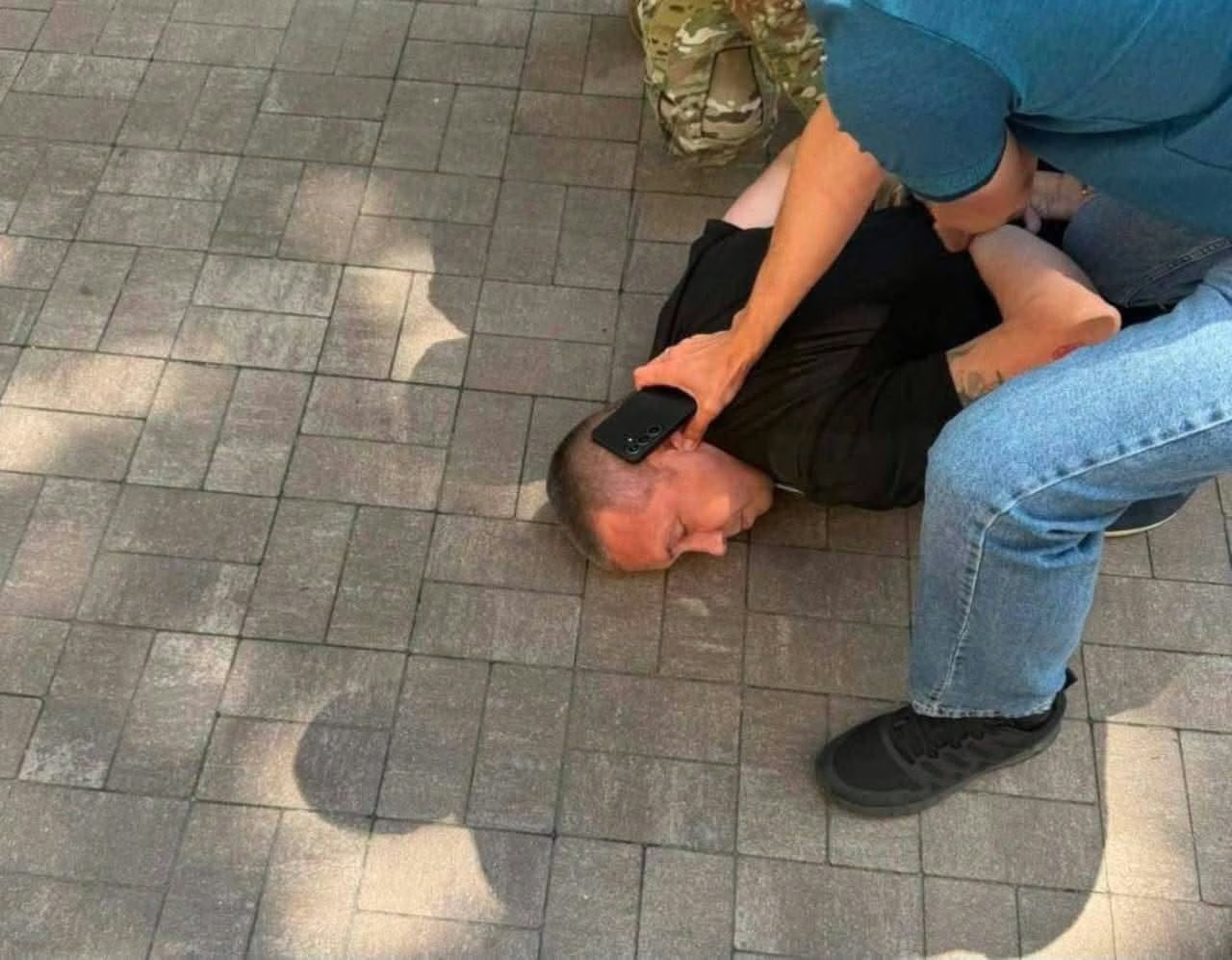
Stanislav Luchanov being detained in Kyiv on 13 July
While we were speaking with Maksym and Roman’s fellow villagers, Luchanov was detained in Kyiv, and Serhii, Maksym and Roman’s brother, was undergoing an identification procedure. People in the village had already begun discussing the brothers’ funeral.
– Has the men’s mother been told that her sons were murdered?
– "Still not," Halyna says. "She still does not know what happened. The woman buried her husband in 2023 and has since suffered two strokes. Her neighbours have been caring for her during these days and are afraid of how she will react to the news that both her sons are dead."
Halyna shakes her head and looks at the windows of the house a few metres away, where the murdered men’s mother is staying. I doubt I was the only one who immediately thought that such news could kill the woman…
Maksym and Roman are to be buried in the Alley of Heroes at the local cemetery, beside their father. "There is and can be no other place for them," their fellow villagers believe. "Maksym served in the military himself and defended the country with honour. His brother deserves to be buried beside his father and brother."
About the brigade commander
Stanislav Luchanov
Accounts of Luchanov’s "combat" record began to include claims that he had served in the 93rd Brigade. In an attempt to verify this, the brigade initially examined personnel orders dating back to 2014. They found one Luchanov, a junior lieutenant. However, his first name and patronymic did not match the brigade commander’s details. They dug deeper and discovered that Stanislav Luchanov had indeed served in the brigade from 2008 to 2011, in a radiation, chemical and biological protection unit. Brigade veterans who remembered him were also found. Their impression of him from those years was that he was shady and unpleasant…
I learned from officers who fought in Pokrovsk last winter that the previous commander of the 155th Brigade, who had only just brought order to the unit and made it combat-ready, came into conflict with the chief of staff of the Skelia Assault Regiment. At the time, that chief of staff was Stanislav Luchanov. At meetings, the commander of the 155th Brigade reported that Skelia’s demands were impossible and proposed his own solutions, arguing that personnel had to be preserved. As a result… he was removed from his post. He was replaced by the very person whose methods the Ukrainian Armed Forces officer had opposed. Logical, is it not?
Everyone who fought in that sector and dealt with both formations was stunned by such a "wise" decision. But even then, it was well known within the military that the assault regiments were Syrskyi’s favourites. They are given mobilised personnel as a priority, regardless of casualty rates that exceed those of adjacent units. To this day, although numerous cases of abuse involving people assigned to these units, as well as deaths during training from "pneumonia" and "falling from a pine tree," have become public, no one has been punished. It is almost as though this were deliberate, so that society continues to form the impression that mobilisation is a one-way ticket and that military units are commanded by nothing but butchers.
Two months ago, an appalling incident involving the 155th Brigade became public. A serviceman was beaten in front of the formation because he had… spoken disrespectfully about the brigade commander. Luchanov publicly apologised at the time, insisting that he had known nothing about such punishment… But that did not stop him. In late June, according to the prosecution, he ordered his subordinates to go and "clear out the village." Just how certain of his own impunity must he have been? And who cultivated that sense of impunity in him?
It is not journalists who are playing into the enemy’s hands by exposing these disgraceful stories, nor are they the ones discrediting the military. Rather, it seems that the leadership itself is creating the conditions for such situations. It is easy to accuse journalists of publicising them when you yourselves fail to bring order to regiments that cast an ugly shadow over the entire military. A single disgraceful incident is enough to undo years of work by journalists and the brigades’ own communications departments, which systematically tell the stories of true Heroes, their courageous deeds and worthy commanders. Then, because someone like Luchanov was not stopped in time, people make sweeping statements: they are all the same there…
This entire situation is even more insulting to other officers because Luchanov holds all three classes of the Order of Bohdan Khmelnytskyi, the country’s highest state military decorations. I could name at least a dozen more deserving officers whose achievements the state, for some reason, does not recognise. Yet here we are. I would now like a detailed explanation of precisely what each of these awards was bestowed for.
"This entire situation is shameful," servicemen say. "Now the whole of society thinks that every brigade commander in the military is like this and that all commanders are scumbags." Unfortunately, a single such example affects the overall perception for a long time. But Luchanov is not representative; he is an exception. Order must urgently be restored in the assault regiments that have produced officers like this, with inflated egos and a sense of impunity. It appears that efforts are already being made to do so by creating a new grouping of forces and appointing a worthy person to lead it, someone spoken of with extraordinary respect by those who served with him and saw him in battle.
What will ease our minds?
I think we ourselves are now handing Luchanov’s defence team trump cards. His lawyers will seize on the fact that his wife’s relatives urged him to "settle scores" in the village. Before the entire family knows it, they will become the main defendants in the case. There are also those who carried it out. Meanwhile, the brigade commander himself, who evidently does have support at a very high level, will spend a couple of months in a pre-trial detention centre and then be released on bail… Naturally, his lawyers will also invoke all three classes of his Order of Bohdan Khmelnytskyi and find positive character references, arguing that he did not personally carry it out and that such a hero cannot be kept behind bars…
In 2015, the military was rocked by the court case involving the Tornado Battalion. At the time, 12 fighters who had committed crimes against civilians were detained. The situation and the punishments are described in detail in this post.
What may help ensure that justice ultimately prevails is sustained public and media attention to this case. Public scrutiny and exposure still influence sound decision-making in our country. I will repeat the words of the Moseichuk brothers’ friend: "Our village will not remain silent and put up with this." I would only replace the word "village" with "country."
Violetta Kirtoka, Censor.NET
***
P.S. On 14 July, the Rokytne District Court in Kyiv region held a hearing to determine a measure of restraint for Luchanov. Serhii Mirzoian, a prosecutor with the Bila Tserkva Specialised Prosecutor’s Office in the Defence Sector of the Central Region, named the other suspects in the case: Dmytruk, Zaiets, Pertsula, Artemonov, Shurko, Mykytenko, Kozak and Kolomiiets. According to the prosecution, it was not Luchanov who fired at the Moseichuk brothers but his subordinate, Oleksii Dolholenko, commander of a battalion of military unit A5001. The murdered brothers’ bodies were placed in a pit dug in advance at a training ground near Poltava and buried. The former brigade commander stated that he had been on leave at the time of the crime and rejected the allegations against him, while saying that he was prepared to cooperate with the investigation. During a recess in the court hearing, Luchanov said that he had not known the Moseichuk brothers. The court remanded the former commander of the 155th Brigade in custody for 60 days without bail. He will be held at the Kyiv pre-trial detention centre.


