



Masters of skies: How "Triika" created its own air defense regiment, on which safety of fighters and rear-area cities depends
Drone Industry
Today, the Ground Forces’ air defense units at the front effectively constitute the first echelon of Ukraine’s air defense. By shooting down up to 70% of Shahed drones within their areas of responsibility, service members ease the burden on other layers of the air defense system.
As part of Censor.NET’s Drone Industry project, we spoke with Maksym Zaichenko, commander of the 1030th Aquila Anti-Aircraft Missile and Artillery Regiment of the Third Army Corps. We asked him about the unit’s operations, how interceptor drones have changed the situation in Ukrainian airspace, and the challenges involved in detecting enemy targets.
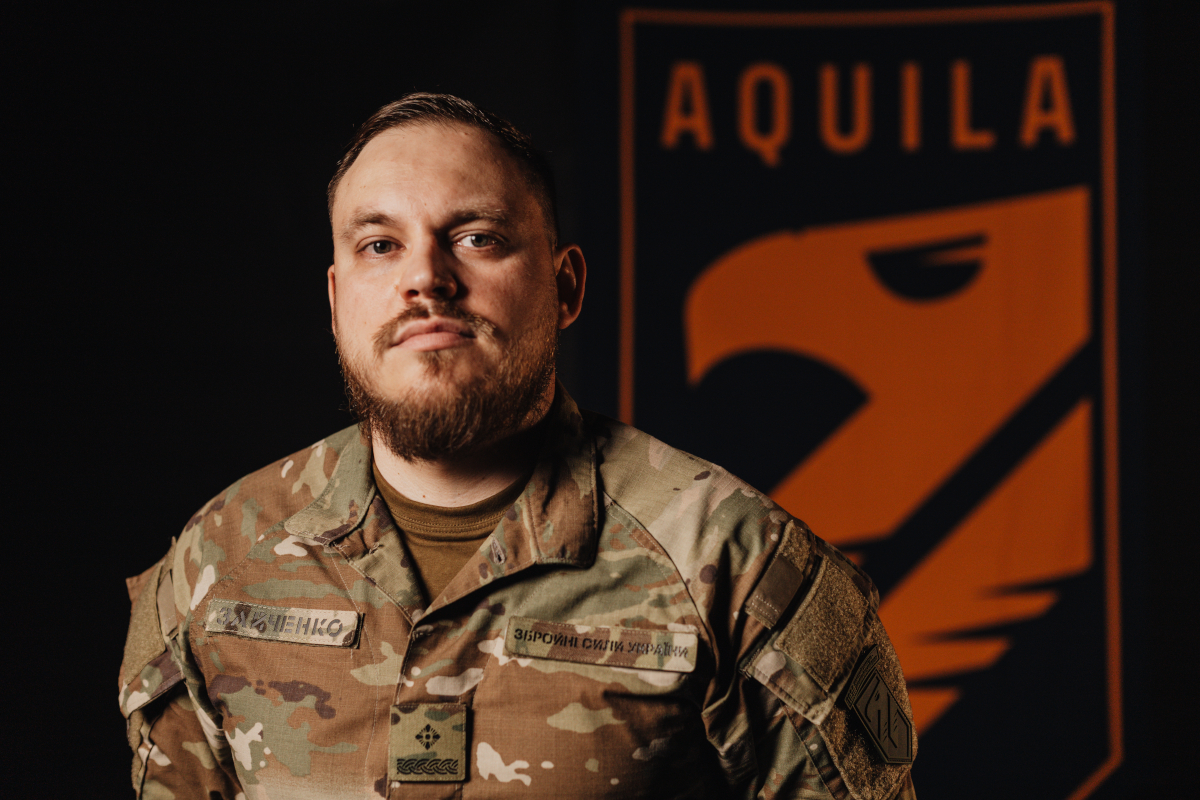
– Could you tell us how Triika came to have its own air defense unit? Was it an order from above, an initiative by the corps itself in response to the current situation, or a coincidence?
– The growing threat of aerial attacks, which the enemy had begun to intensify, demanded a response. We therefore began reforming the Anti-Aircraft Missile and Artillery Battalion, which at the time was still part of the 3rd Separate Assault Brigade. I was appointed commander of that battalion. Before that, I had been responsible for conducting offensive and defensive infantry and mechanized operations in the 2nd Assault Battalion.
But the enemy began expanding its unmanned capabilities, carrying out strikes and using reconnaissance drones to adjust them. In addition, the threat from enemy aircraft striking forward positions remained.
In our search for a solution, we began reforming the battalion within the 3rd Separate Assault Brigade. When it became clear that corps would be established and brigades consolidated, this decision at the military command level coincided with our vision: there should be an anti-aircraft regiment at the corps level. It would support operations and provide air cover for troops throughout the entire area of operations, beginning at the line of contact. The stretch of front currently assigned to our corps is 150 kilometres long, and not all of it was protected against reconnaissance and attack copters.
As a regiment, we reinforce first-echelon units on the line of contact, but we also operate further behind it. Brigades are focused primarily on holding their respective areas of responsibility. However, there are nominally rear areas that serve as the main logistics hubs and sustain operations at the front. There are command posts that the enemy has attempted to strike. There are also settlements that serve as key support areas close to the front. This zone extends up to 100 kilometres in depth, and a problem emerged there: loitering munitions and fixed-wing reconnaissance drones were flying in, with the latter also directing missile strikes.
The regiment, as a corps-level unit, is therefore a direct response to the threat that has emerged. Incidentally, we are the only anti-aircraft regiment among the corps holding the line of contact.
– You said that you had been involved in infantry and mechanized operations. Was it a natural transition to air defense?
– I have been fighting since 2014. I started in Azov as an ordinary soldier, a rifleman. I then served as a machine gunner and a grenade launcher operator. I took part in the Shyrokyne offensive operation (the fighting for Shyrokyne lasted from 10 to 15 February 2015 – ed.). So I know firsthand what combat engagement means.
When the full-scale invasion began, I was tasked with organizing veterans and civilians in the Kyiv region because I had combat experience. First came the Kyiv campaign, followed by the Zaporizhzhia campaign. These were highly mobile light infantry missions: we had neither armored vehicles nor sufficient fire support. We experienced firsthand the impact of the enemy’s heavy-caliber weapons. Enemy aircraft were active at the time, and there was no significant capability to counter them. I later worked in reconnaissance, including the introduction of drone reconnaissance within an assault unit.
I believe I brought practical and effective approaches, primarily to planning and the comprehensive support of our forces and assets. Previously, air defense forces tended to receive less attention. At the time, air defense amounted to some ZU-23-2 guns or an Igla, old weapons systems — and that was it.
– So when the unit took over its sector of responsibility, did the realization that it needed to adapt its capabilities and develop air defenses capable of providing cover emerge organically?
– Yes. Organizational and staffing structures had existed before then. The question was how well they could adapt to the enemy’s actions, as they had originally been designed for different tasks. One example was countering the airborne insertion of enemy personnel. But the only such landing we have seen occurred in Hostomel at the beginning of the full-scale war.
So the question arose organically: given the personnel and weapons available, how could we make them actually destroy targets? For example, we had Strela-10 systems in service. This is a short-range surface-to-air missile system. These systems shot down Zala and Orlan reconnaissance drones. But at a certain point, the enemy climbed from an altitude of three kilometres to four kilometres, and the system ceased to be effective. In other words, the weapons were there, but they were no longer shooting anything down.
Commanders with what might be called a traditional outlook were not particularly receptive to innovative solutions. However, we managed to demonstrate that our ideas were viable, that they were not merely abstract concepts and could be implemented. And we began shooting targets down. This became an example not only for our unit; the unmanned component began to be scaled up.
This is about the institutional development of an entire field and approach, and about changing the understanding that air defense troops are not limited to missiles or artillery systems.
– Why did you choose Aquila as the regiment’s name?
– Aquila is Latin for "eagle." It symbolizes dignity and strength transformed into dominance in the airspace. Those are precisely the principles we embedded in the identity of our unit. People need to be united not only when carrying out a mission; there also needs to be a kind of corporate culture. We depicted an aquila on our battle flag and try to emphasize that we are the masters of the skies.
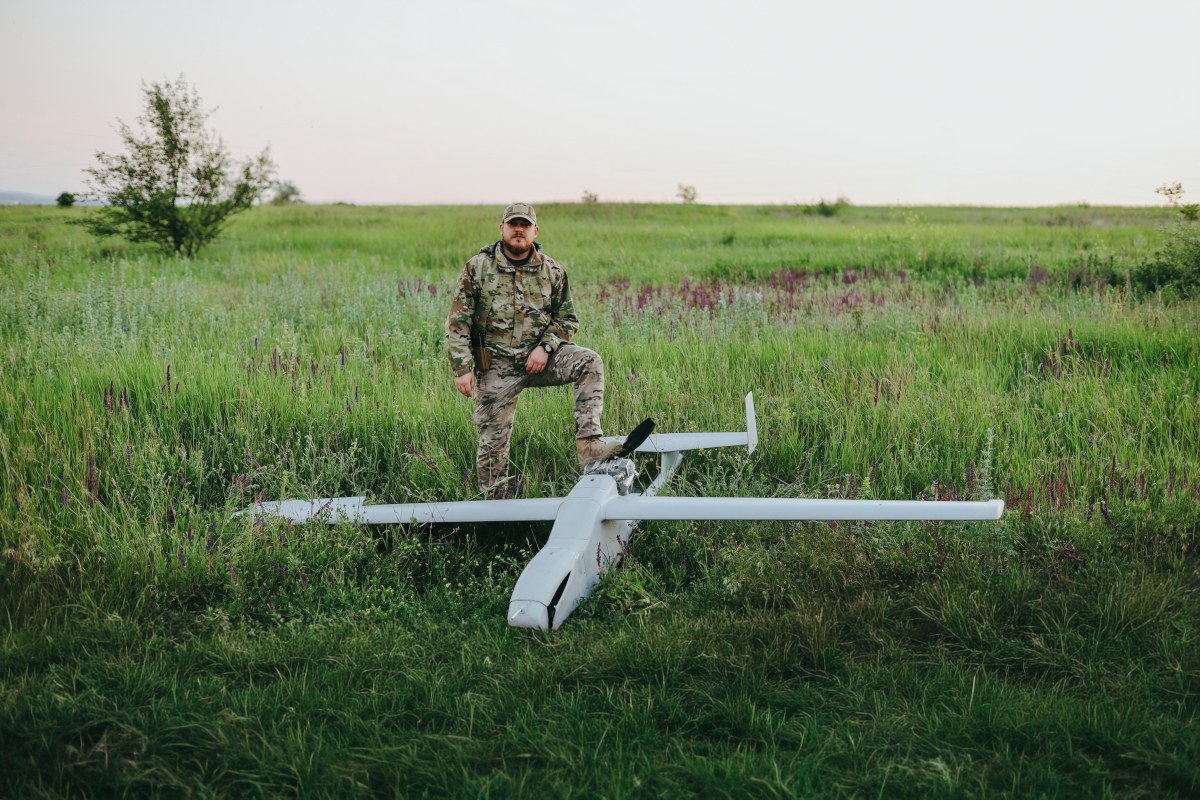
– How effective is Aquila today? Can you share any statistics on enemy targets shot down?
– We are now shooting down hundreds of aerial attack assets every month. Over the period in which we evolved from a separate anti-aircraft battalion into a regiment, we have downed several thousand aerial targets, according to our estimates.
However, it is important to distinguish between the types of aerial targets involved, which is why we have stopped emphasizing the overall number. There are many different types of aerial attack assets: some are more numerous than others, some are easier to shoot down, and some are more difficult.
For example, small quadcopters that disrupt infantry and forward positions account for a much larger share than more sophisticated targets, such as Orlan or Zala fixed-wing reconnaissance drones. There are also loitering munitions such as the Lancet. They are far less numerous but pose a greater threat to our logistics. Then there is the Molniia loitering munition. In addition to being dozens of times cheaper (it is assembled for $500–700, while a Lancet costs $70,000), it is less technically sophisticated: it has a shorter range and is easier to shoot down, but there are very large numbers of them.
In other words, you can shoot down large numbers of small multicopters or Molniias without destroying any Shaheds, for example. A quantitative metric therefore does not provide a qualitative assessment.
As for our regiment, we shoot down multicopters on the line of contact because we provide cover for first-echelon units in sectors where problems arise, enemy infiltration occurs, or our forces are advancing. We also operate at operational and tactical depth, engaging both reconnaissance and attack drones. This involves not only interceptors but also anti-aircraft artillery and missile systems. We proceed based on the priority of the missions and the areas requiring coverage.
We also engage Shaheds. Our commander, Andrii Biletskyi, recently said in an interview that approximately 70% of the Shaheds flying through the Third Army Corps’ area of responsibility are destroyed. We regularly rank among the leading units in terms of the number of Shaheds destroyed.
– What systems do you have in your arsenal? How has the mass deployment of interceptor drones changed the protection of Ukrainian airspace?
– We divide our engagement assets into three main categories. The first is interceptor drones. Unmanned forces and assets will only continue to expand in the future. They can be mass-produced and are considerably cheaper than conventional systems. They are also more accurate because, unlike anti-aircraft artillery, they are guided.
We also have surface-to-air missile systems and man-portable air defense systems, because countering enemy army aviation is another of our missions. And we have seen real results in this area. I took a direct part in the Avdiivka and Bakhmut campaigns, and I remember helicopters overhead launching guided anti-tank missiles and destroying our equipment. That no longer happens. This is precisely because Ukraine’s Defense Forces have restricted the enemy aviation’s ability to operate in the frontline zone. The Russians now effectively use transport aircraft behind their own lines and also carry out strikes with KABs.
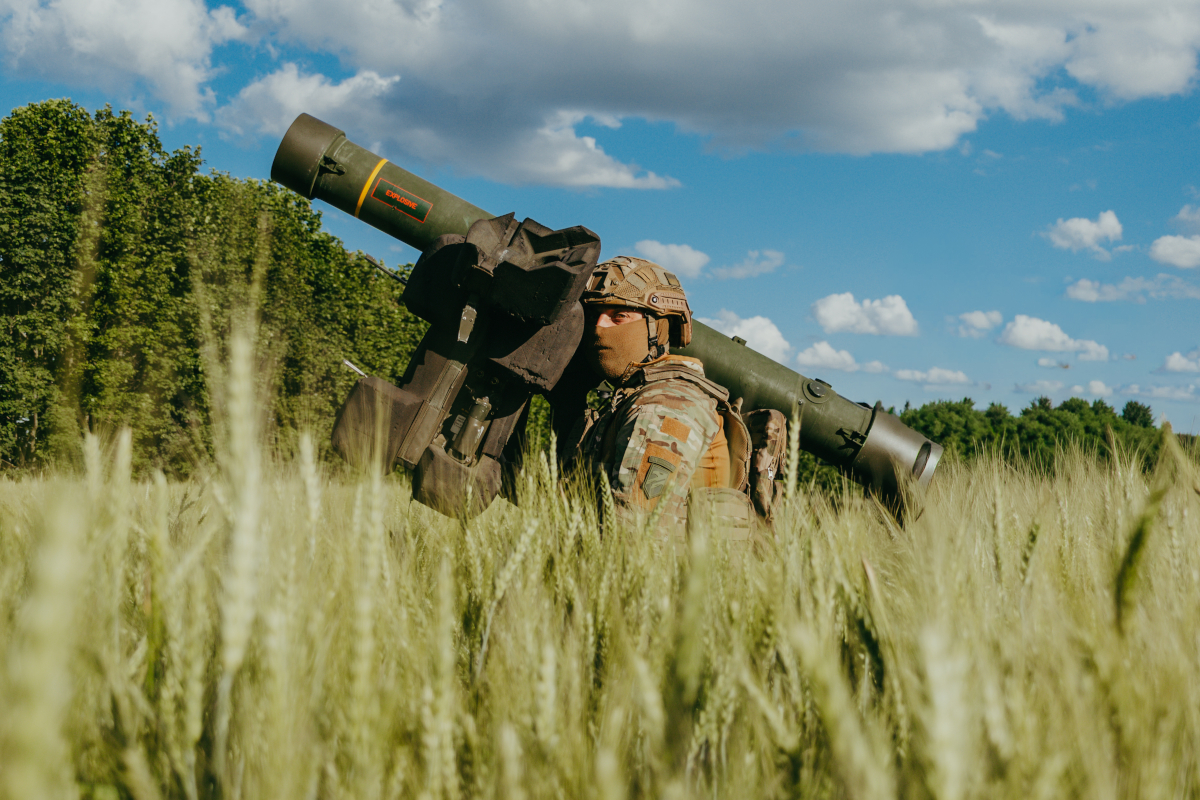
And this is one of the problems that all of us must address. How can we protect against aerial bombs that strike from high altitudes, at high speeds, and over long distances? Unfortunately, there are still few effective systemic solutions. But we are actively working on this.
For example, the enemy has always tried to adjust its KAB strikes using drones. In our area of operations, the enemy cannot afford to keep a reconnaissance drone operating at operational depth because it is immediately destroyed. Therefore, the option of adjusting KAB strikes is no longer available to it.
Since this involves a comprehensive set of measures, the next layer is electronic warfare and signal jamming. This is where other elements of the corps come into play. We have developed some effective solutions, as KABs sometimes fall on the Russians’ own heads.
As for their kinetic destruction and interception specifically, a project is under way, but it still needs refinement.
Surface-to-air missile systems and MANPADS are also effective against long-range strike drones and cruise missiles.
Anti-aircraft artillery constitutes a separate category. This includes guns of various calibers, self-propelled systems, and robotic turrets. Here, too, the focus is on greater automation and modernization, including the introduction of modern electro-optical systems and fire-control systems.
– What systems are you lacking? Perhaps not necessarily in quantitative terms, but in terms of their capabilities.
– It depends on the missions. But I can say that we need short- and medium-range surface-to-air missile systems — there are never enough of them. Some are gradually becoming available, but these are systems that will never be surplus to requirements.
The same applies to anti-aircraft artillery. There are fully automated Western systems. They operate as integrated systems, and we are now moving towards an approach in which anti-aircraft artillery cannot be separated from detection assets. You cannot simply take a machine gun or an anti-aircraft gun and fire it somewhere in the hope of achieving a result.
– Incidentally, in an interview this winter, you said that engagement assets were an important component, but that detection systems were also needed. You said at the time that you would like the situation in this area to improve. What is the situation now: has the problem been resolved, or does it remain relevant?
– The situation has improved significantly. When we can see 100–200 kilometres ahead, we can see the enemy. And the enemy feels the effects, which is why it is trying to change its tactics.
There was a problem with tactical radars. Their detection range is limited. To ensure continuous radar coverage capable of detecting even the smallest drones, a certain number of radars is needed to create sufficient density. The situation is improving here as well: some are provided by the state, while others are sourced through partners who purchase them.
– The rate at which interceptor drones shoot down enemy UAVs is constantly rising. In your view, is this the result of improvements to the interceptors themselves, better pilot skills, or does the numerical factor play a role — are there simply more interceptors now?
– There are more interceptors. But we assess the effectiveness of each combat team based on the number of sorties flown and drones launched, the number of drones lost and the reasons for those losses, and, accordingly, the number of shootdowns. As we increase the latter, we work to ensure that quality does not decline.
A successful shootdown rate of 70–80% of all launches is a realistic figure. Sometimes we launch a drone, but it cannot catch up with or locate the target, so we bring it back. In other words, the sortie took place, and there was no shootdown, but the drone was retained.
Sometimes a drone is lost. This can happen because of human factors, such as an error by the pilot or navigator, but it is primarily caused by signal loss, technical malfunctions, or manufacturing defects. Many factors may be involved, and it is quite difficult to determine objectively what exactly led to the loss.
– How common are manufacturing defects? Companies that produce drones are trying to increase output, and this sometimes affects quality.
– Yes, unfortunately, quality often suffers when production is scaled up. But the manufacturers we work with, which have been on the market for a long time, understand that such things can happen. Sometimes the component configuration of a drone delivered to us may have been suitable yesterday but is no longer suitable today. We can return a batch to the manufacturers with whom we are in contact so that the drones can be retrofitted. On one occasion, the manufacturers themselves told us: "Check this particular series of drones. They may have a tendency to roll and problems with the motors. If you received any of them, send them back, and we will rework them." However, there have also been some less satisfactory cases.
– Many manufacturers are now incorporating AI. From your perspective as an end user, how important is this, and are there areas where artificial intelligence has no practical value?
– Process automation is beneficial. This is not only my view but also that of the people who engage targets directly. In the future, automation could eliminate pilot error entirely. When we talk about AI, in most cases today it concerns the terminal phase, the final 10%, so to speak.
AI is also useful at high speeds, for example when dealing with jet-powered Shaheds. Under such circumstances, it is indeed easier to work with so-called second-generation systems that feature automatic target acquisition and calculate the moment of detonation. At speeds of 300–350 kilometres per hour and above, it is difficult to time the detonation precisely, particularly given signal transmission latency.
Remote drone control has already been implemented, including by our units. The only questions are how to scale it up and ensure reliable communications. But there are still issues involving launch, automatic altitude gain, and entry onto the flight path. Some manufacturers already have models that perform these functions. I therefore think these capabilities will become more widely available in the near future than they have been until now.
But we must not forget that all automation requires preparation and maintenance. Will everything be operating autonomously within a month or two? No. This is a long journey that will take years. Most experimental systems using artificial intelligence have passed through our hands. Initially, they very often locked onto objects they were not supposed to respond to. For example, they would lock onto clouds, the moon, bats, birds, and so on.
For now, people keep the systems operational, supervise them, and continue to control them directly. But it would be useful to have better detection and target-acquisition systems first and foremost, specifically to assist at this stage.
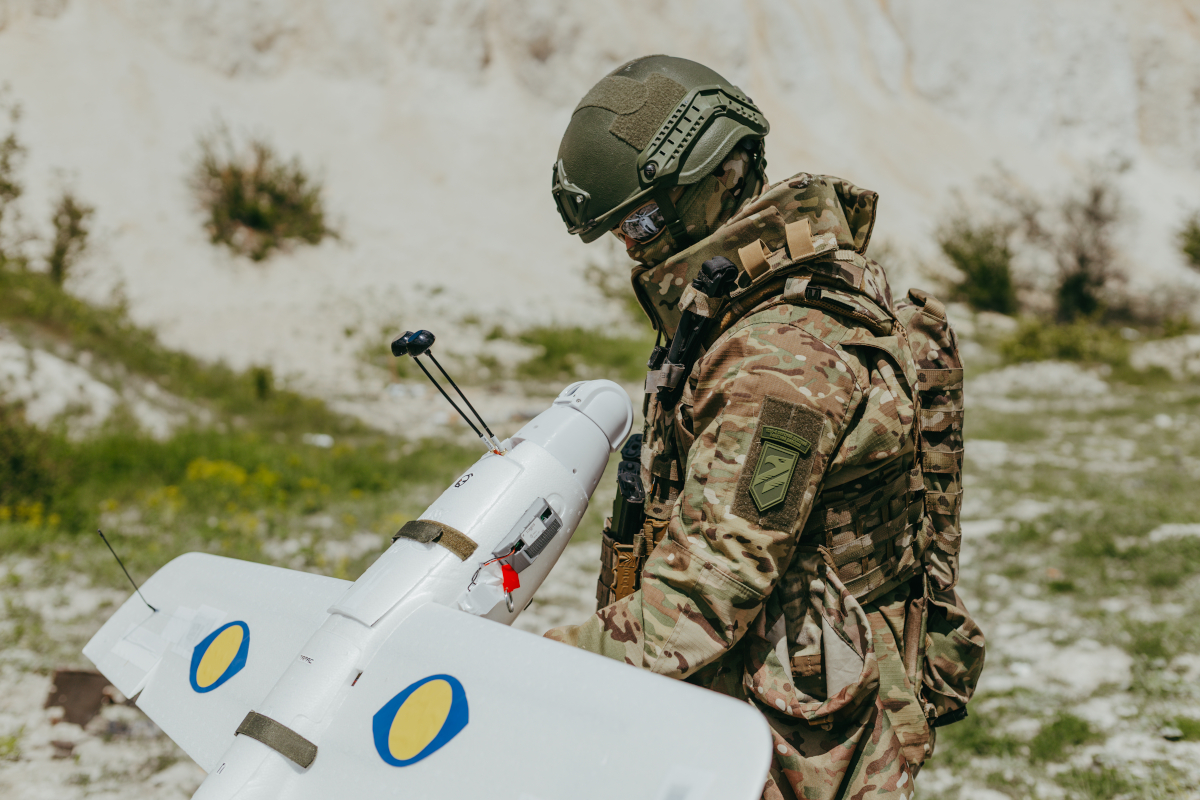
In any case, we absolutely must pursue this direction, as it improves quality. But we need to maintain a favorable cost ratio between our engagement assets and the enemy’s aerial attack assets. The more technologically advanced our systems become, the more expensive they are. The cost advantage must remain on our side. In other words, our system must be cheaper than the enemy’s. This is because the enemy relies primarily on massed combined strikes intended to overwhelm the air defense system.
The enemy will continue stockpiling weapons and increasing the number of simultaneous launches from multiple directions. Accordingly, we must have an even greater number of systems to counter the threat. For every weapon launched by the enemy, we need 1.5–2 countermeasures. They must therefore be inexpensive and more numerous.
– At the beginning of the year, when Deputy Commander of the Air Force Pavlo "Lazar" Yelizarov took up his post, he said his goal was to build an anti-drone dome over Ukraine. How is that progressing? Are you part of this dome?
– The Air Force is a different branch of the Armed Forces from the Ground Forces, to which we belong. My mission as commander of an army corps air defense unit is to provide air cover for units assigned directly to the corps, other troops, and the area of operations, enabling offensive and defensive operations. And we are fully accomplishing that mission.
But there is a clear understanding, including on the part of the corps commander, which we promote: frontline air defense is the air defense of the Ground Forces. It can destroy some aerial attack assets on the line of contact. The more we destroy there, the fewer will have to be destroyed deeper inside the country. We are therefore effectively the first echelon of Ukraine’s air defense. Beyond us are other forces and assets tasked with protecting specific population centers.
However, we work jointly with the Air Force and assist one another.
– It is noticeable. Fewer and fewer Shaheds are now reaching Kyiv, among other places.
– Yes. Other corps and units are moving in this direction to push this wall, so to speak, closer to the front. This approach needs to be scaled up, and corps-level units need to be given the necessary resources and capabilities.
– We were recently told in an interview that Ukraine has the best air defense architecture in the world, particularly when compared with the situation in the Middle East. Do you agree?
– The campaign in the Middle East would be the most telling example. Take Western countries, for instance. They have modern and effective weapons, but their stockpiles are limited and will last for only a relatively short period of active hostilities.
That is why it is right to speak in terms of architecture. One of our central messages is that an ecosystem must be created and a command-and-control structure for these forces and assets must be established, because when they are fragmented, chaos ensues both in the air and on the ground. Comprehensive support must also be taken into account. All of this needs to be developed.
But in terms of the architecture itself, I believe our system is one of the most advanced. This is confirmed by various exercises and our exchanges with foreign representatives of different military formations. They adopt our experience and learn from us. They listen to us, regard us as instructors and ask us to participate in international events.
– What is your staffing situation? This is a very painful issue for everyone. There are probably no volunteers left, while those who are mobilized most often end up in assault units. How do you replenish your ranks?
– The core of our unit consists of personnel from the Third Assault Brigade, but we are actively recruiting new service members. And I encourage people to join our unit.
We continue to follow the same principles we did when we started, both in 2014 and in 2022. First and foremost is the principle of voluntary service. We focus on recruitment. Many people think they are being recruited into air defense but will actually be sent to assault a forest belt. That is not the case. Our relationships are quite honest, both between the command and the people we recruit.
But I want to emphasize that we are a combat unit and carry out combat missions, albeit specialized ones. We take responsibility for the commitments we make to people.
We work with all categories of personnel. Today, volunteers are primarily young men who join because they feel called to serve. But there are also, for example, people returning after going AWOL. We actively work with them as well because we understand that circumstances may have led someone to make a mistake, but that does not mean their entire life should be written off. They continue serving, become part of the team, and know what they are signing up for.
There are also people classified as having "limited fitness" for military service who can serve in rear-area units. We accept them for certain positions as well.
It is fundamentally important to us that people are committed to the cause and have at least a basic understanding of the mission they are undertaking. We will teach them everything else. We will teach them how to fight.


