



Hero of Ukraine Viktor Ivchuk: We were beaten three times a day whilst in captivity
Despite being surrounded, constant bombardment, and the move from the destroyed hospital building to the bunkers at Azovstal and the Illich Plant, Viktor suffered no casualties among his men. He learned that a decree had been issued awarding him the title of "Hero of Ukraine" while in Russian captivity, where he spent 29 (!) months. After his release and rehabilitation, he returned to duty as deputy chief of the Eastern Region Military Medical Clinical Center.
During our conversation, Victor was frequently distracted by phone calls: some people were asking for advice, others were waiting for documents, whilst others were seeking further details about the wounded. Victor also left his office several times, returned quickly and picked up his sentence exactly where he’d left off. That’s how people work when they’re used to juggling several tasks at once.
He speaks quickly, without grandstanding, without any desire to impress. And he says very little about himself. Instead, he constantly mentions the people he served with: commanders, doctors, paramedics, comrades-in-arms. He uses ‘we’ far more often than ‘I’.
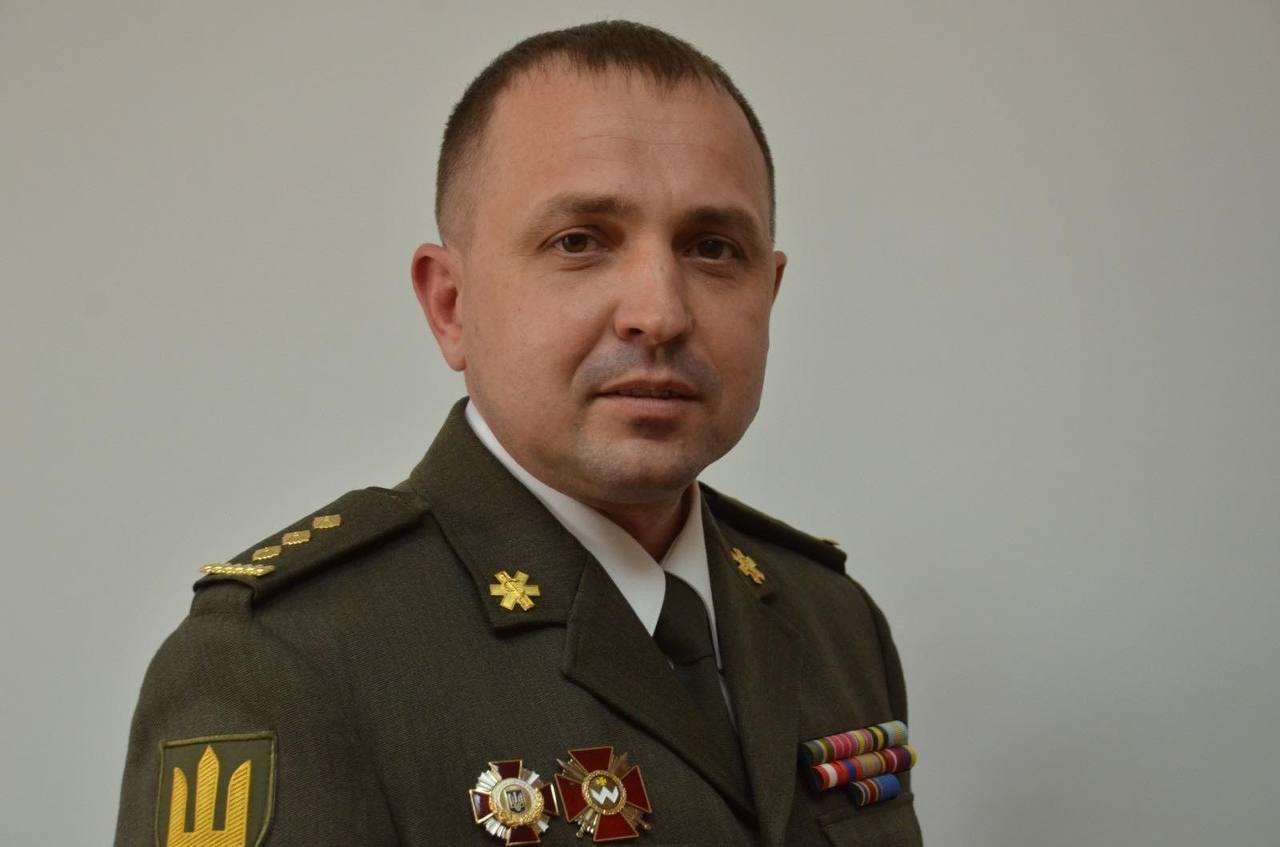
Viktor Ivchuk is well known to the paratroopers who have been fighting since 2014. Together they went through their first raids, assaults and evacuations; they lost friends and rescued those whom it seemed impossible to save. During the famous raid by the 95th Separate Airborne Assault Brigade behind Russian lines, it was often impossible to evacuate the wounded. They continued to move forward with the unit. And the doctors treated them right there during the raid! Back then, the medical service organised by Viktor Ivchuk did not lose a single wounded soldier who had been brought to the medics. Eight years later, almost the same thing happened again in Mariupol. And when Viktor is asked today about his greatest achievement, he does not speak of government posts or the title of Hero of Ukraine, nor does he mention his happiest moment – his release from captivity. He says just one thing: "Not a single soldier from my hospital died! That is the most important and significant thing for me!"
"IN 2014, I WAS WOUNDED DURING A RAID NEAR SAVUR-MOHYLA"
A large map of Dnipro hangs on the wall of Viktor’s office. Viktor notices me looking at it and smiles: "It was the same in Mariupol. The first thing I did after taking up my post was to hang a map of the city on the wall." To an outsider, it’s just a map, but for him, it’s a way of thinking. A commander must see the situation from above: where the units are positioned, where the wounded will be brought from, which roads can be used to evacuate people, which hospitals are still operational, and which have already been lost… We began our conversation by discussing the education Victor has received and continues to pursue.
- I graduated from Vinnytsia Medical College with a specialisation in ‘general medicine’. Then I attended Vinnytsia National Medical University, where I qualified as a pharmacist. After that, I studied at the Ukrainian Military Medical Academy and obtained a Master’s degree in healthcare management. I am currently studying for a postgraduate degree in public administration.
Ivchuk has been in the army since 2004. His first post was head of the medical post at an anti-aircraft missile division, more to come: the 59th Military Mobile Hospital and the Military Medical Clinical Centre of the Central Region. By 2013, he was already responsible for medical support for nearly two hundred military units and six hospitals. He could have remained, as they say, a ‘staff officer’, but he decided to join the 95th Separate Airborne Assault Brigade.
- I knew there was no head of medical services there, as I’d been there on an inspection. To be honest, I turned the unit upside down. Then I went to see the brigade commander, Mykhailo Zabrodskyi. Instead of the inspection report, I laid out my recommendations before him: what needed changing, what needed improving, and what wasn’t working properly. He looked at me intently; he must have thought, ‘What a bold captain…’. But some time later, when I arrived to serve in the brigade, Zabrodskyi took out those very same three pages of mine, placed them in front of me and said, ‘Get on with it.’ It was one of the best learning experiences of my life. Before that, I’d worked in offices and worn shoes with holes in them. But here – combat boots, training grounds, jogs in body armour, strict discipline, no leniency. The paratroopers taught me one very simple thing: tasks must be carried out quickly, to a high standard and honestly.
After a brief pause, he adds:
‘That paratrooper spirit has stayed with me forever.’
As part of the 95th Brigade, Viktor saw action in Sloviansk, Kramatorsk, on Mount Karachun and in Lysychansk. By the summer of 2014, there had already been dozens of combat missions; the paratroopers suffered their first casualties and experienced the joy of saving soldiers’ lives in extremely difficult situations.
- Everything we did back then, we were essentially making up as we went along. The war very quickly revealed what worked and what didn’t. Every mistake could cost a life, whilst the right decision saved dozens of people. There is a concept known as ‘medical evacuation procedures’. In peacetime, they operate according to different principles. A wounded person must get to a doctor as quickly as possible. There is even the concept of the ‘golden hour’. It is during this time that a person must receive qualified medical care. But during a raid, this system doesn’t work, because there is nowhere to evacuate the wounded to; there is no safe route, no rear area. Therefore, the wounded person remains with the unit. Consequently, a doctor must be right there with them. That is how we developed a system which later became standard practice for many Ukrainian combat units: every combat vehicle has a medic and a separate medical kit. Everything and everyone must be spread out. Because one well-aimed shot – and there is nothing left to help with, and no one left to help.
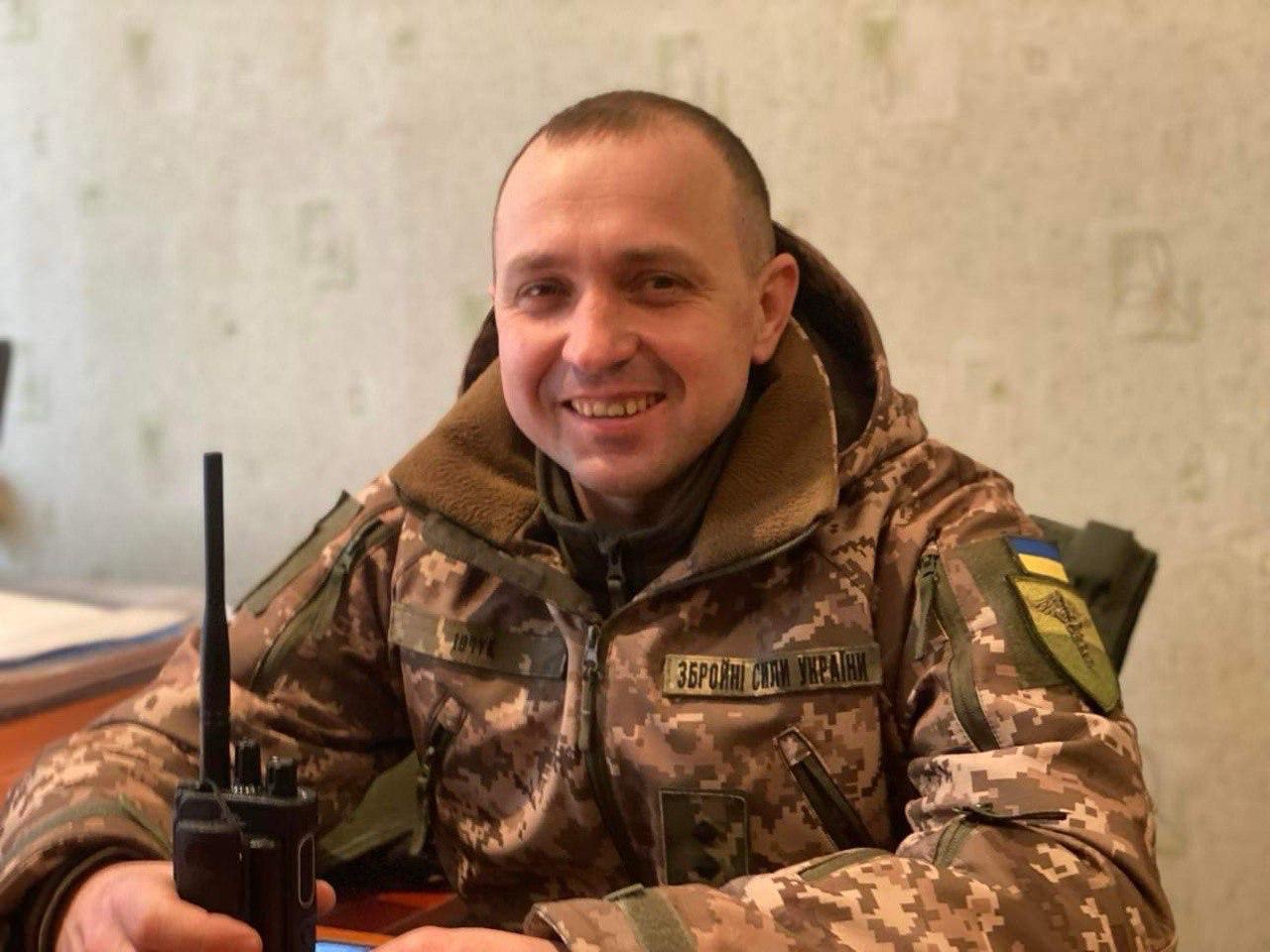
On 27 July 2014, during the assault on a militant stronghold near Savur-Mohyla, Viktor was wounded.
- A piece of shrapnel severed my ulnar nerve. My arm still doesn’t straighten fully. But when I was wounded, there was someone to replace me. We had some fantastic medics in our unit: Serhii Arkhanhelskyi, Maksym Morozko, Oleksandr Falshtynskyi, Ihor Donchenko and dozens of others. During the fighting, I realised all too well that a commander cannot be irreplaceable. When I was wounded, the brigade commander asked: ‘Who will take over your duties?’ I lined up all my officers and said: ‘Choose anyone; everyone is ready.’
People need to be trained. You mustn’t be afraid that they will become stronger than you; on the contrary, you should be proud of that. Because if you are wounded tomorrow and there is no one to replace you, that is a commander’s greatest defeat.
Up until 27 July 2014, the 95th Brigade’s medical service had suffered almost no casualties. There were wounded, including some with extremely serious injuries, but most were saved. Viktor remembers the two instances when this was not possible forever.
- The first was when a soldier stepped on a mine near Dobropillia. The doctors fought for him until the very end. He died whilst being evacuated. The second was the brigade commander’s driver, who was hit by a bullet just above the heart during the fighting for Lysychansk. They tried to save him too; they called for a helicopter and fought to keep him alive, but it was in vain…
Back then, at the start of the war, we were only just learning not to be afraid and not to wait for ready-made solutions. When we were storming Sloviansk, I heard a whistling sound near me. I turned my head and saw a bullet. It flew past very close by. After that, we came under fire from mortars, tanks and artillery. All of this crept into our lives gradually, as if the war were raising the stakes each time.
- Can you get used to war?
- You can. Take, for example, the FPVs operating right now: you’re driving in a car under the netting, and you see one flying past. And you’ve got a chance of surviving if you don’t panic, open the door and jump out; and if you’ve got an anti-drone rifle as well, your chances increase significantly. But if you panic – that’s it: people around you will die, and you’ll die too.
People often ask me if it was scary. Of course it was, especially at the start. But fear very quickly gives way to the task at hand, because there are people all around you and everyone is looking to you in the hope that you know what to do. If the commander starts to panic, everyone will panic; if the doctor loses his composure, everyone will see that too. So you just get on with the job. And that’s when confidence and the ability to act despite your fear are born. This resilience, forged back in 2014, helped me survive the siege of Mariupol and my captivity.
"THE HOSPITAL TURNED INTO A MILITARY BASE. THE TRIAGE AREA WAS GUARDED BY SNIPERS"
- You were assigned to the 555th Hospital almost on the eve of the full-scale Russian offensive…
- Formally, it was a promotion. In reality, however, it was a step backwards. Prior to that, I had been heading the research department at the Ukrainian Military Medical Academy. It was a high-ranking position with good prospects and the opportunity to carry out research. The posting to the 555th Military Hospital in Mariupol meant both a lower salary and significantly greater responsibility. But I knew that it was possible to create one of the country’s best military hospitals there. Mariupol, a large industrial city, lacked a modern medical school. There were skilled doctors there, but they lacked a system that would allow them to train others, develop their skills and attract the best specialists from Kyiv. I wanted our doctors to learn from professors, academicians and doctors of science. I wanted them to become stronger and more professional themselves.
- Did you realise that a full-scale war might break out?
- I always knew the enemy was very close. It’s twenty minutes from Novoazovsk to Mariupol. In the first days of the Russian offensive, the whole country was ablaze. And the Ukrainians simply stepped in and stopped that onslaught with their bare hands. You see, we did something nobody expected!
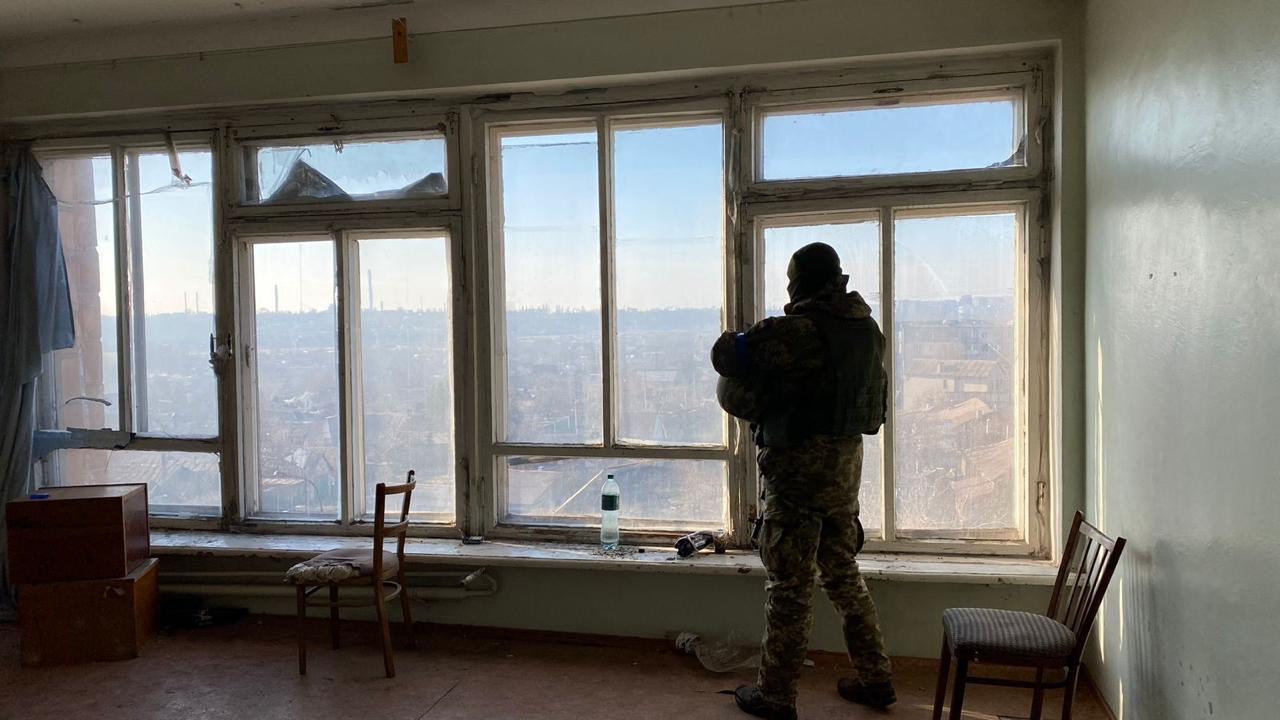
The first few hours of the invasion showed that the city was left with almost no medical care. Civilian hospitals were closing down one after the other. Some doctors had been evacuated. Some were afraid to leave their homes. Others simply didn’t know what to do. Seeing all this, I sprang into action. I tracked down chief doctors at home, brought them to the hospitals, arranged for soldiers to guard them, and delivered dressings. And I told everyone just one thing: ‘Let’s get to work.’ In the early days of the war, decisions had to be made faster than the shells were flying. You see, in that situation, we had to show the soldiers that we, the medics, were there and ready to provide assistance. If soldiers see that medics are working, they carry on fighting. I realised this back in 2014: a soldier brings in a wounded comrade, returns the next day and sees him alive, sees that the doctors are fighting for him, and then he himself goes into battle with a completely different sense of confidence. That is precisely why the hospital in Mariupol was not just a medical facility, but part of the city’s defences. The Russians later confirmed this. During interrogations, FSB officers repeatedly told me: ‘If your hospital hadn’t been operating, we would have entered the city much sooner.’
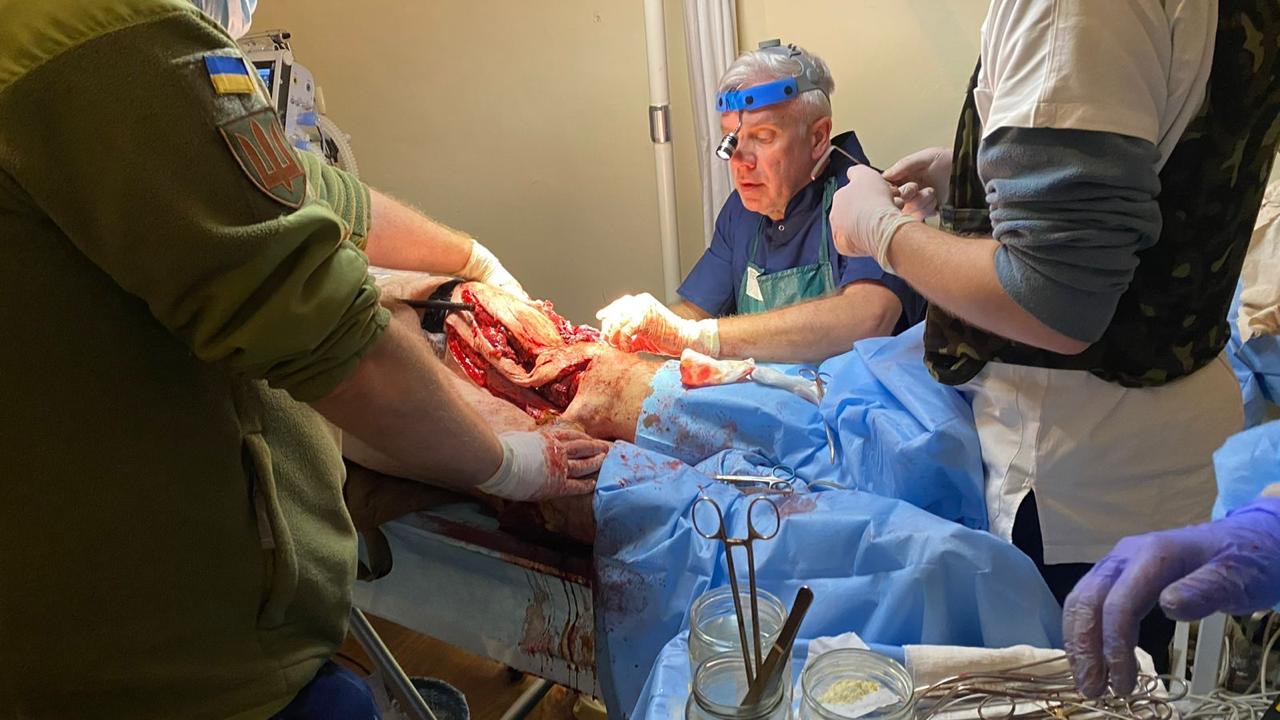
The flow of wounded was growing by the hour. We didn’t have enough operating theatres. So I ordered new ones to be opened so that the hospital could operate non-stop. But there was a security issue. Opening the gates meant saving a person’s life. Yet doing so could also let a potential sabotage group onto the premises. That’s why the gates remained closed. Every single vehicle was checked, without exception. One day, I walked up to the entrance. Standing outside the gates was a young woman holding a wounded child in her arms. The woman was crying and begging for help. It was then that I finally realised: civilian medical services had once again ceased to function, and we opened the gates. I appealed to the commanders of all the units defending Mariupol, asking them to help guard the hospitals. And they assigned their best men to the task. I am very grateful to these commanders. They understood that they were not just defending buildings. They were defending lives.
Our hospital was transformed into a military base. Snipers were stationed on three sides of the triage area, monitoring every movement from outside. If anyone had tried to attack, they would have been shot without hesitation.
Then the worst began: two- and four-year-old children without their parents started being brought into the hospital. Sometimes people only had time to say: ‘Their mum has died…’ Our staff looked after the little ones, feeding them, changing their nappies and comforting them. When the opportunity arose to evacuate the children, we did everything we could to save at least them.
Whenever the heads of the medical services from the various units visited the hospital, Viktor would speak to them and mark the map of Mariupol according to their accounts. And he saw what others were not yet willing to admit: the circle was tightening, and the city was slowly being surrounded.
- On the fourth day of the great war, I realised: we’re staying here for the long haul. And I began preparing for the next stage of the defence – underground hospitals.
- Where was your family at that point?
- They were trying to leave Kyiv… From Mariupol, I was also trying to support everyone, helping to plan where each person should go.
On 15 March 2022, a Russian aerial bomb destroyed half of the 555th Military Hospital building. Fortunately, no one was killed, as the bomb struck the very part of the hospital where no one was left.
- The most important thing is that I’ve had no combat casualties amongst the hospital staff, – says Viktor. – I thank God for that.
After the bomb struck, I reported to the command: the hospital had been destroyed, and the staff had been split into two frontline surgical teams. By this point, Mariupol had effectively been divided into two major defence sectors: the area around the Illich Steel Works and ‘Azovstal’. Medical services were to be divided along these lines as well.
I went to ‘Azovstal’. I was looking for a place where we could set up a hospital. I found a large underground bunker. That was when the name was born, a name that would later be known to almost every defender of Mariupol – ‘Zaliziaka’. I was the one who named it that. Before the bomb hit, our hospital’s call sign was ‘Athena’. I liked that name. But at Azovstal, everything was made of iron – nothing but solid metal. So when the signalman asked for the new post’s call sign, the answer came naturally: ‘Zaliziaka’.
Later, another ‘branch’ of the hospital appeared – at the Illich Plant. There were concrete tunnels and massive floor slabs there. I called this bunker ‘Monolith’. From 15 March to 12 April, I was at the Illich Plant. And ‘Zaliziaka’ held out until May.
- How many wounded were there at ‘Monolith’ before you were taken prisoner?
- About three hundred. But those with minor injuries and those who’d returned to duty were kept separate; they were with their units.
- You didn’t count them…
- In total – nearly a thousand. Back then, practically every soldier had been wounded.
‘Monolith’ proved almost out of reach for aircraft. The ambulance would drive into the tunnel, and from there the wounded were carried on people’s shoulders for nearly two kilometres.
- Were there enough medicines?
- Right at the start of the city’s defence, the owners of pharmacy chains offered the military the chance to take the medicines so they wouldn’t be looted. We took everything we could. Later, we shared our supplies not only with the military but also with civilians. People would bring lists of the medicines they needed and receive everything within a few hours. It was the same with food. Shop and supermarket owners approached us asking us to take whatever we could. Our doctor specially calculated the wounded soldiers’ rations to ensure they received the necessary number of calories. We didn’t go hungry. Those with minor injuries who couldn’t return to their posts became cooks, orderlies and drivers. Everyone found their place, because there’s no such thing as a spare person under siege.
In April, we received orders to attempt a breakthrough alongside the marines. We prepared for this and gathered everything we might need for the journey. Eighty per cent of my personnel were women. I couldn’t fit them all into one vehicle, so I divided them among different vehicles, briefed them and appointed leaders. Unfortunately, the breakthrough didn’t happen. The convoy came under heavy fire, and all our vehicles were destroyed. The wounded began returning to ‘Monolith’; some crawled towards the bunker for almost a day. There, we set up a medical post again, performing operations and dressing wounds…
At one point, our defences were reduced to just a few underground rooms. Above, Mariupol was ablaze, whilst below, the fight for every life continued. Formally, I was no longer the commander of the military unit, as the hospital as such no longer existed. All that remained were 46 military medics and hundreds of wounded. We then became frontline surgical teams. That was more honest, because we were no longer running a hospital, but simply saving people.
"THE HARDEST THING ABOUT BEING IN CAPTIVITY IS REALISING THAT YOU NO LONGER HAVE ANY CONTROL OVER ANYTHING"
- How were you taken prisoner?
- Up until that point, I knew almost nothing about captivity – what goes on there, where people are held, how they’re treated," replies Viktor. "I had acquaintances who’d returned from captivity, but I’d never asked them those questions. It was an experience I’d never expected to need. But I was wrong… The hardest thing in captivity was realising that you no longer had any control over anything.
- How did you find out that you’d been named a Hero of Ukraine?
- One of the prisoners of war quietly said to me: ‘You’re a Hero of Ukraine.’ I didn’t believe him. It wasn’t about the award. In that world, behind the barbed wire, news like that seemed almost unreal. As if it pertained to some other life. In captivity, you had to survive. Not even physically, but to remain human. Not to let the enemy destroy your self-respect, to preserve your ability to think, to hold on and to be yourself. There were always people in the cell who needed support. I would explain to them that they mustn’t lose hope, help them stay calm, or simply remind them that tomorrow would come too. Discipline is particularly important in captivity. If people stop living by the rules, chaos sets in very quickly. And chaos is dangerous there.
I measured time in captivity not by the calendar, but… by my dreams. They were strange and recurring, as if my consciousness were returning home every night. Most often, I dreamt of my family. It felt as though my wife and son were right there, just across the road; I only had to take a few steps. But I could never quite reach them. Each time, there was some sort of invisible barrier between us. I’d wake up and realise it had only been a dream. But it was precisely after such dreams that it was easier to face the next day.
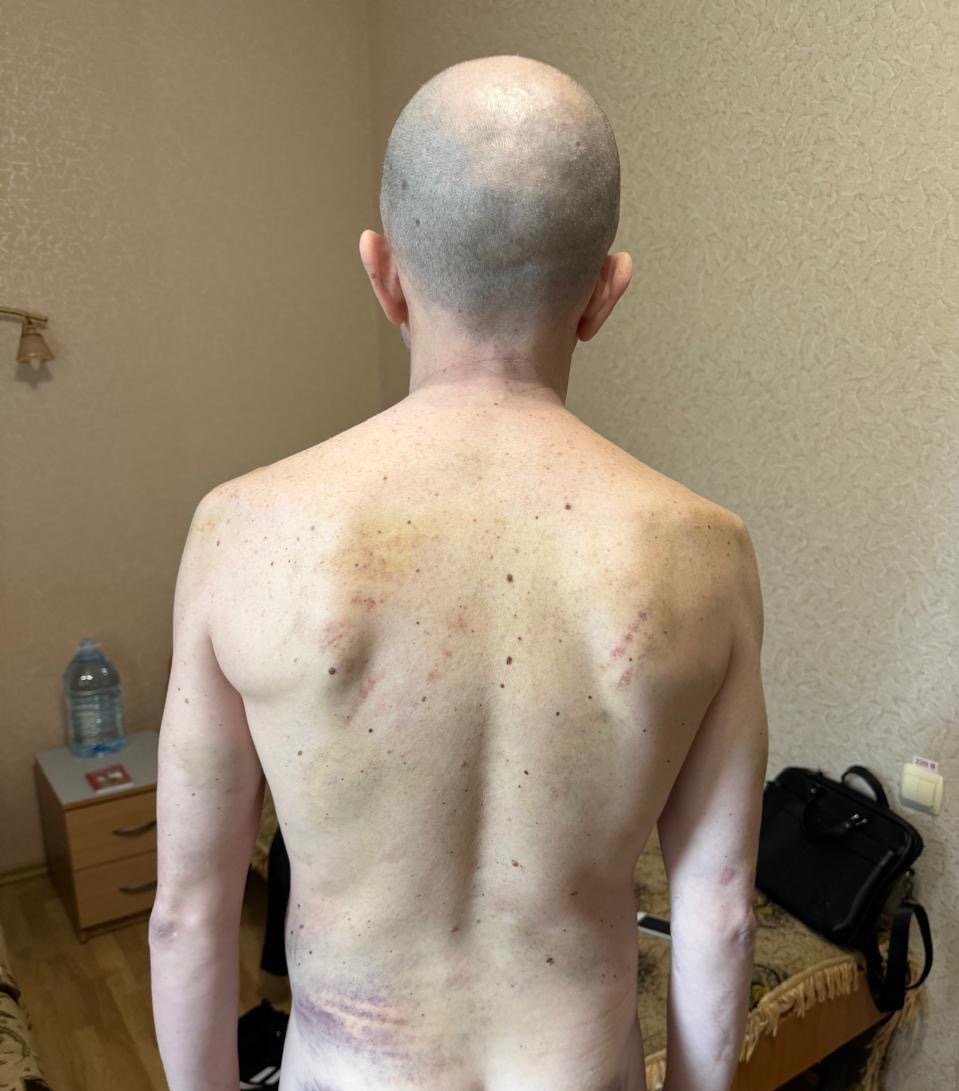
My task was not to die during the prison intake process whilst being transported somewhere, because they beat people everywhere, and the ‘masters of sport’ would beat them with sticks all over their bodies, indiscriminately. They beat people so badly that they couldn’t take it. Sixty people arrive at a new facility – and during intake, five or six are beaten to death. Or someone’s heart gives out. I had to get through it. I spent 29 months in captivity. I was photographed on the first day after my return from captivity. I was covered in blue and yellow marks from both fresh and old bruises.
- Do you still have any scars?
- All over my body. We were beaten three times a day whilst in captivity. The first time was at eight in the morning, when the cells were inspected. Then, when you went out for a walk: they’d beat you, set dogs on you, and use various other methods. The third time, they’d beat you during the evening check.
I’ve divided the investigators into three categories: FSB investigators, Investigative Committee investigators, and detention centre investigators. They all treated the prisoners differently. The worst of the lot were the detention centre investigators. They would hang a prisoner by their arms in the gym for half a day, hoist them up, wrap them in wet sheets and shock them with electricity. Or they would pry out fillings, attach electrodes to them and use a military ‘tapik’ telephone to apply a current – you get an electric shock straight to the nerve endings in your teeth. It feels as if you have a severe toothache… And so they torment you like this for half a day, and then ask: ‘So, what do you talk about in your cells?’ These are people who grew up in these Gulags; their parents were prison guards, and they’ve now become investigators in detention centres – this has been passed down through the generations for hundreds of years. These are the most depraved people.
Investigators from the Investigative Committee ask specific questions that are fed to them from above. They summon you in and question you. They don’t talk to you about anything else. You can’t ask them anything. You sit there with a bag over your head and can’t even see them. But they don’t beat you; they pass this task on to the detention centre investigators.
The third category is FSB investigators. You sit with your head held high, your eyes open, looking at a man dressed head to toe in designer clothes, with an iPhone 15, an Apple Watch, and shoes costing a thousand dollars… Because when they drag you off for checks, all you see are the guards’ feet; you see what shoddy shoes they’re wearing. They’re usually ragged, torn-up, poor people who even eat the slop they cook for us, even the stinking rotten potatoes, because they’re hungry. But to avoid being sent to the SMO, they’ve holed up in prisons. That’s why I could tell the difference between those who worked with us, even from their shoes. An FSB officer might even share the latest news; you could draw him into a conversation and get some information out of him. These guys don’t beat you at all. They might treat you to something, give you an apple – the sort you’d never seen once during your captivity. During one of the interrogations, an FSB investigator told me that I was accused of ordering the killing of six thousand Mariupol residents and of experiments being carried out on them, and that I personally had experimented on 600 people. He showed me a folder containing interrogation transcripts on A4 sheets, photographs, and testimonies from city residents confirming that it was indeed me who had done this… I agreed straight away: "Where do I sign?" I asked: "How long am I looking at?" – "Three life sentences." After that, they stopped summoning me for interrogation and torturing me. They just beat me. Three times a day I got my beatings, like everyone else, but they stopped hanging me up and electrocuting me to extract a confession.
- And were you beaten every single day for all 29 months?
- Yes. During that time, I was held in Olenivka, Taganrog, Stary Oskol, Taganrog again, and in Kyzyl in the Urals.
- I’ve met people who’ve recently returned from captivity. Do you know what I’ve noticed about you? You look people in the eye; you don’t look away. And you don’t have that thing that some people carry with them for a long time – they lower their heads, you know, instinctively.
- Because I served in the Airborne Forces! And because I was brought up properly. I was lucky enough to grow up amongst people who taught me the most important thing – not to lose myself. There are things that can be taken away from you. And there are things that a person gives up only of their own accord. As long as you haven’t given up on yourself, you remain free.
- What did you learn about yourself whilst in captivity? Did you remain the same person you were before?
- After being wounded in 2014, I stopped being afraid and taking offence. And after captivity… After captivity, I came to love Ukraine even more. I appreciate my family more. And I stopped wasting time on people we don’t see eye to eye with. It’s such a waste of time. You need to devote it to those who really matter.
- How long did it take you to recover after the prisoner exchange? How long did your rehabilitation take?
- It wasn’t easy to come back. I had to get my health back, learn to live alongside my family again, and get used to the silence and the freedom that I’d once taken for granted. The command gave me every opportunity to complete my rehabilitation. But I realised very quickly that I couldn’t do without military service. I was offered various posts, including some where I could have focused more on research. But I turned them down and returned to where, in my view, I’m needed most. As Deputy Head of the Eastern Region Military Medical Clinical Centre, I’m in the right place. Here, I’m closer to the combat commanders with whom I fought in the war and who continue to fight today. When they ring and ask me to help their soldiers, I can’t say ‘wait a moment’. Because I know that every hour counts. In this role, I can insist that officers and commanders undergo medical examinations and do not put off treatment, because war certainly does not improve one’s health.

- You received the Hero’s Star after you returned…
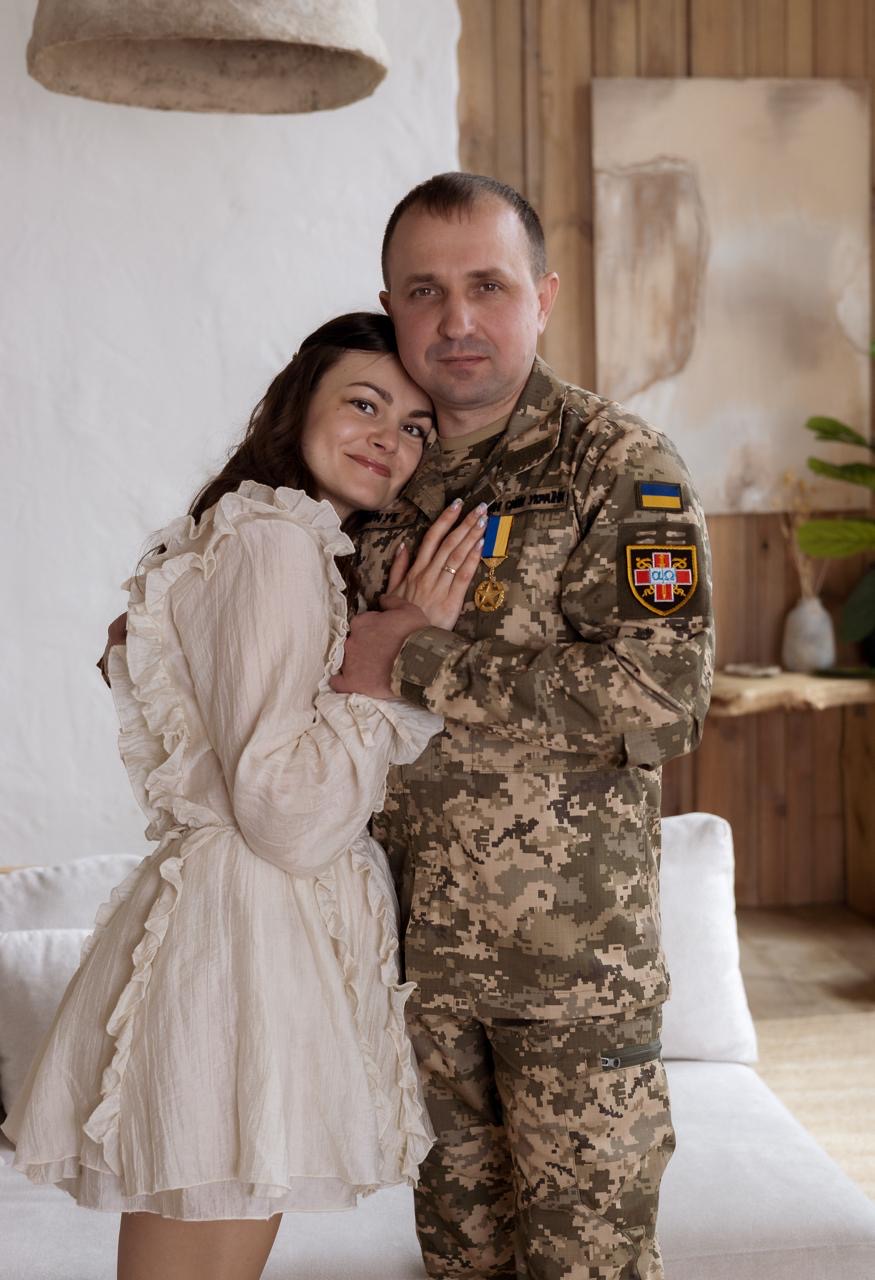
- As well as the keys to a flat in Kyiv. That was nice, of course. But for me, it’s more important that the state recognises my subordinates. Right from the early days of the defence of Mariupol, I submitted applications for awards for the entire hospital staff.
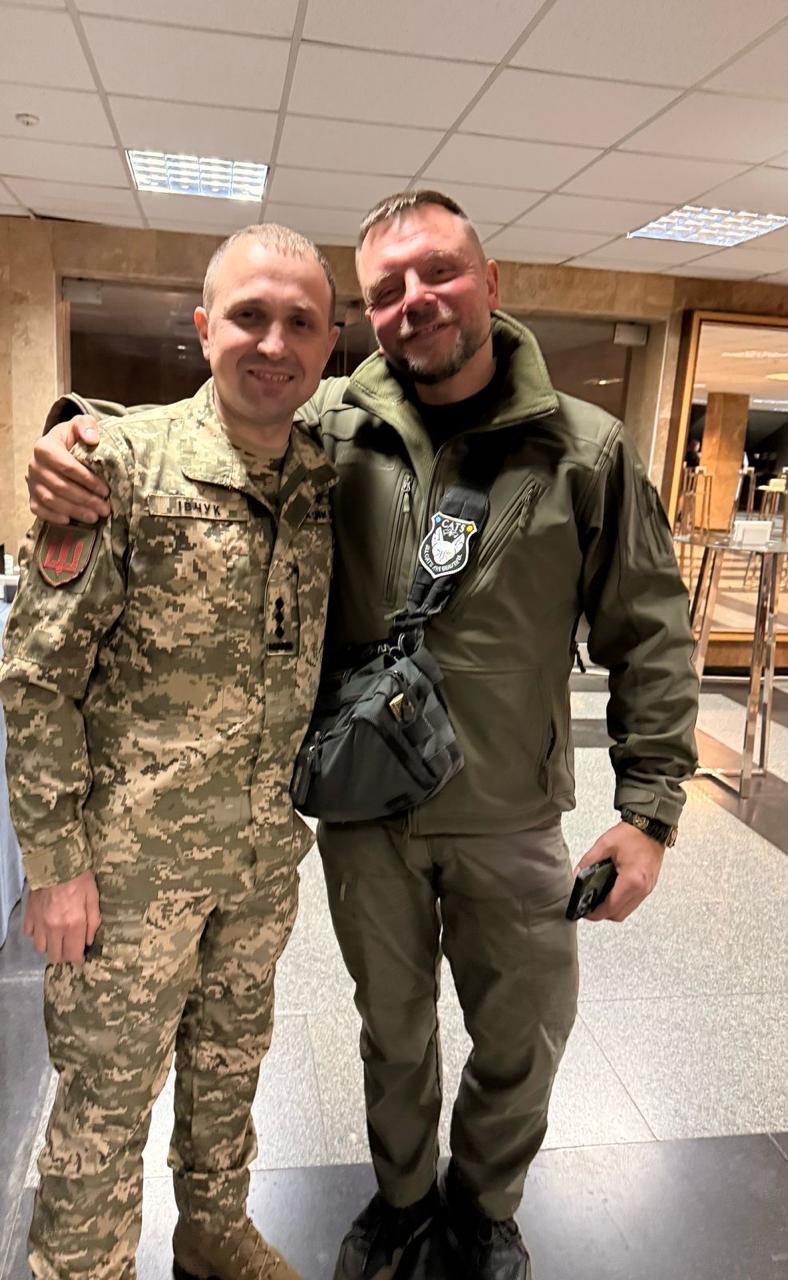
In the photo: Upon returning home, Viktor Ivchuk learnt that the head of the Mariupol Patrol Police, Mykhailo Vershynin – call sign ‘Kot’ – was already back in Ukraine. Censor.NET reported on him in the autumn of 2022, immediately after his release.
- Tell me, how will we win?
Viktor remains silent for a long time – perhaps the longest pause of our entire meeting – then replies thoughtfully:
- We’ve always won wars and almost always lost afterwards. Not on the battlefield, but when we started squabbling amongst ourselves. We must always remember our responsibilities and remember that after the war, we must not allow the country to fall back into indifference. I also really like a saying from one of our ancestors: ‘For Ukraine, one must kill, not die!’
Violetta Kirtoka, Censor.NET


