



1,200 civilians evacuated in year. Incredible story of Anna from Germany and her international team
...Looking at them, you would think they were ordinary young women from Germany who had somehow ended up in Ukraine in the fifth year of the war. There are plenty of foreigners like that in Kyiv; once back home, they will excitedly tell their friends about the city of air-raid sirens and its residents, who for some reason do not go to shelters. Within a week or two, their experiences in Ukraine will be forgotten, replaced by new impressions of life at peace.
In fact, Anna Elsbernd and Ricarda Fasol, both 26, are seasoned veterans of the volunteer movement in wartime Ukraine. People who know Ukraine and love it more than many Ukrainians do. How can they and their colleagues prove their love? Nothing special – they simply risk their lives every day to evacuate Ukrainians from half-destroyed villages and small towns in Donbas and the Dnipropetrovsk region.
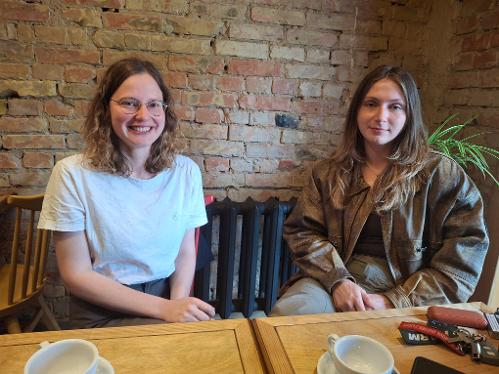
And when they are in Germany, they talk about what they have witnessed in this war. They urge their fellow Germans to keep helping Ukraine – through donations, humanitarian aid, and the individual talents everyone has.
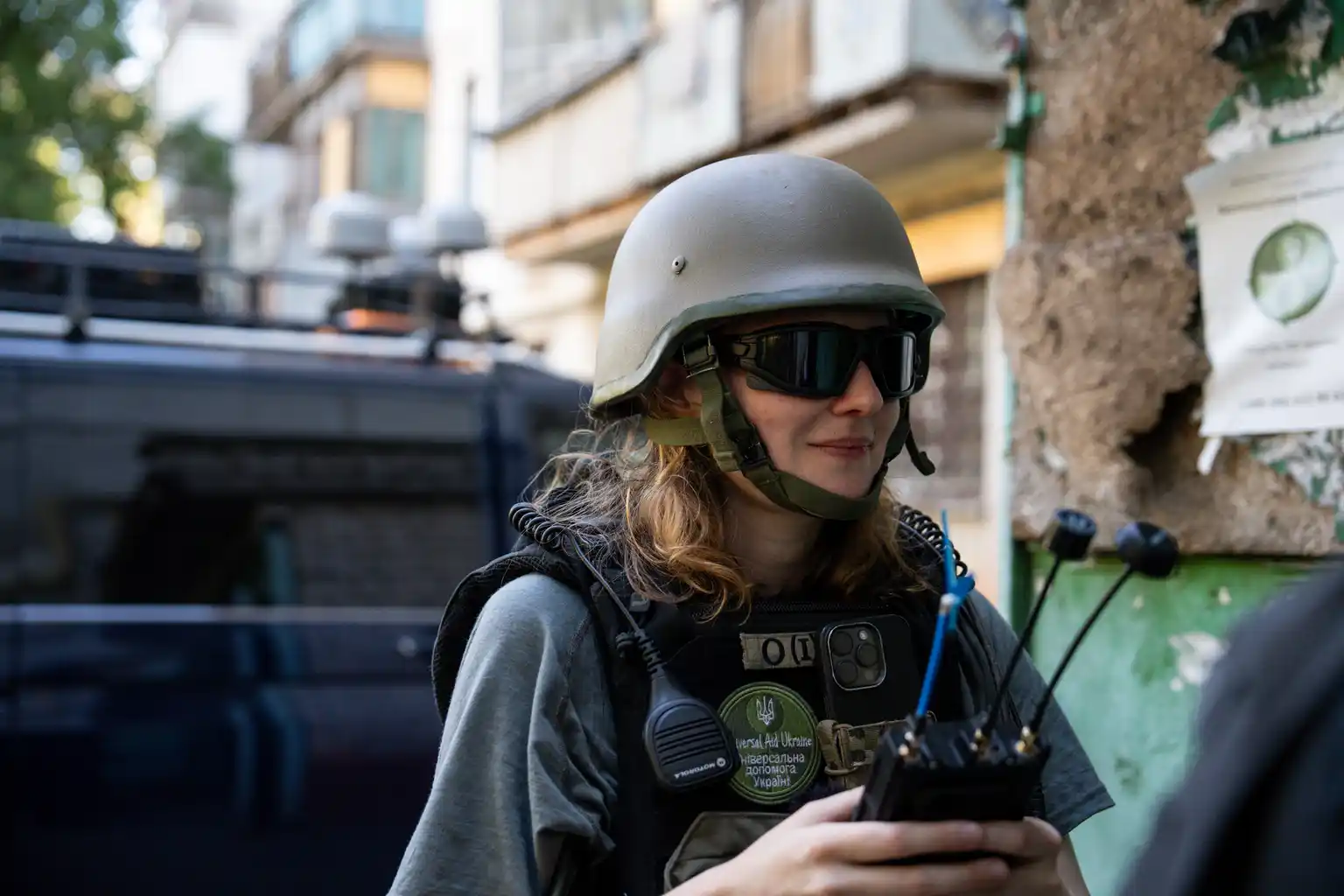
Both are distinctive personalities with their own philosophies of life and a clear understanding of why their work matters. Anna leads an international evacuation team operating in Donbas and the Dnipro sector. In 2025 alone, her NGO, Universal Aid Ukraine, evacuated 1,200 Ukrainian civilians to safety. Elsbernd herself is always "in the field" and has been based in Kramatorsk since early 2023. She has grown deeply attached to the city and describes it with a poet's imagery.
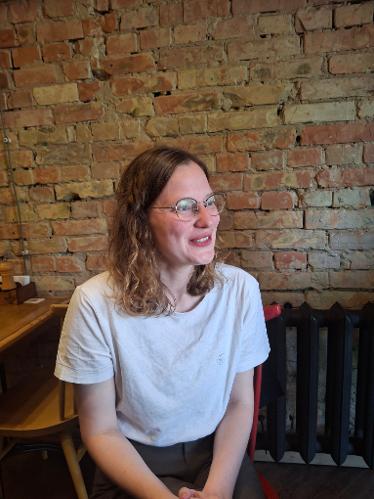
Ricarda says she spends a total of one-third of each year in Ukraine. She helps Universal Aid Ukraine with visual content and social media, makes documentaries about the war, and is currently working on another – about the daily lives of civilians in Ukrainian cities affected by the war. Speaking about her work in Ukraine, Ricarda says: "...I feel that if you try to use your talents to do good, and it actually works, and you make a difference – then it really is rewarding! That is why I keep doing it."

These are the people the Censor.NET correspondent is meeting. And our conversation begins with the natural question: "How did you end up here?"
– Anna, you have been working in Ukraine since early 2022, from the very beginning of the full-scale war. You were 22 at the time. And while European embassies and business personnel were leaving Ukraine, you were helping us (which was very brave of you). How did that happen? What brought you here?
ANNA: At the time, German media coverage mostly focused on Ukrainian refugees queuing at the borders with Poland and other neighbouring countries. And I was already running an NGO for refugees in France. I had also been planning a trip to Kyiv with a friend for a party (she smiles. – Ye.K.). I had planned it a year before the full-scale war. We had booked our tickets well in advance. Then the full-scale war broke out, and Russia began attacking. And I thought: but I already run an NGO for refugees! And this was the very week I had planned to be in Kyiv. So perhaps it was my duty to go to the border and see whether I could help the refugees?
Everyone saw those photographs; people were queuing for days. I think there was a case where a child was freezing in the queue because it was still snowing in Poland. And you see those photographs and think: this is all so terrible, why is nobody doing anything? Then you think: well, I have the resources; Poland is a two-hour flight away, why am I not doing anything?
So I just decided to go and see.
– I am sure your friends and relatives kept telling you: "Anna, you have completely lost your mind. Do not even think about going there. You will get killed!" What did you say to them?
ANNA: Initially, I was only going to Poland, to the border. And I did not know that a week later I would already be in Ukraine. So when I first told my parents and friends that I was going to the border, they said: "Oh, that is good. But do not cross the border!"
And then I did not even tell them I had crossed the border. It all happened there: a German television crew was on the other side, interviewing people live, and they said: "Oh, another German woman!"
And that was how my family first saw me on television, after I had already crossed the border. They were not happy at all. They were very worried.
– Still, you decided to stay in Ukraine. You are a stubborn person, aren't you?
ANNA: Yes, and that did not surprise my family. I had previously provided humanitarian aid in many other countries, such as Kenya. I had even been to Congo. So they had a sense that it might happen, but they did not think it would happen so quickly.
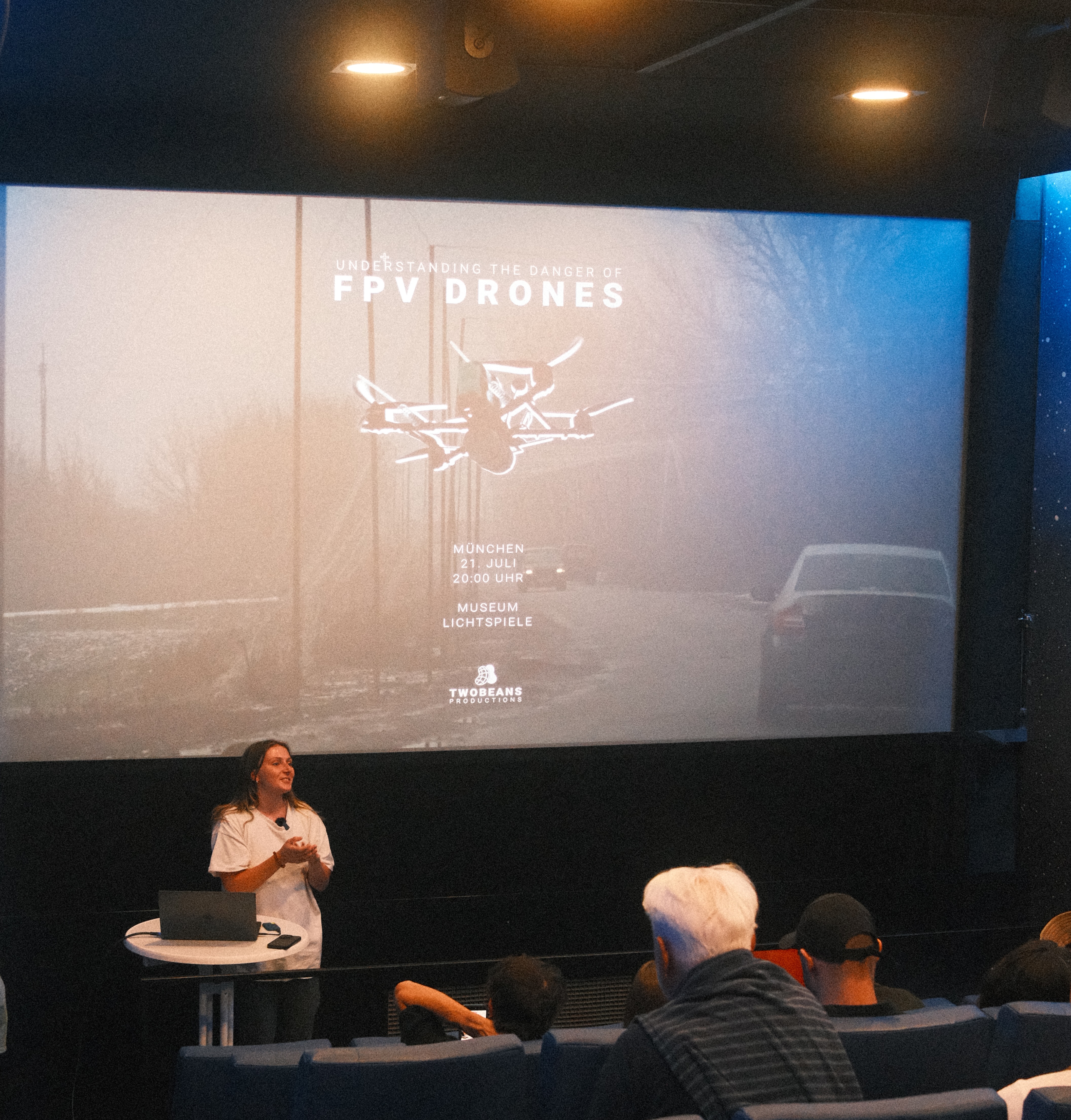
– Ricarda, alongside your active work here, you organise events in support of Ukraine in Germany, such as "Understanding the Nature of FPV Drones". Thank you for your courage and compassion – and please tell our readers about your own experience of the war. When did you come to Ukraine, and what was your mission here?
RICARDA: Over the past few years, I had been in Germany, building my social media business. And I had always followed Ukraine and what was happening there. But last year, I wanted to use my talent for making videos to do more to help. I have a friend who knows Anna. He is half Ukrainian and has been coming here regularly since 2022 to help... He brought me here and put me in touch with Anna. And I started doing social media work for them. Then I returned to Germany and talked about what I had experienced. I realised that people in Germany do not really understand what is happening. They know there is a war, that there are drones – but they do not really understand what that means, what the actual dangers are, what is happening, and on what scale. So I decided to make videos and short documentaries. To show German audiences something that would really help them understand.
– What about your friends and relatives? Did they try to persuade you not to go to Ukraine?
RICARDA: Some people in Germany think it is equally dangerous everywhere in Ukraine. Some of them simply do not really understand. And, of course, my parents, especially my mother, always worry a lot when I go. But they support me wholeheartedly.
– And do they keep messaging you: "Have you eaten? Where are you? Are there any explosions?"
RICARDA: Yes, especially during the first few trips. The thing is, in Germany I have a GPS device, so my parents can see where I am. But in Ukraine, if I am closer to the front line, I turn it off. So that makes them even more nervous. And I am like: I cannot tell you where I am, but I am all right.
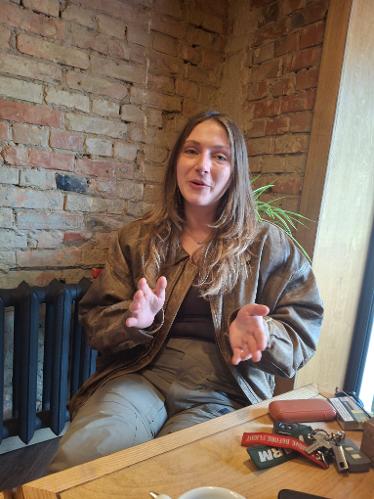
– Anna, from 2022, Universal Aid Ukraine mainly focused on delivering humanitarian aid to towns and cities directly on the front line. Now your focus has changed, largely because of drones. What are you and your colleagues doing now?
ANNA: Over the past two years, we have focused mainly on evacuations. So we go to the front line and evacuate the people living there to safety.
– Please describe a typical evacuation.
ANNA: At this stage, you can roughly distinguish between when the situation in a place becomes really bad and when mandatory evacuation is declared. We go there, put up leaflets and talk to the people who live there, explaining how the evacuation process works. We simply listen to them, to their worries and fears, and try to reassure them.
Many of them refuse to consider evacuation. Of course, they are afraid, because they are leaving behind everything they have known all their lives. And they have to go somewhere they often know nothing about.
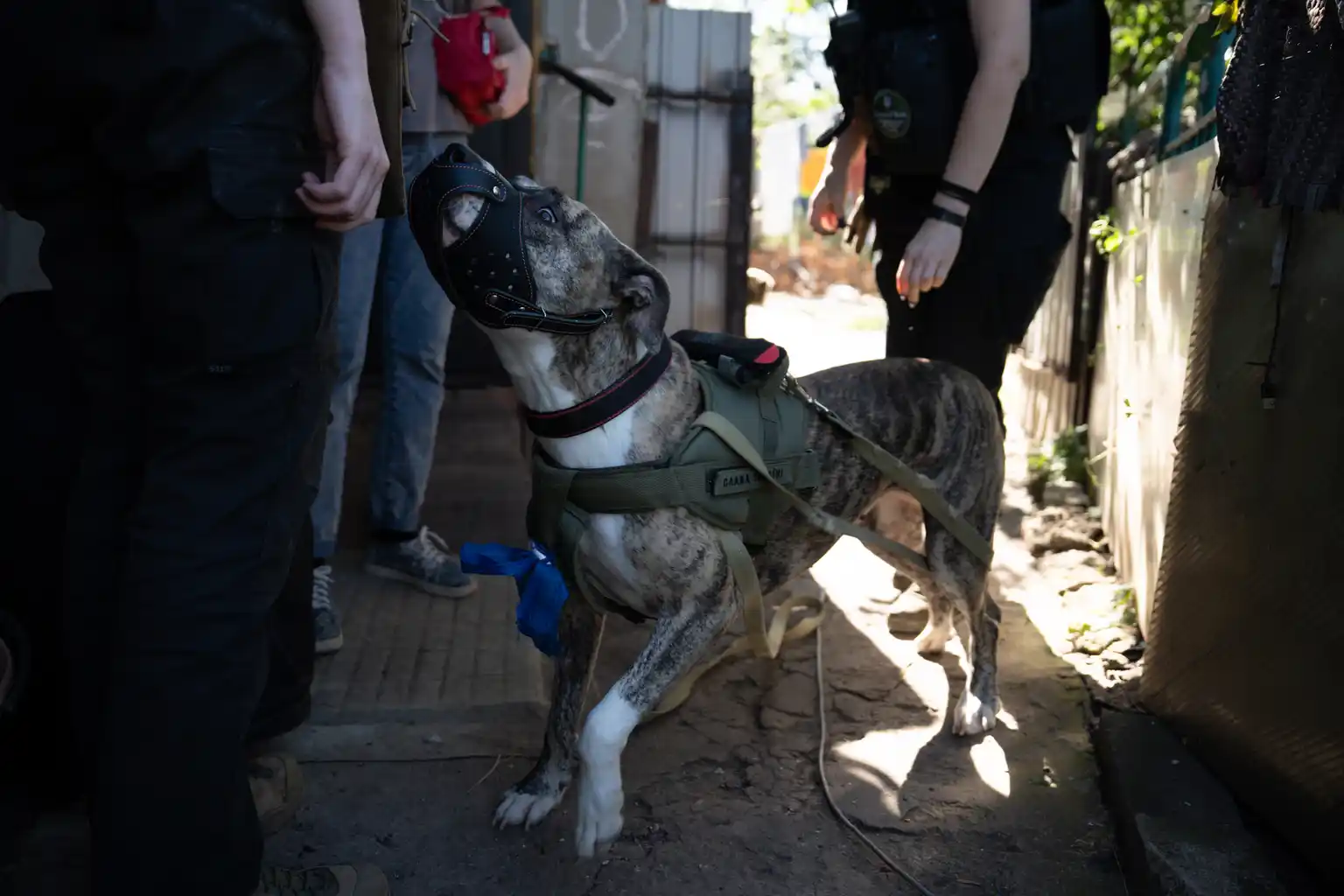
And you just try to spend time talking to them. Then you put up all these leaflets, and eventually (hopefully) they call our hotline. We have our own evacuation hotline, which Vasia runs. They call, usually with lots of questions. Then they give us a date when they will be ready. Of course, they still need to pack their belongings and say goodbye to a few neighbours. And usually, by the afternoon or evening, we know which evacuations we have scheduled for the following day.

A lot depends on how many people call to request evacuation – and who they are. Older people are one thing; children and animals are quite another. We set off in the morning, pick them up from their homes, load all their bags, get them into the vehicle and take them to a shelter or an evacuation and registration point. Their onward transport from there by bus is arranged later.
But, of course, in situations like these, you cannot plan everything down to the smallest detail. You think you have taken everything into account and worked it all out, and then something goes wrong. There may be drones or bombs about to hit, and you have to wait a few minutes. There are many unknown factors when planning an evacuation.
– You mainly work in Donbas, don't you?
ANNA: We currently have two evacuation teams operating. One is with me; we still live in Kramatorsk and work in Donbas. So we mostly work in and around Kramatorsk, Sloviansk, Malotaranivka, and Druzhkivka. We also have a team in Dnipro that works in the Dnipropetrovsk region.
– How many people are on your team? And who does what?
ANNA: I will tell you about our team in Kramatorsk. First, we have Daniel. He is an American who mostly leads the evacuations. He is responsible for the vehicle and the routes. Daniel needs to know which road to take if, for example, a street is blocked. He is responsible for knowing about these things in advance, dealing with them and remaining extremely calm under intense pressure, when people's lives depend so heavily on him.
Then there is Magda. She is Polish and mainly handles onward transport at the end of the evacuation trip. At the moment, we do not have many buses taking people further west from Kramatorsk. So she often drives them west from Kramatorsk in a van for our organisation.
And in Dnipro, there is Lars, another German, who also mostly handles driving and many technical tasks. He knows how to programme radios and understands which drone jammer is best to use in which situation. He has extensive technical experience.
There is also Vlada, who does a lot of translation and outreach work and has contacts with the police and local authorities.
And then there is Vasia (Vasylyna), who also does a lot of outreach work. She communicates extensively with donors and partners and handles all the tedious paperwork. She also runs the evacuation hotline. So whenever people call, she has to answer and explain the process again, then coordinate with them and with us to work out when an evacuation is possible. Finally, she sends us a list of all the evacuations scheduled for the next day. And she always keeps track of us. We post in our group to say where we are going and at what time. She has all the emergency contacts. So if anything happens to any of us, Vasia will be the first person contacted.
– A question for both of you. How many months a year do you spend in Ukraine in total?
ANNA: I am usually in Germany for Christmas, because my family says that is a must. It is an important family holiday for us, but apart from that, I am in Ukraine all the time. I spend about 11 months in Ukraine.
RICARDA: She also works around the clock. I only come for a couple of weeks and try to work on various projects while I am there with them. Then I go back, because I also have to work in Germany. But I would say that, for me, it is probably a third of the year.
– Ricarda, am I right in understanding that an important, if not the main, part of your mission here is to bring the sights and sounds of this war to people in Germany who are willing to watch and listen? Without that, a few words and cold statistics alone cannot make people understand the scale of the crimes.
And you hope they will donate, don't you?
RICARDA: Yes, because I realised that if, for example, I tell someone in Germany that an FPV drone can fly at, say, 180 or 160 kilometres per hour, they will just say: "Oh, okay." Because to them, it is still just a number, with nothing they can relate it to.
But my brother and I did a little experiment (it is in my documentary): we gave him a 10-second head start; he ran straight down the track as fast as he could, and then an FPV drone carrying no payload went after him.
The drone caught up with my brother within seconds – a visual demonstration of the enormous role drones play in modern warfare. It helped many people understand the situation. That is why I try to make my point very simply, while also showing viewers key footage I filmed myself, so that people can really understand the information.
– What does it feel like to show the war to people abroad who, quite naturally, want to enjoy a peaceful life? Do many people get up and leave halfway through your talk (film)?
RICARDA: No, because I try not to show bloodshed – for example, actual images of dead bodies and so on. But I think some parts of the stories I tell them really do stir their emotions. Because it is very different from what I expected.
– Who funds your team's hard work in Donbas and the Dnipropetrovsk region? The war has been going on for four and a half years, and donations and charitable funding are drying up everywhere…
ANNA: We are very fortunate to have some donors who have been with us since the beginning of the war. For example, there are our two German partner organisations. One organisation pays the rent on our house. Another pays for our fuel. We also work with Team UA and Terra Consortium, which provide some funding for our evacuation work. This is a Ukrainian group.
Unfortunately, we also depend heavily on small individual donations. But that is becoming harder and harder every month.
I have also noticed that it is fairly easy to raise money for a particular item. For example, if we announce that we need a new tyre and ask people to donate, they come together and each contribute 10 euros. But what is really difficult is keeping our day-to-day operations running. We need money for fuel, internet access, safety equipment and essentials such as mechanics' fees... I could go on forever.
– I can imagine…
ANNA: People rarely support ongoing work, but they find it easier to respond to one-off appeals for things that have a clear, achievable goal.
– When telling people in Germany about this war, how often do you find yourselves in heated discussions with outright opponents of support for Ukraine? I can easily imagine you, Ricarda, and you, Anna, arguing with AfD officials. Or with Russian admirers of Putin living in Germany. Have you ever found yourselves in situations like that?
ANNA: What is more likely to happen during these conversations is that you suddenly hear typical Russian propaganda talking points. Of course, not as a direct confrontation. People repeat things they hear on social media, from the right-wing party or wherever else. In Germany, they repeat certain Russian propaganda talking points, that is what I hear. But I have not actually discussed this with anyone who was extremely anti-Ukrainian.
– Over these four and a half years, how often have you been in serious danger? Perhaps even praying to God to save you and your colleagues...
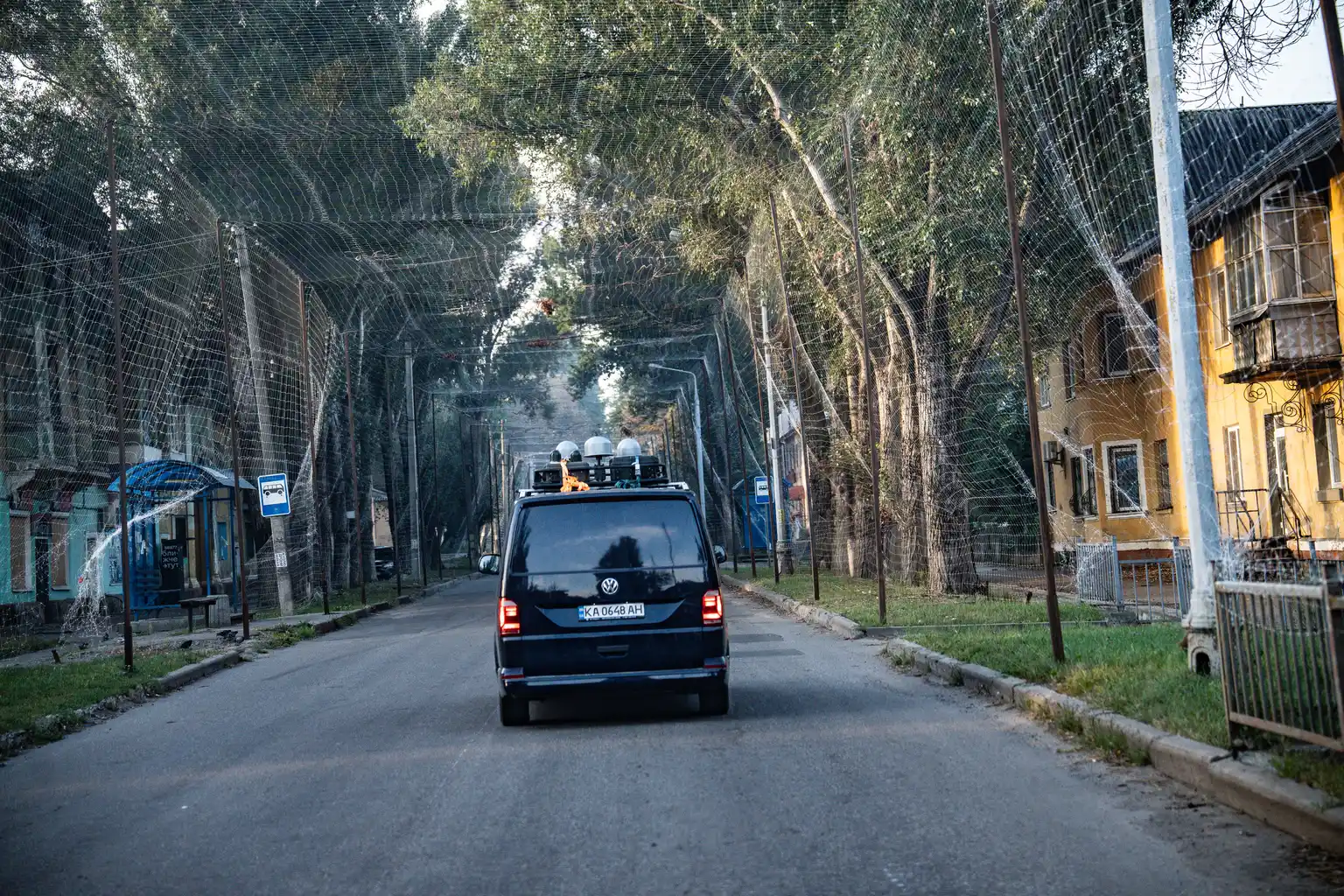
ANNA: There really is not a single day when we do not feel in danger. We drive to the front line every day, back and forth, several times a day and there is danger every time. I cannot remember an evacuation without a drone in sight. I cannot remember the last time I was somewhere in town or on the front line without having to hide under a tree or somewhere a drone could not see me. It happens every time. After all, we live in Kramatorsk, which is now 10 kilometres from the front line.
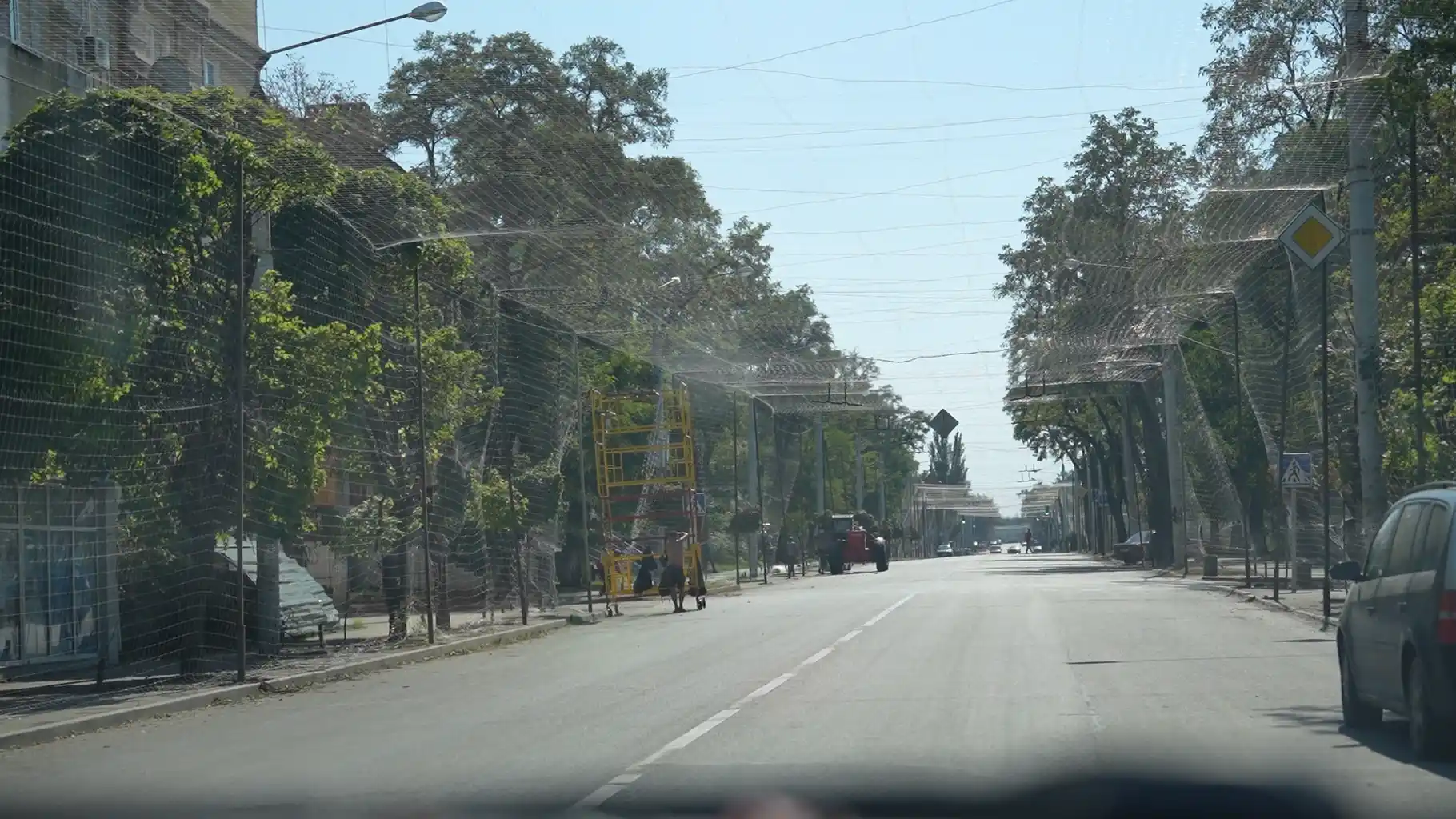
Our lives are in great danger now. We have to go to the supermarket in an armoured vehicle with a "Chuika". (Drone detector - ed.note)

Kramatorsk is under air raid alert around the clock because FPV drones are hitting vehicles on the main roads. You have to be extremely vigilant, but even then, I know the alert offers no guarantee of safety. This happens all the time, and we know it. Everyone on our team has had a really bad experience. Last week, we effectively lost an armoured vehicle because two cars crashed into it. That also happens in areas with heavy drone activity.
You come under fire wherever you go. Drones track us; we can see our vehicle on the tracker, and the drone keeps following it. We have to outrun the drone, to be faster. Or hide from it. And now this happens every day. Even just driving around Kramatorsk and then out to the outskirts, you have to be aware of the danger. These drones fly so fast. Like all the other people who have been hit, you usually do not see it coming. It just happens, just like that.
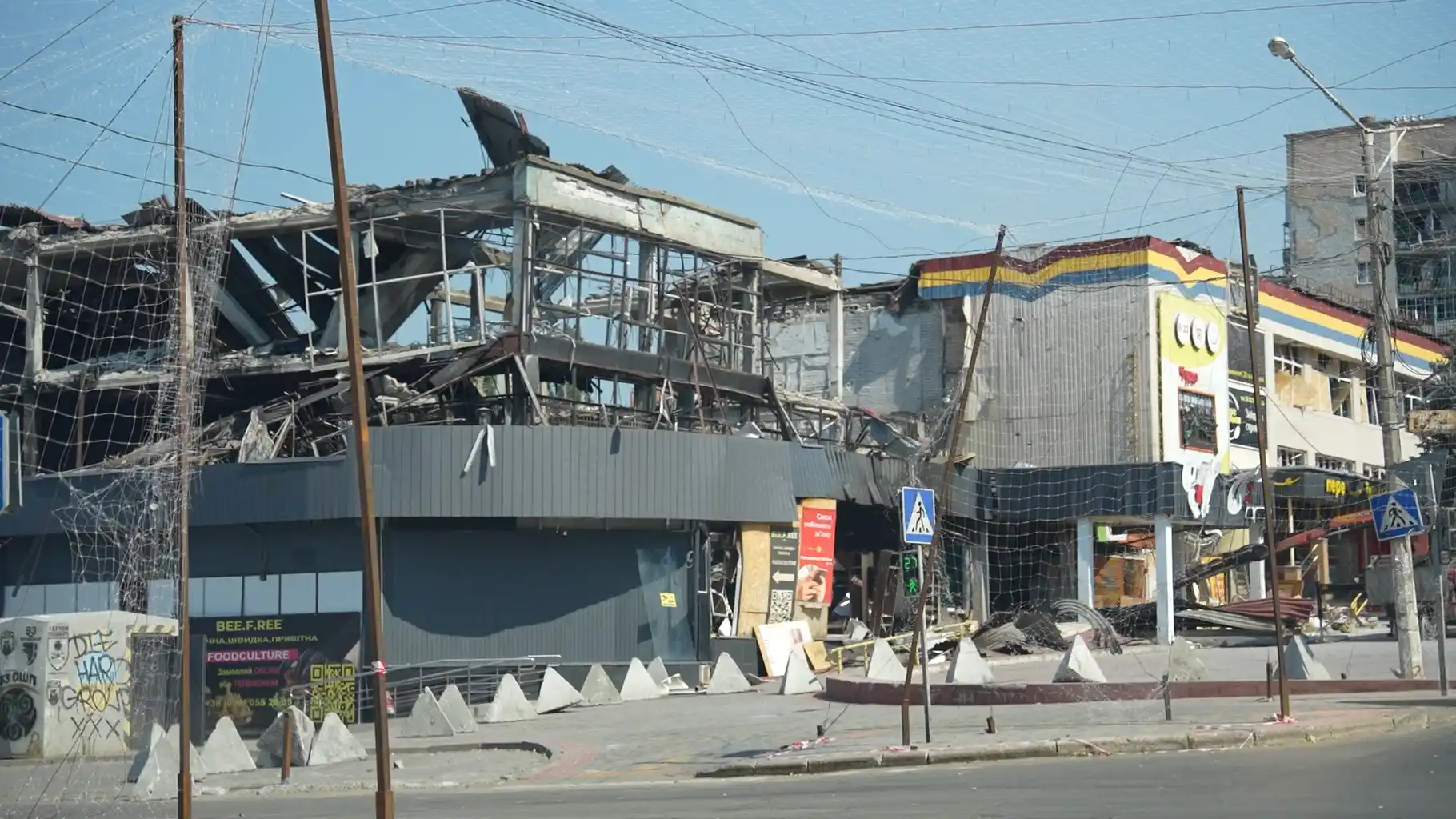
In Kramatorsk, it can happen at any time. It is hard to make a judgement and say: yesterday it was extremely dangerous, but now it is not. Because it often happens without warning. And you are also responsible for looking after the people you evacuate. Once they are in your vehicle, you have to make sure they reach their destination safely. And that makes it doubly frightening, because even if you are scared yourself, you have to smile. Everything will be all right (she smiles faintly. – Ye.K.).
– Over all these years, have you both seen people who have been killed or wounded?
RICARDA: People in a very serious condition – yes. Wounded people – no.
ANNA: At some point, seeing bodies lying on the road becomes normal. Bodies that no one can recover anymore because it is too dangerous. Very recently, in Druzhkivka, we drove past a car that had just been hit. People were still lying dead on the road.
Or there was the time an evacuee from Druzhkivka died in our vehicle. There are many such cases overall.
The other day, the team from Kramatorsk also drove past a wrecked car with a dead, mutilated driver. On the one hand, whenever you drive past, you always need to check whether there is anything you can do. On the other, if someone is lying in front of the car without a head, they are clearly dead, you cannot save them anymore, and you just need to get out of there quickly.
– Because now you are the ones in danger.
ANNA: ...Because the area is swarming with drones. And what happened to them could happen to you at any moment.
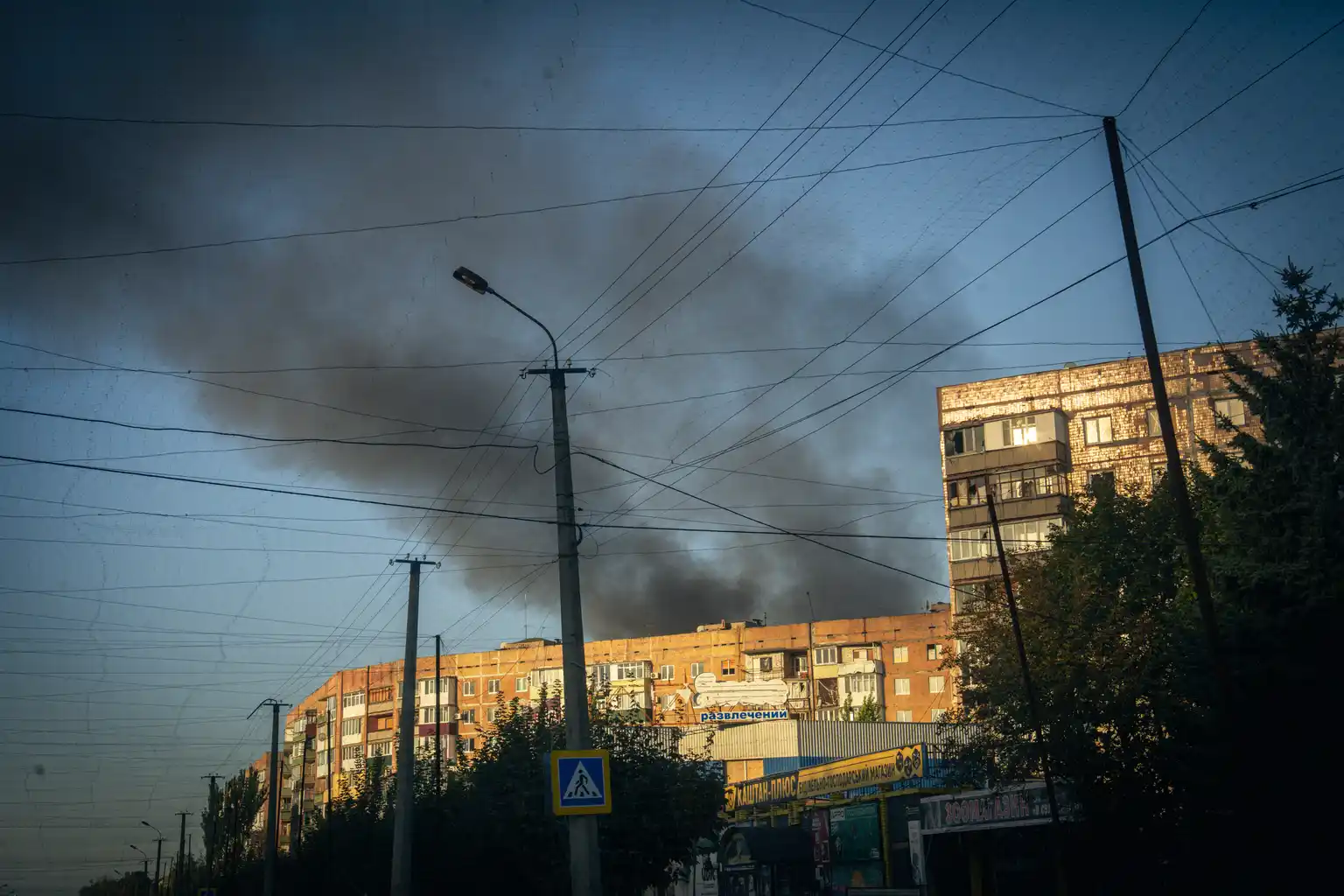
We also sometimes respond to strikes – because if a large KAB hits a site somewhere in Kramatorsk, the emergency services sometimes call us when there are not enough ambulances to take people out. And when you arrive at the scene, everything is filled with smoke, people are frightened, people are screaming, they are in distress, and every part of their body is crying out something different. Then you see the civilians you need to transport in your vehicle. We had a young man with a head wound, or an elderly woman whose eyes were bleeding heavily. And they were all in shock. This is completely different from evacuation, because you really just have to try to get them to hospital as quickly as possible and try to calm them down. But you are not exactly calm yourself... We have all taken enough medical training courses to be able to respond to the most severe injuries, but there are certain things we cannot do.
We had a situation like that in the Dnipropetrovsk region. People in occupied territory contacted us, asking to be evacuated to Ukrainian-controlled territory. But that is impossible: you cannot drive into occupied territory and say, we are evacuating civilians, please let us through. That is simply not going to happen. So these people, ordinary civilians, were eventually forced to leave the area on foot.
– What happened to them next?
ANNA: The Russians came to their town and simply shot a man dead in front of the whole family. Then they all decided they urgently needed to leave. But there was no transport, so they set off on foot. They had to walk for days and sometimes swim. They had a very elderly grandmother who could barely move; their mother had a badly broken leg with external fixation pins. And it was all clearly infected, because she had just swum through muddy water…
That answers your question. We encounter so many stories of civilians killed and wounded every day. It is heartbreaking.

– Five years of danger, grief, explosions and sirens. How do you both cope with this stress?
RICARDA: People in Germany always ask me (and I am sure Anna gets this question too): aren't you afraid; why are you going there again; why don't you just stay somewhere safe? How do you cope with the stress? And because I never knew how to answer, I came up with a good response: well, because it makes me appreciate safety more, and how fortunate we are in Germany not to have to worry about any of this. Because, of course, it is completely different when you are right on the front line, afraid of the drones above you. Or when you are in a big city, afraid of Shaheds. But I feel that what I do is important enough to accept the danger.
– A sensible answer: you do not frighten people, you give them an explanation they can understand — and at the same time encourage them to donate to those who do not have the peaceful life they enjoy.
RICARDA: Yes, because it is such a luxury to say: oh, this is too frightening for me! Because we have a choice. I will return to Germany, and as soon as I cross the border into Poland, it will feel completely different from being in Ukraine. Everything is open around the clock; you can get anything. It is a luxury to be able to take that attitude.
ANNA: I think the most stressful thing is that you never get any rest. I have lived in Kramatorsk since early 2023. And seeing the city I have called home for three and a half years slowly dying... And it is so close to home now... I am evacuating my neighbours, and my mind never rests. Because I keep thinking: the Russians are 10 kilometres away. You can walk that distance in three hours.
You have to find a few minutes for yourself. Say, wake up 10 minutes earlier to make coffee. Or just sit outside on a bench, staring into space, to calm down a little.
But your mind never relaxes. I do not have the luxury of crossing the border and thinking: oh, good, now everything is open 24/7 because I cannot leave this place right now. The city needs evacuation right now; what is more, evacuation is now mandatory and this is the worst possible time to stop doing what we do and take that break. You have to do what needs to be done.

– When you come to Germany, do people tell you that you look different from before?
RICARDA: I would say no, but when I come to Germany, I wonder whether things still feel the same. And actually, conversations about everyday things now seem meaningless to me. There are so many important things happening that I can no longer relate to some topics.
– I understand. War and danger completely change people's priorities.
RICARDA: Yes, it is like when I first came home: people were discussing buying a new sofa because the current one attracted too much dog hair. I had arrived just the day before, straight from Dnipro, from the road and suddenly I was in this conversation. And I thought: how am I supposed to feel about the amount of dog hair a sofa attracts? It is a completely different way of thinking!
– All of us here know from experience that war is ugly and brings death. But even amid all this death, have you sometimes managed to find moments of beauty and optimism?
ANNA: Oh yes, every day! Evacuation also means reuniting families; sometimes people call us to evacuate their relatives. And when they come to the shelter to see their loved ones, for a little while you become part of a family whose members feared for one another's lives and are now being reunited! It is always wonderful.

You always have to find ways to see beauty, because otherwise you are not living. You begin to appreciate the funny things that happen during evacuations every day. Someone brings a really ugly dog, and you laugh about it for a few minutes. Or we have evacuees with a wonderful sense of humour, and you end up arriving at the shelter after a very funny journey.
So much happens during the day that I could write a book about it someday.
RICARDA: Moments of beauty? What I find really interesting is that, because this conflict has affected everyone, people work together. And I do not think they would work together like that in peacetime. I have seen people (with similar personality types) who, in Germany, would simply argue all the time. But here, I have seen them working together.
– Which places in Ukraine do you like most?
ANNA: For me, it is Kramatorsk. Partly because I associate the city with so many personal moments. And I think it is such an honest city. Nobody really pretends to be someone they are not, and people are so sincere and authentic.
And the natural beauty of Donbas is simply breathtaking. There is one road to Kramatorsk where, as you drive through the hills, you can see little lakes and the rivers connecting them. There are endless kilometres of beautiful fields and forests. There are bodies of water with what look like beaches almost in the middle of Kramatorsk. It is so beautiful! And the city itself is incredible; in Kramatorsk, I have seen the most beautiful night sky of my life! You just stand outside and look up at the sky.
– A beautiful monologue, but I have to bring us back to practical matters. You are too diplomatic and polite to say it outright, but am I right in understanding that your budget has become so tight that you often have to cover day-to-day evacuation needs out of your own pocket?
ANNA: Yes, because the roads are so bad in places, and our budget for mechanics was drawn up in February this year. There is not enough money, and we constantly have to struggle just to keep doing what we do. I plan the budget, and I cannot even think about projects we could carry out in the future.
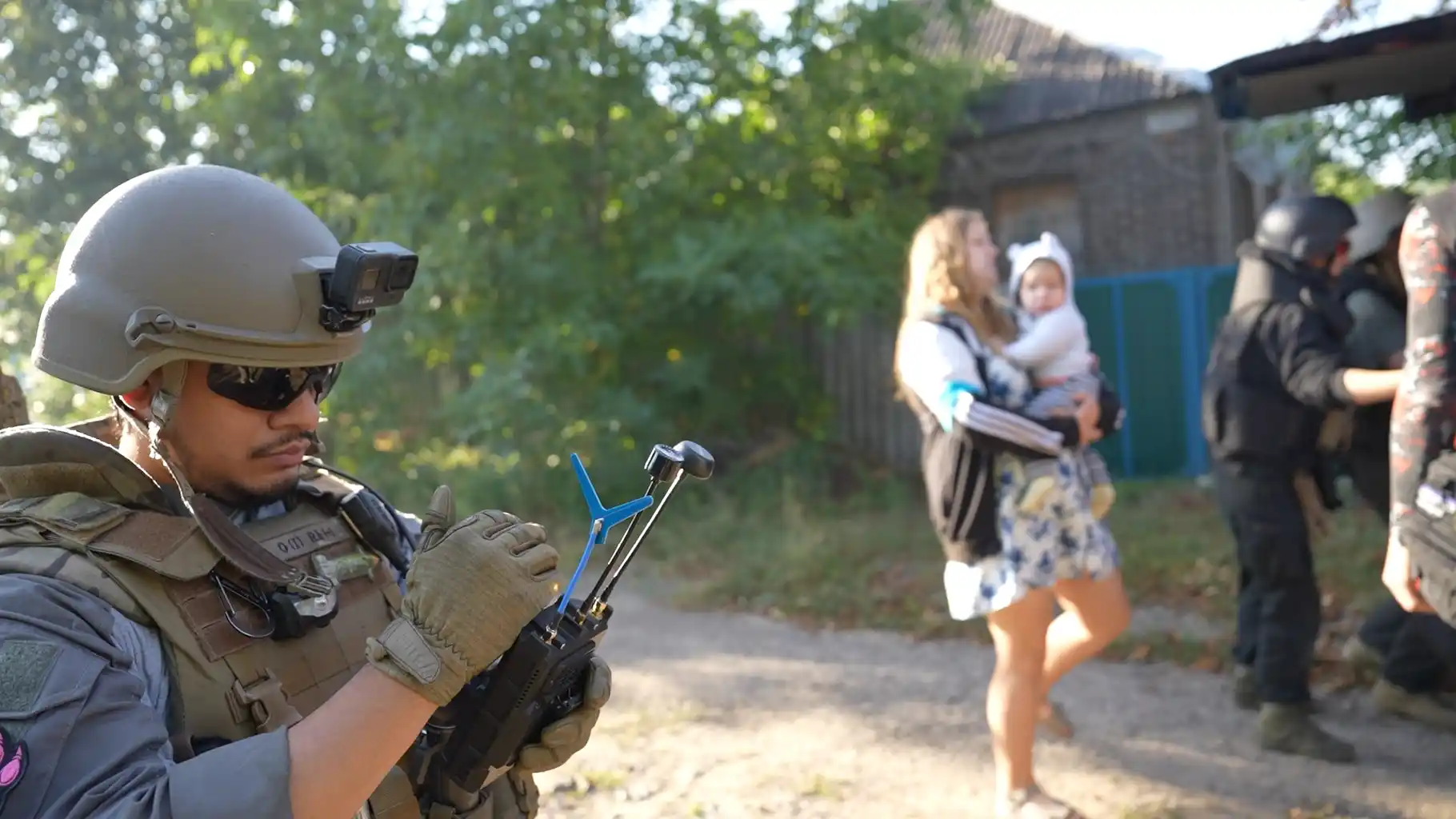
– At the end of this interview, we will publish some information that may be useful to readers who would like to support you... Ricarda, are you planning to make a full-length documentary about your experience in Ukraine? We would certainly be rooting for it to be screened at international film festivals.
RICARDA: I have already started filming my next documentary over the past few days.
– Wonderful! What is the concept?
RICARDA: I realised that many people do not really understand what everyday life is like for civilians during this war. Especially in big cities after four years of war. Initially, I planned to make a documentary about large-scale Shahed attacks, but now I am changing the idea a little. It will essentially be a documentary about civilian life in big cities. I filmed some scenes during medical training courses for civilians, with experts discussing the technical aspects. The aim is to explain this to an ordinary German viewer who knows little about civilian life in Ukrainian cities.
I am also trying to publish more short-form content on social media. Everything happens so quickly, and I want to produce more content in real time, because I feel it reaches people even better than full-length documentaries.
– I am sure many readers have already warmed to you, but some will still ask: Anna and Ricarda, why are you still here?
ANNA: I see this terrible suffering every day, and I am in a position to do something to ease it. We can help bring this suffering to an end for some people. So how can I walk away?
– Especially since you both have the resources and experience.
ANNA: Exactly! Experience is extremely valuable here. There is the threat of drones, KABs, missiles and so on. We know how to respond; we are trained, because we have been here throughout all the developments in this war. That puts us in a unique position to understand when and how things are changing, and to know intuitively how to act to keep people and ourselves as safe as possible.
RICARDA: For me, I feel that I can make a difference. And even if it is only a small part of the bigger picture, you can get people to change their approach. For example, how people in Germany approach the whole issue. Or you can make a difference to people who might donate. Or to families who will finally be safe. It is really rewarding. Yes, it is easy to fall into thinking that war is such an enormous thing, that you cannot do anything about it and can only donate. But I feel that if you try to use your talents to do good, and it actually works, and you make a difference, then it really is rewarding! That is why I keep doing it.
Please note! You can support Anna and her team in Kramatorsk by donating here:
https://www.paypal.com/donate/?hosted_button_id=4W7W92R2D5Q4S
Or here:
https://buymeacoffee.com/uauvolunteers
Or via the bank account of our German partner organisation
H.I.C. - humanitas in centro e.V.
IBAN: DE71 7706 9782 0000 7371 60
BIC: G E N O D E F 1 S P K
Yevhen Kuzmenko, Censor.NET
Photos: Ricarda Fasol and the author


