



Former brigade commander Luchanov’s wife Daryna, upon hearing that her husband would remain in custody for another two months, told him: "It’s okay"
Neither relatives nor friends nor fellow soldiers came to the court hearings for the 155th Brigade servicemen suspected of murdering the Moseichuk brothers, some of the suspects having previously served in the well-known "Skelia" unit. Only Luchanov’s wife attended the hearing to review her husband’s pretrial detention. Nor did any residents of Kalynivka, a village in the Bila Tserkva district of the Kyiv region, attend. This was the village from which the brothers were abducted and where Daryna Luchanova’s family lives.
This high-profile case involving soldiers of the 155th Brigade shocked the whole of Ukraine in July. In brief: a group of servicemen arrived in a tiny village in the Kyiv region, looking for people whose surnames appeared in a forwarded message on their phone. Among them was the name of an underage boy. They asked about these people at the local Territorial Centre of Recruitment and Social Support, at the police station, and at a shop, where they questioned the saleswoman. They were not told where to find the people on the list. Late the following evening, the same strangers broke into the home of the Moseichuk brothers, whose names were not on the list. One of the brothers was wounded. They were blindfolded, forced into a car, and driven away in an unknown direction. Three days later, it emerged that the brothers’ bodies had been found at the same brigade’s training ground in the Poltava region. Both had been shot dead. All the suspects in the case were detained that same day and remanded in custody for 60 days, a period that expired in recent days.
Censor.NET reported in detail on life in the village and what was happening there in late June and early July.
On October 7, court hearings were held to determine the preventive measure for each suspect in the case. Two days earlier, on Monday, four of those detained had their detention extended for another 60 days without the possibility of bail. I will say at the outset that the other six also had their detention extended for the same period.
ANDRII ZAIATS: "I WAS FOLLOWING THE COMMANDER’S ORDERS"
11:24 a.m. Judge Kovtunenko of Kyiv’s Shevchenkivskyi District Court opened the hearing.
I was immediately struck by the fact that, apart from court personnel and the prosecutor, there was no one in the courtroom, where one of the suspects, Andrii Zaiats, born in 1982, was already present. Even his lawyer was representing him via video link from Lutsk. The suspect himself is also from that city.
The prosecutor explains that the case is extremely complex and involves a large number of investigative actions. The results of forensic examinations that would clearly establish how the Moseichuk brothers were killed and whether Zaiats’s weapon was used in the killings have still not been received. Given the suspect’s conduct after the crime, he repeatedly gathered the group that abducted the brothers and instructed them on how to dispose of physical evidence to avoid being exposed; it can be concluded that he has a propensity for such actions. His fellow servicemen provided incriminating evidence against Zaiats. If his preventive measure is changed, he will have to return to his military unit. In that event, there is a risk that he will go absent without leave. The prosecutor also asked that the suspect remain in custody and that no bail amount be set.
As expected, Zaiats’s lawyer disagreed with the prosecutor. He said the risks were unsubstantiated and asked why his client would go into hiding if he fully admitted his guilt. The court should also take into account that he has an underage child.
The judge then gave the suspect himself the floor. Andrii Zaiats said he had no intention of evading the investigation and that he had been following the commander’s orders.
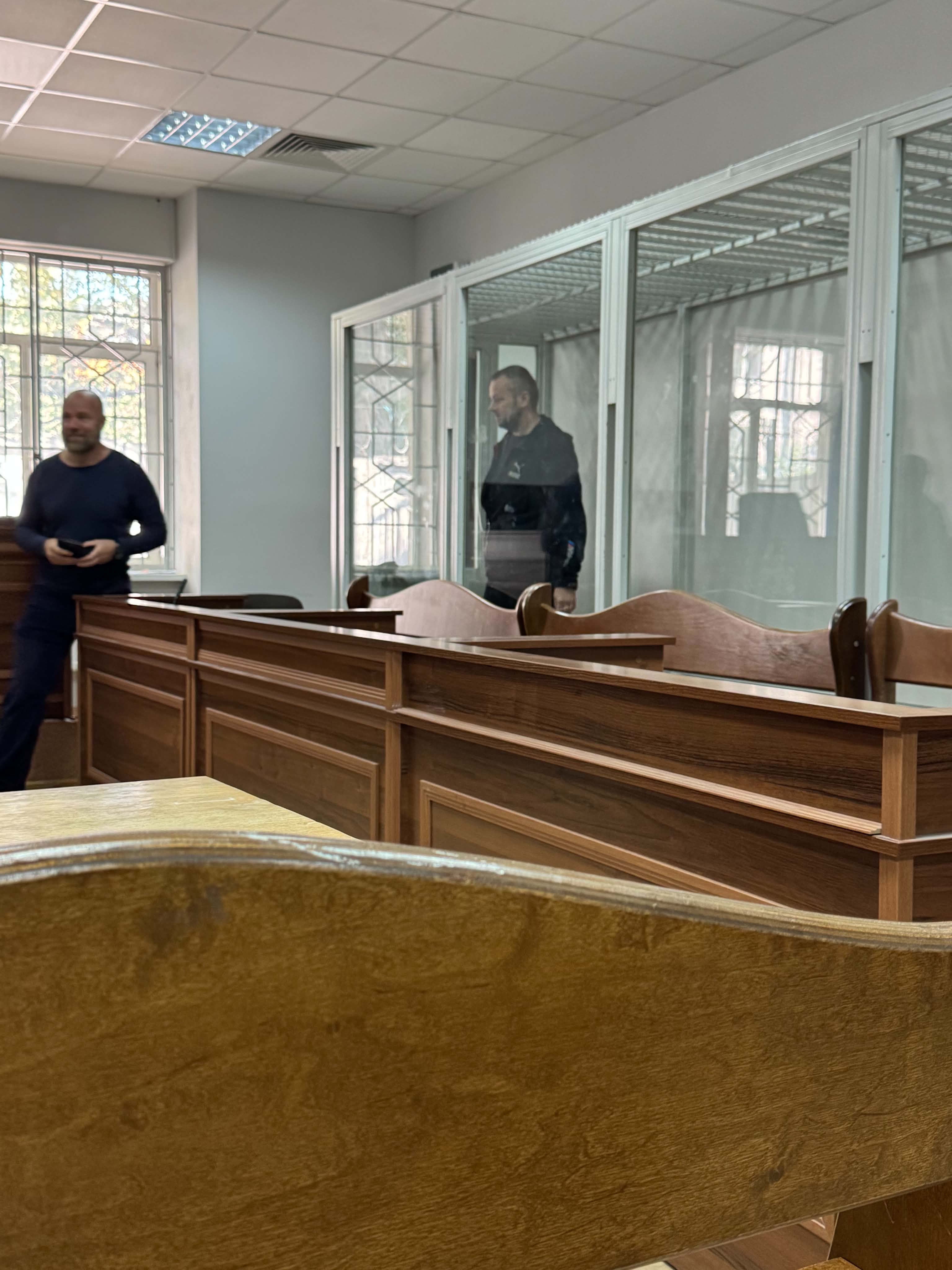
At 11:38 a.m., the judge retired to the deliberation room and returned just a minute later with a decision to extend the suspect’s detention for another 60 days without the possibility of bail.
The guards handcuffed Zaiats and escorted him out, then brought in the next suspect.
VIACHESLAV ARTAMONOV: "KITTEN, YOU HAVEN’T BEEN SENDING ME CARE PACKAGES, AND I GOT WORRIED"
11:47 a.m.
The lawyer has a couple of minutes to speak to his client through openings in the glass enclosure. They whisper. Only once can the suspect’s words be heard clearly: "I’m just worried." It is clear they are speaking Russian. In response to something the detainee says, the lawyer replies: "But that will be worse."
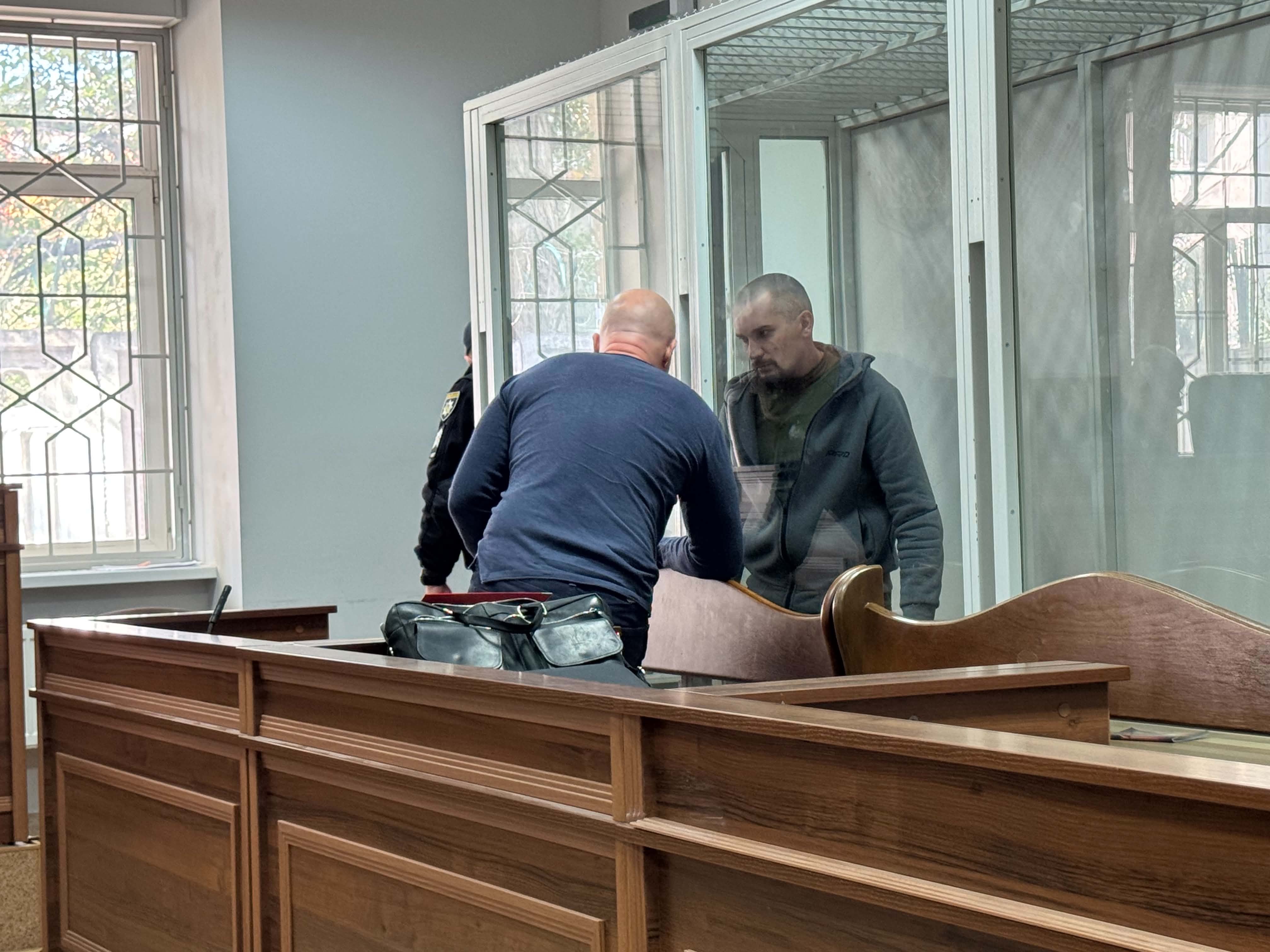
The judge opens the hearing. Looking through the documents, he addresses the prosecutor and the lawyer, who is in the courtroom this time: "Why wasn’t the suspect asked a simple question during questioning: do you admit your guilt?" He then proceeds to read out the details of the case.
Now before us is Viacheslav Artamonov, born in 1995. He is from the Izium district of the Kharkiv region. When the judge asks whether he has any previous convictions, the suspect hesitates and answers "no" as though he himself is unsure.
The prosecutor repeats the arguments set out above but stresses that, because the case is extremely complex, the investigation could not be completed within three months. The investigation has been extended for another three months. This is another argument for keeping the suspect behind bars.
The lawyer disputes the charge against his client under Article 115, noting that he gave incriminating testimony regarding Article 146: how the Moseichuk brothers were abducted. Seven people have testified against his client in relation to Article 115, but all of them took part in abducting the brothers alongside Artamonov. There are no other witnesses. His client did not use violence. It was Zaiats who fired the assault rifle. Artamonov fired because a dog ran out. One of the brothers was wounded when the bullet ricocheted. Overall, the suspect has received positive character references, although the lawyer did not specify from whom. He is married.
The judge asked the prosecutor whether the wound track had been analysed and whether all seven men who came for the brothers had the same type of weapon. As far as I understood, this is being examined, and nothing definitive can be said yet. The judge then asked Artamonov whether he knew these people. "No. I’d never seen them," the suspect replied. The judge then began asking how long he had been serving. "I’ve been fighting since 2025. I volunteered." The judge asked again: "Were you mobilised?" "No," Artamonov insisted. "I buried my brother and joined up. Later, I transferred to this brigade. I’ve been here for a year and a half." The judge continued: "Do you have combatant status?" After receiving an affirmative answer, he asked which sectors Artamonov had fought in. It turned out he had fought in the Kharkiv region and in Pokrovsk. Artamonov also added that his entire family serves in the military.
The lawyer added that Artamonov’s brother has a disability resulting from a wound and also has combatant status. He further said that Article 115 "has nothing to do with this". It was Luchanov who gave orders through another subordinate. When the group travelled to the village, they thought they were apprehending soldiers who had gone absent without leave. They seized them and took them to the unit solely so that the unit would commend them for finding and returning soldiers who were absent without leave.
At 11:58 a.m., the judge retired to the deliberation room. While he was away, the lawyer called someone and held the phone up to an open gap in the enclosure. Hearing a woman’s voice, Artamonov becomes very agitated and starts speaking rapidly: "Kitten, I’m worried about whether everything is all right with you. You haven’t been sending parcels, and I got worried." The woman’s voice replies: "There’s no money." Artamonov responds: "Bunny. I understand everything." He then asks: "Did you receive the parcel?" He gives a few simple instructions about the items in it and asks: "Give our daughter a hug."
12:01 p.m.
The judge returns and reads out the decision, which also orders this suspect to remain in a detention centre for 60 days without the possibility of bail.
Before being escorted out of the enclosure, Artamonov records a voice message on his lawyer’s phone. From the context, it is clear that it is for the woman. He can be heard saying "my love", "I love you" and "sunshine".
MAKSYM MYKYTENKO: "I SERVED FOR THREE MONTHS. TWO IN BASIC MILITARY TRAINING, THEN I WAS ASSIGNED TO THE ESCORT GROUP. I DIDN’T FIRE A SINGLE SHOT"
The next suspect’s lawyer takes his seat. Before his client is brought in, the judge asks him a question that is also on my mind: "No one here to support him?" The defence lawyer replies that his wife could not come…
At 12:05 p.m., another soldier from the 155th Brigade is brought in. This is Maksym Mykytenko, born in 1985. He is from the Chernihiv region. He is given a couple of minutes to speak to his lawyer. They whisper so quietly that not a single word can be made out.
"Let’s begin," the judge says, reading out the same text concerning the motion, only with a different surname and details relating to other articles of the Criminal Code. The lawyer then asks for several documents to be added to the case file, including the birth certificates of Mykytenko’s two children. One child was born in 2014, the other in 2026. A little later, I approached and checked the younger child’s date of birth: January 28. So, in June, this suspect’s child was six months old… Whether he thought about this when forcing civilians into a car, or about his retired parents, whose details the defence lawyer also asked to add to the case file, is unknown.
Mykytenko stood in the enclosure throughout the hearing. He did not sit down once.
The prosecutor again explained why the measure imposed on this suspect cannot be changed either. He once again mentions that the group that took the Moseichuk brothers away met after their murder and discussed how to dispose of their mobile phones and where to go to avoid being detained by the police. The prosecutor also noted that none of the group approached law enforcement on their own, despite understanding what had happened. They all began giving statements only after being detained.
The defence again categorically rejected the prosecutor’s statements and asked for a written version of the lawyer’s subsequent remarks to be added to the case file. He stressed that his client had taken part in two investigative re-enactments. The only reason they went to the village was to search for people who, they had been told, were absent without leave. After being brought to the unit, the brothers lived there freely, ate, and moved around. On the basis of all the above, the lawyer requested house arrest for his client.
The judge asked Mykytenko: "What do you admit your guilt in? Do you recognise your role in what subsequently led to the deaths of the abducted people?" "We brought them in on the commander’s orders," the suspect replied. "We were told they were dangerous, armed deserters." "What weapon did you have at the time?" the judge continued. "We had…" "Not ‘we’. What did you have?" the judge pressed for a precise answer. "The A1M4 assault rifle assigned to me." "How long have you been serving?" the judge continued. "Three months," Mykytenko replied. "I spent two months in basic military training, after which I was assigned to the escort group. I didn’t fire a single shot." "Did those people need help?" The judge was interested in many aspects of this particular suspect’s involvement. He repeated this question several times, rephrasing it because the suspect did not understand what was being asked of him. Eventually, he said: "When we brought them to the unit, medics arrived immediately."
At 12:27 p.m., the judge retired to the deliberation room. At 12:29 p.m., he returned with the same decision: detention without the possibility of bail was extended until December 5.
ROMAN KOZAK: "THE CHIEF SERGEANT ASSEMBLED US FROM DIFFERENT UNITS"
12:34 p.m. The next suspect is brought in through the courtroom rather than through the room at the side, as the previous suspects were. In this case, the lawyer also appeared via video link.
12:37 p.m. The judge opens the hearing. He reads out a motion that is now familiar almost word for word. It concerns Roman Kozak, born in 1991. He is from the Dnipropetrovsk region. The judge then asks whether he would like to speak to his lawyer in private. "I don’t mind," he replies. The court clerk, the prosecutor, and I are asked to leave the courtroom.
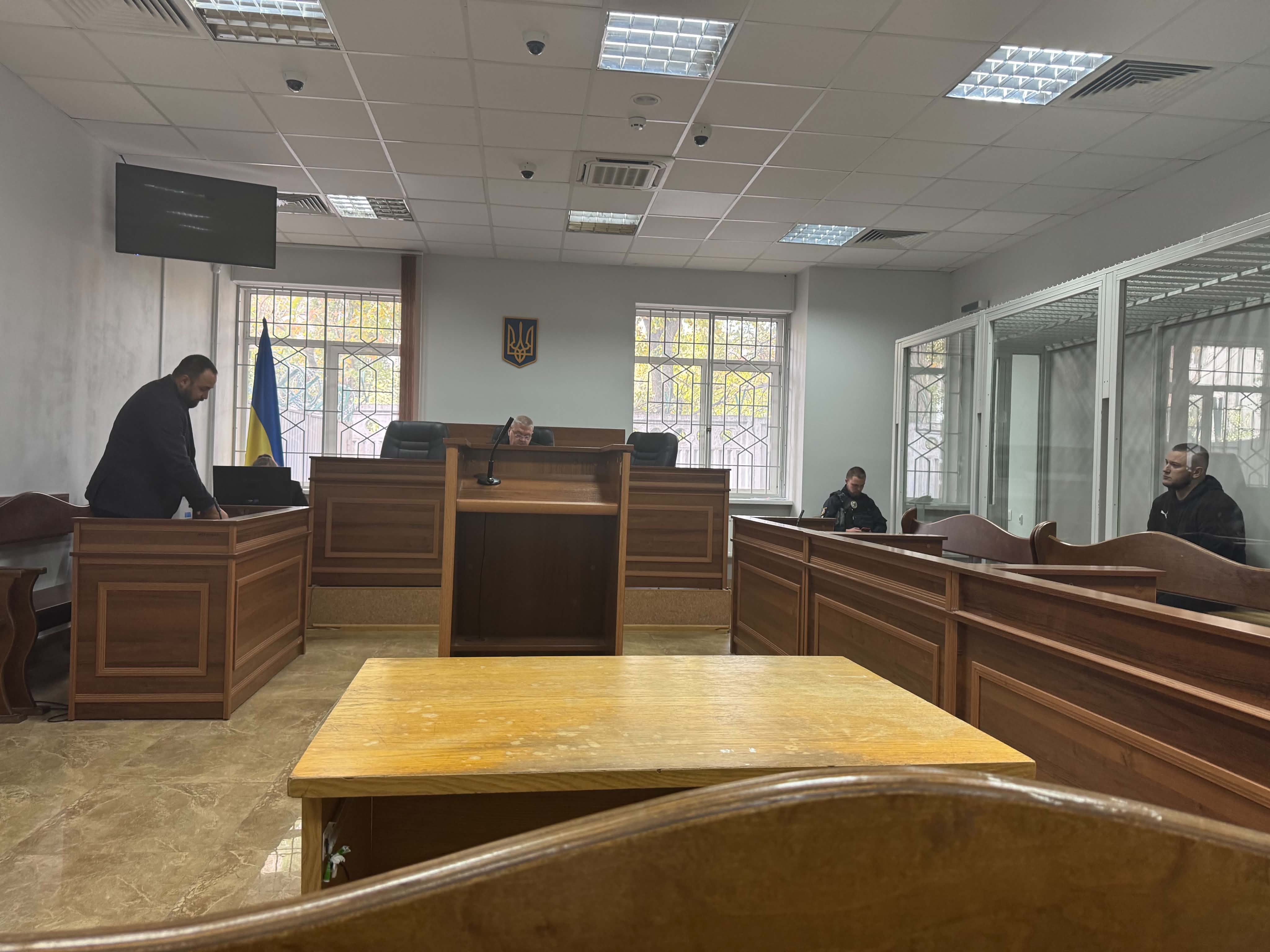
At 12:43 p.m., the hearing resumes. The prosecutor again mentions the extension of the investigation and the complexity of the case, but this time adds that the abducted men could neither leave the unit nor move around freely within it. One of the suspects guarded the brothers, one of whom had been wounded during the abduction.
The defence, of course, disagrees. After some rather vague arguments from the lawyer, the judge asked Kozak what position he held in his unit. He turned out to be a platoon commander. "Are the other members of the group your subordinates?" the judge asked. "Not mine," the suspect replied. "The chief sergeant assembled us into a group from different units." Further questioning by the judge established that Kozak had been serving for two years. Asked whether he knew the Moseichuk brothers, he gave a somewhat strange answer: "I’ve never been to Kyiv."
12:52 p.m. The judge retires to the deliberation room.
12:53 p.m. He returns with a decision to leave the preventive measure unchanged, then announces a ten-minute recess.
OLEKSII DOLHALENKO’S LAWYER: "WE ASK THAT OUR CLIENT BE BARRED FROM RECEIVING CARE PACKAGES AND VISITS FROM RELATIVES, BECAUSE HIS LIFE AND HEALTH ARE AT RISK"
At 1:00 p.m., the guards bring in the next suspect. He immediately begins speaking to his lawyer. This conversation is also in Russian, but the words cannot be made out because they are whispering. Incidentally, before this suspect appeared in the courtroom, one of his lawyers - he has two - approached me and asked which media outlet I represented.
At 1:07 p.m., the next hearing began, concerning Oleksii Dolhalenko, born in 1999. He is from Slovianoserbsk in the Luhansk region. I remembered that he commanded one of the 155th Brigade’s battalions. According to witness testimony, he was the one who shot the Moseichuk brothers dead.
Dolhalenko’s lawyer immediately asked the judge to prohibit his client from receiving care packages or having any visits from relatives because his life and health were at risk. He may communicate with only one person: the forensic specialist working on the case. The defence lawyer also requests restrictions on the dissemination of information and, to that end, asks for the hearing to be held behind closed doors.
The prosecutor stresses that the public should know all the details of this high-profile case and opposes closing the hearing. Nevertheless, the judge grants the defence’s request. I am asked to leave the courtroom, which I do at 1:17 p.m.
While I wait, a man I have already seen in the courtroom appears in the lobby. It was clear to me that he was another lawyer representing one of the suspects. With him are another man and a young woman wearing jeans and a cropped top. "At last, someone close to one of the men appearing in court," I thought, and I was right.
At 1:24 p.m., an air raid alert sounds. The all-clear follows at 1:26 p.m. The hearing, however, was not interrupted.
1:33 p.m., I am invited back into the courtroom. The three people who were in the lobby enter with me. The judge reads out the ruling for Dolhalenko: detention without the possibility of bail.
STANISLAV LUCHANOV: "I AM A COMBAT OFFICER"
At 1:37 p.m., the next man is brought in. This is Luchanov, the former commander of the 155th Brigade. He speaks to his lawyer, casting lingering glances over my shoulder: the woman with dyed blonde hair has sat down on a bench against the wall behind me.
At 1:39 p.m., the judge opens the hearing by asking who the people who have appeared in the courtroom are. He is already used to me. The man introduces himself as the lawyer’s assistant, and the woman says: "I’m Daryna Luchanova, his wife." "She is a witness in the case," the prosecutor points out to the judge. He then addresses the woman: "You were questioned, weren’t you?"… "I’m here now as a member of the public," she replies. Meanwhile, the judge signs some papers brought to him. He hands them back and continues the hearing. He spends a long time looking through the case file for Luchanov’s identification document with a photograph to verify his identity. He cannot find it. He again notes that military IDs should be included in the case files from the outset.
At 1:45 p.m., the judge announces that he will hear the motion concerning Stanislav Luchanov, born in 1989, a native of the Dnipropetrovsk region. The prosecutor immediately asks for his wife to be removed from the courtroom because she is a witness in the case. The judge, however, allows her to stay. Luchanov frequently casts lingering glances at her. He also coughs.
In his remarks, the prosecutor notes that it was Luchanov who gave instructions concerning the brothers. The article under which he is charged provides for life imprisonment. This is why his preventive measure cannot be changed.
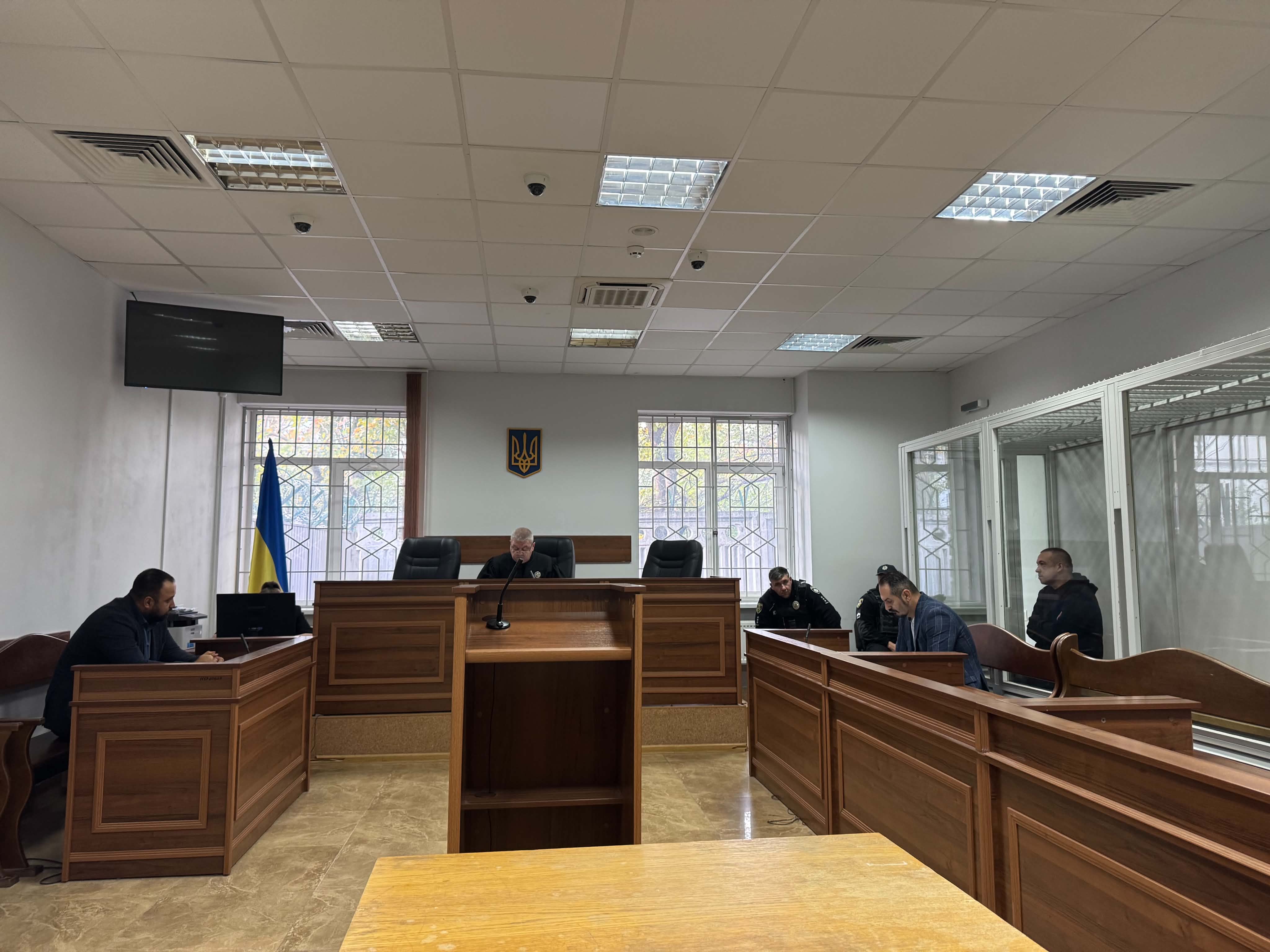
The defence lawyer is confident and animated. After his introductory remarks, he urges himself on: "Let’s move on." He says that they have described it as an organised group. The case contains only subjective information, with no objective evidence. The suspects refer to telephone conversations, but where are they?
I then started recording video, which I include here in full, along with Luchanov’s remarks. This is the kind of case where you do not want to get a single word wrong, and where conveying the intonation matters.
I will draw attention only to these words from the former brigade commander: "I am a combat officer. During the war, I worked my way up from an ordinary assault soldier to brigade commander, for which I was awarded the highest state honours. I have two young children who were born during the war and whom I have barely seen. I understand the full extent of my responsibility and assure you that I will not evade the investigation or flee. I have no intention of doing so."
Like some of the other suspects, Luchanov was no exception: it was in court that he remembered his children and how young they were… As though they had not existed when the brothers’ abduction was being planned, when a group of armed servicemen was being assembled and sent to the peaceful Kyiv region from the area where the brigade was carrying out combat orders… Although one of the perpetrators of this crime may not have thought about his six-month-old child, Luchanov was supposedly protecting his own children so that people would not ride mopeds and motorcycles along the street beside the house where they slept. It is unlikely that these children will thank their father for this when they grow up.
At 2:15 p.m., the judge retired to the deliberation room, first telling Luchanov’s wife: "I will not allow you to approach the enclosure." After these words, one of the guards got up and stood between the enclosure and the woman.
She remained seated on the bench while Luchanov pressed himself against the glass. They tried to talk and ask each other questions, but could not. "I can’t hear what you’re saying," Daryna said more loudly at one point. But part of her sentence "where the f##kwits are" could be heard clearly… Luchanov smiled as he looked at his wife.
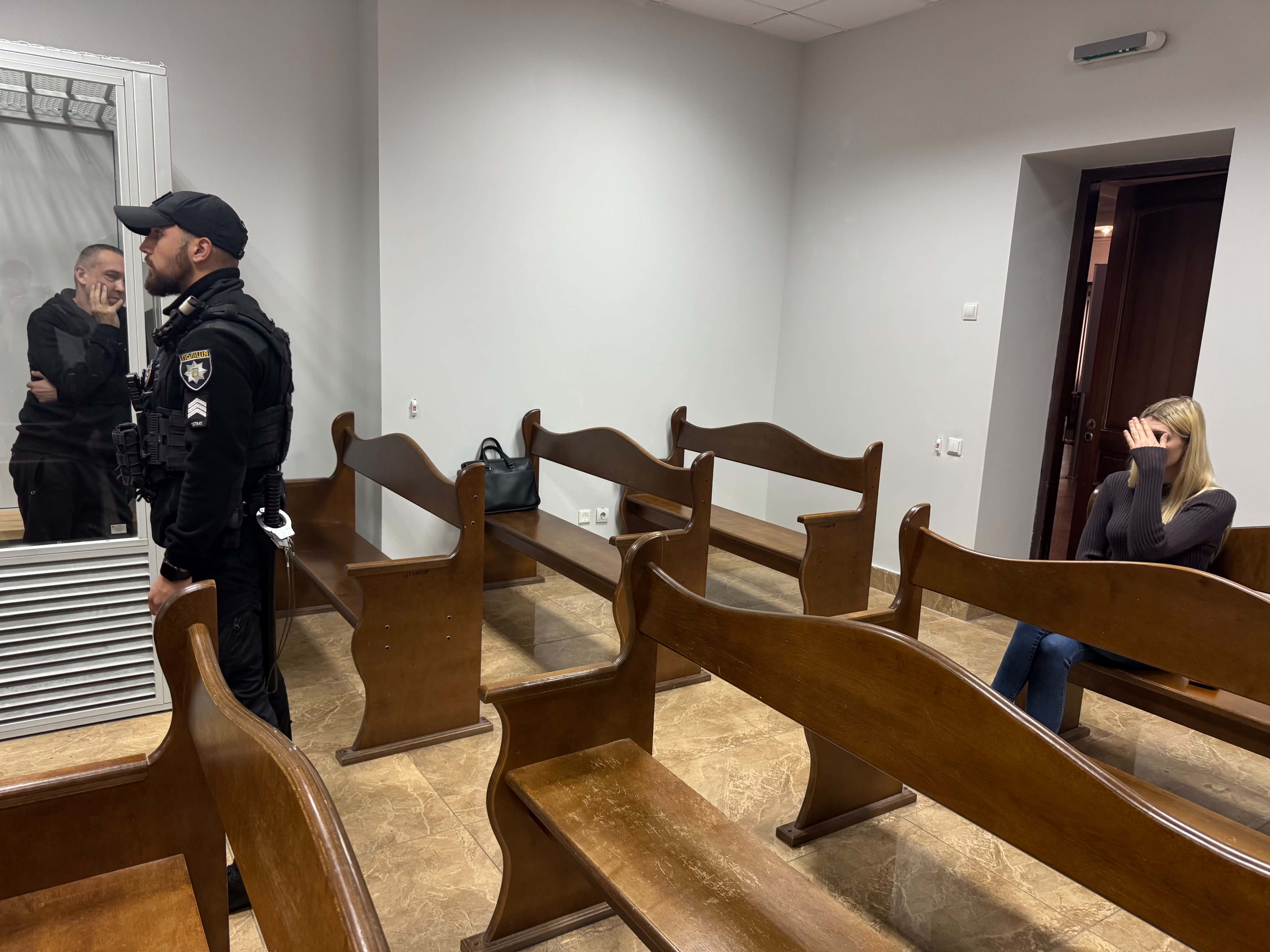

2:21 p.m. The judge returned and read out the decision, leaving Luchanov’s preventive measure unchanged. He remained in prison for another 60 days.
"It’s okay," Daryna told her husband in response. He was escorted out. Neither of them said anything about love or the children. As I filmed the reaction to the judge’s words, the woman covered her face with her hands. What does she have to be ashamed of if her husband is innocent and was, in fact, on sick leave, as his lawyer tried to establish?
After this, Daryna left the building with the lawyers and walked towards the gate through which vehicles carrying detainees leave. Perhaps she hoped to see her husband again… But she returned fairly quickly and went to the car. Standing beside it, she made a phone call. A minute later, an older man approached. One might assume he was her father. She got into the car, and they drove away. Let me make clear straight away: I had neither the desire nor the intention to follow the woman. We were walking in the same direction, so I simply saw all of this. Outside, the woman was no longer hiding her face.
Afterword
I have attended many court hearings involving our servicemen. As a rule, the cases were fabricated, blatantly contrived, and grossly unjust in their accusations. In those cases, supporters and ordinary Ukrainians who wanted to express their views on what was happening always gathered in court. Family members were there too, of course. The most poignant moments are impossible to forget: a wife in the courtroom and her husband in the enclosure holding hands through the small opening used to put handcuffs on him. Here, however, the feeling was entirely different: one by one, people whom no one cared about were brought into the courtroom. Of course, they deserve punishment, and severe punishment at that. But surely at least their parents should care about them.
Censor.NET will continue to follow this case, which is horrifying in every respect.
Violetta Kirtoka, Censor.NET


