



Ukraine faces problems of recruiting recruits to Armed Forces of Ukraine, authorities only "pretend to mobilize" - Economist
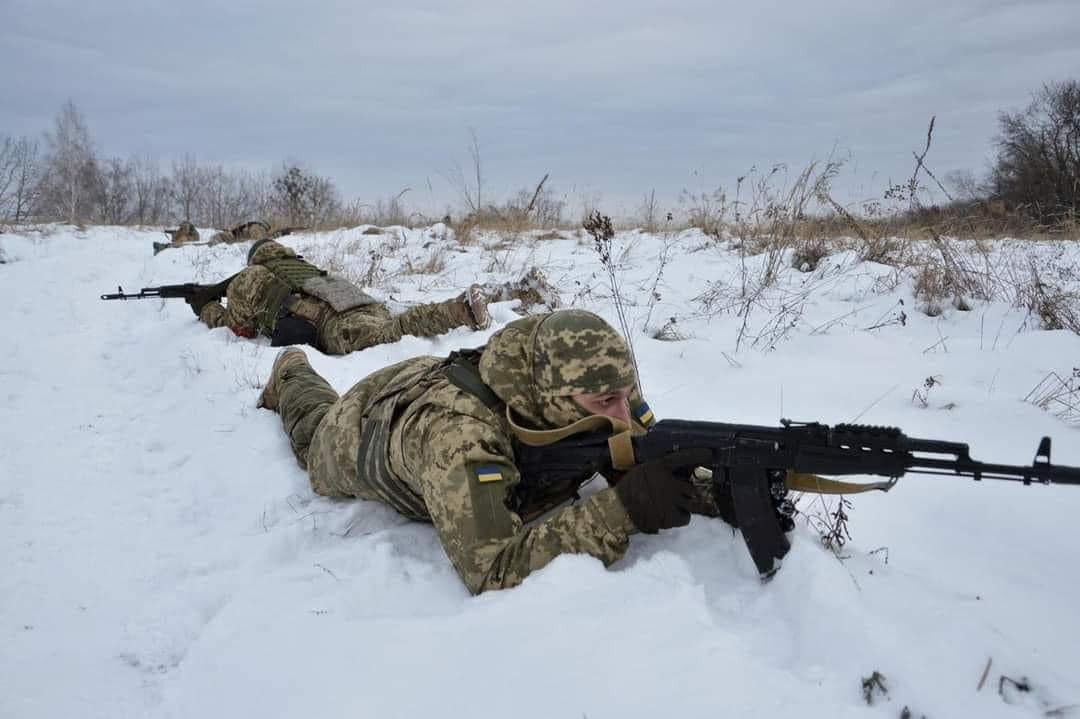
Ukraine is facing problems recruiting new recruits to the Armed Forces as it desperately tries to close its frontline against new Russian attacks. The government has been criticised for its indecision on the issue of recruitment. Critics say that the government is only "pretending to mobilise". The Economist predicts that Kyiv will have to make some tough decisions.
This is reported by The Economist, Censor.NET reports with reference to UP.
"Ukraine is desperately trying to close its frontline against new Russian attacks. No army gives recruits any guarantees about where they will be deployed, let alone in wartime, and assault brigades are among the most desperate units. But what lawyers call the 'deployment lottery' complicates the recruitment process," the article says.
It is noted that the army leadership is trying to fill the places with those who want to join; some of them resort to recruitment raids in gyms and shopping centres. Few of those who enlist in this way turn out to be good soldiers.
"We see 45- to 47-year-olds. They are out of breath when they get to the front line," an unnamed senior officer told the newspaper.
Aware of this problem, the Ministry of Defence of Ukraine has started working on a new mobilisation strategy.
Defence Ministry spokesman Illarion Pavlyuk told the publication that part of the problem lies in the army's success: many citizens no longer perceive the war in existential terms, as they did immediately after Russia's invasion in February 2022.
"Some people mistakenly believe that there is someone else who can do the job for them," he says.
The publication notes that the reforms are aimed at giving those who are hesitant more choice: recruits can, to a greater or lesser extent, sign up for a specific position.
The new digital register will improve the ministry's understanding of Ukraine's human resource potential. There will be a clearer system of rest and rotations. Finally, volunteers will be mobilised for a certain period of time, rather than indefinitely, as is the case now.
The Economist writes that critics say the government is only "pretending to mobilise".
Viktor Kevliuk, a retired colonel who has been in charge of implementing the mobilisation policy for the western part of the country since 2014, says Ukraine risks falling into a trap. In his opinion, Russia will intensify mobilisation after the presidential election in March. The MDI agrees with him.
The publication emphasises that throughout the war, Ukrainian President Volodymyr Zelenskyy resisted the maximalist calls of his military for recruitment. For example, his top generals have insisted on lowering the age at which nonreservists can be drafted, which currently stands at 27. Others have suggested stricter enforcement of mobilisation laws.
The Economist writes that the president backed down partly for political reasons, as if he did not want to irritate the population too much.
According to the publication, Zelenskyy is also driven by more noble considerations.
"Zelenskyy wants to do the right thing by Ukrainians. He doesn't want to be a dictator," a senior government source told the newspaper.
The publication predicts that the authorities will have to make difficult decisions. In particular, for Colonel Kevliuk, the army is a beast that needs to be fed. "We have no choice but to be bloodthirsty," he said.
However, some officials prefer a more consensual approach. A senior source predicts media campaigns promoting national sacrifice and warning that Russia continues to pose an existential threat.
"If we lose, it will be bad for all of us," he says.
The challenge is to convince potential recruits. "The Conductor", one of the men assigned to a unit in Donbas, whose recruits were suddenly thrown into the hottest part of the frontline after training in Western Europe, says he is ready to serve his country, "but only in a way that can be useful".
In the meantime, he is trying 24/7 to ensure that he is transferred as far away from the assault groups as possible. "You can't just write off people's lives," he added to the publication.


