



200 kilometres into enemy rear areas: Lviv engineers create unique battery for AFU drones
Drone Industry
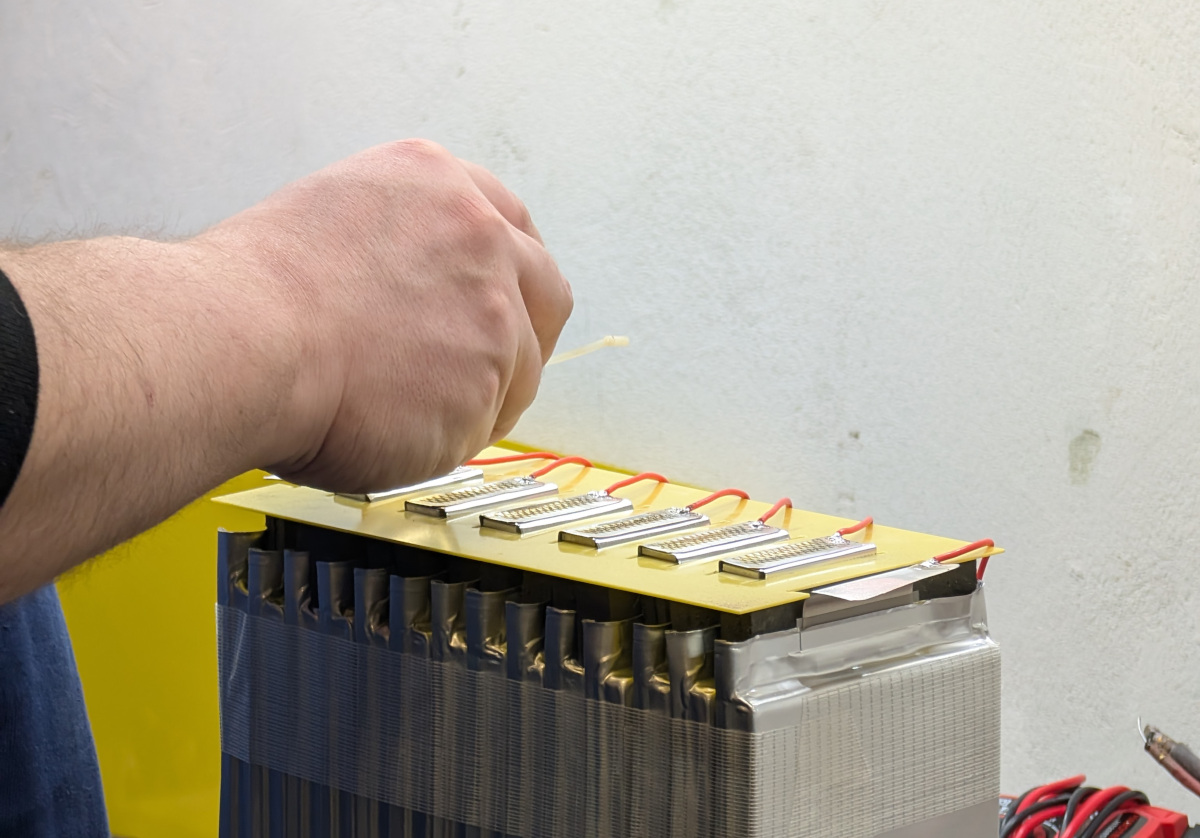
Ukrainian engineers have developed a new power system for fixed-wing drones that allows them to fly more than 600% farther and operate where that had previously been impossible. Whereas previously the simplest agricultural drone used for crop forecasting or field mapping could fly up to 30 km, such UAVs have now become weapons. A drone can cover nearly 200 km deep into enemy rear areas and strike high-value targets, from Buk-M1 air defence systems to military depots.
The developers of Pawell batteries told Censor.NET’s "Drone Industry" project this.
A Ukrainian drone with a new power system destroyed a Russian Buk-M1 worth $10 million
In July 2025, troops in the Sumy direction reported that a Ukrainian drone had flown 40 km into enemy rear areas for the first time using Pawell batteries. During that flight, it detected a Buk-M1 surface-to-air missile system, successfully transmitted the coordinates, enabling Ukrainian artillery to destroy the air defence system worth about $10 million.
Then, in October, the developers beat their own record fivefold. A Postman-type UAV for the first time in history covered 197 km in the southern direction, about 35% more than the drone’s standard battery physically allowed. The UAV was carrying a 15 kg warhead, struck an enemy ammunition depot, and returned with about 10% of its energy reserve remaining, enough for roughly another 20-25 km of flight.
For comparison, with the manufacturer’s standard battery, the maximum range this same UAV could cover was about 135 km.
Drone batteries use Tesla and Mercedes battery cells
This result became possible thanks to a change in the drone’s battery cells. Engineers at Pawell Battery selected a different battery chemistry and switched from standard Li-ion to LiNMC, cells used in electric vehicles.
"Put simply, these components allow a drone to take on more energy at the same battery weight. That means it can fly farther or carry a larger warhead. For example, popular LiPo batteries are heavier and store less energy. That is why we switched to LiNMC: they are lighter, more powerful and allow us to assemble batteries flexibly for a specific drone type," explains Pawell co-founder Pavlo Esyp.
According to him, there is no universal battery for all drones, as each UAV type requires its own balance of characteristics. For some drones, weight is critical; for others, power output is key, as is maximum battery capacity. For example, a relay drone needs to stay in the air for a long time, so battery capacity is crucial. For manoeuvrable FPV drones, by contrast, low weight and high power matter most. In the case of fixed-wing drones, the decisive factor is the balance of battery weight, capacity and cost.
The next benchmark the developers have set for themselves is to cover more than 400 km on a single charge. The company says its engineers already have a plan for how to achieve this.
Ukrainian drones costing $500 are destroying Russian military equipment worth millions
Drones are the main weapon on the battlefield. According to Pawell, about 80-85% of strikes on the front are now carried out by unmanned systems of various types. As recently as February this year, however, Commander-in-Chief of Ukraine’s Armed Forces Oleksandr Syrskyi cited a figure of 60%.
Be that as it may, the enemy is being forced to change tactics. Russian units are increasingly moving in small groups or using primitive transport, including donkeys, as armoured vehicles have become too visible and too costly a target.
"If a year ago the kill zone between positions was about 2 km, now it has expanded to 5-6 km, and in some directions even to 7 km," says Yurii "Lys", chief sergeant of the unmanned systems battalion of the King Danylo 24th Separate Mechanised Brigade.
Overall, the width of the kill zone under fire control held by both the enemy and us with drones can, in some sections of the front, reach up to 30 km, that is, 15 km on each side of the line of combat engagement. More details are available at the link.
This, however, is exactly how deep asymmetric deterrence works: making any aggression so costly that it becomes unprofitable to continue. In this model, cheap drones destroy equipment costing dozens or hundreds of times more. Put simply, instead of one tank worth $10 million, hundreds of drones costing $500-1,000 can be used.
"As flight range increases, this effect only grows stronger. Drones with a range of more than 200 km are effectively creating Ukraine’s own A2/AD zone (Anti-Access/Area Denial). This means that an enemy airfield, oil depot, or railway hub in border regions may remain under a constant threat of strike," Pawell stresses.


