



How soldiers of 28th SMB defend sky in eastern Ukraine from Russian drones
Drone Industry
Drones have changed warfare forever. Ukrainians realized this as early as 2022. The world, given the events in the Middle East, is only beginning to grasp this truth. Relatively inexpensive and easily replicated drones sometimes pose a greater threat than ballistic or cruise missiles.
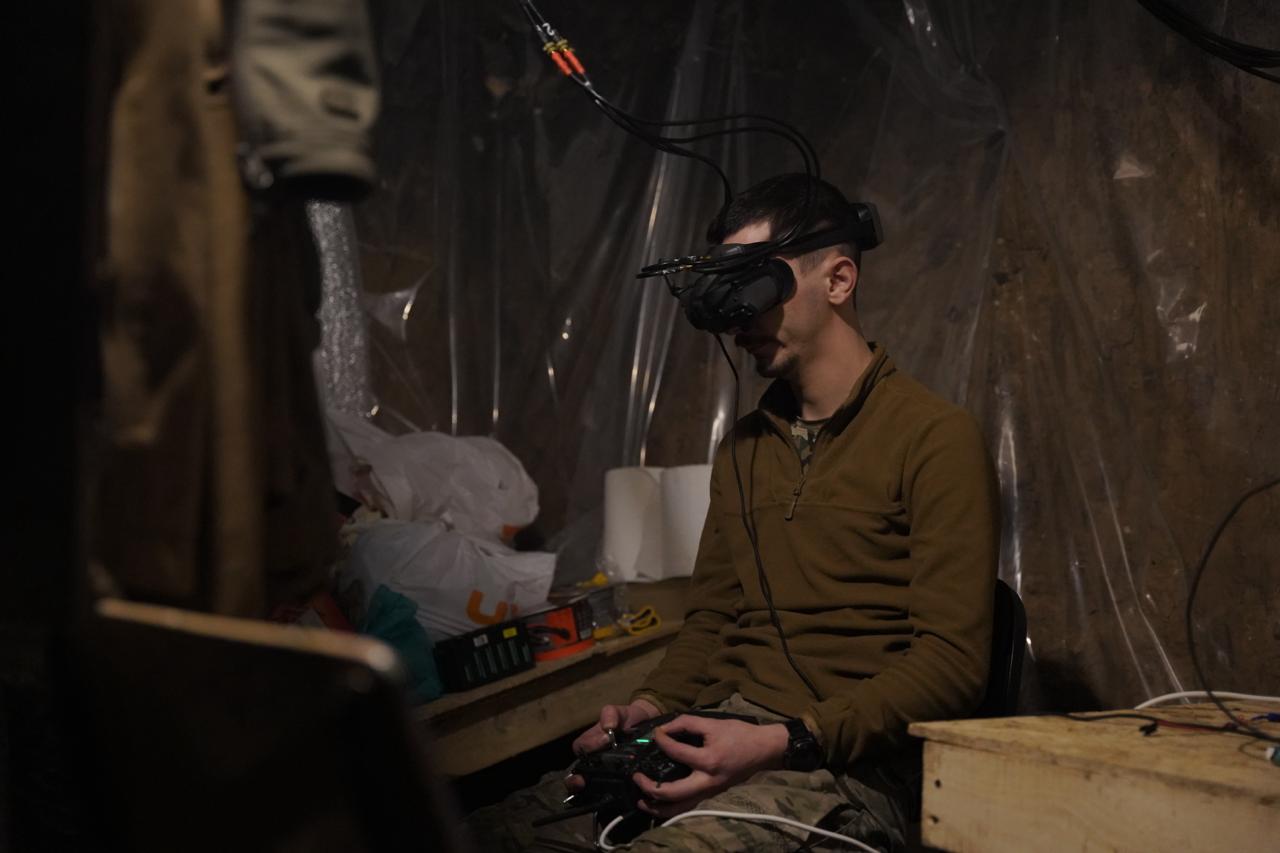
Ukrainian military forces have found themselves on the front lines of the world's first drone war, effectively repelling swarms of attack and reconnaissance drones that the enemy relentlessly launches at peaceful Ukrainian cities.
Drones are effective. In February, Commander-in-Chief of the Armed Forces of Ukraine Oleksandr Syrskyi stated that approximately 60% of strikes on the front line are already carried out by drones. The remainder falls to artillery, which in the classical sense was considered the "god of war".
"The overall number of UAVs is increasing in assault units and mechanized brigades. Every line battalion has an unmanned systems company, and every brigade has a battalion," he noted.
On the front line
Units of the 28th Separate Mechanized Brigade named after the Knights of the Winter Campaign ranked in the top 15 among all units of the Defense Forces of Ukraine and in the top five among the Ground Forces in terms of UAV strikes, according to the Delta system ranking.
In the Kramatorsk sector, soldiers of the 28th Separate Mechanized Brigade (SMB) hunt for aerial targets daily. They shoot down everything that enters their area of responsibility: from reconnaissance drones like ZALA or Supercam, to attack drones such as Molniya, Lancet, and Shahed.

Incidentally, according to the Deputy Commander of the Air Force of the Armed Forces of Ukraine, Colonel Pavlo "Lazar" Yielizarov, up to 50% of enemy drones are destroyed right at the border or along the front line, where the best-trained brigades are deployed. By design, they are to become the vanguard of Ukraine's comprehensive air defense system, which will resemble Israel's Iron Dome.
"Our UAV interceptor unit has already proven itself. However, we are not resting on our laurels and continue to develop. Primarily, we are moving towards greater automation and better detection algorithms to minimize the time from target detection to engagement," say soldiers of the 28th SMB.
The unit is a participant in the Dronopad initiative, implemented with the support of the Come Back Alive foundation. Within the framework of the project, tens of thousands of pieces of equipment have already been transferred in total, from the FPV interceptors themselves to ground stations, electronic warfare systems, and generators. Thanks to such support, units like the 28th SMB can reduce the time from detection to engagement and react to threats faster, which directly impacts the effectiveness of striking enemy equipment.
In February, the Dronopad project set a new goal: 50,000 downed Russian drones. The figure is based on the dynamics of aerial attacks and a clearly structured interception system. This involves hundreds of destroyed attack UAVs every month. Therefore, scaling up this work is a logical continuation of the results already achieved.
While initially Dronopad focused on shooting down reconnaissance drones, the units subsequently transitioned to the systematic interception of attack vehicles, in particular the Shahed and its modifications. The most intensive phase of operations occurred in the autumn of 2025: crews could destroy dozens of aerial targets in a single night.
"When we launched the project in 2024, our goal was 1,000 interceptions. Today, more than 100 military units have joined the initiative, collectively destroying over 20,000 reconnaissance and attack UAVs. So the new goal sounds ambitious—but it is entirely realistic. Overall, the economics of war in this project are simple: an air defense missile costs millions, whereas an anti-aircraft FPV drone is many times cheaper. According to our calculations, every hryvnia invested inflicts 20 UAH of direct losses on the enemy. This is exactly what we strive for: maximum effectiveness at minimum cost," explains Taras Tymochko, a consultant for the Come Back Alive foundation and coordinator of the Dronopad project.
Easier in the air
At the beginning of the full-scale war, soldiers of the 28th Separate Mechanized Brigade operated with man-portable air-defense systems (MANPADS). Their task at that time was to cover the front line, infantry, and artillery from enemy aviation, primarily Su-25s and Russian helicopters.
In 2022, the Russians were just beginning to launch Shaheds. And, as Maksym Terzi, Senior Analyst at the Snake Island Institute, recalls, these were rather test launches to study Ukrainian air defense, its reactions, and deployment. The turning point occurred in 2023, when Russia licensed domestic production and began scaling up manufacturing. From that moment, not only the quantity but also the logic of employment changed. Instead of isolated launches, regular waves. Instead of chaotic strikes, a rhythmic campaign with periodic peaks of intensity.
There were no specialized systems for intercepting Shaheds at that time. Separate groups, particularly the Air Force of Ukraine, were engaged in neutralizing them. With the advent of interceptor drones, specialists from the 28th SMB also began to cover the sky over eastern Ukraine. One of the soldiers, Dmytro, says that he started working with FPV systems even before they were widely used to intercept Shaheds.
"Working in the air is easier than on the ground, because logistics are very difficult right now," the servicemen say.
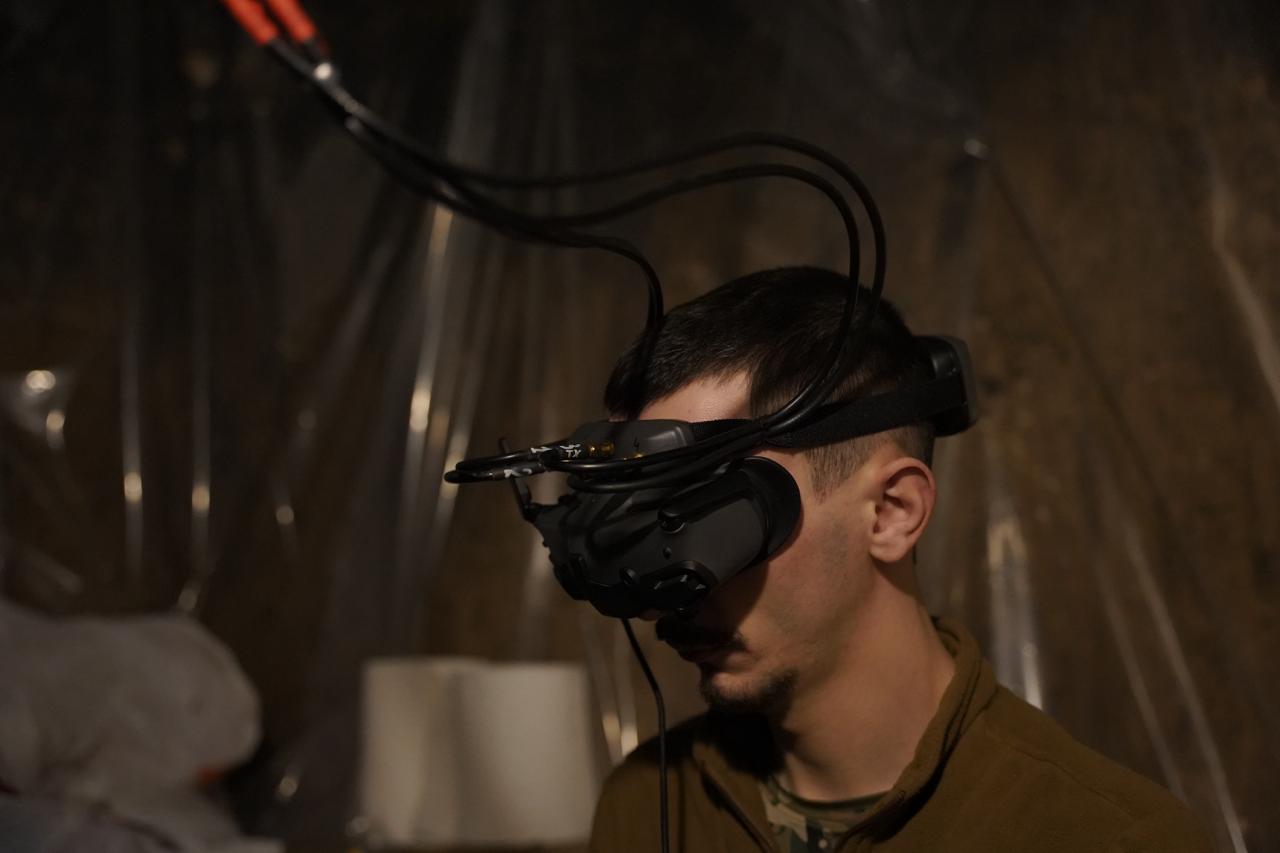
Logistics issues are, in particular, the consequences of an already formed kill zone, where both we and the enemy maintain fire control using drones. In certain sectors of the front line, the kill zone can extend up to 30 km.
Overall, weather conditions affect the duration of a stay in a position. The worse they are, the longer one has to stay there. The biggest problem is cloud cover. Operators rely on ground landmarks, and if they ascend above the clouds, it is difficult to navigate in space.
The system identifies targets in approximately 70% of cases, but without visual contact, it is difficult to correlate the data. Because of this, there is often a high expenditure of resources. Therefore, the unit focuses on automation and the improvement of algorithms to minimize the human factor wherever possible and reduce response time.
"Currently, groups working against attack drones have intercepted up to 14 targets a day. Our highest result is nine shot down in one day. Two more targets were lost. The most expensive ones we shot down were two Merlins, at approximately $200,000 each," the soldiers shared.
Motivation and enthusiasm are needed
Behind the servicemen's words hides fatigue; they say this war has been going on for too long.
"Four years is a long time. But in fact, this war has been going on for about 350 years. It just sometimes shifts from a hot phase to a non-hot one," one of the soldiers noted.
Overall, the soldiers are skeptical of the idea that people will voluntarily join the army—there are fewer and fewer volunteer fighters. For this, they say, motivation is needed, including material motivation. Not just a one-time payment, but decent financial compensation. Without enthusiasm and motivation, according to them, not many targets can be shot down.
"Every person has their own motivation and their own path in the military. Infantry, anti-aircraft gunners, and drone operators all do important work, without which the system simply does not function. The FPV sector is an opportunity for those who are closer to hardware, quick decisions, and working with technology. A lot here depends on personal reaction, thinking, and the ability to analyze a situation. But any military profession is, first and foremost, about responsibility and teamwork. The main thing is to consciously choose your direction and understand that you are contributing to a common cause. It is better to choose a profession yourself than to have it chosen for you," our interlocutors concluded.


