



Ukraine changes approach to Trump’s contacts with Putin - New York Times
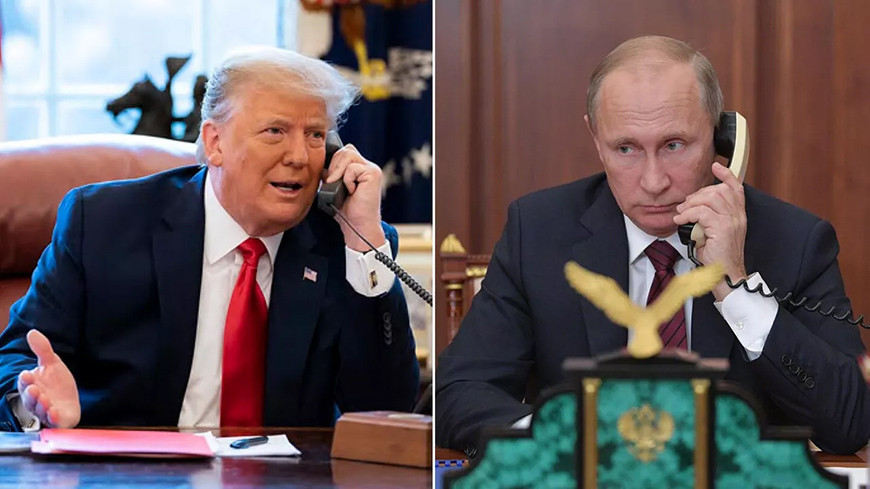
The latest phone call between U.S. President Donald Trump and Russian dictator Vladimir Putin, which took place on April 29, did not cause either panic or heightened concern in Kyiv this time.
According to Censor.NET, this is reported by The New York Times.
After more than ten such talks, none of which brought the war any closer to an end, Ukraine has stopped viewing them as a decisive factor in the course of events, the publication notes.
From anxiety to habitual disregard
Throughout 2025, every interaction between Trump and Putin caused tension in Kyiv. Ukrainian officials feared that the U.S. president, who had shown a willingness to engage with the Kremlin, might compromise Ukraine’s interests.
Following such conversations, officials in Kyiv would typically move quickly to ascertain their content and attempt to minimize any potential political repercussions.
However, the call on April 29 was an exception. Ukrainian President Volodymyr Zelenskyy merely stated on social media that he had instructed his staff to clarify the details of the conversation—particularly regarding the idea of a brief ceasefire on May 9—before making a decision.
Unlike on previous occasions, he did not return Trump’s call or consult with European allies. What’s more, the Ukrainian media paid almost no attention to this news the following day.
Oleksandr Merezhko, chairman of the Verkhovna Rada Committee on Foreign Policy, explained the shift in attitude simply:
"We no longer pay much attention to such calls, because they don't yield any real results."
Over the course of more than a year, there have been eleven phone calls between Trump and Putin, but none of them has brought peace talks or a cessation of hostilities any closer.
On the contrary, these contacts only reinforced the impression that the American leader is inclined to take Moscow’s position into account regarding the resolution of the war.
A Shift in Public Sentiment in Ukraine
Public opinion has also shifted. While in December 2024, following Trump’s election victory, most Ukrainians viewed this as a potentially positive sign, the situation had changed dramatically just one year later.
According to the Kyiv International Institute of Sociology:
- About 75% of Ukrainians view Trump's return to power as a negative development;
- Almost as many do not believe that lasting peace can be achieved through the current negotiations mediated by the United States.
At the same time, the Ukrainian side emphasizes the need to maintain working relations with the United States as a key military partner.
Oleksandr Merezhko noted that Ukraine will continue to seek to maintain a constructive dialogue with Washington. According to him, support for the idea of a ceasefire on May 9 is more of a diplomatic gesture than a belief in its effectiveness.
Ceasefire until May 9: A Tactical Move by the Kremlin
According to Ukrainian officials, the proposal for a brief ceasefire does not indicate that Russia is genuinely committed to peace.
Instead, this is linked to security risks for the Kremlin ahead of May 9—the traditional military parade in Moscow. Ukrainian drones have already posed threats to Russian infrastructure, forcing Moscow to scale back its celebratory events.
Ukraine is relying on its own resources
Amid diplomatic uncertainty, Ukraine is increasingly relying on its own capabilities.
The country is investing in the development of its own defense industry, and EU support totaling over €100 billion is helping to reduce its dependence on the United States for arms supplies.
One manifestation of this strategy has been Ukrainian long-range drone strikes on Russian oil infrastructure—even in the face of calls from some allies to scale them back.
Indeed, just an hour after Trump and Putin concluded their conversation on April 29, Ukraine attacked targets near Perm. NASA satellites detected several fires in the area.


