



Up to 63% of Ukrainians are prepared to support Ukrainian Armed Forces’ involvement in defending Europe in event of attack by Russia, - poll. INFOGRAPHICS
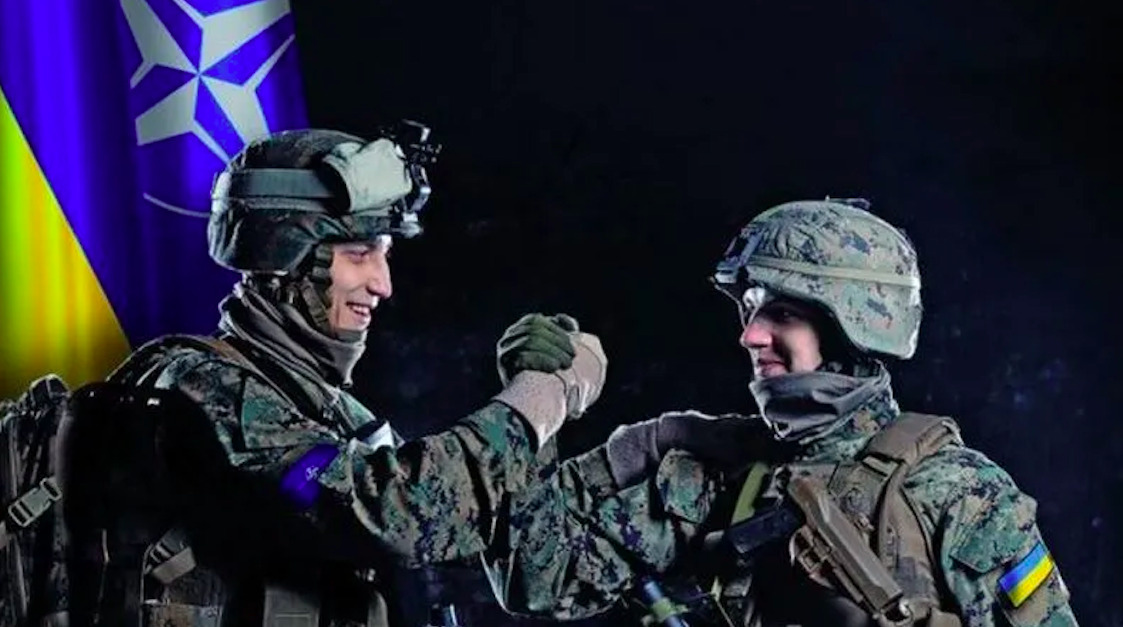
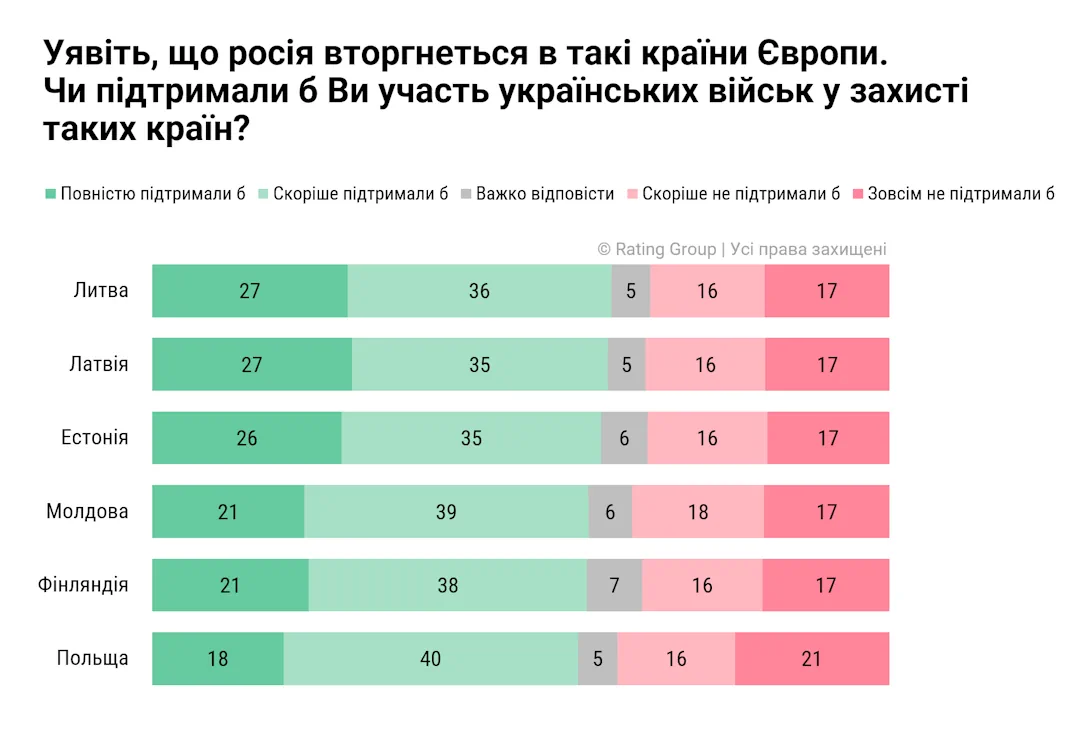
The vast majority of Ukrainians would support the Ukrainian Armed Forces’ participation in the defense of the Baltic states, Moldova, Finland, and Poland in the event of a Russian attack.
This is evidenced by data from a poll conducted by the "Rating" sociological group, according to Censor.NET.
Details
In fact, more than half of the respondents support the participation of the Armed Forces of Ukraine in the defense of all the allied countries on the list:
- Lithuania: 63% would support it, 33% would not support it;
- Latvia: 62% would support it, 33% would not support it;
- Estonia: 61% would support it, 33% would not support it;
- Moldova: 60% would support it, 35% would not support it;
- Finland: 59% would support it, 33% would not support it;
- Poland: 58% would support it, 37% would not support it.
Sociologists noted that the stronger Ukrainians' emotional connection to the EU, the more they support the Ukrainian Armed Forces providing assistance to other countries in the event of a Russian attack.
They cited Estonia as an example.

Among respondents who would vote in favor of EU accession in a referendum, 73% of citizens would support Estonia providing assistance to the Ukrainian Armed Forces.
"Only 37% oppose EU accession, while an absolute majority (61%) would be against it. Among Ukrainians who feel a strong emotional connection to the EU, 85% would support providing military aid to Estonia," the study states.
At the same time, among those who feel little connection to the EU, only one-third (35%) would support such a decision, while 58% would oppose it.
Methodology
The survey was conducted on April 15–17, 2026. A total of 1,000 respondents were surveyed.
The sample is representative in terms of age, gender, and type of settlement (margin of error: no more than 3.1% at a 95% confidence level).


