ENG




11918 visitors online
Recent polls in Ukraine reveal significant public concern over government corruption, with 50% of citizens identifying it as a major issue. President Zelenskyy is seen as responsible by 72% of respondents. Additionally, polls indicate that if elections were held, President Zelenskyy might be defeated by challengers such as Valerii Zaluzhnyi. Trust in key political figures is shifting, with Zaluzhnyi and others leading over Zelenskyy. Another crucial aspect highlighted is the resilience of Ukrainians, as 77% of citizens support continued resistance against Russian aggression, despite potential hardships. Moreover, public trust in the Prosecutor General's Office is low, yet polls suggest that reforms involving international experts might regain confidence.
What are Ukrainians most concerned about according to recent polls?
Recent polls indicate that Ukrainians are most concerned about corruption within the government, with 50% highlighting it as a major issue. This sentiment reflects a broader demand for transparency and accountability among Ukrainians.
How do polls suggest Volodymyr Zelenskyy fares in upcoming elections?
Polls suggest that if presidential elections were held now, Volodymyr Zelenskyy might lose to figures like Valerii Zaluzhnyi, indicating a shift in trust and a potential challenge for Zelenskyy’s administration to regain public confidence.
What is the public opinion regarding Ukraine's resistance to Russian aggression?
Polls show strong public support, with 77% of Ukrainians ready to endure hardships such as cold and darkness to continue resisting Russian aggression. This highlights a resilient national sentiment towards ongoing conflict situations.
What are the issues affecting public trust in the Prosecutor General’s Office?
70% of Ukrainian citizens express distrust towards the Prosecutor General’s Office. However, 56% indicate that open selection involving international experts could restore trust, pointing to a demand for integrity in legal procedures.
Do Ukrainians support tax increases for Western funding?
According to polls, 48% of Ukrainians support decisions to raise taxes if it results in Western funding. This suggests a willingness to endure economic measures in favor of securing financial aid crucial for Ukraine’s stability and growth.
What trust levels are reported for different Ukrainian political figures?
Polls highlight varying trust levels for political figures, with Zaluzhnyi, Fedorov, and Budanov receiving higher trust ratings compared to President Zelenskyy, reflecting shifts in public loyalty and confidence amidst current challenges.
How do Ukrainians view the possibility of a ceasefire in Donbas?
61% of Ukrainians oppose a ceasefire in Donbas without reliable security guarantees. This consensus underscores the public’s priority on ensuring sustained security and territorial integrity over premature agreements.
Is there a willingness among Ukrainians for new leadership post-war?
Polls reveal a significant willingness for leadership change, with 67% supporting replacing President Zelenskyy and 83% wanting a new Verkhovna Rada after the war, indicating a desire for renewed political direction.
News poll
 48% of Ukrainians support creating national unity coalition and national salvation government – poll. INFOGRAPHICS Ukrainians have shared their views on the idea of creating a "national unity coalition and a national salvation government". 2 741 35 Previously in trend: Government of national unity
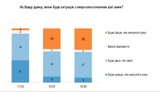 Almost 40% of Ukrainians expect power supply situation to worsen in winter, only 9% hope for improvement – poll. PHOTO Nearly four in ten Ukrainians surveyed believe that the energy supply situation in winter 2026–2027 will worsen compared with the previous heating season. Meanwhile, the largest share of respondents — 47% — expect conditions to remain roughly the same. 719 16 Previously in trend: Power outages Poll on war in Ukraine
 64% of Ukrainians trust Zaluzhnyi, 53% each trust Zelenskyy and Budanov – poll. INFOGRAPHICS Among politicians and public figures, Ukrainians trust former commander-in-chief and ambassador to the United Kingdom Valerii Zaluzhnyi the most. He is followed by President Volodymyr Zelenskyy and Head of the Presidential Office Kyrylo Budanov. 5 597 77 Previously in trend: Trust survey
 62% of Ukrainians ready to endure war for as long as necessary – poll. PHOTO A majority of Ukrainians – 62% – said they were ready to endure the war for as long as necessary. Another 4% were prepared for it to continue for a year, while 23% cited a period of a few months or six months. 5 097 113 Previously in trend: Poll on war in Ukraine
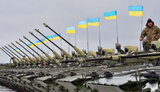 79% of Ukrainians believe Ukraine will win war, - KIIS poll The overwhelming majority of Ukrainians—79%—believe that Ukraine will win the war. At the same time, over the past month and a half, the proportion of those who are absolutely certain of victory has dropped significantly—from 60% to 47%. 2 208 40 Previously in trend: Poll on war in Ukraine
 Only 40% of Ukrainians believe country is moving in right direction. Trend is negative – KIIS poll. INFOGRAPHICS The share of Ukrainians who view the country’s direction of development positively has fallen to 40%. By comparison, the figure stood at 44% in February 2024. 1 495 24
 53% of Ukrainians oppose Zelenskyy running for second term – poll. PHOTO More than half of Ukrainians surveyed – 53 per cent – believe that Volodymyr Zelenskyy should limit himself to his current presidential term and not stand as a candidate in the next election. At the same time, 42 per cent of respondents support his standing for re-election. 9 736 102 Previously in trend: Poll about Zelenskyy
 50% of Ukrainians believe government is not fulfilling its obligations for rapid EU accession, - poll Half of the Ukrainians surveyed believe that the government is not fulfilling the obligations necessary to ensure Ukraine’s swift accession to the European Union. Forty-six percent of respondents hold the opposite view. KIIS 1 827 44 Previously in trend: Ukraine EU accession
 69% of Ukrainians support holding competition for position of Prosecutor General involving foreign experts – KIIS. INFOGRAPHICS 69% of Ukrainians support holding an independent competition for the position of prosecutor general with the participation of foreign experts. 1 250 44 Previously in trend: New Prosecutor General
 50 per cent of Ukrainians are most concerned about corruption. 72 per cent hold Zelenskyy responsible, - KIIS poll. INFOGRAPHICS 50 per cent of Ukrainians are most concerned about corruption within the government. 72 per cent of those surveyed believe that President Zelenskyy bears personal responsibility for the corrupt actions of those around him. 5 090 46 Previously in trend: Poll about Zelenskyy Corruption in Ukraine
 Zelenskyy would lose in second round to Zaluzhnyi, Budanov, and Fedorov, - poll If a presidential election were held, incumbent President Volodymyr Zelenskyy would trail each of the three potential challengers: Valerii Zaluzhnyi, Kyrylo Budanov, and Mykhailo Fedorov. 12 758 178 Previously in trend: Poll about Zelenskyy
70 per cent of Ukrainians do not trust Prosecutor General’s Office, - poll. INFOGRAPHICS 70 per cent of Ukrainian citizens do not trust the Public Prosecutor’s Office. However, 56 per cent stated that they would trust the Prosecutor General if he were selected through an open competition involving independent international experts. 3 383 23 Previously in trend: Trust survey Kravchenko’s resignation
 77% of Ukrainians are ready to endure cold and darkness in winter, but not Ukraine’s capitulation – KIIS poll. INFOGRAPHICS Seventy-seven percent of surveyed Ukrainians believe Ukraine should continue armed resistance to Russian aggression, even if Russia again tries to attack the energy system this winter to leave people without electricity, heating, and sewerage. 6 349 214 Previously in trend: Poll on war in Ukraine
 Over 30% of Ukrainian refugees have faced discrimination in Poland – poll Over the past 12 months, 31% of surveyed Ukrainian refugees in Poland have faced discrimination based on their nationality or ethnic background. 2 325 15 Previously in trend: Ukrainians in Poland
 More than half of Ukrainian refugees in Poland plan to return home, but 43% will wait for war to end – poll Fifty-one percent of surveyed Ukrainian refugees plan to return to Ukraine from Poland, although most are not prepared to do so before the war ends. Only 8% of respondents intend to return home in the near future. 1 559 16 Previously in trend: Ukrainians in Poland
 Despite war, 71% of Ukrainians consider themselves happy, - KIIS poll 71% of Ukrainians consider themselves happy, but one in six Ukrainians (16%) feels unhappy. 2 138 33
 Poles name Volyn tragedy as main reason for worsening attitudes towards Ukrainians – poll Almost half of Poles surveyed named disputes surrounding the Volyn tragedy as the main reason for the deterioration in relations with Ukrainians. 2 633 41 Previously in trend: Volyn tragedy Poland and Ukraine relationship
 "Zaluzhnyi’s Party," "European Solidarity," and "Fedorov’s Party" lead Ukrainians’ electoral preference ranking – poll. INFOGRAPHICS "Zaluzhnyi’s Party," "European Solidarity," and "Fedorov’s Party" have the highest support among Ukrainians in parliamentary elections. 13 194 179 Previously in trend: Party ratings
 Shevchenko, Ukrainka, Khmelnytskyi: citizens name most outstanding Ukrainians of all time – survey. INFOGRAPHICS Ukrainians have named the three most outstanding Ukrainians of all time. 2 971 36
 Zelenskyy is losing his chances of re-election due to high levels of corruption, - Shabunin. VIDEO According to the latest opinion polls, the incumbent president, Volodymyr Zelenskyy, is losing ground in his bid for re-election in the next presidential election. 4 094 118 Previously in trend: Corruption in Ukraine
 Two-thirds of Poles support deportation of unemployed Ukrainian men of draft age Most Poles support a proposal by the opposition "Law and Justice" (PiS) party to deport Ukrainian men of draft age who do not have legal employment from the country. 67.2% of those surveyed expressed support for this initiative. 3 117 74 Previously in trend: Deportation of Ukrainians from Poland Deportation of Ukrainians
 Zaluzhnyi, Fedorov and Budanov lead in terms of Ukrainians’ trust, with Zelenskyy in fourth place – KIIS poll. INFOGRAPHICS According to data from KIIS, Valerii Zaluzhnyi, Mykhailo Fedorov and Kyrylo Budanov enjoy the highest levels of trust among Ukrainians. 56 per cent of those surveyed trust Volodymyr Zelenskyy. 12 508 183 Previously in trend: Trust survey
 For first time since start of war, half of Russians do not consider invasion of Ukraine successful – Russian media For the first time since the start of the full-scale war, only half of Russian citizens consider the invasion of Ukraine successful. At the same time, the share of Russians openly stating that they do not support the war has risen to a record high. 3 824 19 Previously in trend: Russians’ attitude toward the war against Ukraine
 60 per cent of Ukrainians oppose withdrawal of Armed Forces of Ukraine from Donbas. 59 per cent are prepared to agree to ’freeze’ on war, – KIIS. INFOGRAPHICS The majority of Ukrainians do not support handing over the whole of Donbas to Russia in exchange for security guarantees. At the same time, 59 per cent of respondents are prepared to agree to an end to the war along the current front line without recognising the occupied territories as Russian. 5 146 112 Previously in trend: Poll on war in Ukraine
 45% of Ukrainians believe war will continue in 2027. 61% are prepared to endure it for as long as it takes, - KIIS. INFOGRAPHICS 45% of Ukrainians generally believe that the war will continue for a long time. 2 183 53 Previously in trend: Poll on war in Ukraine
 "Zaluzhnyi’s bloc" and "Fedorov’s bloc" lead rankings of Ukrainians’ electoral preferences, - SOCIS. INFOGRAPHICS Ukrainians have indicated which political party they would be willing to vote for in parliamentary elections, should such elections take place in the near future. 10 681 149 Previously in trend: Party ratings
 Zelenskyy ranks 9th in terms of trust and loses to Zaluzhnyi, Fedorov, and Budanov in second round, - SOCIS. INFOGRAPHICS If presidential elections were held in the near future and former Defense Minister Mykhailo Fedorov and incumbent President Zelenskyy advanced to the second round, the majority of Ukrainians would be ready to support Fedorov. 3 840 63 Previously in trend: Elections in Ukraine
 Level of trust in Zelenskyy has decreased: 55% trust him, and 40% do not trust him, - KIIS survey. INFOGRAPHICS 55% of Ukrainians said they trust President Volodymyr Zelenskyy. 40% do not trust him. 4 073 85 Previously in trend: trust in Zelenskyy
 72 per cent of Ukrainians do not support Fedorov’s resignation, whilst 55 per cent support Syrskyi’s dismissal, - poll. INFOGRAPHICS Over 70 per cent of Ukrainian citizens do not support the dismissal of Mykhailo Fedorov from his post as Minister of Defence. Meanwhile, 55 per cent support the dismissal of Oleksandr Syrskyi from his post as Commander-in-Chief. 3 223 69 Previously in trend: Fedorov’s resignation Syrskyi dismissal
 Ukrainians trust Zaluzhnyi, Fedorov and Budanov most, - "Rating" poll Ukrainians have revealed which public officials they trust the most. 7 093 77 Previously in trend: Fedorov’s resignation
 Putin’s approval rating has fallen to a new low, - Russian media The "approval" rating for dictator Putin's actions in Russia has been falling for the fourth consecutive week amid the fuel crisis. 4 196 31 Previously in trend: Putin’s approval rating
 Fedorov confirms he is stepping down as defence minister. What do you think was main reason for his resignation? Vote on Censor’s Telegram channel Mykhailo Fedorov has officially confirmed that he is stepping down as Ukraine’s defence minister, summarising the results of his six months in office. 4 150 48 Previously in trend: Defense Ministry appointments Dismissals at Ministry of Defense Fedorov’s resignation
 Zelenskyy announces "just response" to Russia for shelling of Kyiv: what should it be? Vote on Censor’s Telegram channel On the night of 2 July, Russia carried out one of its largest missile attacks on Kyiv, killing at least 25 people. After that, President Volodymyr Zelenskyy said that Moscow would definitely receive a "just response" for the devastating shelling of the capital. 3 804 47 Previously in trend: Striking Russia Massive combined attack
 If allies allocate additional billions to Ukraine for defense, what should be priority? Vote on Censor.NET’s Telegram channel To continue shifting the momentum in the war against Russia, Ukraine needs billions in additional defense aid. 992 23 Previously in trend: Aid to Ukraine Military aid to Ukraine
 Due to heat, Ukrainians are urged to save electricity. Have you changed your behavior? Vote on Censor.NET’s Telegram Censor.NET is conducting a poll on Ukrainians’ readiness to save electricity amid the threat of power outages. 1 154 25 Previously in trend: Power outages
 90% support constructive approach to resolving historical disputes with Poland, - KIIS poll. INFOGRAPHICS Most Ukrainian citizens express a desire for constructive cooperation with Poland in resolving historical disputes. 2 873 78 Previously in trend: Poland and Ukraine relationship
 Should Ukraine agree to Putin’s "Istanbul peace"? Vote in Censor.NET’s Telegram channel Russian dictator Putin once again tried to inject manipulative talking points into the information space, claiming that Russia is allegedly ready for peace negotiations with Ukraine, but only on the basis of the agreements reached in Istanbul at the beginning of the full-scale invasion. 4 287 57 Previously in trend: Talks with Putin Ukraine and Russia talks
 Will Lukashenko comply with Zelenskyy’s ultimatum? Vote on Censor’s Telegram channel Today, Ukrainian President Volodymyr Zelenskyy issued an ultimatum to Belarusian dictator Alexander Lukashenko: he has one week to remove the equipment from the border that is being used to direct fire at the Ukrainian population. 4 830 50 Previously in trend: Situation at the border with Belarus
 67% of Ukrainians support replacing president after war, whilst 83% would like to replace Verkhovna Rada, - KIIS poll. INFOGRAPHICS In Ukraine, the demand for a change of government has risen significantly over the past three years. 7 846 145 Previously in trend: poll about power in Ukraine
 Zaluzhnyi leads Zelenskyy by 12 percentage points in Ukrainians’ trust rating. INFOGRAPHICS Ukrainians have revealed who they trust most among defence figures and politicians. 7 791 115 Previously in trend: trust in Zaluzhnyi Trust survey
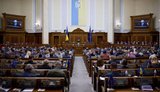 54.9% of Ukrainians support formation of national unity coalition and government of national salvation, - poll. INFOGRAPHICS The majority of Ukrainians support the formation of a national unity coalition and a government of national salvation. 1 406 26 Previously in trend: Government of national unity
 61% of Ukrainians oppose ceasefire without security guarantees, - KMIS poll. INFOGRAPHICS Most Ukrainian citizens do not support a ceasefire without reliable security guarantees. 1 347 28 Previously in trend: Security guarantees for Ukraine
 62% of Ukrainians support ban on religious organisations linked to Russia, - "Rating" poll. INFOGRAPHICS Most Ukrainians support the passage of a law that would ban the activities of religious organizations linked to Russia. 1 480 23 Previously in trend: UOC ties to ROC
55% of Ukrainians believe that government is not doing its "homework" for EU accession, - poll. INFOGRAPHICS More than half of Ukrainians believe that the government is not doing enough—or is not doing anything at all—to prepare the country for EU accession. 671 11 Previously in trend: Ukraine’s Membership in the EU
 35.6% of Ukrainians believe that progress towards EU membership is hindered by corruption in government bodies, - poll. INFOGRAPHICS Ukrainians consider issues related to public administration and corruption to be the key obstacles to EU membership. 847 22 Previously in trend: Ukraine’s Membership in the EU Corruption in Ukraine
 82% of Kyiv residents consider capital comfortable place to live –– poll. INFOGRAPHICS The vast majority of the capital’s residents are satisfied with the living conditions in their city. 82% of Kyiv residents consider Kyiv to be a comfortable place to live overall. 1 749 35 Previously in trend: Poll on war in Ukraine
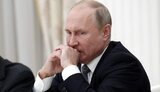 Putin’s approval rating is falling again, even despite change in polling methodology. INFOGRAPHICS The Russian dictator's approval rating is falling again, even despite a change in the polling methodology. 2 309 7 Previously in trend: Putin’s approval rating
 73% of Ukrainians believe that Ukrainian Armed Forces are defending not only Ukrainian people, but also other European nations, - survey. INFOGRAPHICS Most Ukrainian citizens believe that in this war, the Armed Forces of Ukraine are defending not only the Ukrainian people but also Europe as a whole. 971 31 Previously in trend: Security of Europe
Page 1 of 11
more news