



Occupiers are launching drones from Pokrovsk and Myrnohrad, - 7th Corps of Airborne Assault Forces
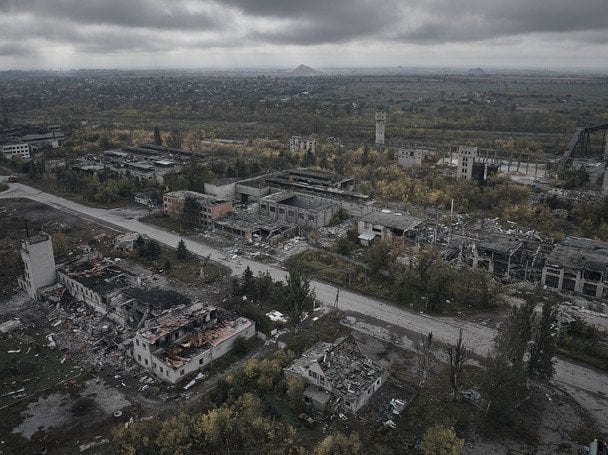
Russian invaders are setting up drone launch sites in the urban areas of Pokrovsk and Myrnohrad, creating a deep strike zone extending up to 25 km.
According to Censor.NET, Volodymyr Polevyi, head of communications for the 7th Rapid Response Corps of the Airborne Assault Forces, spoke about this on Hromadske Radio.
According to the military official, the main problem in this sector lies in the location of Russian drone launch sites near the front line, particularly in urban areas.
"In fact, our kill zone begins right at the drone launch sites. And this kill zone in the Pokrovsk sector is quite deep. The main factor that allowed us to push back the enemy’s kill zone was our consolidation within the cities themselves, in the urban areas of Pokrovsk and Myrnohrad… From these launch points, we can count 25 kilometers of depth in the enemy’s battle formations," Polevyi explained.
Ukrainian forces are increasing their strike capabilities
At the same time, Ukrainian units are developing the capability to strike deep into Russian battle lines—down to the operational and tactical level.
"We are essentially talking about what is now traditionally called a ‘middle-strike’… this zone from 30 kilometers and deeper needs to be covered by something. And the corps is actively increasing its strike capabilities using ‘Haimers,’ missile systems, and ‘middle-strikes,’" he noted.
The Pokrovsk direction remains a priority for Russia
According to a representative of the Airborne Assault Forces, the Russian command continues to view the Pokrovsk direction as one of the key areas for offensive operations.
"The enemy still hasn’t given up hope of breaking through to Dobropillia and reaching the Dobropillia–Kramatorsk highway…," Polevyi said.
At the same time, the Ukrainian military has already adapted to these enemy tactics and considers them predictable.
Russian tactical aviation has not intensified its strikes in this sector
The Airborne Assault Forces have not recorded an increase in Russian tactical aviation activity in this sector, which, according to military assessments, may indicate that the enemy is exhausted.
"We are not currently observing an increase in the intensity of tactical aviation strikes… we understand that the enemy is exhausted," he noted.
Separately, Polevyi noted an increase in strikes by Russian drones against the operational-tactical depth of Ukrainian defenses.
"A weapon that is particularly troublesome for us is the ability to carry out intense, frequent strikes… through the use of drones such as the ‘Molniya,’ ‘Shahed,’ and ‘Gerbera,’" he emphasized.


