



Russia’s fuel crisis has caused shortages and growth of shadow market - Politico
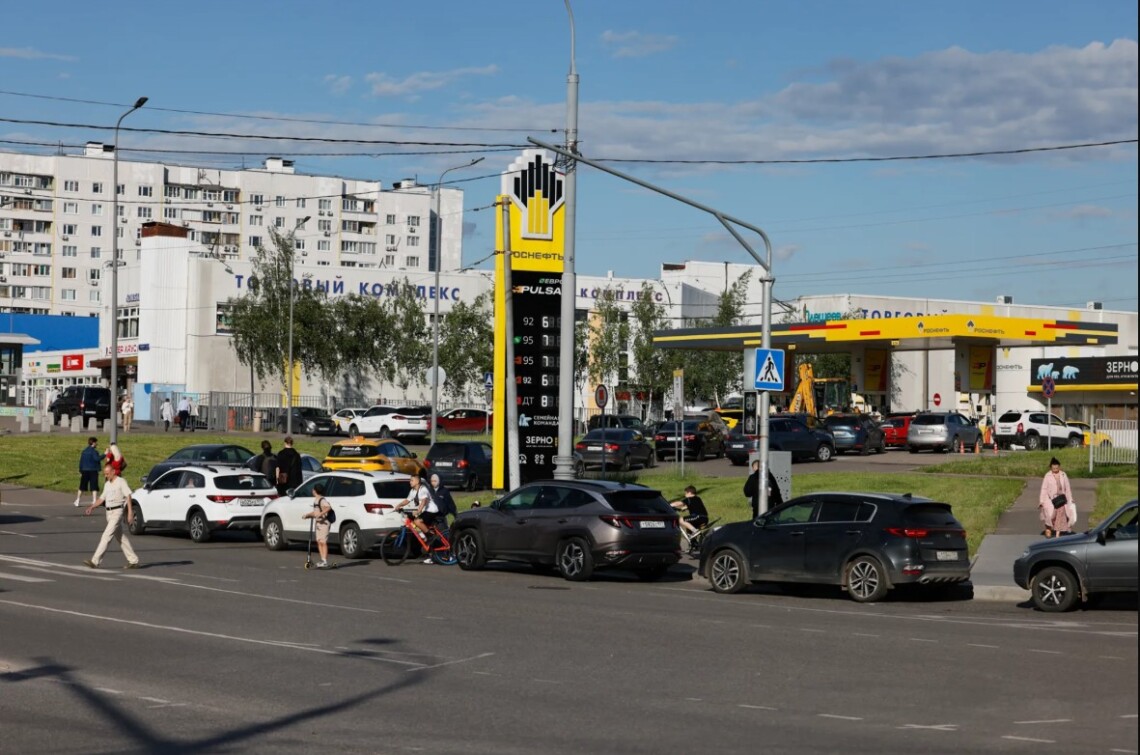
Two-thirds of Russia's regions are reporting fuel shortages following attacks on oil infrastructure. The crisis has exacerbated inflation and shortages and forced the Kremlin to conceal the true extent of the problems.
According to Censor.NET, Politico reports on this.
Since the start of the full-scale invasion, Russian dictator Vladimir Putin has managed to shield the Russian population from the economic consequences of the war. However, following Ukrainian strikes on key energy infrastructure—which have turned the conflict into a fuel crisis—this is becoming increasingly impossible.
Two-thirds of the 83 Russian regions have already reported problems with fuel supplies.
The fuel shortage in Russia is causing serious difficulties for millions of residents and negatively affecting business operations. According to reports, the situation is most dire in the temporarily occupied Crimea, where the occupying authorities have declared a state of emergency, completely banned the sale of fuel, and faced a significant decline in tourism.
Putin acknowledged the problem, but the Kremlin concealed the data
As the fuel crisis deepened, Putin held a meeting with senior officials in Moscow. At the same time, he publicly stated that the fuel shortage was allegedly not "critical."
According to sources, Russian authorities have classified official data on the extent of the damage and domestic fuel prices. Meanwhile, videos showing long lines, crowds, and altercations at gas stations are appearing with increasing frequency on social media.
Russia will import fuel from India due to problems at its refineries
The fuel crisis in Russia has led India—the largest buyer of Russian crude oil—to begin exporting some of its refined fuel to Russia.
According to the report, this need arose after Ukrainian drones struck catalytic cracking units at Russian oil refineries. Due to sanctions, Russia is unable to quickly repair or replace this high-tech equipment.
Serhiy Vakulenko, an analyst at the Carnegie Endowment for International Peace, noted that gasoline production volumes in Russia currently depend on which acts faster—Ukrainian drones or Russian repair crews.
According to him, if the current intensity of the strikes continues, Ukraine will retain the upper hand. At the same time, the Kremlin currently has sufficient reserves of diesel fuel for freight transport and the agricultural sector. To stabilize the domestic market, Russian authorities have already banned the export of gasoline and jet fuel, and are also considering restricting diesel exports.
The fuel shortage is exacerbating Russia's economic problems
The fuel shortage has contributed to the expansion of the black market, where fuel is sold at substantial markups, creating additional inflationary pressure.
Against this backdrop, the Central Bank of Russia cut its key rate in June by only 0.25 percentage points—to 14.25%—despite calls from the government and the business community for a more decisive easing of monetary policy.
Central Bank Governor Elvira Nabiullina continues to oppose a rapid cut in interest rates, warning of the risk of stagflation. Her position has been criticized by German Gref, CEO of Sberbank of Russia. Both acknowledge that the country’s economic difficulties are directly linked to the war, and Gref has publicly stated the need to end hostilities as soon as possible.
The decline in financial reserves is becoming an additional source of pressure on the Russian economy. According to Janis Klug, an analyst at the German Institute for International and Security Affairs, nearly half of Russia’s government spending is currently directed toward military and intelligence needs. At the same time, the volume of liquid assets in the Russian Federation’s National Welfare Fund has fallen from 7% of GDP at the beginning of 2022 to 1.7% of GDP as of April 2026, indicating that the Kremlin’s financial resources are gradually being depleted.


