



White House agrees to support bill on new US sanctions against Russia – Senator Graham
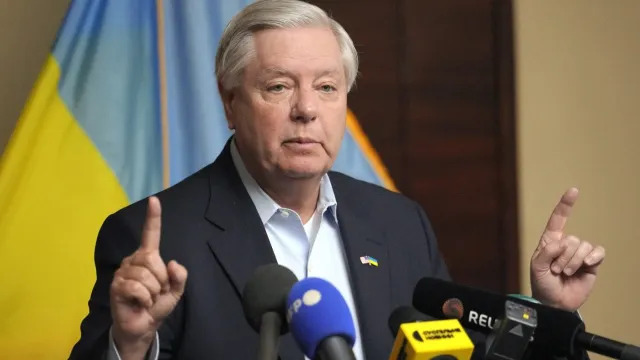
US Senators Lindsey Graham and Richard Blumenthal have reached an agreement with the White House on their version of a bill imposing sanctions on Russia and countries that purchase Russian oil.
Senator Graham told journalists in Kyiv, Censor.NET reports.
Agreement with the White House
Graham recalled that he and Blumenthal had been working for almost two years on a bill authorising Donald Trump to impose sanctions and tariffs on countries that purchase Russian oil and support Russian dictator Vladimir Putin.
According to Graham, this concerns five countries that circumvent sanctions and obtain cheap Russian oil for resale.
"This bill has 85 co-sponsors. Senator Blumenthal, Senator Shaheen and I are working with the administration to ensure that it is acceptable to the administration and written in a way that will secure its support. I am pleased to announce that about 30 minutes ago, we reached an agreement with the White House on a version of the Russian sanctions bill that they support. This means it will become law," he said.
Graham also called for Ukraine to be provided with technology to strengthen its defences against ballistic missiles. In his view, this, combined with pressure on countries that financially support Russia, offers the best chance in years of forcing Putin to the negotiating table.
Graham-Blumenthal bill
Lindsey Graham and Richard Blumenthal introduced a bill in the US Senate that provides for additional pressure on Russia by imposing sanctions on countries purchasing its energy resources.
The bill’s key provisions include:
- freezing assets and prohibiting transactions involving senior Russian officials, military personnel, oligarchs and other individuals who support the military;
- imposing a 500% tariff on goods imported into the United States from countries that purchase Russian oil, gas, uranium and other products;
- imposing sanctions on key banks, including the Central Bank of Russia, Sberbank and Gazprombank, while prohibiting US institutions from conducting transactions with Russia and restricting Russian entities from listing securities on US stock exchanges;
- prohibiting exports of US energy products to Russia and investment in the Russian energy sector, as well as imposing secondary sanctions on foreign companies that support energy extraction in Russia, including its oil and gas and uranium sectors.


