



Over 10 years of occupation, population of Donetsk and Luhansk regions has almost halved, - Defence Intelligence
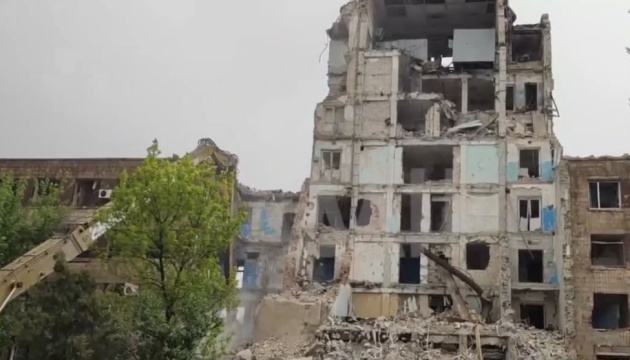
Over the ten years of Russian occupation, the population of the occupied areas of the Donetsk and Luhansk regions has fallen sharply. Whilst around 7.37 million people lived in these two regions in 2001, by the start of 2024 only approximately 3.75 million remained in the occupied territory.
According to Censor.NET, this was stated by the Defence Intelligence of the Ukrainian Ministry of Defence.
The intelligence report notes that the natural population growth rate in the temporarily occupied part of the Donetsk region in 2025 stood at around 9.9‰, which is 2.4 times lower than the average for Russia.
The Defence Intelligence cites hostilities, reduced access to medical and social services, repression, forced Russification, the conscription of local residents into the Russian army, and the lack of property rights guarantees as the causes of the demographic decline.
According to intelligence reports, the Kremlin is simultaneously implementing a policy of replacing the local population. To this end, citizens of the Russian Federation are being brought into the temporarily occupied territories, where they are offered benefits, state support programmes and jobs.
As of 2024, there were around 200,000 ethnic Russians, as well as nearly 100,000 migrant workers, living in the occupied parts of the Donetsk, Luhansk, Zaporizhzhia and Kherson regions. Since the start of 2026, around 10,000 such migrants from Central Asia and the Caucasus have been living in the occupied part of the Donetsk region alone.
The Defence Intelligence also reported that Russia has already approved long-term plans to colonise the occupied Ukrainian territories. In particular, the occupying authorities plan to increase the population of the Mariupol and Kalmius districts from the current 228,000 to 518,000 by 2035, mainly through the resettlement of Russian citizens.
The intelligence report also drew attention to the situation in occupied Crimea. As of July 2026, there were between 200,000 and 300,000 ethnic Russians on the peninsula and in Sevastopol. According to the Kremlin’s plans, a further 130,000 Russian citizens are to be resettled in Sevastopol alone by 2042.


