



More than 100 strategic facilities and almost 5,000 occupiers eliminated: SSU sums up results of 40-day operation
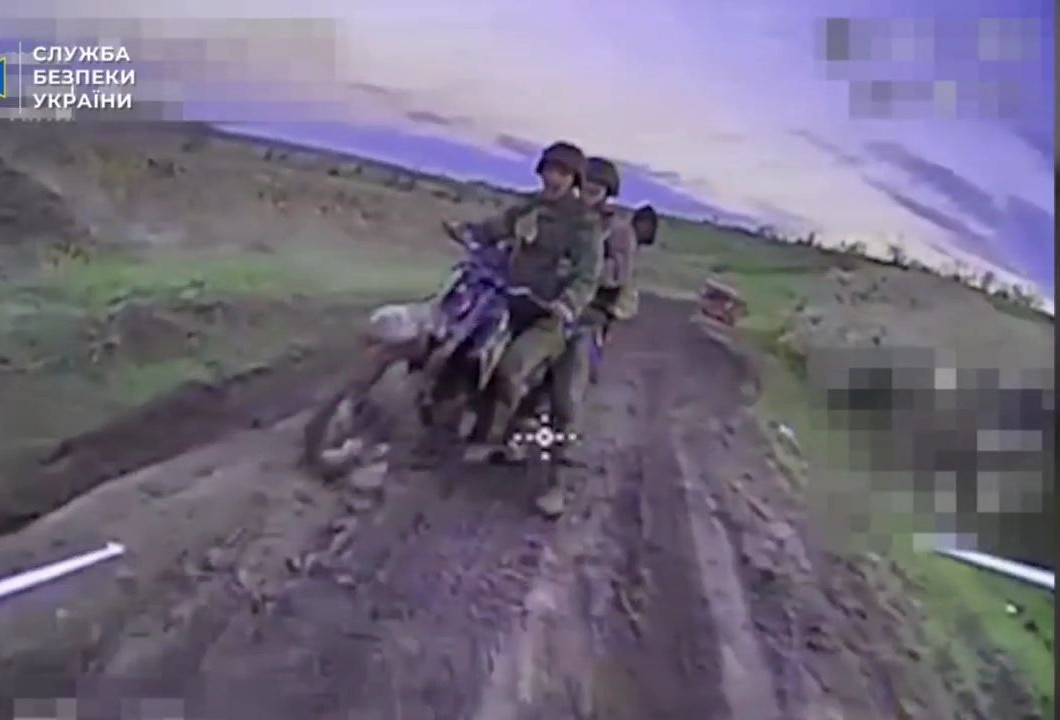
The Security Service of Ukraine reported the results of a 40-day campaign targeting Russia, approved by President Volodymyr Zelenskyy. During this period, the SSU struck more than 100 strategic facilities in Russia and the temporarily occupied territories and hit more than 21,000 military targets on the front line.
This was reported by the SSU press centre, Censor.NET informs.
As part of the 40-day campaign targeting the aggressor state, approved by President of Ukraine Volodymyr Zelenskyy, the Security Service carried out more than 100 successful strikes on strategically important facilities in Russia and the temporarily occupied territories of Ukraine.
In addition, the President authorized new operations proposed by SSU chief Major General Oleksandr Poklad.
Over the previous 40 days, the Security Service struck defence industry enterprises, air bases, air defence systems, occupiers’ command posts, warships and shadow fleet tankers, oil refineries, as well as transport and military logistics facilities.
At the same time, SSU units operating on the front line and behind enemy lines hit more than 21,000 pieces of military equipment, weapons and military infrastructure and eliminated almost 5,000 occupiers.
Systematic destruction of military aviation and air defences
One of the campaign’s principal areas of focus was the systematic targeting of enemy aviation infrastructure. During this period, the SSU struck the Saky, Hvardiiske, Belbek, Baherove, Engels and Khanskaya military airfields, as well as the Yevpatoriia Aviation Repair Plant.
The operations destroyed a Tu-95MS strategic bomber, while strikes on two Su-35 fighter jets and two L-39 combat trainer aircraft were confirmed. Hangars housing Su-24, Su-30 and Su-30SM aircraft, hangars containing Shahed drones and airfield fuel infrastructure were also hit.
At the same time, the SSU systematically weakened Russia’s air defence system. The strikes targeted a Nebo-U radar, a 92N6E multifunction radar belonging to an S-400 system, a Tor-M2 surface-to-air missile system, a Pantsir-S2 air defence system, a Pole-21 electronic warfare system, three Podlet-K1 radars and a Kasta-2E2 radar.
Kinetic sanctions against Russia’s fuel and energy sector
Another key area of the campaign was the systematic targeting of Russia’s fuel and energy infrastructure. Over 40 days, the SSU struck 14 oil refineries, dozens of oil depots, tank farms, oil pumping stations, oil terminals and an oil production platform.
Among the most important targets were the St Petersburg, Yaroslavl, Nizhny Novgorod, Perm and Volgograd oil refineries, three refineries in Ufa, the Pervyi Zavod complex, the Cherkasy and Subkhankulovo oil pumping stations, and an oil production platform at the Filanovsky field in the Caspian Sea.
Strikes on the shadow fleet
A major focus of the operation was the systematic targeting of vessels belonging to Russia’s shadow fleet, which are used to circumvent international sanctions.
The Blue, Louise 1, Banda and Avero tankers, as well as two cargo ships subject to international sanctions, were struck.
Results of combat operations on the front line
Alongside its long-range operations, SSU units continued inflicting losses on the enemy directly on the battlefield. During the specified period, 24 tanks, 63 armoured combat vehicles, 124 artillery systems, 22 multiple launch rocket systems, 40 air defence systems and 14 aircraft and helicopters were hit.
The destruction of enemy unmanned systems was a separate area of operations. More than 11,000 UAVs and unmanned ground vehicles were hit, including 176 Shahed-type drones (Geran drones). A total of 712 UAV crews were also hit, along with their positions, launchers and equipment.
In addition, SSU units systematically destroyed ammunition and fuel depots, command posts, communications hubs, electronic warfare systems, military logistics facilities and other critical enemy infrastructure.
Overall, the 40-day campaign was aimed at simultaneously weakening key elements of Russia’s war machine. In terms of its intensity, geographical scope and the number of strategic facilities struck simultaneously, the operation became an effective mechanism for exerting pressure on the aggressor state. Efforts to reduce Russia’s military and economic potential will continue.


