



Jet-powered interceptors are needed against jet-powered "Shaheds." This must be addressed at state level – UAV developer Yatsenko
Drone Industry
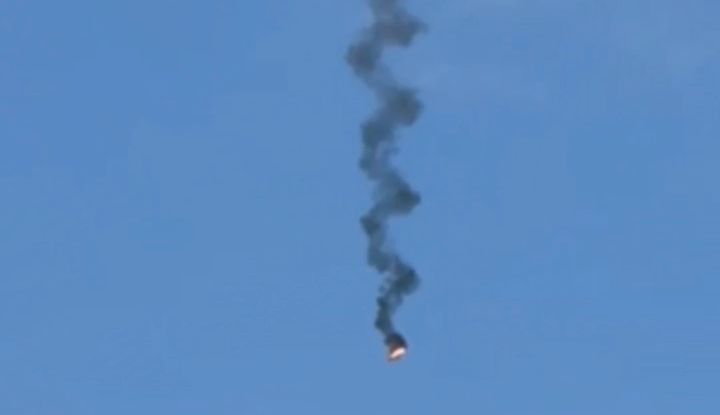
Existing Ukrainian interceptor drones are effective against Shaheds but cannot counter jet-powered UAVs. A reusable jet-powered interceptor needs to be developed.
UAV developer Volodymyr Yatsenko, who developed the Dovbush UAV, stated this, Censor.NET reports.
What is known?
According to him, the interceptors currently available in Ukraine are capable of countering Shaheds. However, they are ineffective against jet-powered aircraft, including the Banderol.
"This is not a matter of refinement. The gap in closing speed and available energy cannot be bridged by upgrading a propeller-driven platform. A different class of system is required. Such targets are currently engaged with surface-to-air missiles. The cost of interception is orders of magnitude higher than the cost of the target — a cost exchange that the enemy deliberately incorporates into its tactics. Given its production rate, we cannot win this exchange.
"The solution is a jet-powered interceptor capable of returning and being reused. Reusability here is not about ease of operation but about making the cost of interception acceptable during mass deployment," Yatsenko stressed.
How can this be implemented?
"1. CONSORTIUM. Responsibilities should be divided according to expertise: the guidance and target-acquisition system, warhead and detonation mechanism, control link and jamming resistance, airframe, ground segment, and integration into the air defence network. The propulsion system must be addressed separately: we do not have a domestically produced jet engine of the required class in serial production, and this bottleneck must be resolved first. This requires either localising production with a partner or launching a targeted programme based on specific performance requirements. No single manufacturer can deliver the entire technology stack within an acceptable timeframe.
"2. PERFORMANCE REQUIREMENTS APPROVED AT THE NSDC LEVEL. These should cover the speed and altitude ranges, reaction time from detection to launch, terminal guidance type, return and landing method, maximum interception cost, and requirements for integration into the existing detection network. Without a unified framework, we will end up with incompatible prototypes instead of serial production.
"3. PARALLEL PROCESSES. Flight testing, tooling preparation, codification and crew training must be conducted simultaneously rather than sequentially. A sequential approach would take two years. We do not have that much time," the developer explained.
Yatsenko noted that Ukraine has the necessary expertise: guidance systems, airframe development, a manufacturing base and combat employment data unmatched anywhere else in the world.
"We do not have our own jet engine — this is the key issue that must be addressed at the state level rather than left to each manufacturer individually. What is lacking is coordination and approved requirements.
"We are ready to contribute our production capacity to a consortium. I am open to contact with manufacturers and relevant agencies," he concluded.


