



OpenAI has blocked Russian network that was using ChatGPT to spread disinformation
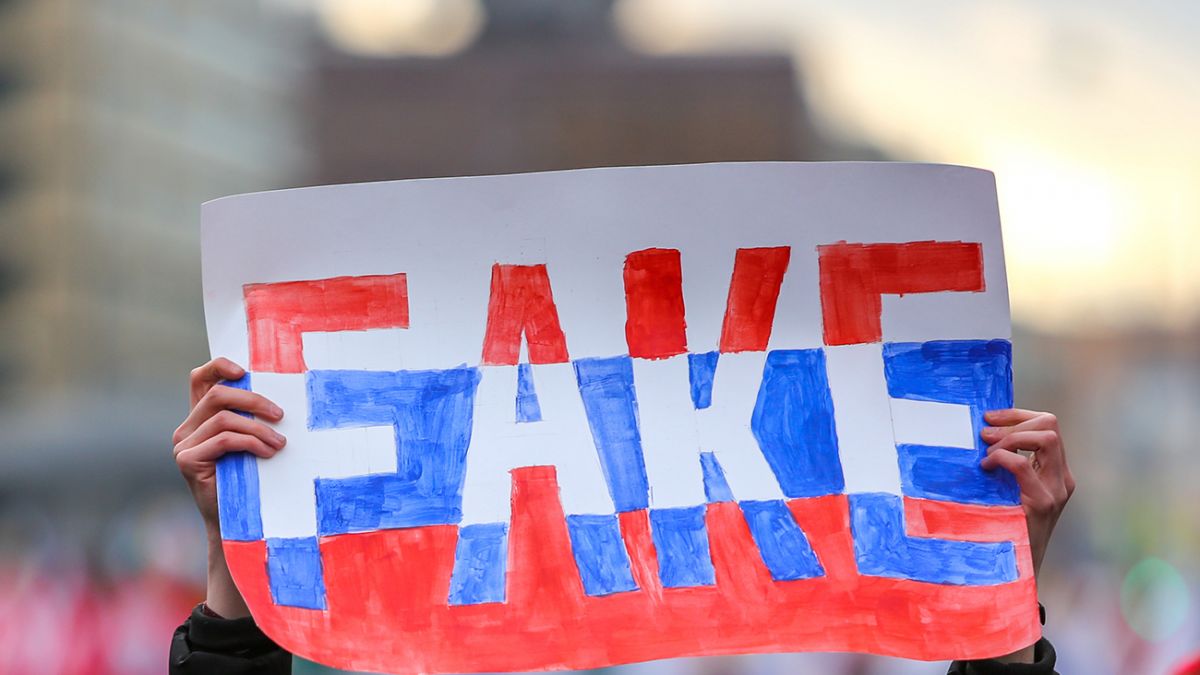
OpenAI has blocked a group of ChatGPT accounts which, according to the company’s assessment, were highly likely to be operated by individuals from Russia. Using artificial intelligence, they created posts and comments for social media and promoted an organisation that presented itself as an international ‘community of experts’.
According to Censor.NET, this is stated in an OpenAI report, which was highlighted by the Centre for Countering Disinformation.
The Russians concealed their origins
According to OpenAI, the operators submitted queries to ChatGPT in Russian, but most of the posts they created were in English. The content was shared on Substack, Telegram, X, Facebook and LinkedIn.
At the same time, users specifically asked ChatGPT to remove any linguistic features from their texts that might reveal their Russian origin. They used a VPN to access the service from Russia.
Much of this activity was aimed at promoting the International Burke Institute (IBI) – an organisation that described itself as an ‘expert community’ and claimed to be based in Israel.
According to OpenAI, the website linked to IBI was registered in February 2025. It was intended to give the impression of a fully-fledged think tank with international experts and its own research.
They passed off other people’s academic work as their own
An OpenAI check revealed that a significant proportion of the content on the IBI website had been copied from genuine academic papers.
The company examined 36 articles published on the website between September 2025 and May 2026. 34 of them were found to have been copied from other sources.
In some cases, papers were attributed to people who had not written them. For example, a research paper on the China–Pakistan Economic Corridor was published under the name of another academic. Another paper on migration policy was attributed to an Australian professor who specialises in food chemistry.
However, according to the company, OpenAI’s models were not used to create the content on the IBI website itself. ChatGPT was primarily a tool for promoting that content.
They created their own ‘index’ that praised Russia
A separate part of the operation was the so-called ‘sovereignty index’. The IBI used this to assess various states and promote narratives favourable to the Kremlin.
The articles were critical of countries that oppose Russian aggression against Ukraine. Among the targets were Germany, France, the US and the European Union. By contrast, this ‘index’ portrayed Russia in a favourable light.
One of the operators also used ChatGPT to create German-language posts for the Telegram channel ‘Lahme Ente’. These posts criticised Ukraine, the EU and the German government, and called for improved relations with Russia.
Another operator used OpenAI tools to create logos for around a dozen Telegram channels targeting audiences in Germany, the US, France, Poland and Turkey.
The audience was small, but the network could be scaled up
According to OpenAI’s assessment, the campaign failed to reach a significant audience. IBI’s official pages had few followers, and individual posts received only a small number of views. At the same time, some associated Telegram channels had around 10,000–20,000 subscribers.
The company emphasises that the main danger lay not so much in the current coverage as in the infrastructure that had been put in place.
The operators effectively built up what appeared to be a credible ‘expert institute’ featuring supposedly authoritative specialists, academic publications and their own analytical index. Artificial intelligence was used as a tool to promote this construct and conceal the origin of the desired narratives.
OpenAI notes that it was the use of its tools that ultimately helped to uncover a wider influence operation and block the accounts linked to it.


