



Head of German intelligence, Jäger, has described standoff between Germany and Russia as having "dangerous nature"
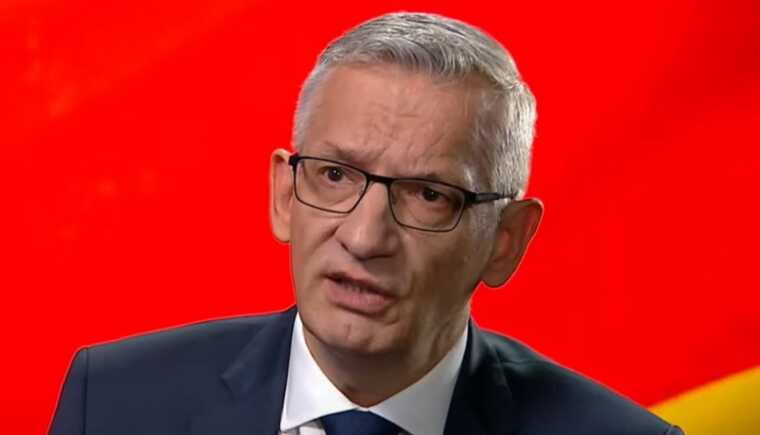
The head of Germany’s Federal Intelligence Service (BND), Martin Jäger, has stated that he sees a risk of "armed conflict" with Russia, and that the standoff between Berlin and Moscow has taken on a "new, dangerous dimension".
He said this during a hearing in the Bundestag, according to Censor.NET, citing Die Welt.
The conflict with Russia
The head of the BND noted that the situation in Europe is entering a "new, very dangerous phase" due to the intensification of Russian attacks on Ukraine. At the same time, he said, the threat of hybrid operations against Germany remains a real one.
"Russia is significantly escalating the conflict in Ukraine and continues to step up the pressure on Europe and Germany. The confrontation we are currently facing with Russia has taken on a new, more dangerous character. Germany risks being drawn into a violent conflict with Russia", said Jäger.
As an example of such an escalation, he cited the attempted attack on Leipzig Airport, for which the German authorities blamed Russia.
Jäger emphasised that Moscow regards Germany as one of its main adversaries because of its stance on Russia’s aggression against Ukraine.
"No other country currently poses such a direct, comprehensive and specific threat to Germany. We did not seek this confrontation. Russia is imposing it on us, seeing us as its main adversary," said the head of the BND.
The Shadow War
According to the official, the Russian leadership is seeking to influence political decisions in Berlin and other European capitals to prevent them from taking measures directed against Moscow.
The head of the BND has described Russia’s actions as a ‘shadow war’. According to him, this refers to an undeclared conflict that does not fit into the traditional categories of war or law.
"We are not on the defensive, but we are still under attack – that is precisely what a shadow war is," he explained.
Jäger also warned of possible attempts by Russia to undermine European support for Ukraine, particularly through intimidation and interference — Moscow may resort to nuclear rhetoric once again.
At the same time, the head of German intelligence added that, as yet, the BND sees no signs that Russia is preparing a full-scale attack on NATO territory.
What led up to this
- On 30 September, Reuters reported that Russia had sent NATO a written warning that it was prepared to use nuclear weapons should the Alliance attempt to isolate the Kaliningrad region from Russian territory. The North Atlantic Alliance responded by stating that it was not threatening Moscow and regarded the letter as an attempt at intimidation.
- NATO Secretary-General Mark Rutte, responding to Russia’s threats to use nuclear weapons should the Kaliningrad region be isolated, stated that he does not take such allegations "too seriously".
- For his part, Nikolai Patrushev, an aide to the Russian dictator, stated that if NATO were to attempt to put its ‘threats’ regarding the Kaliningrad region into practice, Russia’s response would be ‘appropriate and swift’, and the Alliance would ‘come to regret its actions’.


