



Diesel prices rise because of Strait of Hormuz blockade, not Ukrainian strikes on Russia – Zelenskyy
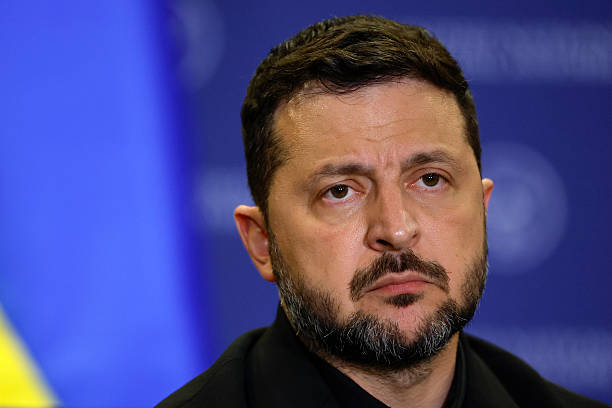
President Volodymyr Zelenskyy rejected accusations by US leader Donald Trump, who had repeatedly linked diesel fuel problems to Ukrainian attacks on Russian oil refineries.
The head of state said this in an interview with Fox News, Censor.NET reports.
Response to Trump’s statements
Trump previously criticized Kyiv for continuing attacks despite US demands not to target diesel production because of shortages.
"Everyone understands that diesel fuel prices do not depend on our attacks on diesel fuel in Russia. Everyone understands that this depends on the blockade of the Strait of Hormuz," Zelenskyy said.
"Lives are lost every day"
Zelenskyy stressed that Ukraine wants to end the war as soon as possible because lives are lost every day.
According to him, Ukraine loses between 20 and 30 civilians following Russian strikes, and behind these figures are people, families and children. He said that five to seven children are killed over a period of a few days, calling it a great tragedy.
The president emphasized that a ceasefire on both sides could be the first step toward a diplomatic end to the war, although the ultimate goal is peace. An energy truce, he said, would also be a good first step. He added that an "agricultural" truce was also possible, because Russia is blockading the Black Sea, preventing countries in Africa and Asia from receiving Ukrainian wheat and other agricultural products.
Zelenskyy attributed Russia’s refusal to support a ceasefire to its unwillingness to stop the war.
US-Russia diesel deal
- On October 9, US President Donald Trump said he had spoken with Russian dictator Putin and reached an agreement on Russian diesel supplies to US and global markets.
- According to him, Russia would "immediately" supply more than 300,000 tonnes of diesel to US and global markets, another 500,000 tonnes during November, and a further one million tonnes "immediately after that."
- The US Treasury Department announced that, at Trump’s direction, the Office of Foreign Assets Control was immediately issuing a temporary general license authorizing Russian diesel supplies to the global market.
- In response, Ukrainian President Volodymyr Zelenskyy called permission for Russia to sell petroleum products an "investment in war" and urged the US to hold firm talks with Moscow and impose sanctions under Lindsey Graham’s legislation.
- Axios reported that, during talks in Miami, US presidential special envoy Steve Witkoff and Jared Kushner had allegedly warned the Ukrainian side that access to US intelligence could be cut off if Ukraine continued striking Russian oil refineries.
- On October 11, President Zelenskyy said Ukraine would be ready to halt strikes on Russian refineries if Russia stopped attacking Ukraine’s energy infrastructure.
- That same day, US President Donald Trump announced the start of an energy truce between Ukraine and Russia.
- In comments to Axios, Zelenskyy said US President Donald Trump’s announcement of the start of an "energy truce" had come as a surprise to the Ukrainian side.
- The president later said Ukraine was ready to refrain from striking Russia’s energy sector provided Russia took similar steps.


