



Trump explained why he doesn’t call Putin dictator: "I’m master dealmaker, and I don’t call people names"
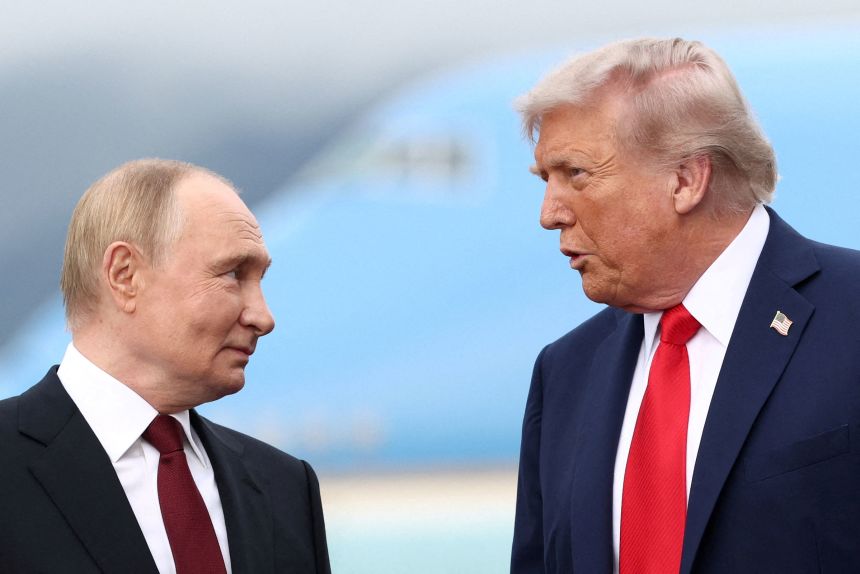
U.S. President Donald Trump explained why he does not call Kremlin leader Vladimir Putin a dictator. According to him, he is a "master dealmaker" and does not insult the people with whom he has to negotiate.
Trump made these remarks in an interview with Gray Media, according to Censor.NET.
About Putin
The journalist noted that Trump and Alaska Senator Dan Sullivan almost always vote the same way, but differ in their assessment of Russia. According to the journalist, Sullivan calls Putin "a dictator, an authoritarian leader, and the head of a mafia-style regime," and also opposes the diesel deal announced last week. He asked who is right here.
"Look, I have to make deals with people, so I don’t go around calling them names. I’m a master deal-maker. I’ve always been a very good deal-maker. I’ve become very rich thanks to deals. That’s why I don’t go around making fun of people," Trump replied.
On the causes of the war in Ukraine
The U.S. president once again linked the start of the war to the actions of his predecessor, Joe Biden.
"Part of the reason this war is even happening is that Biden went around mocking Russia and everyone else and didn’t understand what he was doing. This was a war that should never have started. If I had been president—if that election hadn’t been rigged, and it was rigged—there would be no war between Ukraine and Russia," Trump reiterated his position once again.
On the diesel deal with Russia
Trump also commented on the agreement regarding Russian diesel fuel. According to him, this is a good thing because the fuel will be supplied not only to the U.S. but also to the global market, which, in his view, will significantly lower the price of diesel.
"I think this is great because it’s being released to the world. It’s not just being supplied to us; it’s going out into the world, and this will significantly lower the price of diesel," Trump added.
US–Russia diesel deal and threats against Ukraine
- On October 9, US President Donald Trump said he had spoken with Russian dictator Putin and reached an agreement on Russian diesel supplies to US and global markets.
- According to him, Russia would "immediately" supply more than 300,000 tonnes of diesel to US and global markets, another 500,000 tonnes during November, and a further one million tonnes "immediately after that."
- The US Treasury Department announced that, at Trump’s direction, the Office of Foreign Assets Control was immediately issuing a temporary general license authorizing Russian diesel supplies to the global market.
- In response, Ukrainian President Volodymyr Zelenskyy called permission for Russia to sell petroleum products an "investment in war" and urged the US to hold firm talks with Moscow and impose sanctions under Lindsey Graham’s legislation.
- Axios reported that, during talks in Miami, US presidential special envoy Steve Witkoff and Jared Kushner had allegedly warned the Ukrainian side that access to US intelligence could be cut off if Ukraine continued striking Russian oil refineries.
- On October 11, President Zelenskyy said Ukraine would be ready to halt strikes on Russian refineries if Russia stopped attacking Ukraine’s energy infrastructure.
- That same day, US President Donald Trump announced the start of an energy truce between Ukraine and Russia.
- In comments to Axios, Zelenskyy said US President Donald Trump’s announcement of the start of an "energy truce" had come as a surprise to the Ukrainian side.
- The president later said Ukraine was ready to refrain from striking Russia’s energy sector provided Russia took similar steps.


