



From eggs at 17 to Fire Point: why high-profile resignations alone do not solve corruption problem
Andriy Yermak’s resignation following searches in the Mindych-gate case has probably brought a tidy profit to champagne sellers. However, in itself it in no way protects us from a new Mindich emerging tomorrow, nor from once again hunting for corrupt money or corrupt officials in some new Fire Point.
And to be sure of that, you only need to look at how the latest corruption scandals in the defence sector unfolded and what they led to.
Eggs at 17
That winter, the revelation that Tetiana Hlyniana’s company Aktyv Company planned to charge 17 hryvnias per egg while it cost at most 8 in supermarkets, shocked the whole country. A year later, journalists found that the Defence Ministry’s long-time supplier had in the meantime, built up a decent hotel business in Croatia.
Yet even as of now, Hlyniana has not faced any punishment. Although the State Bureau of Investigation and the National Anti-Corruption Bureau opened enquiries almost simultaneously with Yurii Nikolov’s publications, it was only in spring 2025 that NABU served notices of suspicion on the suspects in the case. Hlyniana herself received hers in absentia and continues to live comfortably in Croatia, already exasperating local residents who periodically complain to Ukraine that she is carrying out illegal construction.

Her son-in-law, as far as the author is aware, likewise happily avoided having his assets frozen in the Bureau of Economic Security case.
And the catalogue-based catering system itself continues to exist and has still not been reformed.
So what did the scandal over eggs at 17 actually give us? Nothing at all?
No, in fact it delivered quite a lot.
Thanks to joint efforts by MPs, civil society and the Ministry of Economy, non-lethal procurement was brought back into the Prozorro system, saving almost 8 billion hryvnias over a year. A cap on catalogue prices was introduced so that eggs would no longer cost 17, and a floor on price cuts was also put in place so that companies could not win tenders with abnormally low bids. For example, by offering raspberries at 1 kopeck when no one actually intends to supply them to military units.
Reznikov's jackets
The scandal over the supply of winter jackets by the Turkish company Vector Avia in August 2023 effectively became the reason for Defence Minister Oleksii Reznikov’s resignation. At the time, journalists and MPs accused the minister of delivering summer jackets instead of winter ones through companies linked to the relatives of MP Kasai.
In reality, it turned out the jackets were not summer ones, but of such poor quality that they literally came apart in the hands of members of the Public Anti-Corruption Council when they were brought in for inspection.
You might think that the minister’s resignation was a good reputational outcome and a punishment for all the corruption scandals. But his successor, Rustem Umerov, in just six months at the helm, had activists calling the Defence Ministry a "ministry of chaos".
And despite their quality and expert examinations commissioned by the Security Service of Ukraine concluding that they did not meet the technical specifications of either the contract or the Defence Ministry, the scandal-ridden jackets still ended up being issued to the troops.
In January 2025, acting Commander of the Logistics Forces of the Armed Forces of Ukraine, Brigadier General Oleh Hut, petitioned the High Anti-Corruption Court to lift the seizure of these jackets and trousers in order to "cover the shortage of special clothing for service members".
In other words, this effectively happened because of the ineffectiveness of procurement by the State Operator for Non-Lethal Acquisition (DOT), whose contract for cheap jackets from the company Farminco, sewn in Vietnam, had stalled at that time and was likewise never accepted by the Defence Ministry due to non-compliance with the technical specifications.
The only positive and systemic aspect of this story is the reinstatement of full-fledged quality control in the summer of 2023. However, the Public Anti-Corruption Council at the Defence Ministry had demanded that Minister Reznikov’s relevant order be put back into effect two months before the scandal broke.
Special importers and undelivered weapons
This will be the saddest part of this article, because you can buy a jacket for the front in a shop and volunteers can bring food, but none of that helps when weapons are not being delivered.
Since 2022, journalists have published dozens of articles about how Ukrainian special importers inflated prices for weapons, playing on competition among themselves and their drive to make money and, worst of all, then failed to deliver the weapons at all.
The most high-profile cases involved Lviv Arsenal, which never delivered 100,000 mines, and people implicated in the scam who had previously surfaced in schemes at the Odesa Portside Plant and the state-owned United Mining and Chemical Company.
Another story concerns the Polish company Alfa. In April 2022, Alfa directly offered the Defence Ministry 122 mm shells at 890 euros apiece and was awarded a contract… despite having previously failed to deliver helmets.
But a few months later, the Defence Ministry signed three more contracts – this time via the state special exporter Prohres, with Alfa acting as intermediary – and the price rose to 985 euros.
In February 2023, an addendum raised the price once again, to 1,318 euros per shell. The difference in price inflicted more than 415 million hryvnias in losses on the budget under just one contract.
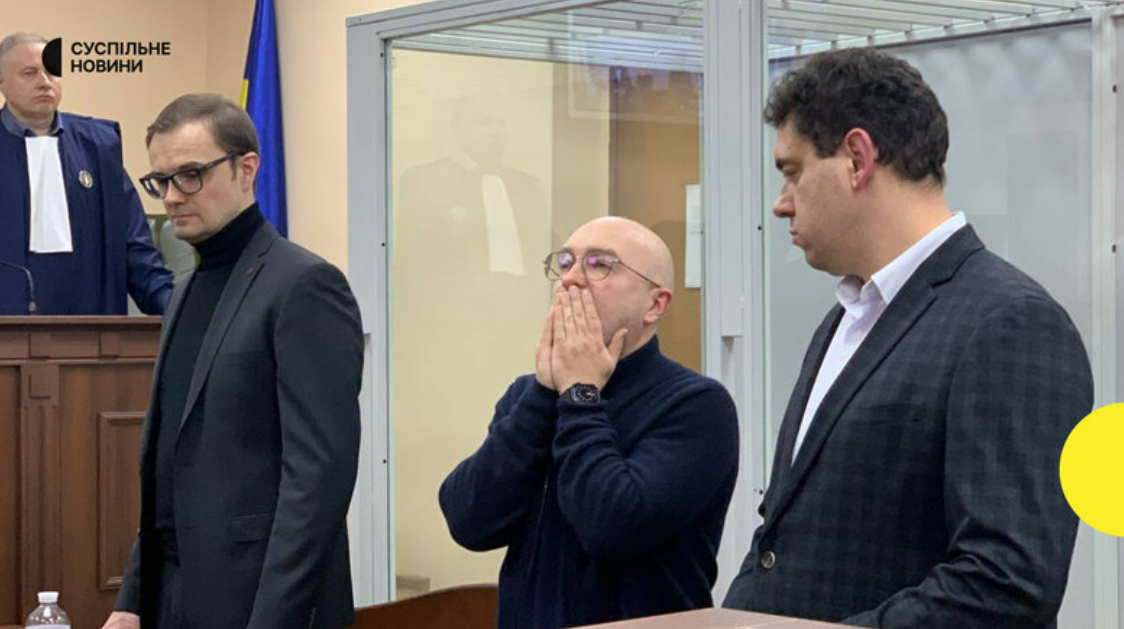
According to the investigation, officials from the Defence Ministry, Prohres and Alfa acted in collusion, inflating prices and sharing the profit.
NABU spent more than a year gathering evidence: it carried out searches in Kyiv and Poland, seized assets, and confiscated phones and documents – and that is when correspondence emerged about ammunition supplies from the Bulgarian plant VMZ.
The searches also uncovered links to outside shell companies, including the Polish firm Strassmayr sp. z o.o., whose owners are – of course – Ukrainians.
This may be yet another route through which funds were siphoned off and then, it appears, converted into crypto.
The last searches in Ukraine took place a year ago. After that, the case stalled because it was blocked for some time on the Polish side. This summer, searches were already conducted in Bulgaria.
But that is only the investigation.
The Lviv Arsenal case, meanwhile, seems to have simply evaporated.
Nor has there been any news of results in the investigations into price gouging by Ukrainian state special exporters – Prohres and Spetstechnoexport.
Although the Defence Ministry created a procurement agency that was supposed to improve the purchasing process, the public has now lost its last mechanism for monitoring how effective it is. Since this summer, the Defense Procurement Agency (DPA) headed by Arsen Zhumadilov has classified information on overdue receivables. Previously, this information was not treated as secret. It is reasonable to assume that the only explanation for this step is that these receivables are higher than those of its predecessors.
Fire point
Practically everyone has written, citing rumours, that Fire point is linked to Timur Mindich.
At the same time, there are now media investigations indicating that the company is connected to people in the president’s inner circle and directly pointing to a corrupt scheme to secure military exemption for Mindich’s cash-out operator, Ihor Fursenko, through this company.
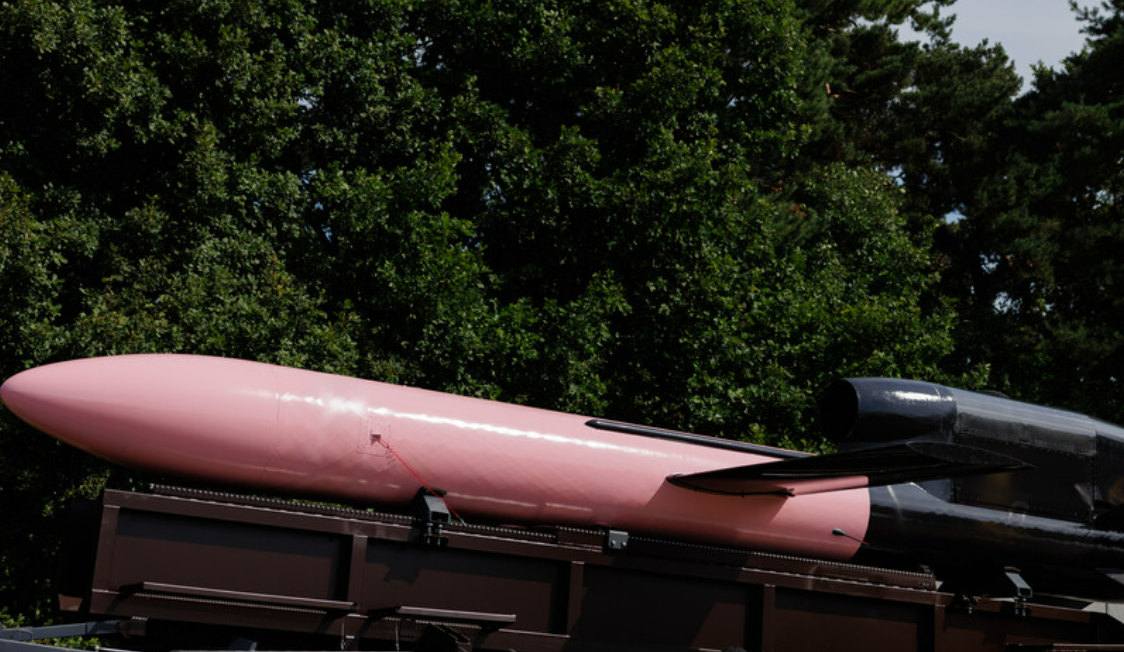
Even if we hear more detailed proof on NABU tapes of the company’s ties to Mindich – the kind of thing that, as one insider put it, "will make you throw up on your screen" – that, unfortunately, will not solve the systemic problem.
Three years of the saga with Tetiana Hlyniana’s companies have shown that it is enough to register a firm to a new "Sharik" or take over some other "Murchyk’s" company, and the state system will already treat it as risk-free.
Formally, the company Mit Prom is in no way connected to Hlyniana and continues to supply food. Clearly, the same could be done with Fire point. All this mumbo jumbo around the company and the invitation to Mike Pompeo to join its supervisory board point precisely to attempts to shield the company from repercussions.
However, all the corruption risks lie in a different plane. And despite all the criticism currently being directed at the National Agency on Corruption Prevention (NACP), it has produced an excellent study identifying 19 risks in drone procurement – none of which is eliminated either by putting Mindich behind bars or by Yermak’s resignation.
In recent years, drone procurement has been carried out under a Cabinet resolution that introduced an experimental procurement procedure. It provided for the following: a procedure whereby the Administration of the State Service of Special Communications and Information Protection considers written requests from interested state customers to procure UAVs and EW equipment; a requirement that domestic contractors (agreements) under state contracts for the manufacture and supply of UAVs obtain an expert opinion determining the possible indicative (expected) value of a UAV (or its component); and the contractor’s profit included in the contract (agreement) price, which may not exceed 25% of the production cost of goods, works and services.
However, this simplified procedure – which, of course, is dictated by wartime needs, and no one disputes that, and which has indeed allowed the sector to grow – simultaneously permits a whole range of corruption risks that enable some to advance much faster than others.
Splitting drone procurement among several agencies without proper pricing criteria has already led to a series of corruption cases opened by NABU, which found, among other things, that Mavic drones purchased by the State Special Communications Service were almost twice as expensive as those bought by military units.
We have a single expert who sets the indicative value of UAVs, with all the corruption risks that entails, and no standardised procurement practice with clear pricing criteria.
All procurement is carried out on the basis of the General Staff’s Needs and List, and buyers can only purchase items included there. In the case of UAVs, they are entered by name. Accordingly, if the list contains the "Chereshnia" drone, no one will buy the "Apelsyn" drone, even if it is functionally equivalent.
Hence, the constant complaints from both the military and manufacturers about how exactly these needs are determined and what criteria are taken into account, whether it is only the price, or also effectiveness on the battlefield.
Unless these systemic problems are fixed, in three days or three months, we will simply end up with a new Mindich – or the same Mindich under a new label. That’s all.
Effective performers or just effective PR
Two state agencies were set up by the Defence Ministry to replace ineffective bureaucrats with effective procurement professionals. But in the two years since, the number of scandals around the defence sector has not decreased in any meaningful way.
Arsen Zhumadilov’s congratulatory message on the second anniversary of the DOT and the findings of the Accounting Chamber look like two parallel realities. One praises colleagues for their achievements, while the Accounting Chamber speaks of systemic shortcomings and ineffective decisions that have only increased the burden on the budget.

Following its 2024 audit, the Accounting Chamber found that the Defence Ministry had failed to ensure an optimal distribution of procurement functions between its internal units and the state contracting authority. "Together with the costs of maintaining the state-owned DOT enterprise (250 million hryvnias), this led to an overall increase of 285 million hryvnias in administrative and management spending in the area of logistics procurement – 3.4 times more than in 2023," the Chamber stated.
Many of the issues now highlighted in the Accounting Chamber’s report were flagged by NAKO a year earlier – in particular the problems with funding, when the 2024 state budget allocated only 44.5% of the required amount for clothing and equipment for the Armed Forces, and 73% for fuel and lubricants.
The Accounting Chamber’s auditors found that although the state-owned DOT carried out 95% of its procurement procedures through the electronic system, thereby ensuring a competitive environment, violations and errors in tender documentation led to 100 lots (7.2% of those announced) being appealed and cancelled, and 216 lots (15.5%) being declared unsuccessful due to a lack of bids.
Civil society representatives had raised these issues earlier, but DOT continues to offer its own explanations and considers itself to be in the right where systemic problems exist.
For example, when companies without their own production facilities were allowed to participate in tenders by manipulating qualification criteria and applying them arbitrarily.
According to DOT’s own responses to an information request, in the food supply area in 2025, it signed direct contracts totalling 7,153,245,424.75 hryvnias and concluded framework agreements worth 1,457,206,010.35 hryvnias. In other words, direct contracts accounted for almost one fifth of all food procurement. DOT did not even explain why this happened.
DOT’s replies also show that in 2024 and the first half of 2025, suppliers under 252 contracts with the state-owned DOT failed to deliver clothing and gear on time – 191 contracts in 2024 and 61 in the first half of 2025.
At the same time, only 24 contracts were terminated in 2024 and just 2 in the first half of 2025 as a result of non-delivery of clothing and gear.
And that is without even touching on the notorious procurement of body armour from Milikon, a company affiliated with Mindich, which DOT still presents as a case where it "expanded competition". In reality, it is unclear where this extra competition came from, given that no new suppliers actually entered this segment. Instead, just as in the Farminco case, our troops simply did not receive their gear on time.
Many of these issues could be chalked up to growing pains, and one can legitimately describe DOT-chain as a very solid systemic solution. But how can you trust an institution that is pressured to buy substandard body armour and then fails to report that pressure?
Who said that after Mindich, they will not similarly listen to other "Roshyks" who are bound to show up again? And who can guarantee that they will not bend under that pressure?


