



Scrapping parcel tax exemption will hit Ukrainians’ wallets: will Rada pass controversial bill?
The Verkhovna Rada may support draft laws No. 15112-D and No. 12360 as early as May 12, introducing new taxation rules for goods purchased via foreign online platforms. If the vote succeeds, the 150-euro tax-free limit on international parcels will be abolished, and global platforms such as Amazon, AliExpress, or Temu will add value-added tax to every order—if, indeed, they remain in Ukraine at all.
This means that goods purchased abroad will rise in price by up to 20%. Moreover, retail chains in Ukraine are also expected to increase prices as price comparison, which currently acts as a safeguard, will disappear, experts believe.
The changes are set to take effect as early as January 1, 2027, if the draft laws are passed. However, the MPs themselves have doubts about whether it will even be possible to gather the necessary votes.
BusinessCensor spoke with members of the Verkhovna Rada Committee on Finance, Tax, and Customs Policy, economists, and postal operators to find out what consequences ultimately await businesses, international imports, and ordinary Ukrainians if the initiative is supported.
Will the vote take place?
Let's start with the simplest question: will the vote on May 12 take place at all?
MP Nina Yuzhanina, who participated in the working groups preparing the draft law, is skeptical: "The mono-majority is counting votes because there are differing opinions in the chamber. It wasn't even brought up for inclusion in the agenda last week because, obviously, there were not enough votes."
Economist Oleh Hetman estimates the chances as "50/50": "While the draft law on digital platforms can be given a 99.9% guarantee, whether there are enough votes for the parcel tax remains a mystery."
Yuzhanina adds that there is an additional technical risk. Lawmakers included draft law No. 12360 on KPIs for customs officers (Key Performance Indicators – ed.) in the voting package. If it fails the second reading, the entire parcel-related block will have to be restarted from scratch.
"If it is not passed in the second reading, it will mean having to go through the entire cycle all over again," the MP says.
The vote scheduled for May 12 will be the second attempt to introduce customs duties and VAT on international parcels from the very first cent. In April, the controversial draft law No. 15112 was removed from the agenda, and now an alternative will be considered "under the dome." Last time, a unique bonus for MPs was inserted into the text—the abolition of lifelong PEP status (politically exposed persons whose financial transactions must be scrutinized by banks – ed.). However, this clause was eventually withdrawn as it contradicted Ukraine's Euro-integration obligations; the EU did not appreciate such generosity.
How much prices will rise and who will pay the difference
The public backlash against the initiative to scrap the tax-free limit on international parcels has a simple explanation: today, clothing and electronics on Ukrainian marketplaces cost more than in China. Moreover, the markup on similar products on domestic platforms sometimes reaches 300%.

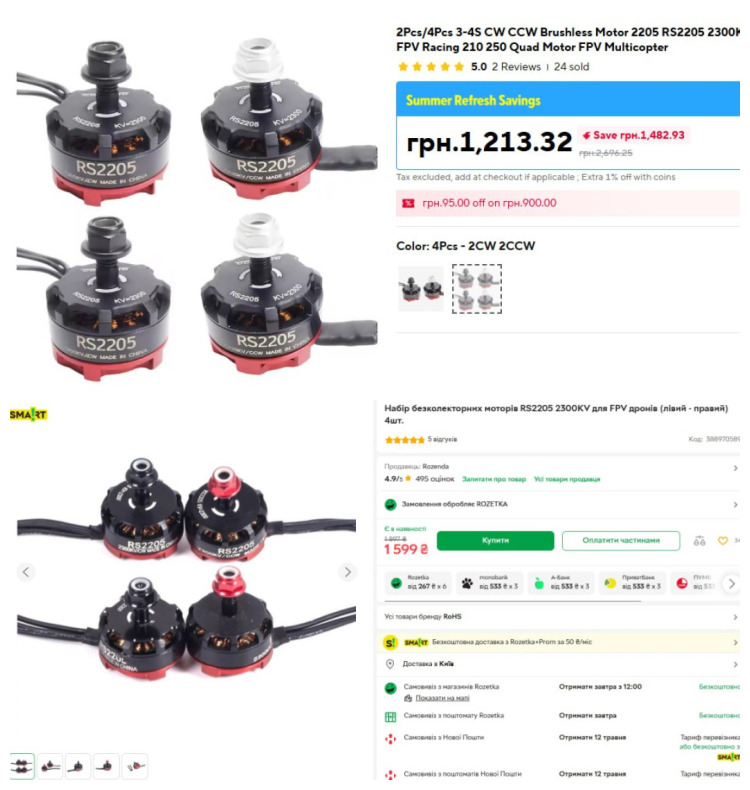
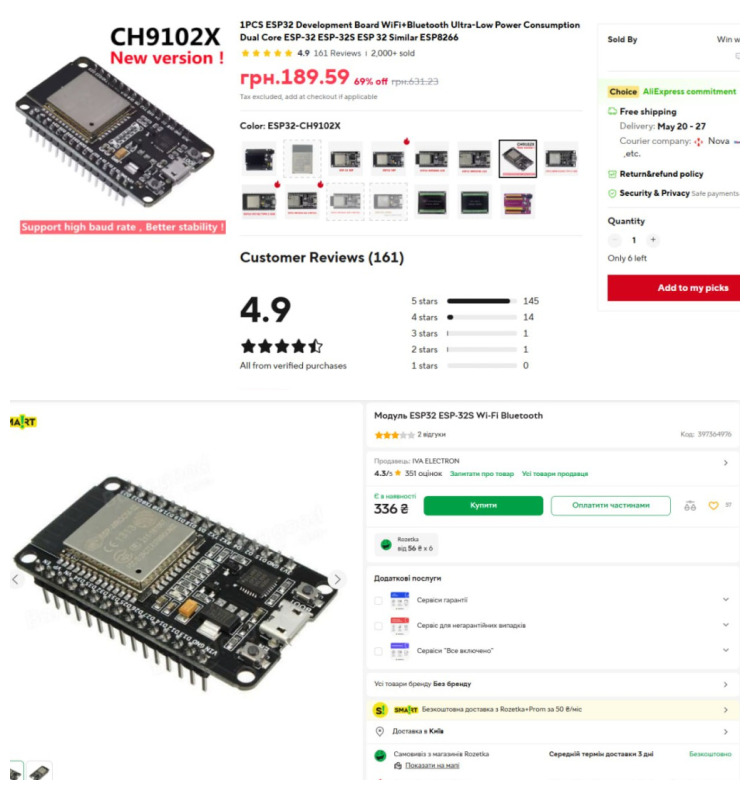
According to the results of a Rating Group survey, Chinese marketplaces are almost the only source for Ukrainians to obtain basic household essentials. For instance, 45% of those who received international parcels ordered clothing and footwear.
Furthermore, this winter, Ukrainians actively purchased backup power solutions abroad—power banks, batteries, and chargers. Thus, the VAT levy from the very first cent, as proposed in draft law No. 15112-D, will become a sort of "tax on survival."
If 20% is added to Chinese goods, Ukrainian counterparts will also pull up their prices to the new level. After all, why sell Ukrainian goods cheaper if the buyer is now willing to pay more for Chinese ones?
Economist Oleh Hetman does not entirely agree. He says that competition and increased sales volumes within the country will prevent this. However, he admits, the price of Chinese goods will rise, though not by exactly 20%. Manufacturers themselves will absorb part of the difference by lowering wholesale prices to remain competitive. Thus, the actual expected price increase for the buyer could be 10-15%. However, this is of little comfort.
Co-founder and CEO of postal operator Meest International, Vasyl Zhuravel, looks at it from another angle. In his view, if Chinese goods rise sharply in price, brick-and-mortar retail will follow suit, as the price comparison that currently acts as a safeguard will disappear:
"My subjective opinion is that brick-and-mortar retail is behind the initiative for the immediate introduction of parcel taxation. And as soon as this rule takes effect, they will also raise prices on their goods. Therefore, the buyer in Ukraine will suffer twice," says Zhuravel.
He is convinced that a sudden implementation could lead to a collapse in the operations of postal and courier services: "We anticipate that shipment volumes will decrease by 35-40%, while administrative costs will at least double at the same time."
Nina Yuzhanina also does not share this optimism: "If the price is around 30-40% of the price in Ukraine, people are willing to wait three weeks for delivery. But if the gap narrows, some buyers will simply give up on such purchases."
How much money the budget will receive and why the figures differ twofold
In the explanatory note to the draft law, the Ministry of Finance predicts 10 billion hryvnias in annual revenue starting from 2027. Meanwhile, back in April, Oleksii Leonov, a member of the Tax Subcommittee, cited a figure of 20 billion. Who is right?
Both are right, but they are talking about different years. Oleh Hetman explains: "The Ministry of Finance calculated based on 2024–2025—that was the correct figure for that time. We calculated based on 2026. The volume of parcels grows by about 50% each year, so the figure can be multiplied annually. In 2027, it will be 27–28 billion; in 2028, over 30 billion hryvnias."
However, will this volume continue to grow without the tax benefit? If it does, it will be at a significantly slower pace. After all, if goods become more expensive, Ukrainians will buy less.
At the same time, economist Andrii Dlihaсh is more restrained in his forecasts: "The maximum estimate is up to 20 billion hryvnias, provided everything works, and the number of parcels does not drop."
Dlihaсh emphasizes that the main problem for the Ukrainian budget right now is not parcels: "Smuggling accounts for 150 billion hryvnias, according to think tanks. That is what should be addressed first. But, unfortunately, the customs overhaul is moving slowly, and well-known major systemic smugglers still remain in the Rada and at large."
Meanwhile, the volume of the shadow economy in Ukraine exceeds UAH 1 trillion, as previously stated by Danylo Hetmantsev, Chairman of the Committee on Finance, Tax, and Customs Policy.
Furthermore, budget funds are spent on ineffective populist initiatives in the form of various "Ukrainian support programs": cashback, "e-Bucks", the "Winter Thousand", etc. Incidentally, the state spent UAH 17.8 billion on the "Winter Thousand" last year—practically the entire expected resource from parcel taxation.
In other words, the state gives away money it already lacks with one hand, while taking it out of citizens' pockets with additional taxes with the other. However, this is easier than fighting the shadow economy.
Overall, the most optimistic forecast regarding the effect of scrapping the tax-free limit on international parcels comes from Hetmantsev. Responding to a question from BusinessCensor about his expectations, he replied with a short message: "$8.1 billion from the IMF, €90 billion in aid from the EU, and $3.3 billion from the World Bank. Directly from the law, according to the Ministry of Finance estimates, 10 billion."
At the same time, for the sake of clarity, it should be noted that international funding consists essentially of loans that will have to be repaid sooner or later. Ukraine's national debt, incidentally, rose to a record $7,200 per capita in April, which equals the income of an average citizen for 15 months.
Will marketplaces leave Ukraine?
One of the main questions is whether AliExpress, Temu, and others will agree to become tax agents for the Ukrainian market. While China remains a key supplier of imports for Ukraine ($19 billion in 2025), Ukraine’s share of total Chinese exports ($3.77 trillion in 2025) accounts for only 0.5%.
"This model, known as One-Stop Shop, has long been in operation in the EU and countries comparable to us in terms of population and purchasing power. All Chinese marketplaces have become tax agents there," Oleh Hetman claims.
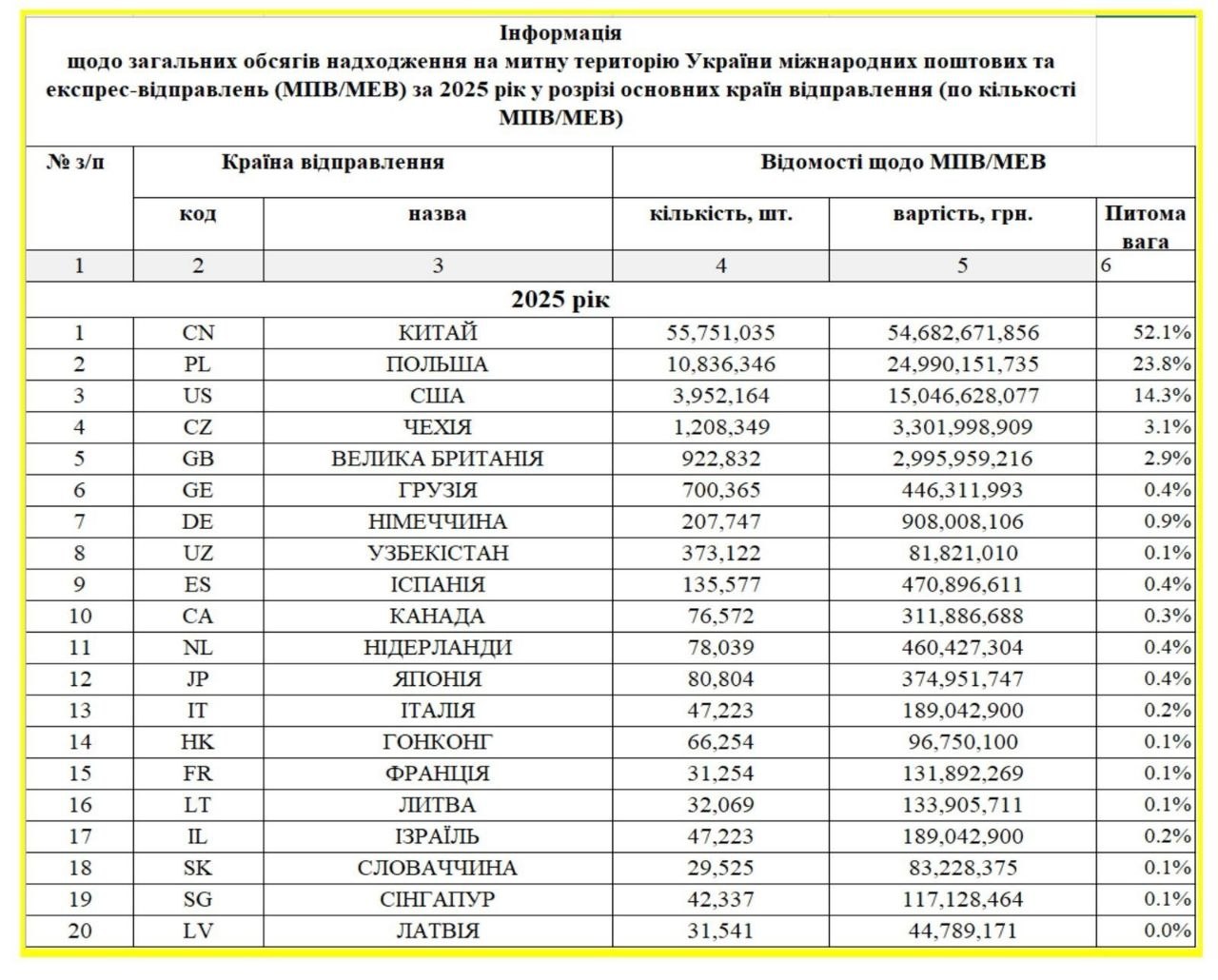
However, the picture is not so clear-cut. Nina Yuzhanina says that Amazon has already refused, seeing no possibility of becoming a VAT payer in Ukraine. Incidentally, the US rounds out the top three leaders in postal shipments to Ukraine. According to official data, 52.1% of international and express shipments entering Ukraine's customs territory in 2025 were from China, 23.8% from Poland, and 14.3% from the US. Together, these countries account for 90% of the parcels Ukrainians receive from abroad.
Vasyl Zhuravel points to another risk that is often ignored: small businesses from the EU, which will be forced to either accept inconvenient rules or withdraw from the Ukrainian market altogether.
"In the European Union, small businesses can sell to other countries without VAT if their turnover does not exceed 100,000 euros. Small and medium-sized enterprises (SMEs) account for 50-60% of e-commerce there. The proposed regulation will cause SMEs to face service gaps, complex bureaucratic procedures, and a refusal to enter the Ukrainian market, which in turn will lead to the dominance of large players who, sensing no competition, will raise prices," he explains.
"Grey" import: will it decrease or grow?
Proponents of the law argue that it will shut down "grey" schemes, where a thousand parcels are received using a thousand passports to sell goods without paying taxes.
However, Zhuravel predicts the opposite: "Lowering the threshold for C2C parcels from 150 to 45 euros will further activate 'shuttle buses'—a phenomenon that has existed for decades and which the state has never learned to 'civilize.' If a person cannot receive a parcel without VAT legally, they will find a way to do it illegally."
Dlihaсh clarifies: the "grey" sector already uses parcels to bring in goods for resale. This is an issue of customs corruption, where it is impossible to check 70 million parcels for compliance with the declared price—this is a real problem, the economist says.
"Abuses will remain regardless, and we may see longer queues or other negative consequences. I believe it would be correct to delay the implementation of such a rule and introduce it in stages depending on the technical readiness of the customs service," he added.
Yuzhanina admits: "In Ukraine, there are many such rules that work somewhere in Europe, but for us, things turn out a bit differently." In her opinion, there are many initiatives in Ukraine "that encourage the development of the shadow economy." "And this is one of them," the MP emphasizes.
Ukraine's European course indeed requires the abolition of the tax-free limit on parcels. However, our country has not yet become an EU member. And according to German Chancellor Friedrich Merz, Ukraine's swift accession to the European Union is impossible. It would be entirely logical to delay the entry into force of the parcel regulation until Ukraine gains full membership in the European Union.
Military and volunteers: a question without an answer
A significant portion of international parcels today consists of components for drones, EW systems, cables, and batteries. According to Zhuravel's estimate, 10% to 20% of all international shipments are somehow related to the needs of the military and volunteers.
According to the Tax Code, such goods are exempt from VAT. However, in practice, Yuzhanina warns, no marketplace will study Ukrainian legislation to figure out exactly which components are tax-exempt: "They will charge VAT on everything. This is the biggest issue, but it has quieted down."
Yuzhanina says that in the working group, they forced through one amendment — to oblige the Cabinet of Ministers to develop a procedure for returning paid VAT to individuals: "How will it work? I cannot imagine the timeframe for such a refund or how it will be declared. But it is essential."
Notably, at the committee meeting, not a single deputy raised this issue. Nina Yuzhanina explains this by saying that "the majority believes this law will not be passed."
Speaking to journalists from 24 Channel, Yaroslav Zhelezniak, the first deputy chairman of the Committee on Finance, Tax, and Customs Policy, expressed doubt that the draft law would be passed at all:
"The good news is that it won't work anyway."
The bottom line
The parcel law is a rare case where all interviewed experts fundamentally support the idea itself but disagree on everything else: timing, consumer forecasts, and system readiness assessments.
Economists say: leveling the playing field for Ukrainian manufacturers is long overdue, the model has been technically implemented in dozens of countries, and the budget will receive UAH 20 billion or more. Introducing VAT for foreign goods is not a preference, but the fairness that national manufacturers deserve.
MPs and practitioners say: it is correct, but not now, not this way, and not at this pace. The administrative system is not ready, agreements with marketplaces have not been reached, and the issue of military procurement remains partially open.
The vote on May 12 will show whose arguments prevail. But even if the law passes, the real test will begin on January 1, 2027, when price tags for cheap goods on Temu and AliExpress are updated.


