ENG




13690 visitors online
In 2026, Ukraine navigates numerous taxation changes amid ongoing geopolitical challenges. The Cabinet of Ministers recently re-approved the taxation of parcels valued up to 150 euros, a significant move expected to affect online consumers and businesses. Conversely, the Verkhovna Rada passed laws taxing digital platforms, aiming to generate additional state revenue during martial law. Moreover, controversy surrounds the tax imposed on residents of the occupied Luhansk region by Russian authorities, introducing a vehicle tax with looming threats for non-compliance. These developments reflect broader economic pressures, including the IMF's focus on Ukraine's fiscal reforms and rising public sentiment towards tax hikes for Western funding. Stay informed with the latest news.
What is the consequence of the parcel tax policy in Ukraine?
The taxation of parcels worth up to 150 euros, approved by the Cabinet of Ministers, is likely to influence international online shopping. It could lead to increased consumer costs, potentially affecting market dynamics for cross-border trade. Businesses and consumers need to adapt to these regulatory changes to manage costs efficiently.
How will the vehicle tax impact Luhansk residents?
The new vehicle tax imposed by Russian authorities in the occupied Luhansk region represents a significant financial burden for residents. Non-payment carries severe penalties, including the potential for account blocks and property seizures, increasing economic strain on individuals during a period of occupation.
What are the implications of digital platform taxation?
Taxing digital platforms, a move recently approved by the Verkhovna Rada, aims to bolster Ukraine's revenue by targeting the growing digital economy. While it aligns Ukraine with global digital tax trends, its implementation can challenge local and international platforms operating under Ukraine's jurisdiction, prompting compliance adjustments.
Why is the VAT exemption for UGV supplies significant?
Exempting unmanned ground vehicle supplies from VAT represents Ukraine's strategic move to bolster its defense infrastructure amidst martial law. This exemption can significantly reduce costs for defense suppliers, enhancing the nation's military capabilities and readiness during continued conflicts.
What does public sentiment reveal about tax hikes in Ukraine?
According to KIIS data, 48% of Ukrainians support potential tax hikes if these are required for Western financial aid. This reflects a crucial shift in public opinion towards sacrificing short-term financial comfort for long-term support and stability. However, it also underscores the need for transparent governmental communication and accountability in tax policies.
News taxes
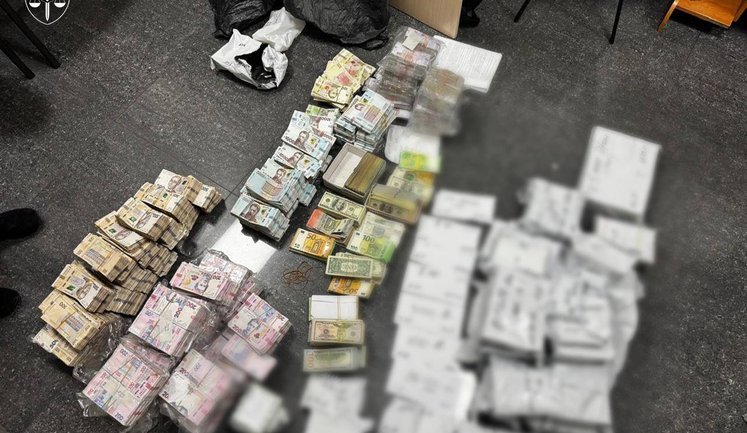
 Over 630 million hryvnias in cash and searches across 16 regions: OGP and the BES have uncovered shadow financial network. PHOTOS A large-scale underground financial network has been uncovered which, according to the investigation, operated throughout Ukraine and was used for tax evasion and money laundering. During more than 30 searches across 16 regions, law enforcement officers seized cash amounting to over 630 million... 1 701 4 Previously in trend: financial fraud
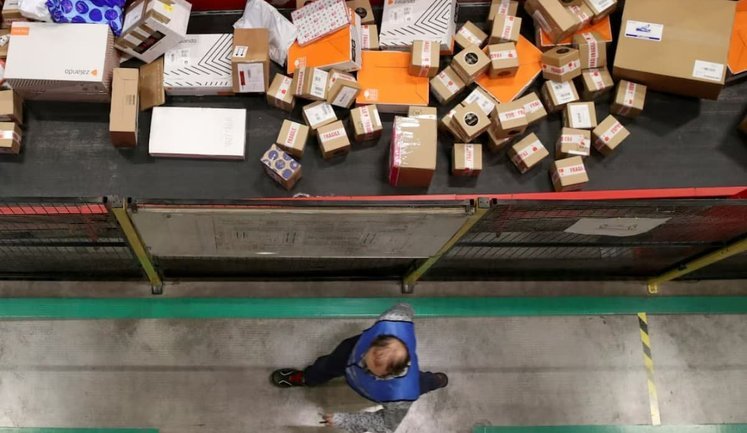
 Cabinet of Ministers has once again approved taxation of parcels worth up to 150 euros The Cabinet of Ministers of Ukraine has once again approved draft legislation on the taxation of international postal and express consignments valued at up to 150 euros. 12 690 42 Previously in trend: Tax changes
 Occupiers have introduced new transport tax for residents of Luhansk region: for non-payment, they threaten to block accounts and seize property Russian occupiers have imposed yet another mandatory payment to the Russian Federation budget on residents of the temporarily occupied Luhansk region. In 2026, vehicle owners in the occupied part of the region will have to pay the Russian vehicle tax for the first time. 2 030 3 Previously in trend: Situation in occupied Luhansk region
 Cabinet of Ministers has approved tax on parcels The Cabinet of Ministers has submitted a draft bill to the Verkhovna Rada to amend the rules on the taxation of imported goods. 6 709 31 Previously in trend: Tax changes
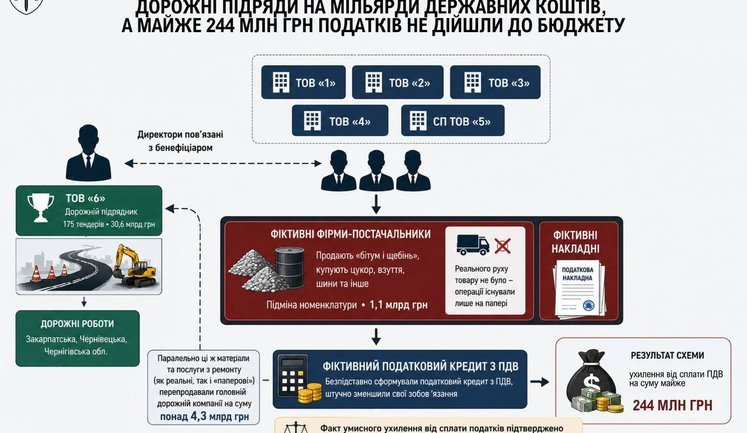
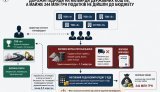 Scheme involving fictitious transactions worth 1.1 billion hryvnias has been uncovered in road construction sector: budget lost 243 million hryvnias in VAT, – Kravchenko. INFOGRAPHICS Prosecutors, working alongside law enforcement agencies, have uncovered a VAT evasion scheme in the road construction sector. 1 158 10 Previously in trend: financial fraud
 Rada passed law on taxation of digital platforms The Verkhovna Rada voted in the second reading on Bill No. 15111-d regarding the taxation of digital platforms. 3 448 31 Previously in trend: Tax changes
 Supplies of UGVs exempted from VAT: Rada passes bill The Verkhovna Rada has passed a bill exempting supplies of unmanned ground systems from VAT for the duration of martial law. 1 470 7 Previously in trend: Unmanned Ground Vehicles UGVs Drone industry
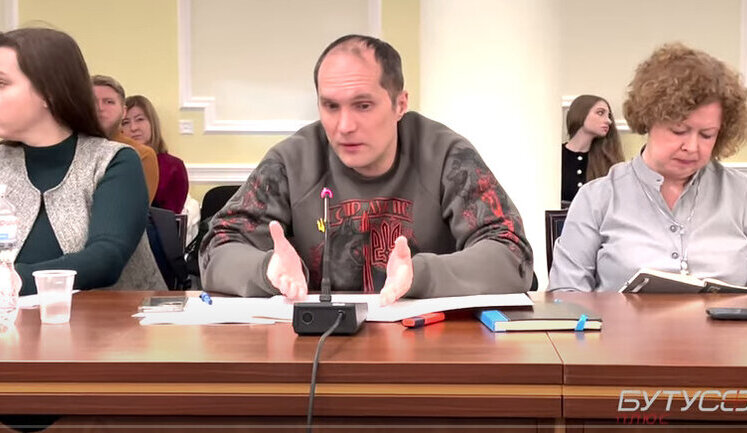
 Adoption of bill on taxation of parcels is step towards defeat in war, - Butusov The adoption of Bill No. 15112 on the taxation of parcels could have disastrous consequences for the supply of the Defence Forces. 9 588 70 Previously in trend: Tax changes
 48% of Ukrainians ready for tax hikes to obtain Western funding, KIIS says. INFOGRAPHICS 48% of Ukrainian citizens believe the state should adopt all necessary decisions to obtain Western funding, even if this includes, in particular, tax increases. 3 035 57 Previously in trend: Tax changes Reforms in Ukraine
 Over 576 million hryvnias were diverted from defence contracts into "shadow". Scheme has been dismantled. PHOTOS A criminal organisation that had set up a so-called "money-laundering centre" to assist businesses in laundering funds and evading taxes has been exposed and its activities halted. 2 134 12 Previously in trend: financial fraud Fraudulent schemes
 There will be no introduction of VAT for sole traders at this stage, - Svyrydenko There are no plans to introduce value added tax for sole traders in Ukraine. 2 598 16 Previously in trend: Tax changes
 Finance Ministry promised IMF tax changes and presented Rada with fait accompli – ’Servant of People’ Yanchenko Ukraine's Ministry of Finance should first have held consultations with parliament and only then conducted negotiations with the IMF. 6 831 34 Previously in trend: Tax changes
 Ministry of Finance presents tax bill: projected revenue of 60 billion, but expenditure is already almost the same, – Zhelezniak The Ukrainian Ministry of Finance is proposing tax changes in the hope of generating additional revenue. At the same time, government spending on various programmes is already approaching this figure. 2 128 13 Previously in trend: Tax changes
 "Conditions need to be eased": Hetmantsev announces changes to Defence City law The government must prepare amendments to the legislation regulating the operation of the separate legal regime of Defence City. 42 0 Previously in trend: Drone industry
 Ukraine may lose IMF funding due to delays in Rada’s decisions on tax hikes, - Bloomberg The International Monetary Fund has expressed concern about Ukraine’s ability to secure the remaining funds from the $8.1 billion package, as members of parliament are delaying the passage of necessary legislation in the Verkhovna Rada. 9 806 57
 Putin demands higher taxes from Russians to finance war, CCD says Amid Russia’s economic slowdown and a growing budget deficit, Russian dictator Vladimir Putin has demanded that the government "significantly increase" tax collection in 2026. 2 154 16 Previously in trend: Economic disaster
 Smuggling of medicines and online sales: Khmelnytskyi police shut down criminal group. PHOTOS Cyber police and investigators from the Khmelnytskyi region, under the procedural guidance of the Khmelnytskyi regional prosecutor's office, exposed and stopped the activities of a group of individuals who were smuggling foreign-made medicines into Ukraine. 1 213 5 Previously in trend: Tax violations
 Kremlin shifts war costs onto population – intelligence In Russia, the tax authorities are massively sending citizens notices to pay income tax on bank deposits for 2024. This measure is intended to offset budget losses caused by the full-scale war against Ukraine. 3 477 20 Previously in trend: Russia’s expenditure on war
 Defense City: How did arms manufacturers respond to initiative? On August 21, the Verkhovna Rada passed in second reading and as a whole two key draft laws to implement the Defence City initiative – a special legal regime for defense industry enterprises. 180 0 Previously in trend: Drone industry
 Revenues from unified tax up 13% since start of year. Which regions paid most? In January-July 2025, taxpayers under the simplified taxation system paid UAH 45.8 billion in single tax. 116 0 Previously in trend: Tax changes
 Ukraine pays soldiers’ salaries exclusively from its own tax revenues – Shmyhal Ukraine pays its troops entirely from its own tax revenues. 1 933 28 Previously in trend: payments to military
 Hetmantsev thanks OnlyFans models for paying taxes: "I know many of them personally as we talk on social media". VIDEO Head of the Verkhovna Rada Committee on Finance, Tax and Customs Policy, Danylo Hetmantsev, has expressed gratitude to OnlyFans content creators for paying taxes. 10 263 60
 Head of customs post in Lviv region, who "covered black imports" of electronics to Ukraine, detained on receiving $23,000 bribe - SSU. PHOTO The Security Service and the National Police detained the head of a customs post in Lviv region. 7 108 21 Previously in trend: Grafters
 UAH 120 million of tax fraud: two customs officers who issued trucks with cigarettes as empty will be tried - Prosecutor General’s Office. PHOTOS Two Chernivtsi customs officers will be tried for their involvement in a tax evasion scheme involving the import of tobacco products. 1 619 9
 Philip Morris increased tax contributions to Ukraine’s budget by 38% in 2024 In 2024, Philip Morris in Ukraine paid UAH 52.2 billion in taxes, which is over UAH 14 billion (or 38%) more than in 2023. 101 0
 Occupiers imposed new taxes, destroying small business in TOT of Kherson region - NRC The Russian occupation authorities in the temporarily occupied territories of the Kherson region have introduced new taxes and reporting forms, effectively destroying the remnants of small businesses. 1 633 16
 "Ukrainian Armor" paid UAH 1.044 billion in taxes to budget in 2024 1 billion 44 million hryvnias - this is the amount of taxes paid to the Ukrainian budget by the Ukrainian Armor company in 2024. 901 2
 Taxes will rise in November, not in December - "servant of people" Hetmantsev Law 4015-IX on increasing the military tax from 1.5% to 5% and a number of other amendments to the Tax Code was published in the Golos Ukrainy newspaper on Thursday, November 28. On November 29, it will come into force, which means that the new tax rates will be in effect for the two days of... 8 354 37
 Zelenskyy signs law on historic tax increase in Ukraine President of Ukraine Volodymyr Zelenskyy has signed Law No. 11416-d "On Amendments to the Tax Code of Ukraine on Peculiarities of Taxation during the Period of Martial Law". 16 743 137
 Tax law will be amended after Zelenskyy signs it - Marchenko Minister of Finance Serhii Marchenko expects that the Verkhovna Rada will amend the law on raising certain taxes to avoid their retroactive introduction. 2 447 14
 Association of Ukrainian Cities calls on President to preserve reverse subsidies for communities Village, town and city mayors appealed to the President of Ukraine to keep the reverse subsidy funds in community budgets in 2025 to jointly protect Ukrainian citizens from rapid tariff increases or disruption of the heating season, power outages and lack of critical medical care. 1 641 14
 National Bank does not rule out further tax increases in Ukraine The National Bank of Ukraine does not rule out the introduction of new tax initiatives in case of additional budget needs. 1 934 18
Single tax should remain in communities, - Association of Ukrainian Cities The Association of Ukrainian Cities is against the removal of the single tax from local budget revenues. 1 898 23
 Stefanchuk signs law on tax increase On October 15, the Chairman of the Verkhovna Rada Ruslan Stefanchuk signed the law on tax increases No. 11416-d. 4 592 63
 Military tax and revenues from domestic government loan bonds should be transferred to trust fund to finance AFU - Poroshenko The government has rejected a proposal to create a special trust fund for the needs of the Defense Forces. 1 553 24
 Verkhovna Rada rejected all resolutions blocking signing of law on tax increases The Verkhovna Rada has rejected 13 resolutions that blocked the signing of Bill 11416-d on a historic tax increase. 3 113 22
 Rada voted for historic tax increase The Verkhovna Rada has supported in general the draft law No. 11416-d on tax increases. 23 379 87
 Verkhovna Rada Committee supports historic tax increase for second reading - Zheleznyak The Verkhovna Rada Committee on Finance, Taxation and Customs Policy supported the draft law on a historic tax increase No. 11416-d. 6 555 48
 Former regional deputy Makeyenko is suspected of tax evasion over UAH 71 million. PHOTOS Law enforcers served a notice of suspicion to Volodymyr Makeenko, a former MP of several convocations and former deputy head of the banned Party of Regions faction, in a case of tax evasion of UAH 71 million. 3 467 19
 Before raising taxes, government must cut billions in spending on telethon and road construction - Poroshenko Before raising the tax burden on Ukrainians, the government should explain how much money the state budget needs, for what purposes, and whether the possibilities of reducing inappropriate expenses during the war have been depleted. 7 189 118
 Use of withdrawn "military" PIT from local communities is only 45%. The "military" personal income tax was removed from community budgets in 2023, along with the "force" personal income tax. The amount of funds withdrawn amounted to approximately UAH 115 billion. 1 984 5
More than half of "military" personal income tax after being withdrawn from communities was not used by state for needs of AF - AUC The Ministry of Finance has admitted that the withdrawal of the "military" PIT from communities was an ineffective decision. More than half of the revenues were not used for the needs of the army. 7 848 21
 If amendments to budget are not adopted by mid-September, there will be no funds to pay salaries to military - "servant of people" Pidlasa If budget expenditures are not increased by half a trillion in mid-September, the government will not have the funds to pay salaries to the military at the end of September. 5 518 45
 Tax revision is unavoidable. Everything should happen very quickly - "servant of the people" Hetmantsev In 2025, the budgetary situation in Ukraine will deteriorate, so tax revisions are unavoidable. 19 087 255
 Issue of tax increase is not currently being discussed - Shmyhal Prime Minister Denys Shmyhal said that the Cabinet of Ministers is not currently discussing the issue of raising taxes. 1 436 16
 Parliament adopts law on tax benefits for military personnel The Verkhovna Rada passes a draft law introducing additional benefits for military personnel. 6 794 10
 "In 2022-2023, Ukrainian Armor provided UAH 87 million in charitable assistance and paid over UAH 480 million in taxes In 2022-2023, Ukrainian Armor LLC allocated UAH 87 million in charitable aid and about UAH 12 million in material and technical assistance. 865 4
"Servant of People" proposed to raise taxes on iPhones and on those who earn more than UAH 20 thousand. Roksolana Pidlasa (Servant of the People), Head of the Rada Budget Committee, proposes to introduce a luxury tax, in particular on new iPhones. 26 850 251
Page 1 of 3
more news