



Government "in favour", 82% of Ukrainians "against": How will tax on parcels affect citizens, front line and state budget?
Ukraine’s authorities have not abandoned their intention to impose a 20% VAT on all parcels from abroad. The government hopes this will raise additional revenue for the state budget, while Ukrainian retailers expect to increase their profits.
At the same time, the overwhelming majority of Ukrainians (82%) are strongly opposed to taxing all international shipments, according to a recent survey by Rating Group. Moreover, beyond ordinary citizens, the taxation of parcels may hit the work of volunteers and the supply of the military.
BusinessCensor examines how this government initiative will affect citizens, the front line, and the state budget.
Tax on parcels: attempt No. 3
Abolishing the exemption that allows goods in international express shipments worth up to €150 to be imported without VAT is not a new idea. During the years of the full-scale war alone, the authorities have already returned to it for the third time.
The Cabinet of Ministers, led by Denys Shmyhal, was already pushing this idea in 2023 as part of a comprehensive tax hike bill, but its implementation had to be postponed due to insufficient support in the Verkhovna Rada.
However, as early as the beginning of 2024, a group of MPs from Servant of the People registered separate draft laws to tax parcels from abroad with 20% VAT and a 10% customs duty. Yet these bills have still not been endorsed by the Verkhovna Rada Committee on Finance, Tax and Customs Policy, and its chairman Danylo Hetmantsev has acknowledged that there is still not enough support to pass them.
The third attempt to tax all parcels from abroad was initiated last autumn by the government of Yuliia Svyrydenko. This time, taxing parcels became one of the commitments undertaken by the Ukrainian authorities in order to secure a new $8.1 billion cooperation programme with the International Monetary Fund (IMF).
Adopting the relevant legislative amendments, along with taxing Ukrainians’ income from online platforms (the so-called "OLX tax"), was one of the prior actions required for the approval of the new programme. However, after a series of corruption scandals, securing enough votes from Servant of the People MPs in the Verkhovna Rada became even more difficult.
At the same time, delays in approving the new IMF programme could have blocked EU loans to Ukraine totalling €90 billion, which are critical for financing the state during wartime. As a result, the IMF took an unprecedented step and agreed to postpone the fulfillment of these commitments.
However, these commitments have not gone away. The Ukrainian authorities must now fulfil them by the end of March. To make it easier to muster the necessary votes, all tax changes will be combined into a single bill that also introduces VAT for individual entrepreneurs (informally dubbed, in the latest American fashion, the "Big Beautiful Tax Bill"). At the same time, Ukrainians and MPs will be told that this is no longer merely an initiative of the government or Servant of the People lawmakers, but a condition for continuing cooperation with the IMF – and thus for securing funds from other international partners.
What do Ukrainians order from abroad?
The government insists that introducing VAT on parcels from abroad worth up to €150 will generate additional revenue for the state budget. But what do Ukrainians think about this? Until recently, there was no answer to that question.
Data from a sociological survey by Rating Group show that the introduction of a tax on parcels from abroad will be felt by millions of Ukrainians.
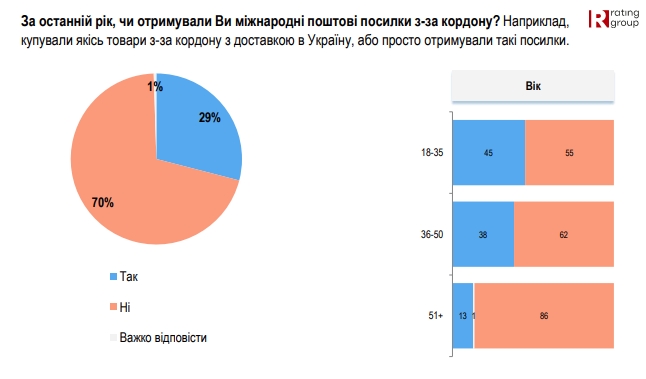
Thus, over the past year, 29% of citizens received international shipments. Notably, among Ukrainians aged 18–36, the figure is 45%, and among those aged 36–50, it is 38%.
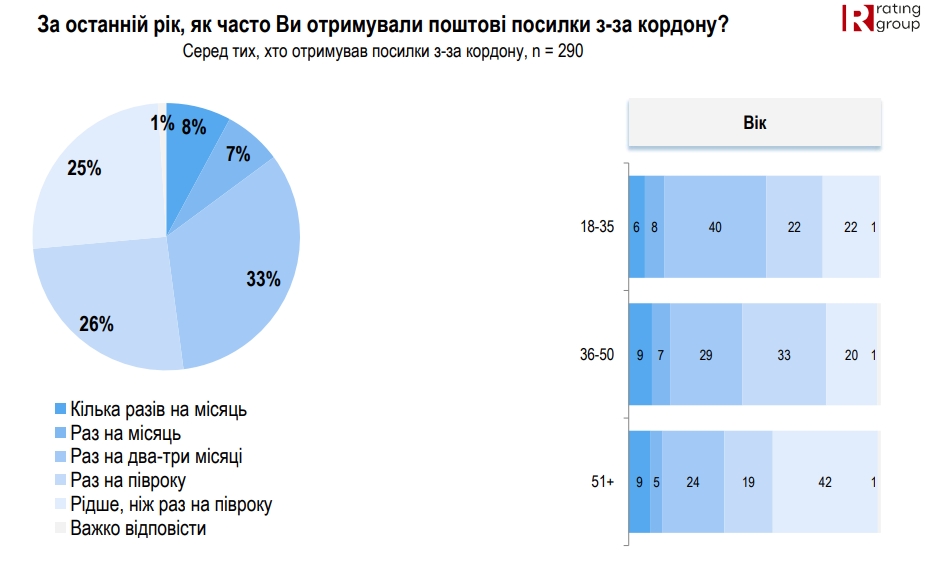
At the same time, this is far from any kind of regular "shopping" abroad: only 15% of those who received international shipments did so every month, while more than 50% received just one or two parcels a year. In other words, only 4% of all respondents regularly order goods by post from abroad.
At the same time, Ukrainians use international mail to order basic household items: clothing and footwear (45% of those who received international parcels), as well as power banks, batteries, and chargers (26%).
Given that two-thirds of parcels are worth no more than €50, this is not about any "elite" or branded goods – for the most part, these are inexpensive clothes or basic equipment needed amid regular power outages.

Blackout relief
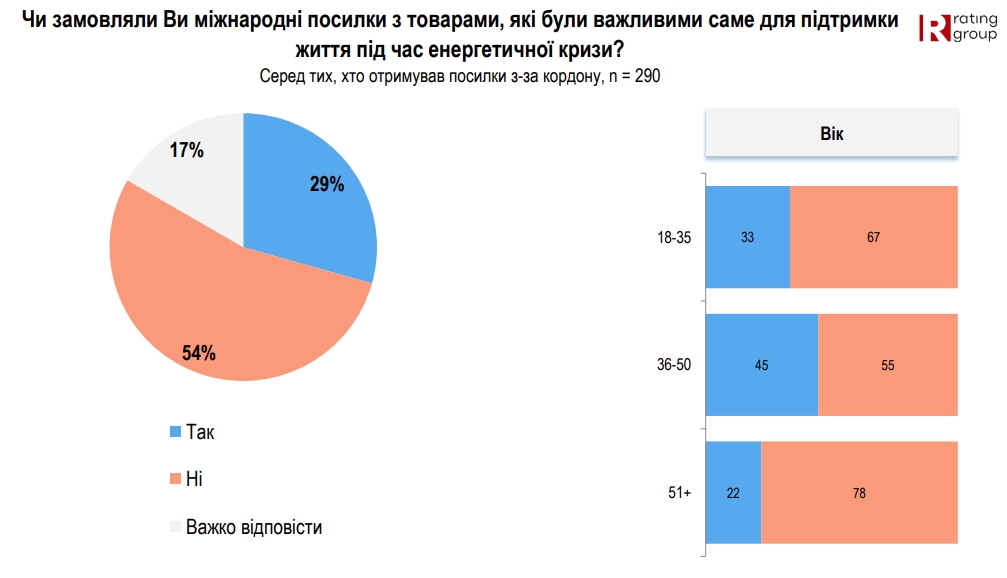
In one-third of cases, Ukrainians ordered international parcels containing goods that are particularly important during the energy crisis. Most often, these were people aged 36–50, who typically have families but also know how to use online services.
And this is hardly surprising, as ordering a power bank or a power station from abroad is often several times cheaper than buying from Ukrainian sellers.
For example, the popular Baseus Star-Lord Display power bank with a capacity of 30,000 mAh was selling in Ukraine in the summer at an average price of 1,400 hryvnias, but after mass strikes on the energy system began last autumn, its average price soared to 2,400 hryvnias, and in some well-known Ukrainian electronics chains, it exceeded 3,000 hryvnias.
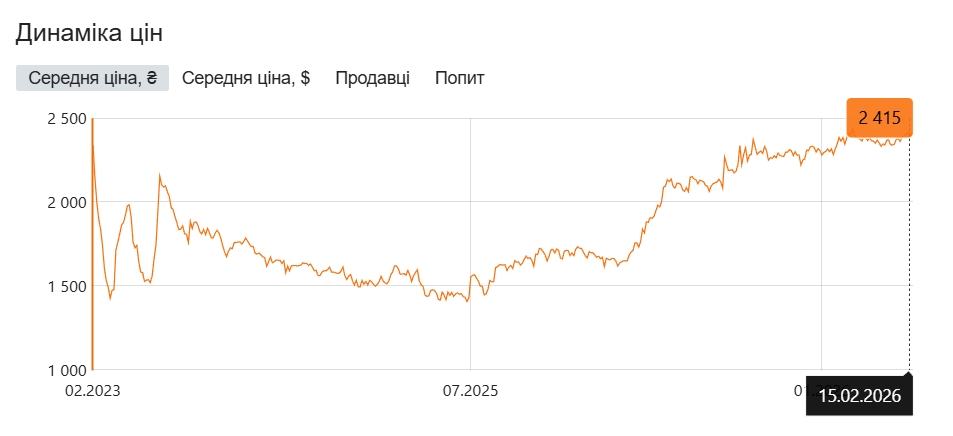
An even more telling example is the entry-level EcoFlow RIVER 2 power station. On the manufacturer’s official website in Europe, it can currently be purchased for €229 including taxes (but without taking into account promotions and discounts).
In Ukraine, its price last summer was close to the European level and at times dropped below 10,000 hryvnias. But as soon as demand for such equipment surged after Russian strikes, Ukrainian sellers sharply increased prices: in January, it was above 23,000 hryvnias.

The situation is similar to the most basic means that help people get through power outages.
Such price differences are more indicative of Ukrainian sellers’ desire to earn extra profit than of any tax gap. Even the State Tax Service (STS) noted the sharp and unjustified increase in prices for backup power devices after mass outages began, calling on businesses to stop artificially inflating them. However, as we can see, this has had little effect on sellers. "Not everyone has the strength and conscience to withstand the temptation to profit," admitted STS head Lesia Karnaukh.
Parcels for volunteers and supplying the military
At the same time, taxing parcels will also have an impact on the front line. According to the survey, 79% of Ukrainians believe that higher costs for international shipments could adversely affect volunteer or defence activities. And 85% are convinced that delays in international parcels, if all of them have to go through customs clearance, will also have a negative impact.
Meanwhile, in 29% of cases, Ukrainians or their relatives ordered international parcels to meet the needs of the military, in 26% of cases for volunteer activities, and in 25% for the repair or production of technological equipment.

As Business Censor has reported, most small Ukrainian manufacturers receive components for the production of drones and other defence-related products from abroad, precisely via parcels. This is usually more reliable and cheaper. Even Ukrainian sellers who manage to import wholesale batches of parts have, until recently, been forced to sell them on the domestic market at higher prices, as they have to pay VAT.
""Ninety percent of spare parts for drones and electronic warfare (EW) systems are precisely these parcels," admitted Oleksandr Fediienko (Servant of the People), a member of parliament and member of the Committee on National Security, Defence and Intelligence.
The channel for supplying components through international shipments not only enables many Ukrainian manufacturers to buy them more cheaply, but also helps them bypass restrictions that China has imposed on the export of certain components. For obvious reasons, however, representatives of most companies are reluctant to talk about how imported parts are supplied.
"Parcels are an additional supply channel. When it exists, that is better than when it does not. When it is untaxed, that is better than when it is taxed. So there may potentially be situations in which taxing parcels would worsen conditions or disrupt certain deliveries," said a representative of one of the well-known manufacturers of FPV kamikaze and reconnaissance drones in a comment to BusinessCensor.
At the same time, this supply channel is crucial for the development of new drones and other systems: for research and testing, dozens of small batches of parts are usually ordered by parcel from the EU or China.
Ukrainian defence industry enterprises have already learned to import large batches for serial production via other routes, but taxing parcels will complicate the development of new innovative products or technologies (R&D).
"The initiative itself (taxing parcels – ed.) will, as before, be ruinous for the defence industry, because it will significantly increase R&D costs for manufacturers," notes the co-founder of one of the leading manufacturers of interceptor drones.
Another risk could be delays in customs clearance of components once taxes on all parcels are introduced, noted TAF Industries deputy director Volodymyr Zinovskyi.
"We make all our purchases officially through customs, using existing preferences. Therefore, abolishing the €150 threshold is not a risk for legitimate manufacturers. What matters is that customs can cope with the increased workload and that no delays in clearance arise," he explains.
At the same time, taxing parcels could become a direct problem for military units that have their own workshops for repairing and modifying drones. Service members mostly order components and equipment for such workshops from abroad using their own or volunteers’ funds.
"Something big can be covered by the brigade's fund, but most often – at our own expense. Consumables, tools – we need everything, and in large quantities; sometimes itemising it all (to request funds from the brigade’s fund or from volunteers – ed.) takes longer than simply buying it," confirms a serviceman from one of the best-known brigades of the Unmanned Systems Forces.
He adds that some components and equipment are provided with the support of drone manufacturers, but far from all of them, so service members would not want to pay more for parcels from abroad out of their own funds.
How many goods are imported via parcels?
According to calculations by the State Customs Service, in 2024 (the latest published data) 75.5 million international postal and express shipments containing goods worth 123 billion hryvnias were imported into Ukraine. More than 99.2% of them were valued at up to €150 (74.9 million shipments with goods worth a total of 61.4 billion hryvnias).
Accordingly, the remaining 0.8% of "expensive" parcels worth more than €150 account for more than half of the total value (61.6 billion hryvnias), and taxes and duties have already been paid on them.
For comparison, total goods imports into Ukraine in 2024 amounted to $70.7 billion. Thus, goods in untaxed parcels accounted for only about $1.5 billion, or 2% of total imports. Against the backdrop of an overall trade deficit in goods of $29.1 billion that year, this is not a significant figure.
Moreover, taxing postal shipments from abroad worth up to €150 will not significantly reduce demand for imported goods and therefore will not help curb the outflow of foreign currency.
"If there is demand in the country for 100 computer mice manufactured in China, or 100 power banks, or EcoFlow units, the foreign currency, whether through parcels or through purchases of these goods by large retailers, will still leave the country for the manufacturer. In other words, nothing will change," explained Ukrposhta CEO Ihor Smilianskyi.
He also stated directly that large Ukrainian retail chains are interested in taxing parcels.
"This initiative is, first and foremost, an initiative of large retail chains so that people buy mice from them rather than on AliExpress. Because, as they say, Ali does not pay VAT, while they do," the head of Ukrposhta noted.
Indeed, initiatives to introduce VAT on parcels have been supported by a number of major business associations, including the Association of Information Technology Enterprises of Ukraine (which unites electronics suppliers) and the Ukrainian Retail Association (which brings together large retail chains).
Smilianskyi also pointed out that taxing parcels would have a limited effect unless "grey" import schemes at customs are curtailed. However, the authorities are in no great hurry to reform the State Customs Service.
"I am ready to support such a VAT, but only on one condition: we must shut down grey imports through individual entrepreneurs. In that case, I am fully in favour. Simply forcing people who honestly buy on Ali to pay 20% more, while they can purchase the same goods at a market without those 20%, will by no means lead to the desired result. Unless, of course, the goal is simply to raise prices in retail chains by the same 20%," Smilianskyi explained.
How much will the state budget "earn"?
According to Oleksii Leonov (Servant of the People), head of the VAT Subcommittee of the Verkhovna Rada Committee on Finance, Tax and Customs Policy, introducing VAT on parcels from abroad worth up to €150 would generate an additional approximately 20 billion hryvnias in tax revenue.
However, the results of the Rating Group survey suggest that these estimates may be overstated. If a tax on parcels from abroad is introduced, Ukrainians will simply order fewer of them.
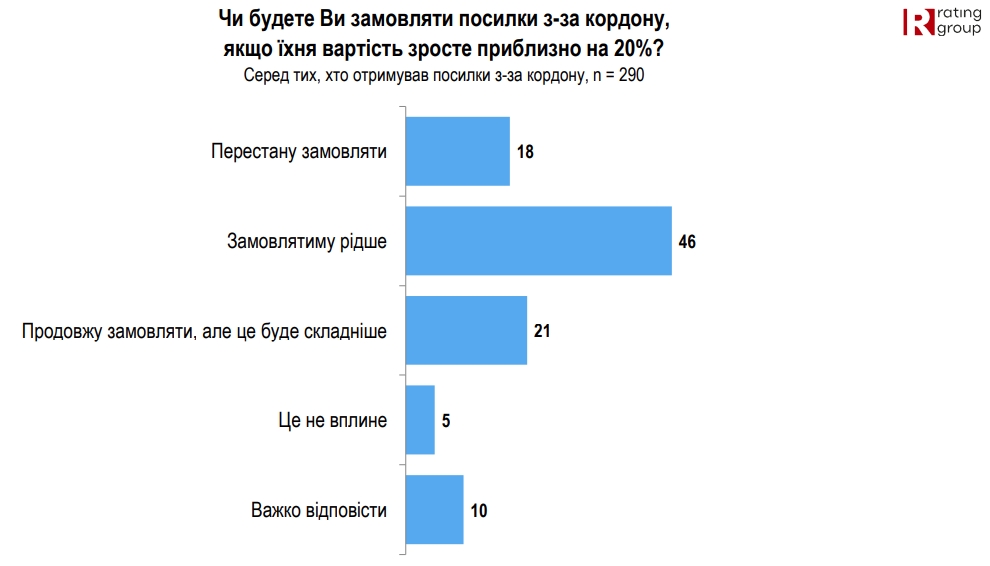
Thus, 64% of respondents who received parcels from abroad said they would either stop ordering them altogether or do so less frequently. Another 21% indicated that it would create noticeable difficulties for them. Only 5% of respondents would be able to continue ordering parcels as before. In other words, the state budget may receive significantly less from taxing parcels than the government expects.
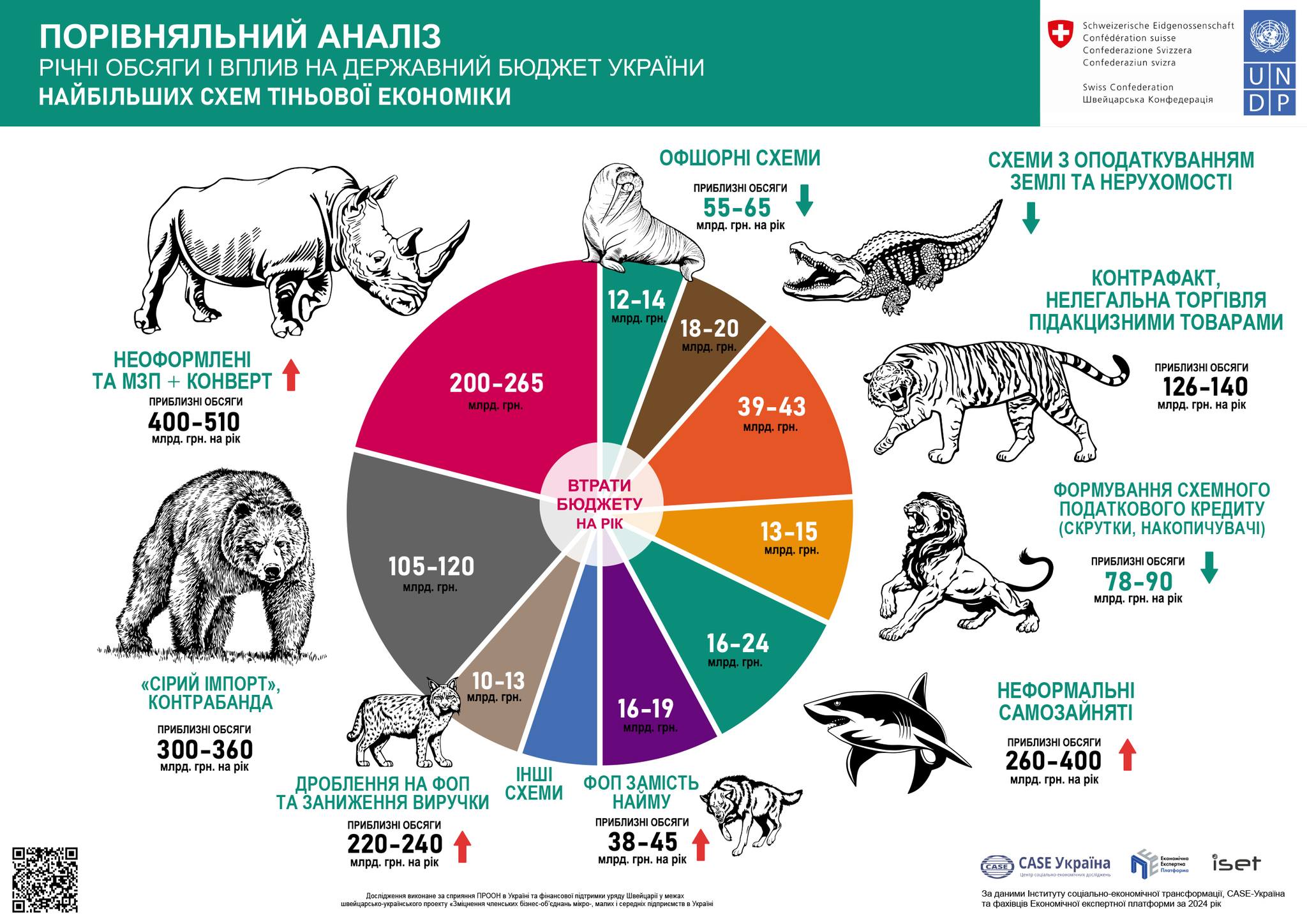
Moreover, potential revenues from taxing parcels will in any case be incomparably smaller than the state budget’s losses from smuggling schemes and grey imports at customs. According to estimates by leading Ukrainian think tanks, these schemes already "cost" the budget 105–120 billion hryvnias per year, and the amount is growing annually.
Will MPs vote?
Nina Yuzhanina (European Solidarity), deputy chair of the Verkhovna Rada Committee on Finance, Tax and Customs Policy, argues that taxing parcels and the sale of used goods, together with the introduction of VAT for individual entrepreneurs, is merely a way to offset budget spending on the authorities’ populist initiatives.
For example, in 2025, 5.7 billion hryvnias were spent from the state budget in 2025 on the "National Cashback" programme alone, and nearly 18 billion hryvnias on payments of 1,000 hryvnias to anyone who applied.
This opinion is shared by the first deputy chairman of the Committee, Yaroslav Zhelezniak (Voice).
"This is a ‘bill for populism’ – a tax hike that we will use to pay for ‘cashbacks’, ‘winter thousands’, ‘3,000 kilometres’, and other government handouts," the MP stressed.
Yuzhanina also notes that taxing parcels may create more problems than benefits for the state.
"Since 68% of parcels are worth up to €50, taxing them will increase the administrative burden, create queues and delays, and may stimulate shadow import schemes. At the same time, a significant share of the goods are small purchases that do not affect overall consumer demand in the country," the lawmaker says, commenting on the Rating Group survey findings.
She adds that international postal shipments have become an important element of Ukrainians’ survival during the war.
"Therefore, abolishing or restricting preferential import rules for international parcels is not a simple tax decision! In wartime, international parcels have become not a luxury for millions of Ukrainians, but a tool for adaptation and resilience," Yuzhanina stresses.
The head of the Verkhovna Rada Tax Committee, Danylo Hetmantsev, is also not sure that MPs from the ruling mono-majority will support tax increases that run counter to the moods of the overwhelming majority of Ukrainians.
"The issues of changes to tax legislation – parcels, digital platforms, the military levy, VAT for individual entrepreneurs – are being postponed at least until the end of March… As things stand today, I do not see the potential for the adoption of the bill dubbed in the media the ‘One Big Beautiful Tax Bill’, which is supposed to combine all the postponed initiatives. We will continue consultations with the government, parliamentary colleagues and international partners," the MP notes.
Nevertheless, the very idea of combining a number of contentious provisions, including the taxation of parcels, into a single bill shows that the authorities have not abandoned it. This time, however, MPs will be "persuaded" to vote for everything at once, with the argument that this is necessary to fulfil commitments to the IMF and international partners.


