ENG




8901 visitors online
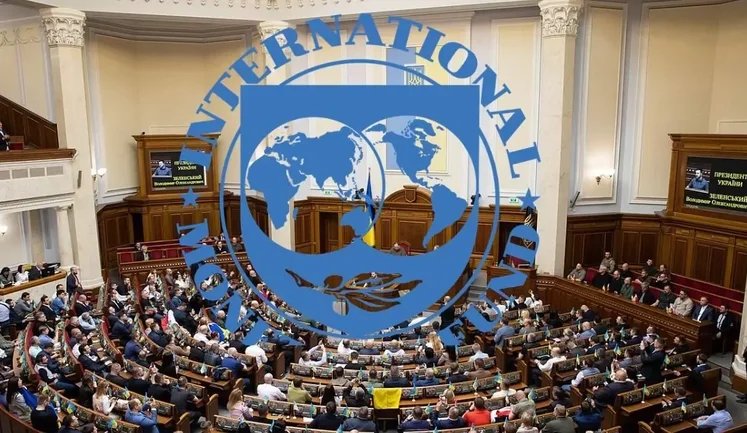
The International Monetary Fund (IMF) is central to Ukraine’s economic stability, with a $8.1 billion Extended Fund Facility (EFF) aimed at stabilizing the war-affected economy. However, challenges persist as Ukrainian parliament faces difficulties in passing IMF-required reforms, crucial for maintaining international financial support. A recent IMF mission in Kyiv is set to evaluate Ukraine’s progress in implementing agreed reforms and discuss potential financing adjustments. As funding delays pose risks, Ukrainian officials emphasize the need for institutional reforms and balanced tax policies to fulfill IMF criteria and ensure economic growth despite the ongoing war with Russia.
How does the IMF support Ukraine's economy?
The International Monetary Fund supports Ukraine's economy through financial assistance programs like the $8.1 billion Extended Fund Facility (EFF). These programs are designed to stabilize the economy by providing necessary funds to cover budget deficits and support economic reforms. The IMF conditions its support on the implementation of critical structural reforms to improve economic governance and ensure efficient use of funds.
What are the conditions tied to the IMF's financial aid to Ukraine?
The IMF's financial aid to Ukraine, particularly under the Extended Fund Facility, is contingent on several conditions, including the implementation of structural reforms, anti-corruption measures, and strengthening of economic institutions. Ukraine must also address tax policy reforms and energy subsidy reductions to align with the IMF's recommendations to facilitate economic stability and growth.
What challenges does Ukraine face in meeting IMF requirements?
Ukraine faces significant challenges in meeting IMF requirements due to political hurdles in parliament, where passing necessary legislation is difficult. The war with Russia further complicates these efforts, as it strains government resources and focuses political energy on immediate security concerns, hampering long-term economic reform strategies essential for IMF compliance.
Why is the IMF concerned about Ukraine's institutional capacity?
The IMF is concerned about Ukraine's institutional capacity because effective governance and robust institutions are crucial for implementing reforms and managing funds efficiently. Without strong institutions, Ukraine risks misallocation or inefficient use of the financial support, jeopardizing its economic recovery and the credibility of its commitment to the international community.
What potential risks does Ukraine face without IMF funding?
Without IMF funding, Ukraine faces significant risks, including worsening budget deficits, inability to finance critical infrastructure projects, and potential loss of international investor confidence. This could lead to economic instability and increased pressure on the government to find alternative, possibly less favorable, financial sources while dealing with the ongoing war's economic impact.
How does the ongoing war affect IMF's economic outlook for Ukraine?
The ongoing war in Ukraine profoundly affects the IMF's economic outlook, introducing uncertainty and risk. It complicates fiscal planning, affects investor confidence, and necessitates substantial international financial assistance. The war also diverts governmental focus from long-term economic reforms crucial for sustaining economic growth and stability as envisioned by IMF programs.
News IMF
 Zelenskyy on $27 billion deficit: EU and IMF ready to support Ukraine The European Union and the International Monetary Fund have responded positively to Ukraine’s need for financing to cover the state budget deficit and are ready to support our country. 1 871 24 Previously in trend: Aid to Ukraine from Europe IMF financial assistance
 Zelenskyy criticised Rada: MPs failed to pass five bills that could have brought Ukraine over $4 billion President Volodymyr Zelenskyy expressed his outrage at the vote in the Verkhovna Rada, where MPs rejected three important bills that were intended to secure more than $4 billion in revenue, as well as two documents relating to the IMF programme. 5 903 46 Previously in trend: Aid to Ukraine from Europe Verkhovna Rada session
 Open letter to IMF: Former officials and experts urge not to block changes to PEP status in Ukraine Former Ukrainian officials, experts, and representatives of the business community and civil society have published an open letter to the International Monetary Fund calling on it to support amendments to legislation on politically exposed persons (PEPs). The authors of the document argue that... 3 324 15
 Ukraine has received its second tranche from IMF: $690 million has already been transferred to state budget Ukraine has received the second tranche from the IMF under the new four-year programme. 497 5 Previously in trend: IMF financial assistance
 IMF memorandum contains no separate commitment to raise tariffs during martial law – Energy Ministry Ukraine’s Energy Ministry has commented on reports that the memorandum with the IMF allegedly "locks in" increases in gas and electricity tariffs from 2027. 893 11 Previously in trend: Cooperation with IMF
 IMF has proposed beginning to raise gas and electricity rates for population starting in 2027 The International Monetary Fund is proposing that Ukraine begin a gradual increase in gas and electricity rates for households as early as 2027. 6 605 35 Previously in trend: Cooperation with IMF
 IMF has approved new tranche of $690 million for Ukraine The Executive Board of the International Monetary Fund has completed its regular review of the Extended Fund Facility (EFF) program for Ukraine and approved the disbursement of a new tranche in the amount of $690 million. 589 1 Previously in trend: IMF financial assistance
 IMF to consider allocating $690 million to Ukraine on July 20, - Koretskyi Prime Minister Serhii Koretskyi announced that on July 20, the IMF Executive Board will consider the issue of providing Ukraine with the next tranche under the EFF program. 680 6 Previously in trend: IMF financial assistance
 IMF mission will arrive in Ukraine to assess the reforms An International Monetary Fund mission will arrive in Ukraine in the coming weeks to assess progress on the $8.1 billion loan program. 1 172 19 Previously in trend: Cooperation with IMF Tax changes IMF financial assistance
 There will be no introduction of VAT for sole traders at this stage, - Svyrydenko There are no plans to introduce value added tax for sole traders in Ukraine. 2 578 16 Previously in trend: Tax changes
Terms were agreed with IMF without MPs, but they have to make all unpopular decisions – "Servant of People" Frolov The Servant of the People faction has not yet discussed the government’s new bills aimed at fulfilling commitments to the IMF. 3 035 16 Previously in trend: vote fails in Rada
 If USD 100 billion came into Ukraine this month, it would not be able to use it because of lack of institutions – IMF Deputy Executive Director Rashkovan For investment to flow into Ukraine after the war ends, the country needs to build institutions. 3 180 32 Previously in trend: Cooperation with IMF
 Finance Ministry promised IMF tax changes and presented Rada with fait accompli – ’Servant of People’ Yanchenko Ukraine's Ministry of Finance should first have held consultations with parliament and only then conducted negotiations with the IMF. 6 808 34 Previously in trend: Tax changes
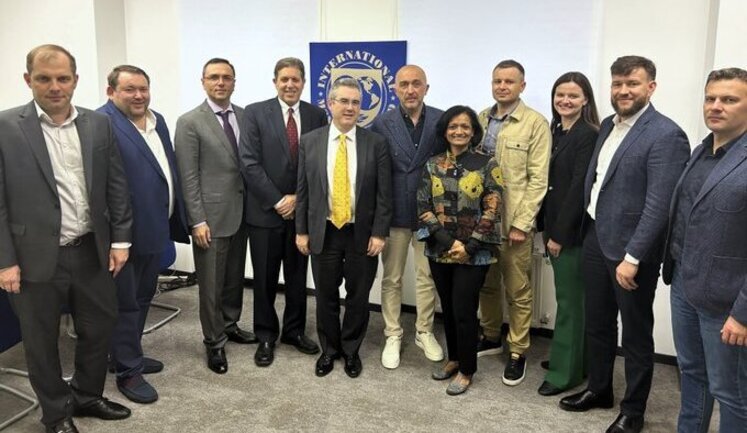
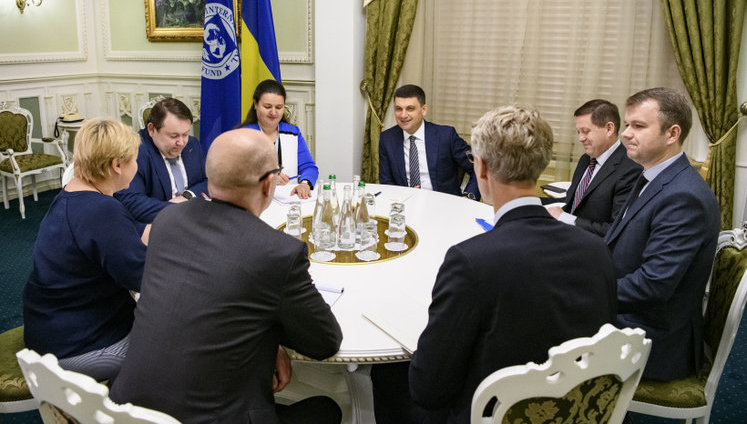
IMF representatives have arrived in Ukraine: Reform talks have begun Today, March 18, a team from the International Monetary Fund (IMF), led by the head of the mission to Ukraine, Gavin Gray, is beginning a series of meetings with Ukrainian officials and other partners. 1 935 14 Previously in trend: Cooperation with IMF IMF financial assistance
 Ukraine may lose IMF funding due to delays in Rada’s decisions on tax hikes, - Bloomberg The International Monetary Fund has expressed concern about Ukraine’s ability to secure the remaining funds from the $8.1 billion package, as members of parliament are delaying the passage of necessary legislation in the Verkhovna Rada. 9 791 57
 There are no votes in Rada for IMF’s demands, so Fund had to soften them, - Nikolaienko Parliament says that it is difficult to expect MPs to vote for "very big reforms" at this stage. 2 373 25 Previously in trend: Cooperation with IMF IMF financial assistance
 Ukraine received $1.5 billion in first tranche from IMF under the new EFF program, - Svyrydenko Today, Ukraine received the first tranche from the IMF under a new four-year program within the Extended Fund Facility (EFF). 845 11 Previously in trend: Cooperation with IMF IMF financial assistance
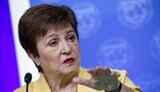 IMF to review new programme for Ukraine in case of peace talks, - Georgieva IMF Managing Director Kristalina Georgieva said that the new 48-month EFF programme worth $8.1 billion for Ukraine will be immediately reviewed if peace talks yield results. 1 152 7 Previously in trend: IMF financial assistance
 Svyrydenko on state budget: We do not expect any catastrophe in April Prime Minister Yuliia Svyrydenko stated that the Cabinet of Ministers does not expect any disaster with the state budget in April. 1 256 8 Previously in trend: IMF financial assistance
IMF approves $8.1 billion financial program for Ukraine, designed to last four years, - Svyrydenko The International Monetary Fund has agreed to allocate $8.1 billion to Ukraine. The funds will be used to cover the budget deficit and stabilize the economy. 1 140 4 Previously in trend: IMF financial assistance
IMF expects war to end in 2026, but there are risks The International Monetary Fund predicts that the active phase of the war could end in 2026. 2 924 8 Previously in trend: Ending the war
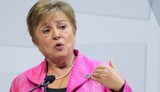 "Get up in morning and roar": IMF chief calls on Ukraine to scrap electricity subsidies Ukraine needs to accelerate structural reforms, abandon energy subsidies, and distribute the tax burden more fairly in order to ensure sustainable economic growth. 14 306 89 Previously in trend: Attacks on the energy sector Shelling of energy and gas infrastructure
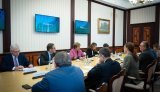 Svyrydenko and IMF chief Georgieva discuss new IMF support programme Ukraine’s Prime Minister Yuliia Svyrydenko met in Kyiv with IMF Managing Director Kristalina Georgieva. The key topic of the talks was preparations for approving a new IMF support programme. 537 3 Previously in trend: Cooperation with IMF
IMF chief Georgieva arrived on visit to Kyiv, - Reuters The head of the International Monetary Fund, Kristalina Georgieva, arrived in Kyiv early Thursday morning 1 290 9 Previously in trend: Cooperation with IMF
IMF demands decisive anti-corruption efforts from Ukraine The International Monetary Fund has urged Ukraine to step up its anti-corruption efforts in order to maintain the trust of international partners and donors. 2 756 30 Previously in trend: Mindichgate
IMF may halt funding for Ukraine due to dispute within European Union, - Politico Due to Belgium's position, the International Monetary Fund (IMF) may suspend aid to Ukraine. 7 981 35 Previously in trend: Aid to Ukraine Reparations from Russia
IMF mission to visit Ukraine soon – Svyrydenko An International Monetary Fund (IMF) mission will arrive in Ukraine in the near future. 492 0 Previously in trend: Cooperation with IMF IMF financial assistance
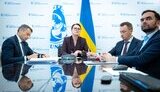 Svyrydenko announces IMF mission visit to Kyiv at end of August Prime Minister Yuliia Svyrydenko held talks with Kristalina Georgieva, Managing Director of the International Monetary Fund. The parties discussed further cooperation. 1 265 16
Ukraine receives ninth tranche of $500 million from IMF. Funds will be used for budgetary needs, - Shmyhal Ukraine has received the ninth tranche of the International Monetary Fund - $500 million. The funds will be used to cover priority budgetary needs. 689 18 Previously in trend: IMF financial assistance
Ukraine to receive ninth $500 million IMF tranche – Shmyhal The Executive Board of the International Monetary Fund has completed the eighth review of the EFF program for Ukraine, and Kyiv will soon receive the next tranche from the Fund totaling $500 million. 594 6 Previously in trend: IMF financial assistance
Ukraine receives $1.1bn from IMF, funds will be used to finance critical budget expenditures - Shmyhal Today, 23 December 2024, Ukraine received $1.1 billion from the IMF. 871 12
Under negative scenario, war will last until 2026 - IMF The IMF has updated its negative scenario for Ukraine: the war will last until mid-2026. 7 646 58
 Zelenskyy’s "servants" are trying to abandon IMF to preserve "Lozovyi’s amendments" and opportunity to cover up corrupt officials from prison - Shabunin The amendments submitted by the "Servants of the People" MPs do not actually cancel the "Lozovyi amendments". 8 445 62
 IMF to decide on next $1.1 billion tranche for Ukraine in coming weeks The Executive Board of the International Monetary Fund will meet to review the results of the sixth review of the EFF program for Ukraine and decide on the allocation of the next tranche in the coming weeks. 427 2 Previously in trend: Aid to Ukraine
 Ukraine is doing great job, but more needs to be done, - Head of IMF Georgieva Despite the ongoing war and intensified Russian shelling of Ukraine's energy sector, Kyiv has demonstrated good economic management. However, there is a need to do more, particularly in terms of domestic revenue mobilization. 1 387 10
 Ukraine received tranche of $1.1 billion from IMF - Shmyhal About $1.1 billion from the IMF has already been received by Ukraine. 715 12
 IMF disburses $1.1 billion tranche to Ukraine to support budget The International Monetary Fund has decided to allocate another tranche of $1.1 billion to Ukraine under the Extended Fund Facility (EFF). 713 4 Previously in trend: Aid to Ukraine
 IMF predicts Ukraine’s financing gap of $26 billion in 2025 Estimates of the International Monetary Fund's forecast for the public financing deficit in Ukraine for 2025 remain at up to $26 billion but this figure may change based on the results of the latest revision of the EFF program. 1 968 12
Negotiations with IMF mission are difficult. Hard work, many challenges, - Shmyhal The Ministry of Finance and the Ukrainian government are in talks with the International Monetary Fund mission on Ukraine's budget for next year. They are currently difficult. 1 144 29
 We call on IMF not to resume any cooperation with Russia - Ukraine’s MFA Ukraine is concerned about reports that the International Monetary Fund plans to resume cooperation with Russia and send a mission to Moscow. 3 100 28
 Ukraine received $2.2bn from IMF - Shmyhal Ukraine received $2.2 billion from the International Monetary Fund. 1 622 22 Previously in trend: Aid to Ukraine
 Ukraine expects to receive $2.2 billion tranche from IMF at beginning of next week - Shmyhal Ukraine is expecting the next tranche of $2.2 billion from the International Monetary Fund early next week. 633 8
 Ukraine expects three IMF tranches of $4.5 billion this year - Ministry of Finance Today, on May 23, the leadership of the Ministry of Finance of Ukraine held a working meeting with the leadership of the European Department of the International Monetary Fund and the IMF mission in Ukraine. 580 6 Previously in trend: Aid to Ukraine
 Ukraine will need $42 billion of budget support this year - IMF Ukraine needs at least $42 billion in international aid for budgetary support this year as the war waged by the Russian Federation continues. 1 478 12 Previously in trend: Aid to Ukraine
 IMF: Russia’s missile strikes may affect macroeconomic forecasts for Ukraine The International Monetary Fund is monitoring the massive missile and air strikes on Ukrainian civilian infrastructure and does not rule out that this could affect Ukraine’s macroeconomic outlook in the near term. 1 093 2
 Ukraine has received tranche of $880 million from IMF - Shmyhal Today, 26 March, Ukraine has received $880 million from the IMF. This is the third tranche of financial support under the EFF Extended Fund Facility. 955 12
 Ukraine expects tranches from IMF and EU next week - Shmyhal Ukraine expects to receive $5.4 billion from the International Monetary Fund (IMF) this year. 1 210 19 Previously in trend: Aid to Ukraine
IMF representatives arrived in Kyiv: They will discuss the challenges facing Ukraine’s economy Representatives of the International Monetary Fund arrived in Kyiv for a working visit. 1 555 5
Page 1 of 8
more news