


Language Ombudswoman Olena Ivanovska: Significant proportion of citizens are bilingual, and this cannot be ignored. We are still overcoming effects of prolonged Russification
Serving as the language ombudsman in Ukraine—especially during the Russian-Ukrainian war—is not for the faint of heart. This is especially true if you view your work as a historic mission and actively engage with the public sphere.
Life won’t be easy: you’ll be threatened, your daughter’s TikTok will be scrutinised down to the last detail, and your academic career in folklore studies will be turned into memes, even if only in jest. What’s more, certain individuals will hate you with a fierce passion.
On the other hand, if the foul-mouthed Russian Foreign Ministry spokeswoman Maria Zakharova takes your statements personally, and hordes of Kremlin bots are busy trashing your mission — surely you must be doing something noteworthy in this life?
Many Ukrainians have been eagerly awaiting the legislative enshrinement of protections for the rights of Ukrainian speakers. A few die-hards complain that our ‘Ukrainisation’ is too mild, and that the language ombudsman should take a tougher line. Those who have been accustomed to hearing Russian all around them since childhood, and who speak it themselves, strongly disagree with them — and they couldn’t care less that chauvinists from the Russian Federation are using the very same Russian language to mark out territories they intend to ‘liberate’ in the future.
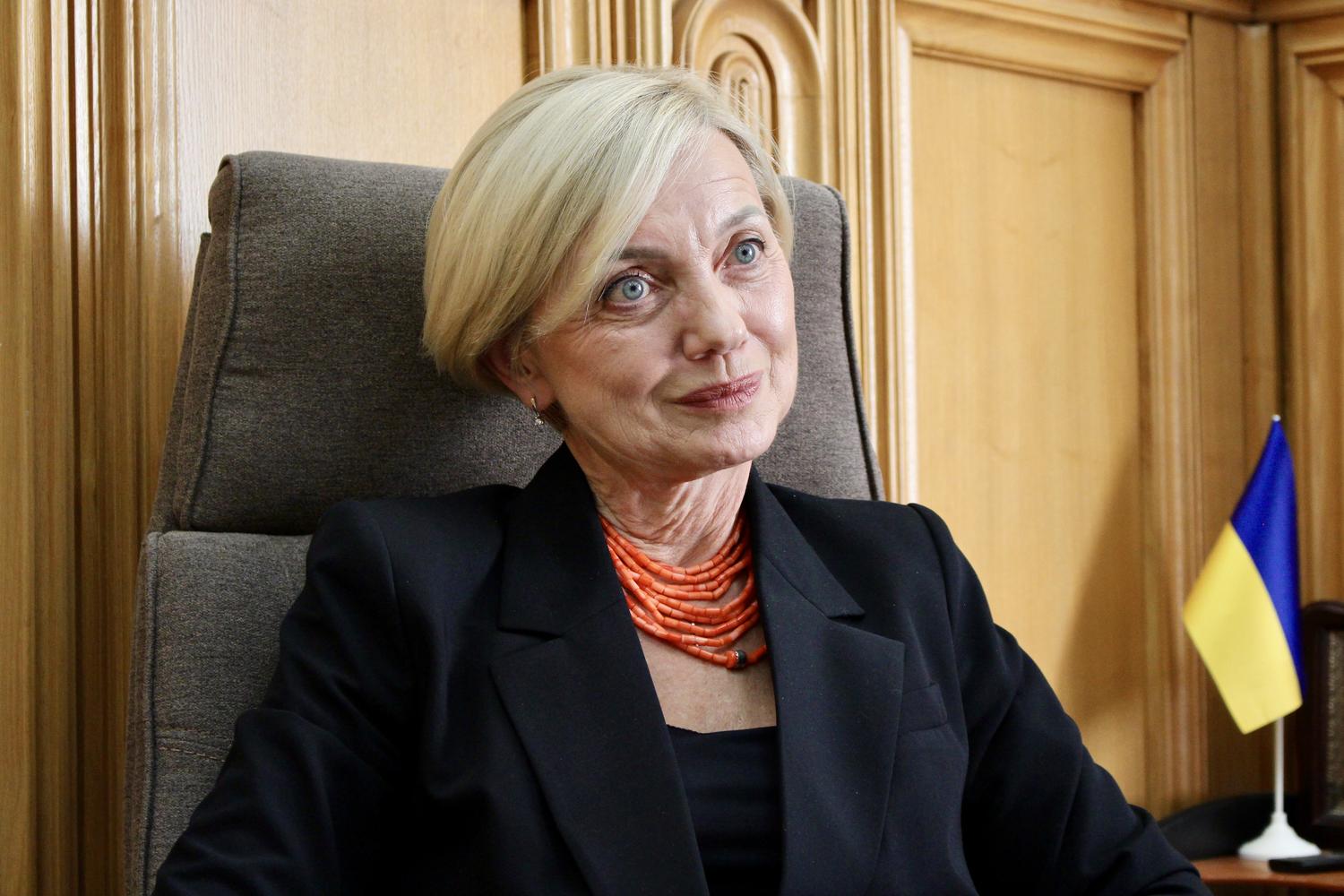
This is the context in which Olena Ivanovska, the Commissioner for the Protection of the State Language, has to work. It is no surprise that this interview, too, was at times heated, with both sides expressing surprise at each other’s views from time to time, but overall it was an interesting and insightful conversation.
- Let’s start with a high-profile news story from a month ago. We’re talking about an incident that took place on the night of 2 September in Kyiv: a conflict arose between representatives of the SSU and the DIU whilst carrying out operational activities, which escalated into an exchange of fire. I imagine everyone remembers that incident, so I won’t go into detail; I’ll simply include a link in the text to a video from Censor.NET showing this ‘exchange’.
But that story had a follow-up on your part: as the Commissioner for the Protection of the State Language, you approached the Security Service of Ukraine and the Main Intelligence Directorate of the Ministry of Defence, demanding an explanation regarding their staff’s use of the Russian language. Have I put that correctly?
- Yes, we sent enquiries to both state institutions. The law imposes on us the duty to protect citizens’ right to receive information in the state language in those areas covered by the relevant legislative requirements. We therefore responded to a situation that had received public attention and asked for an explanation.
We have fulfilled our obligations to citizens and the state: we have approached the SSU and the Main Intelligence Directorate, and have also emphasised the importance of systematic attention to language policy within these organisations. Employees of state institutions must be aware of and comply with the requirements of the law, whilst management must regularly remind staff of the relevant regulations.
It is a matter of principle for us that, even in such sensitive situations, the issue of compliance with language legislation is not overlooked.
- What responses have you received, and what stage is your correspondence with these bodies at?
- I would like to thank these respected organisations for responding immediately and commenting on this situation. They are conducting an internal investigation, and (as we anticipated) it is unlikely that the names and specific details of the staff at these state institutions can be made public. Consequently, this matter is limited to an internal investigation and ensuring that those who have breached the language legislation are made aware of the applicable provisions of the law on ensuring the functioning of the Ukrainian language as the state language.
- A quote from one of the online discussion threads on the situation: "In a stressful, dangerous situation, people generally speak the language in which they think. These people spoke Russian because that is the language they think in. Does she understand this? Or does she want those involved in the shooting, defying the laws of nature, to speak the Ukrainian of official protocol?"
What do you make of this accusation?
- In reality, we are still at the stage of overcoming the consequences of the long-standing colonial policy of Russification pursued by the Russian Empire and, later, by the Soviet authorities. For many Ukrainians who grew up in Russified families, Russian remains their mother tongue or the language in which they are accustomed to thinking. A significant proportion of our fellow citizens are bilingual, and this is a reality that cannot be ignored.
At the same time, a distinction must be made between private conversation and official communication. In extreme circumstances, a person may indeed automatically revert to the linguistic code formed in childhood. We know that severe stress affects behaviour, and habitual reactions can override conscious control. It is worth recalling here even the famous scene from the film "Seventeen Moments of Spring", in which a Soviet spy, whilst giving birth in Nazi Germany and losing consciousness, speaks in her native language.
Of course, I fully understand that in a combat situation, a person may switch to the language they are accustomed to thinking in. But understanding this mechanism does not mean believing that the language issue is of no importance at all, or that we should not move towards establishing the Ukrainian language in all spheres where its use is provided for by law.
People do not change their linguistic habits overnight. It is a long-term process of self-improvement. When a person becomes aware of the historical circumstances in which their linguistic experience was shaped, and understands the current political situation and the threat posed by Russia, they can consciously work towards making Ukrainian the primary language of their public life.
I do not believe that linguistic transformation can be achieved instantly or solely through administrative measures. This is particularly true when it comes to people who are fighting and who find themselves in extremely difficult psychological circumstances on a daily basis.
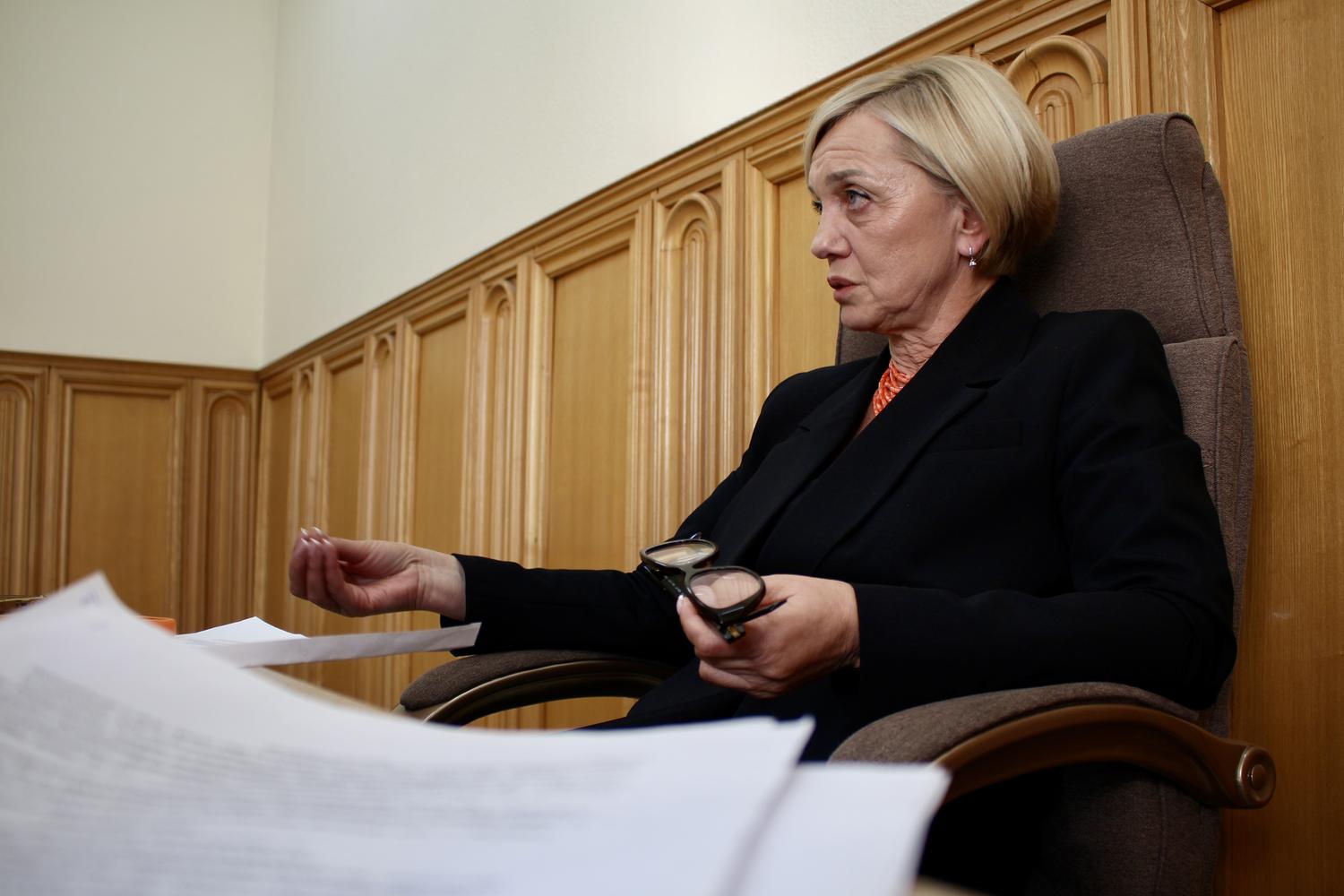
So the answer to this criticism is this: no, I do not expect that, in the heat of battle, a person will, contrary to their automatic reactions, speak in the language of official protocol. But I am convinced that even in these difficult circumstances, we must consistently promote Ukrainian as the official language. This requires an understanding of human psychology, respect for the realities of war, and a clear awareness of the place the Ukrainian language occupies in our country.
- I’d like to pick up on the term ‘bilinguals’. In fact, there is an ongoing debate surrounding this term: there is a view that there are very few bilinguals in Ukraine. Because, by definition, these are people who communicate in two languages with absolute equality. We have almost none of those. In any case, the first language will be either Ukrainian or Russian – with certain advantages.
- Of course.
- So there is a view that invoking bilingualism undermines the position of the Ukrainian language in this debate. That many people who do not want to switch to Ukrainian, at least in the public sphere, wrongly invoke bilingualism.
- As we agreed, I’ll steer clear of abstract musings – instead, I’ll rely on the language of figures and rational arguments.
To date, over four thousand pre-school children have had their language skills assessed using the methodology of the civil society organisation ‘SpilnoMova’ (its director, Andrii Kovalov, draws precisely on European practices for researching language stability in multilingual contexts). The aim of these assessments is to determine how a child’s first language affects their subsequent education when that education is conducted in a different language. In our context, the first language is mostly Russian, as well as the languages of Ukraine’s traditional national communities – Hungarian, Romanian and so on. Education, however, is conducted in the state language.
The results speak for themselves: if children whose first language is not the state language lack exposure to a Ukrainian-speaking environment – hearing little of the language at nursery, and not being in the habit of reading Ukrainian books or watching high-quality children’s content – then by the time they start Year 1, they have suffered at least a 40 per cent educational deficit.
The conclusion here is therefore purely pragmatic: parents who care about their child’s successful future must consciously create a fully-fledged Ukrainian-speaking environment for them even before they start school. This is the key to ensuring that children feel confident in class and have an equal chance of achieving high academic results alongside their peers for whom Ukrainian has been their mother tongue from birth.
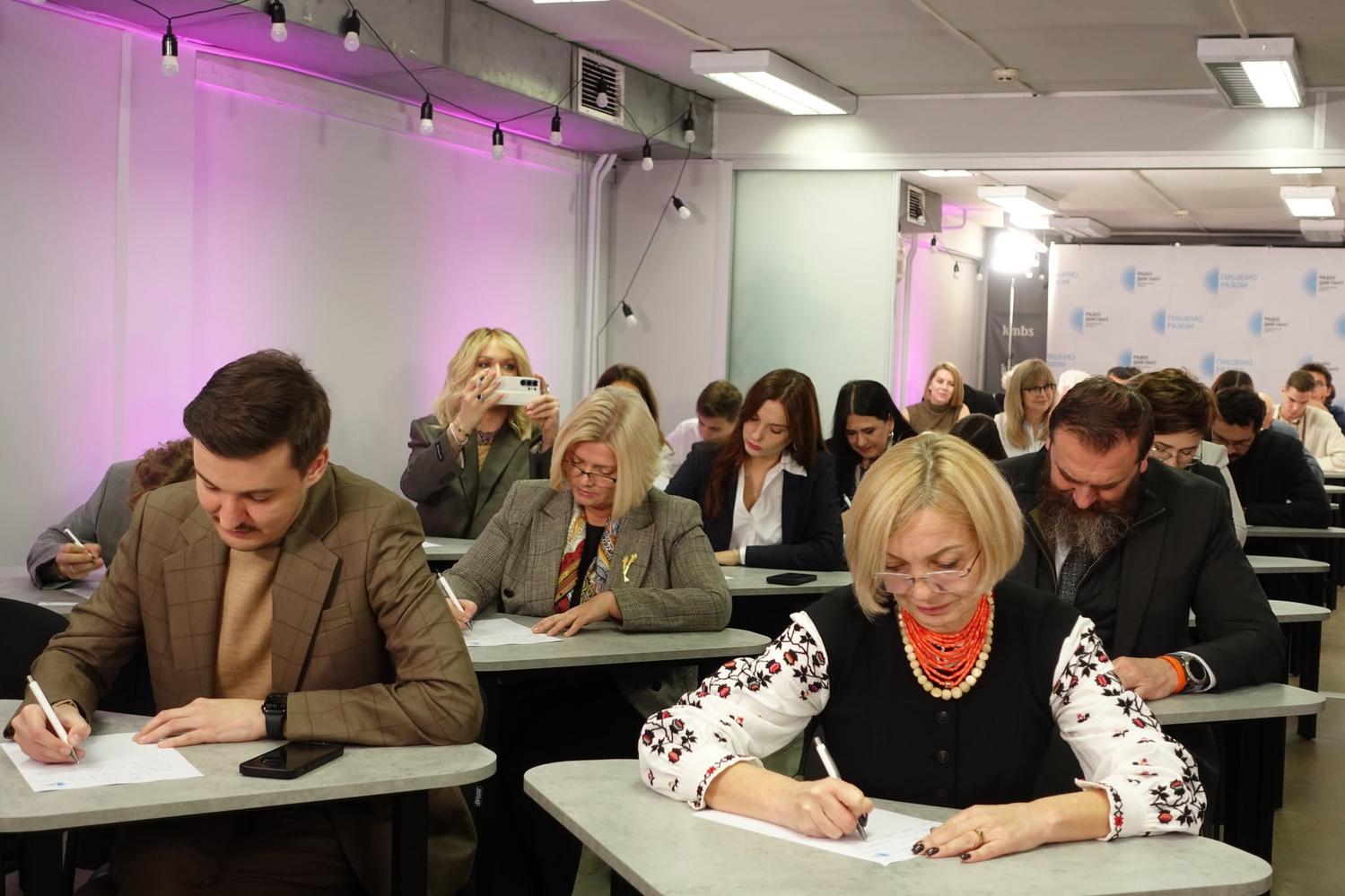
Radio Dictation - 2025
- Let’s return to the tense situation between the Main Intelligence Directorate (DIU) and the Security Service of Ukraine (SSU). Do you also believe that communication on the front line should be conducted in the official language?
- To a certain extent, yes. But here we need to distinguish between two aspects. There is the language of the military as an institution: administrative procedures, official documents, and orders issued by a senior officer to a junior one. Clear rules must apply in these matters. At the same time, in combat conditions, particularly in extreme situations, specific circumstances must be taken into account, as human lives and the fulfilment of combat missions take precedence.
It seems that, as a nation, we have not yet come fully to terms with this, even though more than three decades have passed since Ukraine regained its independence. We are speaking to one another in Ukrainian – the official language. But for many military personnel, Russian was the language of their professional lives prior to the full-scale war. Therefore, in a state of stress, a person may automatically revert to familiar linguistic patterns, including giving orders in Russian.
Is this a good thing? Obviously not. However, when assessing such situations, we must take into account the human psyche, automatic reactions and the circumstances in which the serviceman finds himself. There is certainly work to be done here, particularly for specialists in military psychology.
At the same time, understanding the circumstances does not mean that we should ignore the requirements of the law. When our institution receives complaints on this matter – and whilst they are rare, they do occur – we are obliged to examine them and respond in accordance with established procedures. Each case requires a proper assessment, taking into account the specific circumstances.
Our task is to promote the official language without losing sight of the realities of war. These things should not be pitted against one another.
- And what would you say to those military personnel who do not consider the language issue to be significant? Moreover, some of them might take offence: ‘I am defending this country, so why should this lady be telling me which language to speak?’
- I’m sorry, but this isn’t about the personal logic of some lady sitting in Kyiv, in a cosy office, who would prefer our borders to be defended there in the official language (although I do dream that this might be the case, because it is, after all, logical). This isn’t someone’s whim; these are the provisions of the law. It is unlikely, for example, that road users would pose such rhetorical questions to a police officer or appeal to higher authorities to find out who laid down the law on driving through a green light.
- You’re on the wrong track, Ms Olena – you’re comparing your mission to that of the police. Once people read this, the trouble will start...
- No, why are you saying that? Serhii Petrovych Holovatyi, who in 2021, as the reporting judge, drafted the decision of the Constitutional Court of Ukraine on the constitutionality of the current Language Law, and who, back in the late 1980s, was involved in drafting language legislation, was sitting right here in your seat and told me: ‘Your institution, Ms Olena, and your powers are, on the one hand, those of a prosecutor, since you issue rulings. On the other hand, they also serve as a kind of bridge between the law and the community, in terms of bringing the letter of the law to life for ordinary people. In our society, we still need to explain and clarify why this particular letter of the law is important in Ukraine.
I would like to convey what I consider to be an important point. We have hypothetically assumed that someone might say, ‘This lady from Kyiv is forcing me to speak the official language.’ Believe me, in my conversations with veterans – with people directly involved in defending our borders, who were in the combat zone – not a single one of them said that they were defending their right to speak Russian in this way. Usually, people who have been through such an ordeal defend freedoms very consistently and consciously. And the freedom of a Ukrainian to speak the language of their ancestors and to defend Ukrainian territory is the highest of all freedoms. That is precisely what they stand for.
- Have there been any instances where military personnel themselves approached you with specific proposals (perhaps local ones) regarding digitalisation or reforms of certain language-related issues within the armed forces?
We have not received any direct initiatives from military units, but we have been approached by veterans and serving personnel from the front line. They raised a valid point – the linguistic presence in the digital environment. For example, when a Ukrainian-language search query yields Russian-language results solely because of the user’s geographical location.
In accordance with Article 49 of the Law, we provide recommendations to public authorities, in particular the National Academy of Sciences. Today, the strategic task is to create a comprehensive State Electronic Thesaurus of the Ukrainian language, which will cover word forms and dialects to enable high-quality training of large language models (LLMs). Furthermore, we have already sent an official letter to Google’s head office regarding the accuracy of its search algorithms.
Without adequate state attention and systematic investment in the digitisation of the language, we risk losing the younger generation, for whom the virtual space is becoming their primary environment.
- Does your office receive many complaints from Ukrainian citizens regarding the use of a non-official language by staff at non-governmental organisations and elsewhere? I’m asking because I’d like to understand the scale of the issue.
- There are indeed many complaints, and they relate to various areas. Recently, for example, we concluded our examination of two cases concerning Russian-language advertising linked to members of parliament.
- Who exactly are we talking about?
- In one case, Oleksandr Feldman, a Member of the Ukrainian Parliament, was sharing Russian-language adverts from his page on the Meta platform. In the other, a non-governmental organisation called ‘Peace. Development. Stability’ was distributing such adverts in support of Member of Parliament Yurii Boiko. Following the results of the state inspection, reports were drawn up against Oleksandr Feldman and the head of this civil society organisation, Roman Zahorodnyi. Each was fined 5,100 hryvnias for breaching the requirements of Article 32 of the Language Law regarding the language of advertising.
There are other cases as well. A state inspection recently concluded at the Teplytska Village Council in the Bolhrad district of the Odesa region. During a plenary session, the village head, three officials and seven councillors spoke in Russian. Following the inspection, 11 reports were drawn up for breaches of Article 12 of the Language Law. Almost all of them acknowledged the breaches and cooperated with the state inspection.
In other words, we are seeing citizens paying close attention to whether officials at various levels are complying with language legislation. And this is only to be expected: who, if not them, should demonstrate respect for the state language and the law?
There is, incidentally, a certain legislative paradox here. Local councillors are explicitly included in the list of persons required to be proficient in the state language and must provide documentary evidence of their proficiency. Yet members of the Verkhovna Rada of Ukraine are not included in this list. That is precisely why I have initiated the relevant amendments to the Language Law. This provision has been included in draft law No. 15412 on strengthening the protection of the state language.
- We’ll talk about the Hungarian national minority later. But for now, let me ask: does anyone from your office have a post assigned to the Verkhovna Rada?
- Yes. We have an analytical department – which, admittedly, has just one analyst, as the other is currently serving in the Armed Forces… We plan to strengthen the staffing in this important area of our work. However, such monitoring is carried out regularly with regard to the sessions of both the Verkhovna Rada and local councils.
- Is this what your monitoring of MPs looks like: ‘Ah, they’ve switched to Russian — tick that box’?
More or less. In fact, we record the specific speech, the time, the person involved and the circumstances under which the requirements of the language legislation may have been breached.
- Do you have any repeat offenders amongst the MPs?
- No. During my time in this post, there have been no instances of anyone daring to make a public speech in Russian in the chamber of the Verkhovna Rada. I think that if such sessions are broadcast on television, speaking in the official language of the aggressor state is a kind of act of moral suicide. I believe that one must possess either great courage or excessive audacity to publicly demonstrate one’s allegiance to the occupier’s language in such a situation.
- How many complaints has the Office of the Commissioner for the Protection of the State Language received in total, and how do you categorise their subject matter? Are there any statistics on the most common themes of these complaints?
- Of course there are! We keep such statistics and publish them regularly. As for the most recent figures, in the first nine months of 2026 the Secretariat received 2,245 complaints regarding breaches of the Language Law. This is slightly more than in the same period last year.
If we look at the trend over full years, the number of complaints is generally rising: in 2024 we received 2,314 complaints, and in 2025 the figure had risen to 2,888.
In terms of subject matter, the picture is fairly consistent. In first place is the internet: websites, social media pages, and the automatic loading of Russian-language versions. In the first nine months of this year, we have received 633 such complaints – that is 28 per cent of the total. Next came advertising and public information, with 426 complaints (19 per cent). We received 339 complaints regarding the service sector, whilst a further 145 related to education.
There are complaints regarding information about goods and services, the cultural sector, the activities of public authorities, the media, healthcare and transport. In other words, the range is quite broad, but the main problem areas remain virtually unchanged from year to year.
Regarding the service sector, I would like to emphasise one point, as misunderstandings sometimes arise here. By default, customers must be served in the official language. At the customer’s request, it is possible to switch to another language, but only if it is acceptable to both parties. In other words, if a customer asks to switch to, say, Russian, the staff member is not obliged to do so. The law does not impose such an obligation. The obligation is to provide service in Ukrainian.
- So, what about a situation where someone comes in to buy an ice cream and asks to switch to Russian, but there’s no one in the café at that moment who speaks Russian?
- By law, any service provider is obliged to serve customers in the official language. The 2021 ruling of the Constitutional Court of Ukraine contains, in my view, a seminal phrase that I often have to remind those who invoke Article 10 of the Constitution. After all, it is the Constitutional Court that is authorised to officially interpret its provisions. This ruling states that a citizen of Ukraine is not obliged to speak any language other than the official language.
Therefore, a service provider may quite correctly and courteously respond in Ukrainian. This does not apply solely to Russian. A customer may also address them in Chinese. Yet we do not expect every barman or ice-cream seller to necessarily know Chinese or any other foreign language.
Of course, if a service provider speaks another language and both parties agree to communicate in it, the law permits this. But this possibility does not create an obligation for the employee to know that language. In my view, our law is even too tolerant on this issue.
- And how do you view ‘surzhyk’? Let’s say someone is trying to speak Ukrainian, but they’re not very good at it. One-fifth of their words are Ukrainian and four-fifths are Russian. But they’re trying. Are you understanding of such situations?
Personally, I do. Because I understand the obstacles faced by someone who has set themselves the goal of mastering a language. I, for example, learnt French, but decided to learn English as well, and I’m still improving my English to this day. And I realise that my English probably sounds odd, or even funny, to a native speaker from the UK.
- On the other hand, such an experience teaches linguistic humility.
Yes. We have to go through this process and gain this experience.
- Here, though, people sometimes get confused and call dialects ‘surzhyk’…
- Of course, I’m no fan of ‘surzhyk’. But at the same time, I’m convinced that a person’s sincere desire to master the official language deserves unconditional respect. Even if their speech is imperfect at first – after all, nobody’s perfect. The very intention to speak Ukrainian and the effort put into it are already worthy of support.
As a folklorist, I always listen carefully to the academic community of linguists. Last year, during the Potebnia Colloquium, I raised this issue amongst my colleagues, and it turned out that there is no unanimous view: opinions range from categorical condemnation to a more lenient, functional perception of this phenomenon.
I am impressed by the approach of one researcher, who clearly distinguishes between two opposing aspects of surzhyk: as a transitional bridge and as a tool of devaluation. In one instance, surzhyk is an intermediate stage, when a person is overcoming a barrier and moving towards fluent Ukrainian speech – they simply lack the necessary vocabulary yet, and unwittingly fill in the gaps with familiar constructions. In the other, however, it is a conscious distancing from the literary norm, a linguistic game, parody or sarcasm, where a person has a command of the language but deliberately distorts it.

- When you say things like that, aren’t you afraid that people will call you the ‘language police’ again?
- If there’s one thing I’m not afraid of, it’s that. These days, we’ve become fearless. We’ve probably crossed that Rubicon where each of us fears such trifles. If we can just get through the day and survive under such conditions… After a night of shelling, worrying about a few complaints or comments on social media is a completely trivial matter.
- We’ve already asked about the Verkhovna Rada. Do you analyse the official language used by the President and the Prime Minister in any way?
- What exactly are we supposed to analyse? We analyse whether the language used in the public sphere is the official language or not. As for how varied it is in terms of vocabulary and the meanings it conveys – that is not covered by current legislation.
- Have there been any cases where fines imposed – perhaps by your predecessor – have been appealed? To what extent are you able to defend your position?
- In 2025, out of 706 decisions issued, only 14 were challenged in court. Of these, the court overturned five – that is, just over 30 per cent of the decisions challenged. At the same time, this represents less than 1 per cent of the total number of decisions issued. Moreover, all five were overturned solely on procedural grounds. For example, a person deliberately fails to collect letters or avoids attending appointments at our office. As a result, proper communication does not take place, and the matter ends up in court. If a fine is imposed, it is collected from the offender in accordance with the law.
At the same time, our representatives use all available means of communication to inform the person about the state inspection, the relevant report and the minutes drawn up. We try to ensure that the person is properly informed at every stage.
- Different regulations set different time limits for consideration. Some allow two months, others five. Could this also be a point of contention?
- No. Under the Code of Ukraine on Administrative Offences, we have two months to consider a case – and that is all. These are very tight deadlines, which is why a significant proportion of proceedings are closed.
Last year, we put forward a proposal to make the necessary amendments to the Code of Ukraine on Administrative Offences. However, the new Code has not yet been adopted, and the committee responsible for this matter has so far shown no consistent progress towards its adoption. And the current Code has, in essence, been in force since 1984…
- But can amendments be made to it?
- We have put forward a proposal, but it is now up to the MPs to take the changes forward.
- Are there any specific regional patterns to the complaints? Zakarpattia, Odesa, Sumy regions and so on...
- Unfortunately, I do not currently have a representative in Zakarpattia. And in general, there are only seven people carrying out this work today, effectively exercising my powers on the ground. Therefore, it is difficult to speak of clear regional patterns in the complaints: our ability to cover all regions is still limited.
- Anna Nerush is responsible for the South, whilst Krystyna Holovachova covers Dnipro. In Kharkiv, Viktoria Merenkova has been working for less than a year. And in Sumy – Viktoria Viter. Yelyzaveta Sachura is responsible for Central Ukraine (she is currently in Kyiv, but she stays in touch and is constantly on business trips). Polina Tretiak works in the Kyiv region. Our veteran, Ihor Spiridonov, is in charge of Kyiv. That’s all. I’m deliberately naming each of them personally. These people deserve to be known by Ukrainians. They are holding our linguistic front lines today.
- What about Western Ukraine?
- In western Ukraine, historically, compliance with language legislation has generally been sound. But today the situation is not as clear-cut as it might seem. Transcarpathia itself shows just how complex and ambiguous language issues can be. And the issue isn’t even the languages of the ethnic communities that have historically lived in this region, but our fellow citizens who have moved here from other regions. It is the Russian language that has become more prominent in Transcarpathia recently.
And this, in my view, is an issue that deserves particular attention. Unfortunately, even in the western regions of our country, which are geographically distant from active hostilities, we are seeing a resurgence of the Russian language in everyday communication. Of course, we must be understanding towards people who find themselves in new circumstances, but at the same time we cannot ignore this trend.
We have high hopes for positive developments in our work. In September, the Cabinet of Ministers approved a decision to increase our staff by 25 people. We are extremely pleased about this, as funding for salaries and technical equipment has already been allocated. However, the issue of expenditure on office rent and utilities remains unresolved for the time being. There is hope that the western regions will not be overlooked by the Commissioner either.
- Could there be problems there, particularly regarding services in Russian?
- That is why it is extremely important for us to have a representative there – someone who is politically level-headed, calm yet consistent, and who would defend the language rights of Ukrainian speakers and uphold the status of the state language.
- For us, Crimea is temporarily lost, but I hope your Office hasn’t forgotten about it?
- The issue of Ukrainians in occupied Crimea, unfortunately, very rarely comes to the fore in public discourse these days. But we must remember that the problem of occupied Crimea is not just a problem for the Crimean Tatars, but also for the Ukrainians who continue to live there despite everything. And this is not just about people’s physical survival, but also about preserving their national identity, language and cultural memory.
We are witnessing a systematic policy of linguicide being carried out by Russia in the occupied territories of Ukraine. In Crimea, for example, there is currently not a single educational institution where teaching is conducted in Ukrainian, nor is there a single Ukrainian church or cultural institution. A policy of discrimination on the basis of language is a standard strategy of the occupying state. This is an attempt not only to change the linguistic environment, but also to sever people’s ties with Ukraine and gradually eradicate Ukrainian identity from their lives.
As for Crimea, according to the latest Russian census, only 3 per cent of respondents identified themselves as Ukrainians.
- That’s very bold of them…
- That 3 per cent is the core that must be protected and kept in mind.
We were recently visited by representatives of the civil society organisation ‘KRUK’, who are addressing this issue and are prepared to champion it on a voluntary basis. They are keen for one of the state institutions to be the first to take on this work, to raise the issue at a national level and to initiate a systematic dialogue about Ukrainians in occupied Crimea. And this is important, because countering linguicide must not merely be a reaction to harm that has already been done. We must document these processes, preserve testimonies, reflect on the consequences of Russian policy, and start thinking today about how to restore the Ukrainian-speaking environment after de-occupation. We have already secured the agreement of Dmytro Lubinets, the Verkhovna Rada Commissioner for Human Rights, and Viktor Moisiienko, Director of the Institute of the Ukrainian Language at the National Academy of Sciences of Ukraine, to coordinate our efforts in addressing this issue.
- Realistically speaking, how many people would you like to have across the regions instead of these seven?
- Given the current economic situation, a staff of 65, which we will reach as early as January–February, is a very good result. At present, the Office has a total of 35 staff members, including regional representatives. This is critically low.
Regional representatives are needed not only to draw up reports and carry out state oversight. An important part of their work is preventative: communicating with local authorities, businesses and communities. After all, state language policy is implemented primarily at the local level, and systematic work there requires people and time.
Looking ahead, as envisaged by my predecessor, we should gradually increase our staff to at least 100 people. But for now, 65 is already a significant step forward.
Let me give an example: our representative in the south, Anna Nerush, works with Odesa and the region, specifically Bilhorod-Dnistrovskyi, Bolhrad, Izmail, and also Mykolaiv. She currently has 57 state oversight cases. There were recently 70, so even this reduction has made the work noticeably easier. At the same time, just last week she took part in two coordination councils, which also require preparation, analysis and time. And that is only part of her duties. Today, representatives – and indeed other staff at the Secretariat – are working at the limits of human capacity.
What does state oversight entail in your case?
- Our Secretariat receives complaints about violations of language rights. We examine them and, if there are sufficient grounds to believe that a violation may have taken place, we initiate a state oversight procedure. This is carried out by a representative on the ground: if necessary, they travel to the location to ascertain the circumstances and check whether the violation is ongoing or a one-off incident.
Once the circumstances have been established, we establish communication with both the complainant and the person against whom the complaint was made. Based on the findings, the relevant documents are drawn up – a report and, where warranted, a protocol. I then review the case and issue a ruling.
- Ms Olena, how much do you and your staff earn? Could you walk us through the general financial statements?
- There isn’t a single figure here. The Secretariat employs civil servants in categories ‘A’, ‘B’ and ‘C’, so the level of remuneration depends on the specific post, its grade, length of civil service and other factors provided for by law.
If we take, for example, the Commissioner’s representatives, these are Category ‘B’ civil service posts. Their basic salary is around 38,000 hryvnias. This may be supplemented by a bonus, as well as allowances for rank and length of service.

The Commissioner’s basic salary is indeed modest – 15,000 hryvnias. In accordance with the established remuneration system, the prescribed payments are added to this. Furthermore, I continue to teach at the university on a part-time basis. All my income is declared – this information is public and can be found in my declaration.
- Do you teach because you want to feel fully fulfilled?
- I’ve been in university lecture theatres for over 35 years, and for me it’s much more than just a profession or a job. It’s a space of inner balance and mental resilience. Interacting with students is a completely different dimension of my intellectual and emotional life. Young people come into the lecture theatre with remarkable sincerity, curiosity, inner freedom and powerful energy. What takes place between us is what traditional culture aptly calls ‘daha-braha’ – the ancient law of mutual exchange: giving and taking, imparting knowledge and, in return, being inspired by the pure light of the new generation.
This weekly exchange provides a tremendous resource and source of inspiration for my daily work. After all, here I am constantly faced with stress: dealing with public complaints, responding to parliamentary enquiries that are often manipulative, and having gruelling discussions with those who breach language legislation. The university department restores a sense of purpose and reminds us for whose sake we are upholding the official language and building our country’s cultural security.
- Is this emotionally draining?
- Based on my experience of dealing with offenders, there were only a few of them whom I felt like reminding of the Executed Renaissance, Sandarmokh, the Gulag… One such case involved a violation in the theatre sector. I was accused of discriminating against the ‘Russian intelligentsia’ because of a fine of 3,400 hryvnias that had been imposed. And that’s when it really struck me just how easily the historical experience of discrimination against the Ukrainian intelligentsia is forgotten.
Of course, I realise that appealing to history when speaking to such offenders is often futile. But on the whole, the dialogue is quite positive. After all, sometimes people fail to comply with language legislation due to inattention, oversight, or because they are hearing about the relevant requirements for the first time.
That is precisely why educational work, as a means of preventing violations, should be much more active. And what can be said about ordinary citizens when, in some cases, even local councillors lack the necessary information about the requirements of language legislation?
- Upon taking office, you announced that language policy should cease to be polarised between soft power and coercive pressure. You called for a balance. To what extent are you managing to maintain it?
- In my view, the balance lies not in reacting to individual violations, but in systematic work to pre-empt such violations. Of course, establishing this balance requires additional human resources; we need to improve legislation and collaborate with the institutions that shape the state’s language policy, as well as with civil society. It is civil society that has enormous potential for influence today: it can not only identify problems but also propose solutions, promote the Ukrainian language and shape public demand for change. I therefore see the balance not in a choice between soft power and coercion, but in their correct combination: education, communication and the prevention of violations must be the priority, whilst state control should be an effective mechanism where required by law.
- If we consider the polarised criticism, some people perceive your organisation as a police force – this is about ‘harsh pressure’. On the other hand, there has been a great deal of outrage – with people claiming that the institution of the language ombudsman is completely ineffective, and this is about ‘soft power’.
- We are not a punitive body, and punishment is not our primary objective. Above all, we protect citizens’ right to receive information and services in the state language. In other words, we are defenders, not a punitive body.
Of course, there are exceptional cases – when dealing with repeat offenders who deliberately, purposefully and demonstratively flout the law. In such cases, the state’s response must be principled, consistent and commensurate with the seriousness of the violation. After all, striking a balance does not mean abandoning oversight, but rather understanding when an explanation is sufficient and when it is necessary to apply the sanctions provided for by law.
- Are you referring primarily to increasing the size of fines?
- If, for example, we are talking about a large supermarket chain which, despite having significant resources, systematically ignores language legislation and fails to ensure that its staff are properly informed about the requirements for providing service in the state language, then a fine of 3,400 hryvnias is hardly a sufficient incentive to change such practices.
Therefore, the draft law currently before the Verkhovna Rada proposes imposing fines on legal entities that systematically breach language legislation, which will be several times higher than the penalties for individuals. The aim is to ensure that the penalties are commensurate with the scale of the breaches and encourage businesses not merely to pay lip service to the law, but to ensure systematic compliance with it.
- According to your interpretation, a routine message in a parents’ chat group about lessons, timetables or school events is no longer a purely private conversation. If the correspondence concerns the organisation of teaching, it forms part of the educational process and must therefore be conducted in Ukrainian. Warnings and fines are imposed for breaches of language legislation, and for repeat offences within a year – up to 11,900 hryvnias. Do these rules apply to both teachers and parents?
There has been a whole debate about this on social media. Some are applauding – saying, ‘Well done, let’s put pressure on those parents so they know which language to use when addressing their colleagues.’ Others, on the other hand, are expressing outrage.
- It is important here to distinguish between different types of chat groups. If we are talking about an official chat group set up by a member of staff at an educational institution to communicate with parents and organise the educational process, then this is no longer simply a matter of private communication. The Law ‘On Education’ defines parents as participants in the educational process. Consequently, in such official chat groups, which form part of the organisation of the educational process, participants must comply with the requirements of the Law ‘On Ensuring the Functioning of the Ukrainian Language as the State Language’.

At the same time, there is an exception: our penalties do not apply to such communication between participants in the educational process at educational institutions where, under the law, the language of instruction is a national minority language.
- So, if a teacher or school principal writes in Ukrainian in a group chat while other participants use a language of their choice, do you consider those participants, the parents, to be breaking the law?
- The law does not specifically define the language of communication in group chats. In 2019, when the law was adopted, group chats used in education were not yet as widespread, so it contains no corresponding terminology. We therefore assess each complaint individually, taking the specific circumstances into account.
One can take a strictly formal approach: look for the word "chat" in the law and, on failing to find it, argue that language requirements do not apply to such communication. But there is another approach: to consider the substance and purpose of that communication.
I would also point to the Constitutional Court’s ruling. As a participant in an educational group chat, I am not obliged to receive information in a language in which I am unwilling or unable to process it. For example, I do not want to receive information in Russian—the language of the aggressor state. I find this unacceptable and outrageous. And I have the right, as provided for by law, to receive in the state language the information I need to participate in my child’s education.
That is why it is essential for me to understand exactly what kind of chat we are talking about. Private messages in which friends arrange to meet are one thing. An official group chat where teachers and parents discuss children’s learning, organisational matters and the educational process is quite another. Such a chat has the characteristics of public communication, and it is in this context that we consider compliance with language legislation. The final assessment, however, depends on the circumstances of the individual case.
- But that calls for an important clarification. If a class parents’ group chat is discussing buying curtains for the classroom, that is not part of the educational process, so you would have no grounds to intervene?
- If parents use the chat for private communication and discuss personal matters, that is their private business. After all, the language law does not apply to the private sphere. But in my view, a moral and ethical principle should come into play here.
We do not always know what participants in the chat have experienced during the Russian-Ukrainian war. Someone may have been held captive and tortured for speaking Ukrainian. Someone may have lost a loved one in this war. For such a person, the Russian language can be a very powerful psychological trigger.
We must respect one another, our sisters and brothers, and be mindful of what each of us has lived through during these years of war. I believe our society has gone through an important period of coming together and that we have learned to be more attuned to one another. I would like this mutual understanding to be reflected in our everyday communication too.
This is also a matter of raising awareness: we need to explain that sensitivity to language is neither a whim nor an overreaction. For some, the Russian language is a reminder of violence, loss or occupation they have experienced. Understanding this will help us be more considerate of one another, even in ordinary everyday situations.
- You support Bill No. 13072 (authored by N. Pipa and A. Korniienko), which would establish a fully Ukrainian-speaking environment in educational institutions, not only during lessons but also during breaks and on school grounds. Many readers have not read the bill. How exactly do you and its authors envisage this environment? Will you require children to speak Ukrainian during breaks?
- As the saying goes, a child is like a vessel: it holds whatever you pour into it. If teachers, educators and other school staff, including the police officer responsible for the safety of students and staff, comply with language legislation, they set an example for children. It is these everyday practices that shape the language environment in which our children grow up.
That is why I support the bill authored by Pipa and Korniienko, which is intended to give teachers additional legal tools to create a Ukrainian-speaking environment in schools. Certain mechanisms already exist, but additional legal backing would be useful. After all, this is about more than compliance with the law: it is also about making Ukrainian the natural language of everyday school life.
- At the beginning of our conversation, you mentioned research by the organisation Spilnomova, which showed that many first graders are at a significant disadvantage in learning and communication because their command of Ukrainian is below the level expected for their age.
- Ever since I became familiar with Andrii Kovalov’s research, I have raised this issue at every opportunity, above all in discussions with the leadership of the Ministry of Education and Science. This challenge cannot be ignored. Our fellow citizens are gradually returning from abroad, and after victory, this will happen on a mass scale. Children who have been living in a different language environment will need targeted support for a smooth reintegration into Ukraine’s education system.
Effective tools under consideration include adaptation programmes, preparatory classes and the introduction of a system of language assistants. Of course, this requires substantial funding and expert planning, for which resources are currently insufficient. Yet we cannot put this task off: education is a strategy for the future. If children encounter a language barrier at the very start of their schooling, the country will face severe learning losses, and we cannot allow that to happen.
- Legislative changes concerning education for national minorities and Indigenous peoples. It appears that, since Ukraine is being required to adopt these amendments as part of European integration, and they are one of the cornerstones for unblocking the EU accession process, you are effectively being presented with a fait accompli: the law will be adopted. To what extent is that the case? How do you assess the proposed changes?
- Let them open the negotiating cluster for us. This is a matter of national security, and everyone understands that. As an institution, we have done everything required of us to protect the state language. At the same time, we carefully reviewed the proposed legislative changes and did not support a number of amendments to education laws. We categorically rejected those that conflicted with the Constitution and existing legislation or posed a risk of discrimination.
In particular, we took a firm stand against exempting the heads of private educational institutions from the requirement to be proficient in the state language and hold the relevant certificate. An institution’s form of ownership cannot be grounds for relaxing requirements for proficiency in the state language.
In our assessment, the consensus and compromise ultimately reached by MPs do not undermine the fundamental principles of language legislation. In particular, an institution may be granted the status of an educational institution providing instruction in a national minority language only under the conditions set out in law, including a requirement that more than 50% of its students belong to that national minority. There are currently few such institutions.
The Russian language warrants separate discussion. The state must ensure that fulfilling its European integration obligations does not pave the way for a resurgence of Russian linguistic influence. Our legislation contains safeguards to this effect. Russian does not enjoy the same legal protections as national minority languages that need support for their preservation and development. The legislation also provides for a special approach to safeguarding educational and cultural rights in the language of a state recognised as an aggressor state.
It is essential to us that European integration proceed without any departure from Ukraine’s Constitution, any weakening of the status of the state language or the creation of discriminatory exceptions. We support fulfilling our European integration obligations, but believe that any compromise must be lawful, balanced and pose no threat to national security or the country’s linguistic resilience.
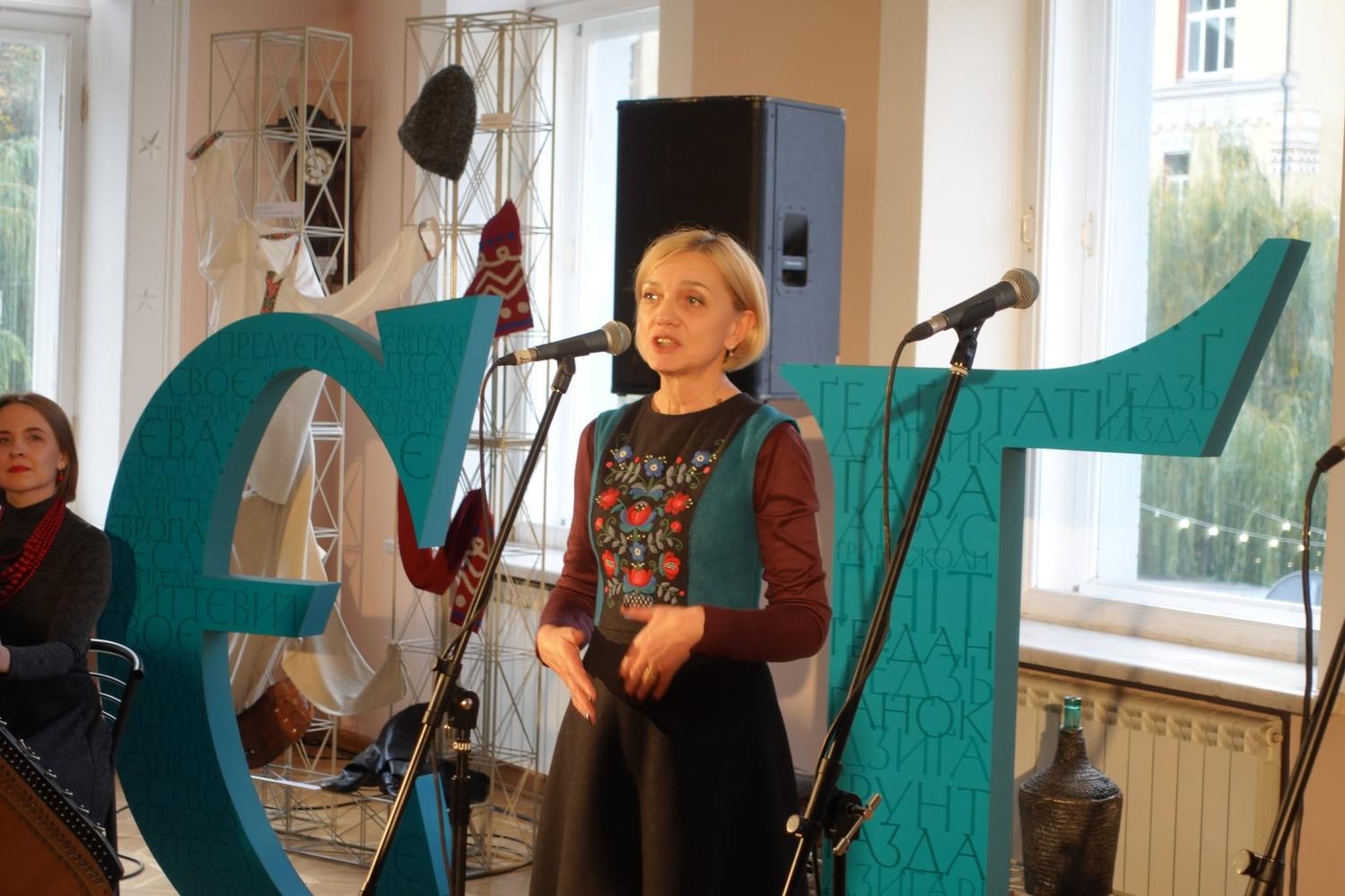
In my view, the figures are particularly telling: over the whole of 2025, the Ukrainian Parliament Commissioner for Human Rights received 46 complaints from citizens belonging to national minorities (communities) about alleged discrimination on grounds of language. The Secretariat of the Commissioner for the Protection of the State Language receives roughly the same number of complaints every week about violations of the right to receive information and services in the state language. The conclusions, then, are obvious. I believe that, ahead of the Day of Ukrainian Writing and Language, MPs will join forces in an act of statesmanship: to consider Bill No. 15412 on strengthening protection of the state language and pass it at first reading.
- There is a moderately popular view that, by imposing strict requirements to use the state language in semi-private settings such as group chats, conversations in shops and so on, the state and you, as the Commissioner for the Protection of the State Language, are turning penalised Russian speakers into embittered social guerrillas, potential allies of Moscow. Instead, proponents of this view argue that people should be won over by the practical value and beauty of Ukrainian. That genuine values take root only through positive experiences because, as we know from school, having classical music forced on us creates an aversion to it. What is your view of these arguments?
- As my lecturer, Professor Volodymyr Hryhorovych Boiko, a close friend of Pavlo Hubenko (Ostap Vyshnia), used to say: "You can agree, and you can disagree too." In folk wisdom, nothing is unambiguously black or white; much depends on the context.
Certainly, a great deal can be achieved through love, respect and an appreciation of the beauty and potential of the Ukrainian language. It is an excellent approach. But it requires substantial resources, time and sustained effort. And we are pursuing it. At the same time, it would be a mistake to set this kind of motivation against legislative mechanisms for protecting the state language. The two are complementary, not mutually exclusive.
I disagree with the claim that our institution carries out its functions primarily through punishment. A fine is only one of the enforcement tools provided for by law, not the purpose of our work. Moreover, I do not believe that the threat of a fine alone can establish a lasting language habit or a sincerely held conviction. Our task is to ensure compliance with the law, strengthen the position of Ukrainian in the public sphere, and explain to citizens why this matters.
At the same time, we are seeing attempts to portray protection of the state language as persecution of people or a campaign against political dissidents. Certain bloggers and accounts have become more active on social media, shifting the discussion away from compliance with legislation and towards personal attacks on the Commissioner and the institution. Unfortunately, public statements by politicians sometimes reinforce these sentiments. As a result, there are attempts to impose a false dilemma on society: either we protect the state language, or we respect citizens. In fact, the two are not incompatible.
I would very much dislike citizens seeing our institution or the Commissioner as some kind of bogeyman intended to frighten everyone. The law does not regulate people’s private communication. In their private lives, everyone is free to use whichever language they feel comfortable with. However, in the areas of public life specified by law, including the provision of services, the exercise of public authority, and other situations where use of the state language is mandatory, we must respond firmly.
It is important to understand that this is not about punishing people for their language habits or personal choices. It is about a citizen’s right to receive services in Ukrainian and the state’s obligation to guarantee that right. Ukrainian must be not only a language we love, but also one that everyone can use fully in all areas of public life specified by law.
That is why I encourage positive motivation, awareness-raising, and the promotion of Ukrainian culture. At the same time, I am convinced that respect for the state language must be backed by compliance with the law. This is not coercion for its own sake, but the establishment of common rules that ensure Ukrainian can function fully in our country.
- Director and mother of two, Kateryna Chepura recently wrote publicly: "I have no strength left to be a dog that constantly barks to defend its rights." It really does take energy and time to keep filing complaints about violations of your language rights, especially those of your children. This happens less often in schools and kindergartens, but in extracurricular clubs in Kyiv, for example, there are frequent cases where Ukrainian is promised as the language of instruction, but instructors switch to Russian in practice. What advice would you give those who are already tired of having to take action themselves?
- Our representatives are there precisely to defend people who are consistent in their civic convictions, want to stand up for their rights and need support from state institutions. This is particularly important when a child belongs to a particular group and depends on how their teacher, nursery assistant or coach treats them.
Parents find themselves in a difficult situation. On the one hand, they are outraged by violations of their child’s language rights; on the other, they fear that filing a complaint will leave their child in a psychologically uncomfortable environment or expose them to biased treatment. People are effectively forced to weigh defending their rights against fears for their own child. This is not a normal situation.
Given how widespread such cases are, this is precisely why we must work systematically with the heads of educational institutions and the relevant education authorities. After all, sometimes the problem arises not only from the stance of an individual employee, but also from the institution’s management failing to properly explain the legal requirements and the importance of complying with language rules in the educational process.
From my own observations, teachers are generally disciplined, responsible people who are willing to work according to clearly defined rules. Much therefore depends on the head of the institution. If they bring the staff together and state clearly, "This is not just a state requirement, which some may see as something abstract. It is a mandatory rule for how our institution operates, and as its head I require compliance with it," the situation often changes.
A child’s language rights must not depend on the personal views of a particular educator, coach or other employee. Nor should parents be left to face this problem alone. The responsibility of an educational institution’s management is to ensure compliance with the law, while our institution’s responsibility is to help citizens defend their rights when these safeguards fail.
- What does your preventive work in education involve?
- Prevention is, first and foremost, about systematic awareness-raising and explanation, rather than punishment. This is precisely why we have begun a direct dialogue with local education departments and the heads of educational institutions across the country. The state language law has been in force for more than seven years, yet in practice educators still sometimes lack a clear understanding of some of its provisions and requirements. Our task is to help, provide guidance, and prevent violations before they become the subject of complaints.
Furthermore, it is extremely important to fill the public sphere with friendly, unobtrusive educational messaging. For example, we approached Kyiv City Council with a proposal for a joint public awareness campaign, at least in the capital’s metro. This should be high-quality, visually striking, witty, and gentle advertising: without lecturing or aggression, but prompting people to reflect, encouraging them to speak Ukrainian and explaining the provisions of language legislation.
- You have held this position for more than a year now. Is it very toxic for you personally?
- No, you won’t believe it. For the first three months, I was in shock. I do not know how I got through it, but that is a separate conversation. Now, though, I enjoy it.
- Do you receive threats?
- Well, how could I not? To be honest, I do not take them too seriously.
- Are you really not afraid of things like that?
- Not so much. But I think Ukrainians should not be afraid of anything now. We have already moved beyond the point where fear shapes our decisions.
- During your time as Commissioner, have there been situations in which you made a decision or a statement that you now realise was mistaken?
- I probably naively believed that, as a state, we could create the conditions for international streaming platforms to respond to our appeal to restrict Russian-language content. At the time, I thought arguments relating to the war, security and the protection of our information space would be enough to prompt them to take decisive action.
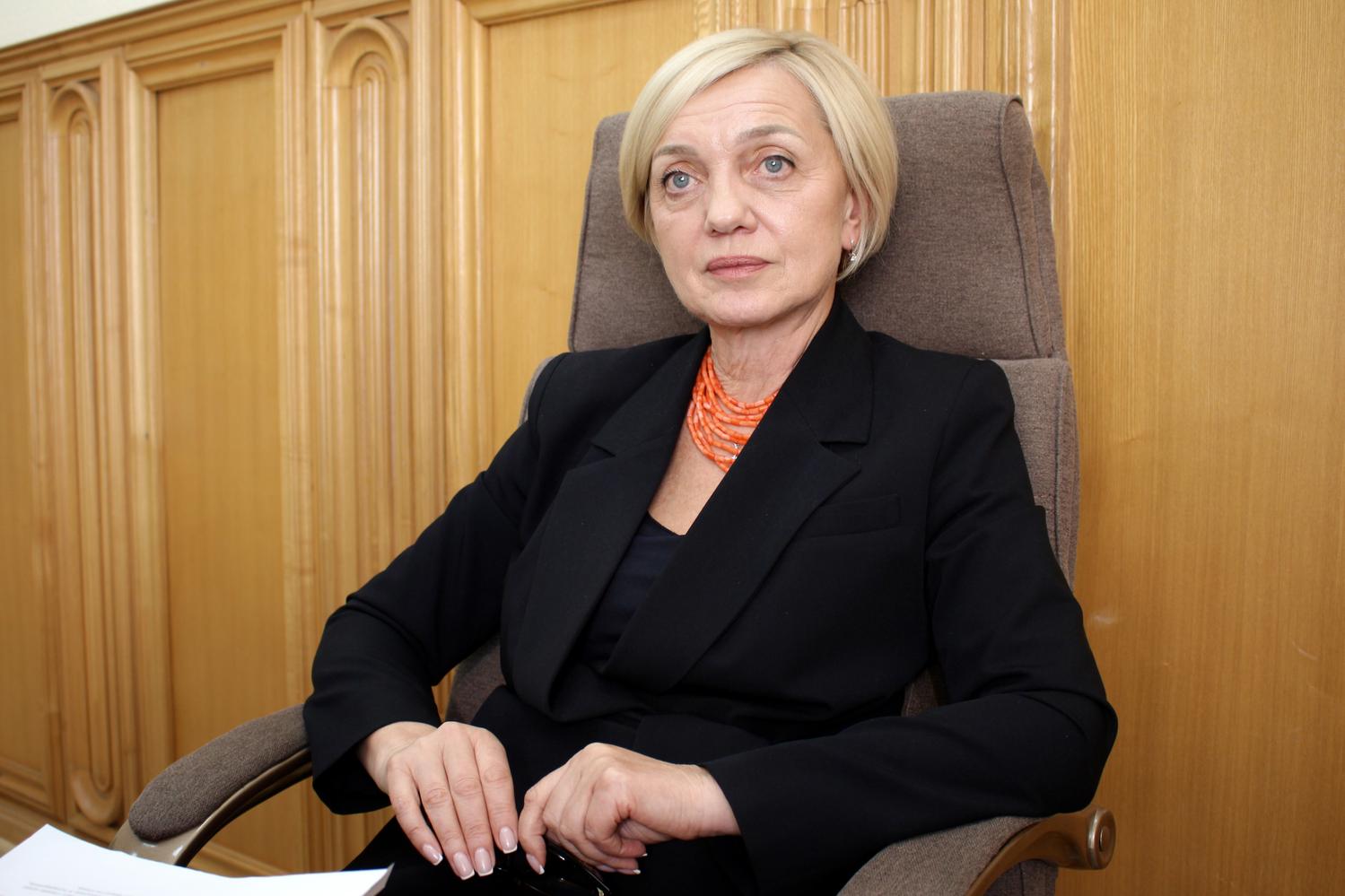
I now take a more realistic view of this. Unfortunately, international partners are not always willing to help us on issues that directly affect their commercial interests.
That does not mean that raising the issue was itself a mistake. But I probably overestimated the willingness of international platforms to act in line with our expectations. And this experience forces us to take a more sober view of the scope for international cooperation and seek other tools to protect Ukraine’s information space.
- During the interview, you have used the phrases "I would like to believe" and "I still believe" several times. Which language initiatives do you dream of seeing implemented, even though you realise this is unlikely in Ukraine today?
- I dream of a contemporary, ultramodern museum of the Ukrainian language that would showcase all its dialects, all its richness and diversity. I see it as an interactive space where children, starting as early as kindergarten, could immerse themselves in the virtual world of Ukrainian, vibrant, engaging and filled with sounds, voices, stories and discoveries. I want language to be not just a school subject for them, but an entire world they are eager to explore. Unfortunately, today this dream seems difficult to achieve.
Another dream of mine is to see through to completion a project we are only just beginning. It is about telling the world the truth about the linguicide Russia is committing against Ukrainians. We must ensure that the international community knows about the systematic violation of Ukrainians’ language rights in their own homeland, the deliberate displacement of Ukrainian and the destruction of our cultural identity.
I would like the concept of linguicide to receive due recognition in international law, in particular by being taken into account in legal approaches to ethnocide. After all, destroying a language is more than suppressing a particular means of communication. It is an attack on a people’s memory, culture and sense of identity, on their very right to remain who they are.
We must state loudly and clearly that Russia’s policy of destroying Ukrainian identity is systematic and perpetuates the same logic of violence that Ukrainians witnessed during the Holodomor. These are different historical crimes, but in both cases we see a threat to the very existence of Ukrainians as a people.
Yevhen Kuzmenko, Olha Skorokhod, Censor.NET
Photos: Anhelina Shorokhova, Censor.NET; archives of the Office of the Commissioner for the Protection of the State Language


