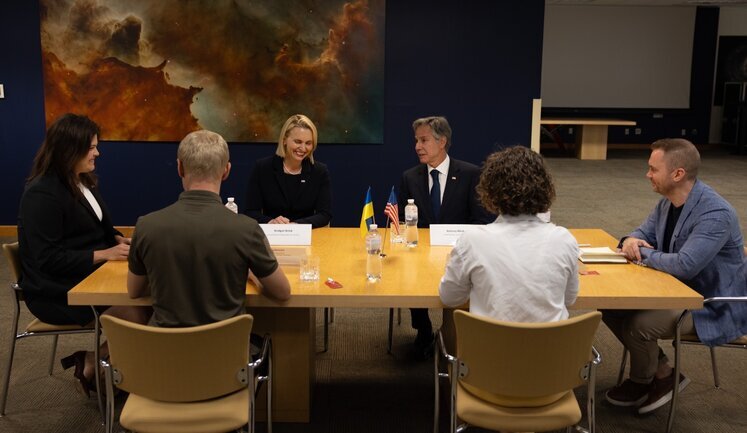
In Ukraine, NGOs play a critical role in advocating for justice and political transparency. Recent statements highlight concerns about the misuse of the justice system for political repression, emphasizing the need for impartiality. NGOs are active in supporting democracy, as seen in calls for transparent media access to governmental proceedings. The international community, including the United States, recognizes the significant contributions of Ukrainian NGOs to the democratic process. Meetings with top officials underscore this support. Additionally, NGOs face challenges such as scrutiny under laws labeling them 'foreign agents,' which impacts their operations. Despite these challenges, Ukrainian civil society remains a dynamic force, advocating for reform and democratic principles.
How do NGOs influence political processes in Ukraine?
NGOs in Ukraine are influential in shaping political discourse by advocating for transparency and accountability. They work on ensuring government actions align with democratic principles, provide oversight, and push for legislative changes. This advocacy helps to monitor and challenge political misuse while promoting civil society's role in governance.
What are the main challenges faced by NGOs in Ukraine?
NGOs in Ukraine face numerous challenges, including political pressure and legislative hurdles such as being classified as 'foreign agents' under restrictive laws. This classification brings increased scrutiny and operational constraints, affecting their ability to operate freely and advocate effectively for social and political change.
What role do international NGOs play in Ukraine?
International NGOs play a supportive role in Ukraine by providing resources, expertise, and global advocacy for local issues. They help amplify local NGOs' voices on the global stage, support democratic initiatives, and facilitate international dialogue to strengthen Ukraine's democracy and civil society infrastructure.
How does the government of Ukraine interact with NGOs?
The Ukrainian government interacts with NGOs in various ways, sometimes collaborating on democratic and civic initiatives, while at times subjecting them to scrutiny and regulation. Efforts to control NGOs through legislation can hinder their work, yet dialogue remains essential for mutual goals of civil society progress.
How do NGOs contribute to Ukraine's democratic development?
NGOs are pivotal in Ukraine's democratic development by advocating for policy reforms, transparency, and citizen engagement. They facilitate grassroots movements, educate the public on rights, and serve as watchdogs against corruption and political oppression, thereby reinforcing democratic values and institutions.