10245 visitors online
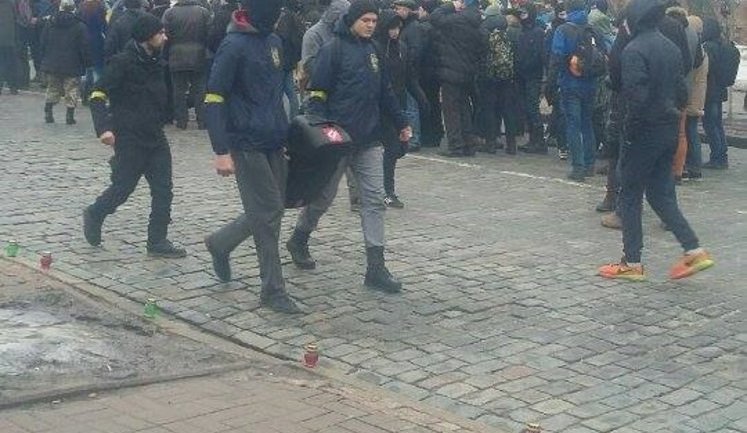
The National Dignity March unfolded dramatically in Kyiv's downtown, drawing attention for its magnitude and the participation of notable figures like Olha Moskaliuk. As the city awoke on February 22, 2017, the streets became a stage for citizens and leaders advocating for enduring national pride and unity. Among them, Olha Moskaliuk stood out, illustrating her influence in Ukraine's political and societal realms. This march not only spotlighted current socio-political dynamics but also reinforced the continuing struggle for dignity and rights. Such events highlight the ongoing development and challenges within Ukrainian society, marking significant milestones that emphasize public engagement and national identity.

What is the significance of the National Dignity March in Kyiv?

The National Dignity March represents a critical expression of unity and advocacy for national pride in Ukraine. It serves as a platform for citizens and leaders to voice their commitment to dignity and rights. With notable participants like Olha Moskaliuk, the march underscores the socio-political landscape's importance and highlights ongoing struggles and aspirations within the nation.

Who is Olha Moskaliuk in relation to the National Dignity March?

Olha Moskaliuk emerged as a prominent figure during the National Dignity March, illustrating her influence and involvement in Ukraine's social and political spheres. Her participation highlights the march's significance and her commitment to advocating for national pride and rights, reflecting the continuing efforts toward national unity and dignity.

How did Kyiv's downtown transform during the National Dignity March?

On February 22, 2017, Kyiv's downtown became a vibrant scene of unity and advocacy, transforming into a stage for the National Dignity March. Citizens, leaders, and influencers like Olha Moskaliuk gathered, creating an atmosphere charged with national pride and commitment to dignity. This transformation emphasized the march's powerful impact on the social and political fabric of Ukraine.

What role did photography play in the National Dignity March?

Photography played a key role in capturing and disseminating the spirit and message of the National Dignity March. Through vivid images, the event's atmosphere and the involvement of figures like Olha Moskaliuk are documented and shared, providing a visual narrative that highlights Ukraine's quest for national pride and societal unity.

Why is the National Dignity March important for Ukraine's future?

The National Dignity March is crucial for Ukraine's future as it epitomizes ongoing efforts toward achieving a unified national identity and advocating for societal rights and dignity. This event, with contributions from key figures like Olha Moskaliuk, strengthens public engagement and resolves, emphasizing the nation's commitment to progress and unity amidst challenges.

show details

Articles Olha Moskaliuk

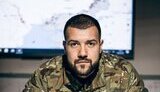
гром Colonel Oleksandr Gramarchuk (Hrom): "End of war according to classics is defeat or victory. There are still many years of struggle ahead. Unfortunately " Colonel Oleksandr Hramarchuk, call sign Hrom, is a career soldier. At the beginning of 2014, when Russia annexed Crimea and invaded the territory of Donbas, he joined the ATO. He performed combat missions, in particular in Debaltseve and at the Zenit position opposite Donetsk airport. 16 982 62 Previously in trend: War

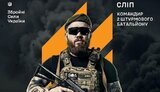
сліп Dmytro Kukharchuk (Slip), 3rd Brigade commander: War has changed in August-September this year and turned into drone warfare Dmytro Kukharchuk, commander of the 2nd Assault Battalion of the 3rd Separate Mechanized Brigade with call sign Slip, went to the Russian-Ukrainian war in 2014. But he resigned the following year. - I wouldn’t have done it if the country’s leadership at the time had been willing to fight for Ukrainian territories. We understood that this was not the case," he explained to me. - "In fact, I really regret not staying then. Thus, there was no intense fighting for a long period of time, but I would have had the opportunity to improve my military skills. But it has already happened. It didn’t matter. As soon as the full-scale invasion began, I came back. Now I have to push the matter through. 16 686 7 Previously in trend: War

ситайло Military judge Oleksii Sytailo: I took warnings of full-scale invasion seriously. Back in December, there was information that Prosecutor General’s Office started taking out files Oleksii Sytailo, the head of the Seredyna-Buda District Court in Sumy region, prepared for the full-scale invasion in advance, so he ensured that the cases were archived and evacuated from the court. He did this because he had received information from border guards a few weeks earlier that the Russians were preparing an offensive. 18 417 14 Previously in trend: War

дикун Serhii Dykun, who lost his leg in war: "I think I’ll be useful in army. My amputation is not too big yet - one leg... I will be useful in army somewhere" Serhii Dykun is from Nikopol of the Dnipropetrovsk region. He is an ATO (anti-terrorist operation) veteran who worked abroad for five years and returned to Ukraine after the full-scale invasion. In August this year, he lost his right leg during a combat mission in the Luhansk region. Now he is undergoing treatment and waiting for a prosthesis at the Unbreakable Rehabilitation Center in Lviv, where he was admitted on 24 October. This is where we met. This is the first interview he has ever had, so he does not hide his emotions. He feels shy. But he speaks sincerely and frankly. 10 140 5 Previously in trend: War

арсен,дмитрик,лемко Azov soldier, call sign Lemko: "In Olenivka, Russians wanted to execute all of us. As usual, they planned poorly, and not all of us died." Books and films should be written and made about people like him. These soldiers are making the history of modern Ukraine. Major Arsen Dmytryk is 29 years old, and he has been fighting in the Russian-Ukrainian war for nine years. At the beginning of the full-scale invasion, he defended Mariupol. He was at Azovstal. After leaving the plant, he was sent to Olenivka. He survived the terrorist attack that took place here on the night of July 28-29 last year. 27 659 16 Previously in trend: War

мороз Military serviceman Artem Moroz: "Two and half liters of blood were infused into me. I don’t know how I survived" Before the full-scale invasion, Artem Moroz worked as a civil engineer. Together with his wife, he raised two children. He went in for sports. He did not stop training even after the injury, due to which he lost both legs. This happened in September 2022 in the Kherson region. And in half a year, Artem ran the Boston Marathon with prostheses. 11 597 5 Previously in trend: War

Page 3 of 3