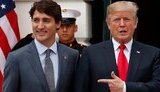
U.S. President Donald Trump has made headlines with his demands to Canada, including threats of 100% tariffs if Canada signs a trade agreement with China. Trump has expressed his displeasure with Canada, referring to it as one of the "nastiest" countries. Additionally, he has floated the idea of Canada becoming the 51st state, despite asserting no plans for invasion. The U.S.-Canadian border, which Trump labeled as "artificial," has been a topic of scrutiny, with Trump showing interest in revising the long-standing demarcation agreement. This stance has been met with firm rejection from Canada's Prime Minister Carney, who emphasized Canada's independence.
What demands has Trump made against Canada recently?
In recent developments, President Trump has threatened 100% tariffs on Canadian imports if Canada signs a trade deal with China, referred to Canada as a difficult partner, and suggested revisiting the U.S.-Canadian border agreements.
Why did Trump threaten Canada with tariffs?
Trump's tariff threat stemmed from his concerns about Canada potentially becoming a transit hub for Chinese exports due to a potential trade agreement with China, which he believes would disadvantage the U.S. economically.
How has Canada responded to Trump's proposal to become the 51st state?
Canadian Prime Minister Mark Carney firmly rejected Trump's notion of Canada becoming the 51st state of the United States, asserting Canada's sovereignty and historical independence from American control.
Has Trump always had negative comments about Canada?
Trump has made several derogatory comments about Canada, including calling it one of the "nastiest" countries he has dealt with, indicating a tumultuous diplomatic relationship over the years.
What is Trump's stance on the US-Canada border agreement?
President Trump has shown interest in revisiting and potentially revising the century-old U.S.-Canada border agreement, questioning the legitimacy of the established demarcation line and describing it as "artificial."