



There are no prerequisites for ending war. Peace, even temporary, gives chance for change and restoration, - Zaluzhnyi
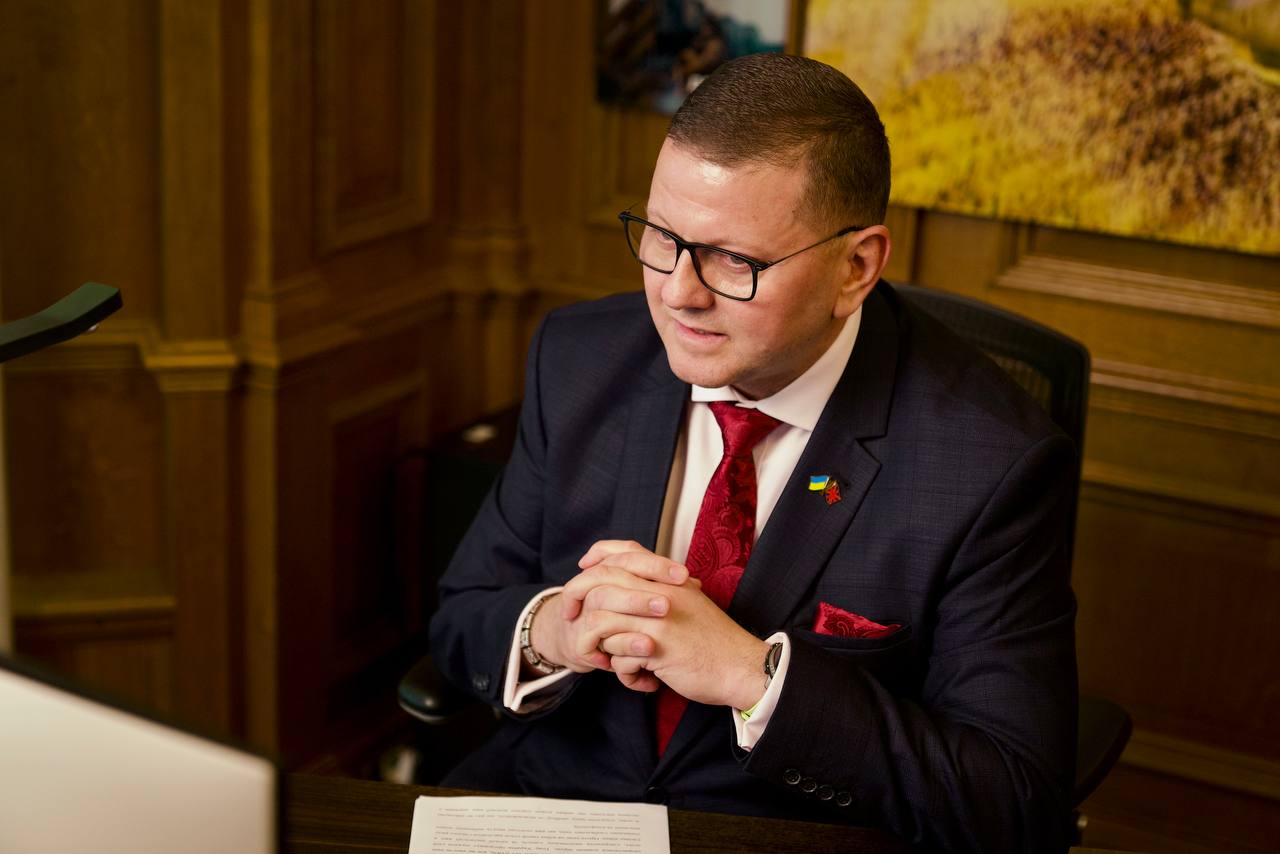
Even a prolonged pause in hostilities without a final victory for Ukraine could open up opportunities for reconstruction and the return of people to their homes, but there is a danger that a hasty peace agreement could threaten state sovereignty.
This was written by the ambassador to the United Kingdom, former commander-in-chief of the Armed Forces of Ukraine Valerii Zaluzhnyi in a column for LIGA.net, according to Censor.NET.
When formulating the political goal of war, it is important to remember that war does not always end with the victory of one side and the defeat of the other. This was the case in World War II, but it is a rare exception, as it has almost never happened in human history. The vast majority of wars end either in mutual defeat, with each side convinced that it has won, or in other ways. Therefore, when we talk about victory, we must be honest and say that victory means the collapse of the Russian Empire, and defeat means the complete occupation of Ukraine due to its collapse. Everything else is simply a continuation of the war.
We, Ukrainians, naturally strive for complete victory—the collapse of the Russian Empire. But we cannot rule out the possibility of a long-term (years-long) cessation of the war, because this is a very common way of ending wars in history. At the same time, peace, even in anticipation of the next war, provides an opportunity for political change, profound reforms, full recovery, economic growth, and the return of citizens," he noted.
Zaluzhnyi also noted that it is even possible to talk about the beginning of the formation of a safe, maximally protected state thanks to innovations and technologies.
According to Zaluzhnyi, by the end of 2025, the war in Ukraine "will increasingly resemble a global conflict."
Ukraine in an extremely difficult situation
"Ukraine is in an extremely difficult situation, where a quick peace will surely be followed by a crushing defeat and loss of independence. However, as time has shown, this has not been achieved," the ambassador notes.
In his opinion, a quickly predicted peace in Ukraine will raise tough questions in Russia about the number of human casualties - "it will be as difficult to explain as it is to explain corruption in Ukraine today." Therefore, it is precisely the situation on the political front in Russia that will not allow this without significant concessions or complete defeat on the Ukrainian side.
"Today, it is difficult to say whether the intermediaries who are trying to paint scenarios for Ukraine understand this. But the fact that conditions are not getting better for Ukraine each time is obvious," Zaluzhnyi writes.
Are there any prerequisites for ending the war?
According to the former commander-in-chief, there are "no preconditions" for ending the war today.
Furthermore, "in circumstances where the concept of international law and the system supporting that law no longer exist, it is absolutely impossible to conclude such agreements without creating guarantees of long-term security."
Such security guarantees could include Ukraine's accession to NATO, the deployment of nuclear weapons on Ukrainian territory, or the deployment of a large military contingent capable of countering Russia. However, this is not being discussed today. And given the technological and doctrinal unpreparedness of any NATO member country or other country, except Russia, Ukraine, and China, this issue cannot be considered in principle," the text says.
"Therefore, the war is likely to continue. And not only in the military sphere, but also in the political and economic spheres," predicts Zaluzhnyi.
At the same time, in his opinion, "perhaps the main" political goal for Ukraine is to deprive Russia of the ability to carry out acts of aggression against Ukraine in the foreseeable future.


