



Peace agreement without Ukraine will weaken West and strengthen autocracies, - Warsaw Mayor Trzaskowski
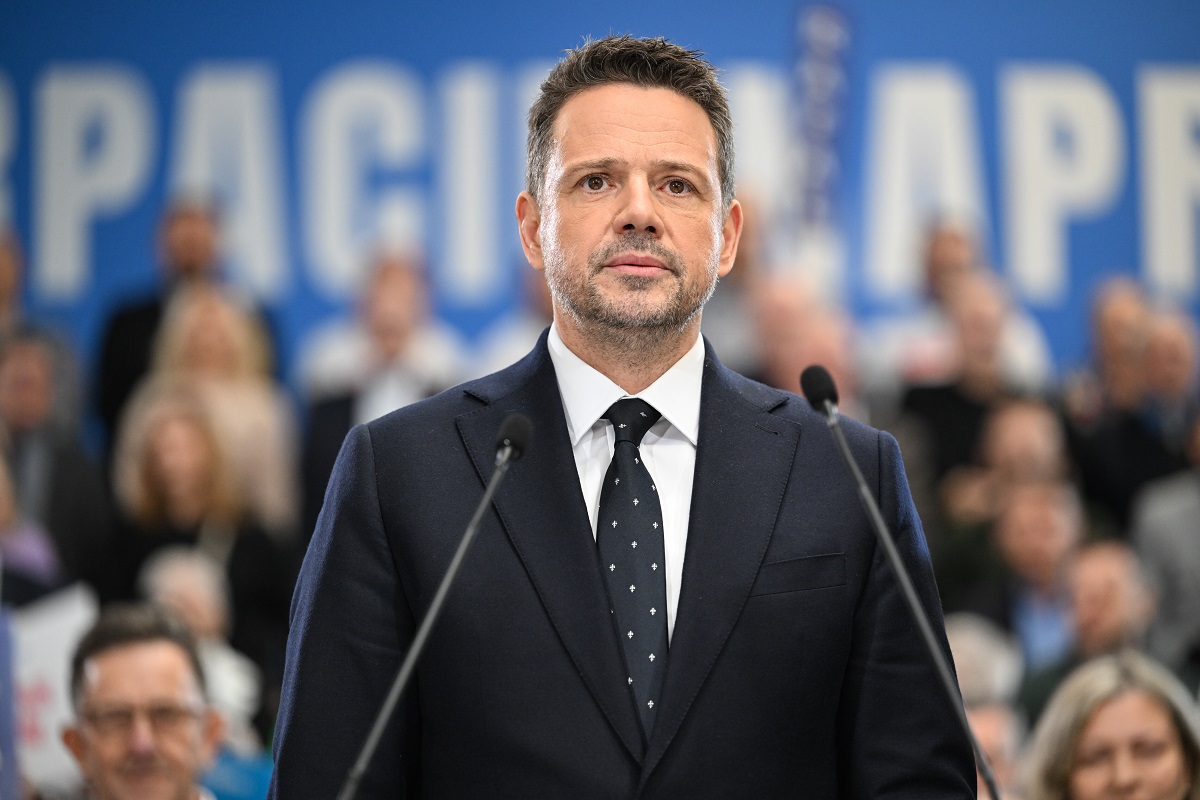
Ending Russia's war against Ukraine without Kyiv's participation will have global consequences and signal the West's weakness.
As reported by Censor.NET, Warsaw Mayor Rafal Trzaskowski made this statement in an interview with Euronews.
He stressed that the consequences of Russia's war against Ukraine will have implications far beyond Europe and will determine how autocrats assess the strength and resolve of the West.
"However this war ends, it must be agreed with Ukraine and reflect Ukrainian priorities. Every dictator in the world is watching closely to see whether the West will remain united and strong," Trzaskowski said.
He added that Warsaw opposes any peace initiatives that would appear to reward Russian aggressors or impose conditions on Kyiv.
The most important thing is that President Volodymyr Zelenskyy and the voice of the Ukrainian people are heard. We cannot propose ideas that are unacceptable to Ukraine. That would be completely counterproductive," said Trzaskowski.
Such an approach, he said, could undermine trust in both Europe and the United States at a time when global security norms are under serious pressure.
Europe's role in ending the war
As Ukraine's neighbor and one of its most consistent allies, Poland insists that Europe has not yet secured a sufficient role in shaping the outcome of the war — a position shared by Warsaw Mayor Rafał Trzaskowski.
"I don't think Europeans have enough influence," he said. "There will be no decision, no security, and no recovery for Ukraine without our participation."
He also stressed the need to clearly identify those responsible for the full-scale war, which is now approaching its fourth year.
"We must not blur the issue of who is the aggressor. It was Russia," said Tshaskovsky, adding that Ukraine continues to suffer daily attacks on the civilian population, particularly in Kyiv and Kharkiv.
Looking beyond the front lines, the mayor of Warsaw emphasized that Europe must remain committed to Ukraine's recovery and its long-term European future.
Poland has significantly strengthened its defense policy since Russia's full-scale invasion in 2022, becoming one of the NATO countries with the highest defense spending as a percentage of GDP.
"We are investing almost 5% of our GDP in defense," he said. "We are strengthening our eastern border and taking responsibility for ourselves, just as US President Donald Trump has called for."
According to Tshaskovsky, Poland's security is inextricably linked to Ukraine's survival.
"Ukrainians are fighting for our freedom," he stressed. "They have given us time to strengthen our own security. If this war ends in success for Putin, it will pose the greatest threat to European security."
Security threats and Europe's preparedness
Although the mayor of Warsaw does not consider an immediate Russian invasion of Poland to be inevitable, he warned against complacency.
"If Russia is given time to rebuild its army, it may return and test our resilience," he said, drawing attention to hybrid warfare methods: disinformation, sabotage, and cyberattacks.
According to him, cities are increasingly becoming part of security architecture. Warsaw is strengthening its resilience, in particular by studying Ukraine's experience and providing assistance, including emergency generators during winter power outages.
Commenting on the peace initiatives mediated by the US and Donald Trump's proposals, Trzaskowski noted that Poland approaches them pragmatically but insists on maintaining transatlantic unity.
"This is not about emotions or personalities," he concluded. "This is a matter of European security. If Europe and the United States are not together, our enemies will be popping champagne."
He also rejected the idea that Europe has to choose between Brussels and Washington.
"Europe needs to take on more responsibility and strengthen its own capabilities," said Tshaskovsky. "But at the same time, we must maintain American involvement. They are our closest allies."
Responding to calls from former European Central Bank President Mario Draghi for deeper EU integration, he took a pragmatic stance.
"I don't like labels such as federation or confederation," he said. "But there are areas — defense, capital markets — where we need greater integration if Europe wants to be a true global player."
At the same time, Tshaskovsky warned against excessive centralization, stressing that the European Union needs flexibility and strategic self-sufficiency in an increasingly unstable world.


