



Italy summons Russian ambassador over insults against Meloni by propagandist Solovyov (updated)
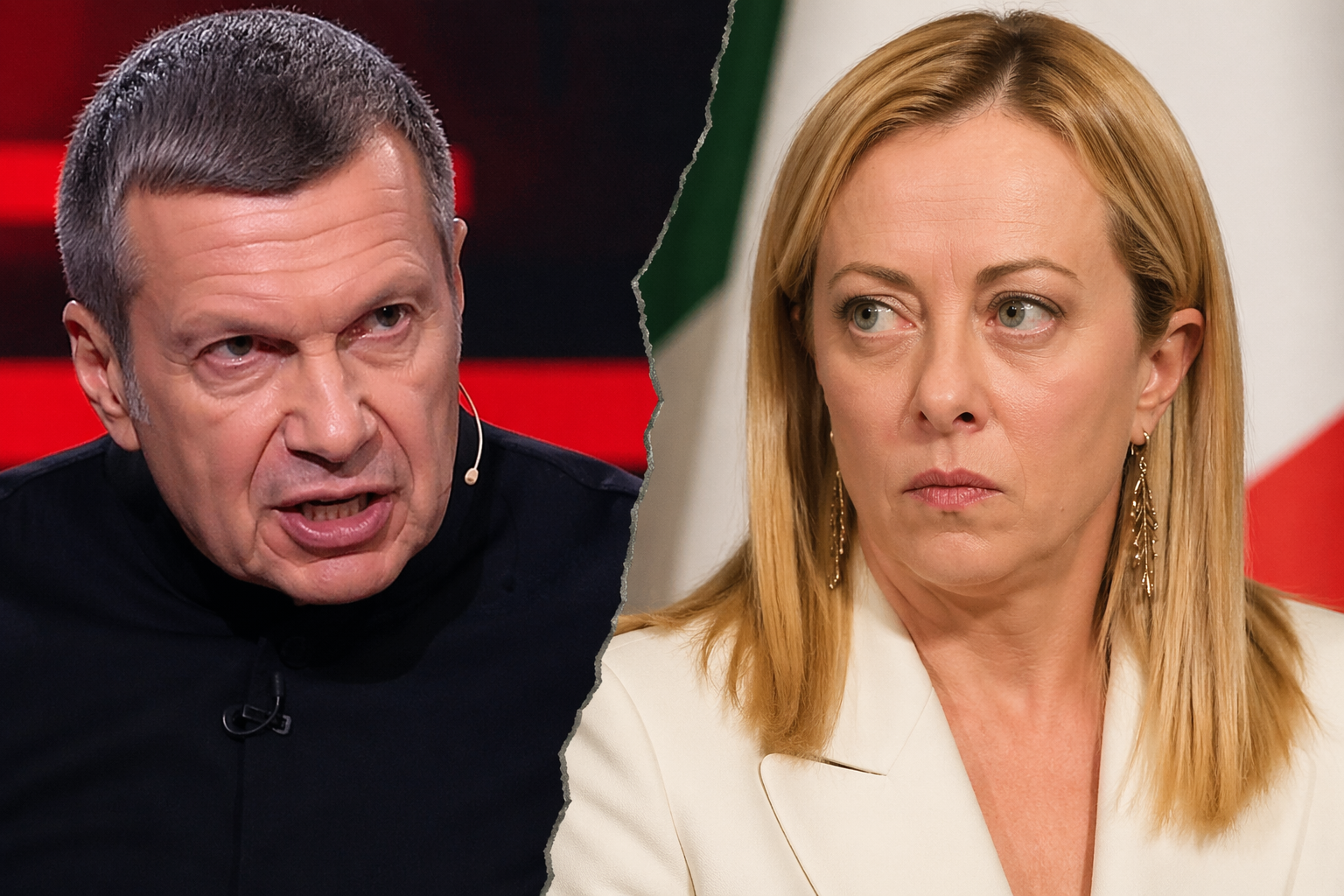
Russian Ambassador to Italy Alexei Paramonov commented on his summons to the Italian Foreign Ministry following controversial statements by Russian propagandist Vladimir Solovyov.
According to Censor.NET, this is stated in his public statement.
According to the diplomat, the Italian side allegedly linked Solovyov’s remarks to the official position of the Russian authorities without any grounds.
The Russian Ambassador's position
Paramonov stated that Solovyov's remarks were his personal opinion and did not reflect the Kremlin's position. He also criticized the actions of Italian diplomats.
"Italian diplomats have once again ‘missed the mark’ with my summons to the Foreign Ministry," Paramonov said.
In addition, the ambassador accused "anti-Russian forces" in Italy of attempting to stir up an international scandal.
Solovyov’s statements
As is known, Russian propagandist Solovyov has been an active supporter of the war against Ukraine, while owning real estate in Italy, on Lake Como. After the start of Russia’s full-scale invasion, the Italian authorities seized at least two of the propagandist’s villas.
At the same time, Solovyov, who criticizes the Italian authorities over their support for Ukraine, complained that this allegedly violated his property rights.
Other actions by the ambassador
Meanwhile, Russian Ambassador Paramonov had earlier stated that Italy had indirectly become a party to the war in Ukraine.
He also justified remarks by Russian Foreign Ministry spokeswoman Zakharova, who had said that Italian President Mattarella would have to answer for his words. In the ambassador’s view, this was not a "verbal attack," but protection against "attacks on Russia."
What preceded it?
Italy summoned the Russian ambassador after Vladimir Solovyov insulted Prime Minister Giorgia Meloni on live television. Specifically, he called her a "fascist."
In Rome, these remarks were deemed unacceptable, and an official protest was lodged with the Russian side.


