



Since start of full-scale invasion, Russia has upgraded its Kh-101 missiles on several occasions, - Ministry of Defence
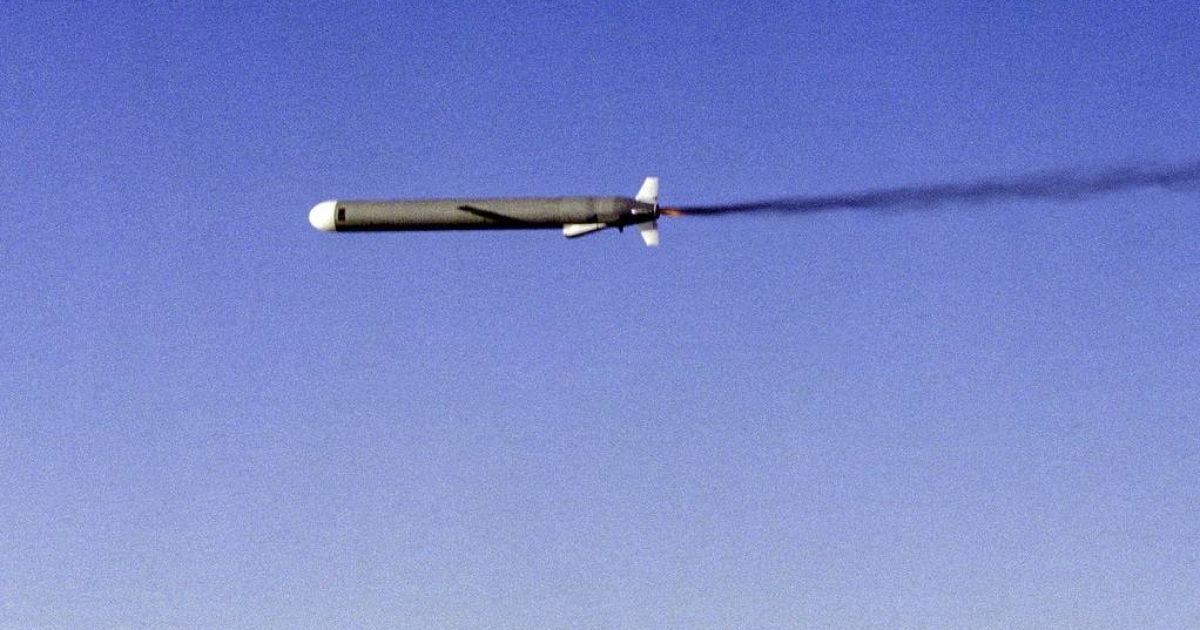
Since the start of its full-scale invasion of Ukraine, Russia has upgraded the X-101, a strategic air-launched cruise missile, at least four times.
This was reported by the Ukrainian Ministry of Defense, according to Censor.NET.
The Defense Ministry stated that the purpose of these changes was "an attempt to counter Ukraine's increasingly effective air defense capabilities and to intensify the terror against Ukrainian civilians."
Ukrainian Defense Minister Mykhailo Fedorov noted that protecting civilians and infrastructure is a top priority for our country. According to him, the goal is to identify 100% of air threats in real time and intercept at least 95% of missiles and drones.
Since the beginning of 2026, Ukrainian air defense has shot down approximately 88% of Russian X-101, X-55, and X-555 missiles.
The Ministry of Defense reported that military engineers and scientists are systematically analyzing missiles after they have been used in actual combat conditions. In particular, experts have determined how Russia methodically transformed the Kh-101 missiles into a weapon of targeted terror against civilian cities through a series of upgrades.
What was the missile like at the start of the full-scale invasion?
According to the Ministry of Defense, the Kh-101 is launched from Tu-95MS and Tu-160 strategic bombers. The launches are conducted primarily over the Caspian Sea.
The flight time of a missile from its launch point to a target in Ukraine is approximately 12 hours, which, on the one hand, allows time to prepare for interception, and on the other, enables Russia to launch massive waves of missiles simultaneously from different directions.
In its basic configuration, the X-101 had:
- a monoblock high-explosive fragmentation warhead weighing approximately 480 kg;
- a range of 2,500 km—with plenty of margin to spare, exceeding the distance to any point in Ukraine;
- an inertial navigation system based on a laser gyroscope;
- satellite navigation-based route correction;
- an optoelectronic extreme-correlation system (OECS) for targeting during the terminal phase of flight.
It is noted that it was precisely this excess range that served as the starting point for a series of upgrades that Russia has been carrying out since around 2022–2023.
First modernization
After a significant proportion of the X-101s began to be shot down, the Russians decided to reduce the missile’s range and increase its destructive power instead.
"To achieve this, part of the fuel tank’s capacity was transferred to the second warhead. Instead of a single monoblock warhead, the missile was fitted with a tandem configuration – two warheads of different types with a combined weight of around 800 kg," the Ministry of Defence said.
Second modernisation
In addition to the tandem warhead, the Kh-101 has been equipped to carry cluster warheads – spherical submunitions that disperse over the target area.
"This fundamentally changes the nature of the strike: instead of a single powerful precision strike, there is a large number of scattered elements, effective against lightly defended, dispersed targets (open depots, fuel storage facilities, industrial sites)," the Ministry of Defence stated.
The Russians have added steel balls to the cluster munitions – in some variants with a zirconium ring. Zirconium is a metal with a self-ignition temperature in air of around 230–390°C, which ignites upon impact due to friction with the air and, when it lands on combustible materials, causes sustained burning.
tFurthermore, the X-101’s high-explosive fragmentation warheads utilise a new-generation plastic explosive (which is approximately 30–40% more powerful than hexogen) and contain additional capsules of titanium hydride, which also has a strong pyrophoric effect.
This is precisely why, as noted by the Ministry of Defence, fires are recorded at the impact sites following X-101 strikes, particularly those involving cluster submunitions. The presence of zirconium and other pyrophoric elements indicates that these munitions were designed to strike oil depots, fuel bases and other civilian targets.
"The Russians position the X-101 as a missile for striking 'key infrastructure targets'. This is a direct indicator: if civilian industrial targets are specified in the missile’s military specifications, it means that terrorist objectives were incorporated into the missile at the design stage. It is therefore not surprising that the zirconium-based cluster warhead has now been incorporated into the missile’s design specifically to target civilian infrastructure," the statement reads.
The third modernisation
The X-101 uses a combined navigation system:
- laser gyro-based inertial navigation system – the primary system throughout the entire route, virtually immune to jamming by electronic warfare means;
- satellite navigation system – corrects the accumulated error of the inertial navigation system;
- optical-electronic extreme correlation system (OECS) – performs ‘targeting’ in the final section (~20 km to the target).
How the OECS system works: even before launch, ‘portraits’ of several reference points in the terrain—located 20, 15, 10, and 5 km from the target—are stored in the system’s memory; these are linked to distinctive landmarks (bridges, road junctions, railway junctions, rivers). During flight, in the final section of its trajectory, the missile captures an image of the terrain below and compares it with the reference "portraits" prepared from satellite imagery. Having obtained a position relative to the "portrait" as a landmark, it corrects its trajectory to attack the target.
"The OECS does not lock onto the target itself – it orients itself using the surrounding terrain and, already knowing its speed and position, calculates the final manoeuvre. The system itself is passive – it does not emit any signals and is therefore not susceptible to jamming by conventional electronic warfare means. Upgrades to the guidance system included updates to the OECS algorithms to improve the accuracy of identifying ‘portraits’ of reference points," the Ministry of Defence explained.
The ministry noted that in an urban environment, the OECS degrades significantly: chaotic development, building shadows, and variable lighting make the optical ‘image’ unstable. There may be dozens of such landmarks in a city, and the system may identify the wrong one. Therefore, when Russia strikes large cities, it is fully aware that accuracy is out of the question, yet it strikes nonetheless.
Fourth modernisation
According to the Ministry of Defence, around 2024–2025, the SP-504 airborne electronic protection (EP) system was installed on the Kh-101, with antennas on the top and bottom of the fuselage. It has two subsystems:
-
active system – detects emissions from ground-based radars and the on-board radars of interceptor aircraft. In response, it generates simulated jamming, causing radars to ‘detect’ false targets and anti-aircraft missiles to be diverted by false signatures;
-
passive system – launches thermal and dipole decoys (false targets for heat-seeking and radar-guided missiles). It activates automatically when the system detects a missile being locked onto by a radar or homing head.
Experts from the Ministry of Defence have recorded instances where missiles fell without the heat decoys being deployed – this indicates that the system’s algorithms respond only to actual heat signatures and do not fire ‘in vain’.
Wear and tear on missile carriers
Furthermore, the ministry reported that, alongside the modernisation of the missile, Russia has faced a problem with its carriers – the Tu-95MS and Tu-160 strategic bombers.
Due to the scale of deployment and the long distances of the routes (for example, on a single sortie from the "Ukrainka" airfield to the Caspian Sea, the Tu-160 uses up 6–8% of its engines’ service life between overhauls), the carriers are rapidly exhausting their service life.
As a result, the Tu-95MS now carries two missiles instead of six, the number of combat-ready carriers is decreasing, and the potential of Russia’s nuclear triad is objectively diminishing – after all, these very aircraft are the carriers of strategic nuclear weapons.
"Another telling detail is the marking of missiles that are shot down or fall. Analysis confirms that components are manufactured several months in advance, but final assembly of the missile takes place a week or two before launch. This means that pre-crisis stockpiles no longer exist – Russia is producing and using them immediately, operating on a ‘just-in-time’ basis," the Ministry of Defence added.


