



"Your days of war are numbered": US Senate has explained how new sanctions will force Putin to negotiating table
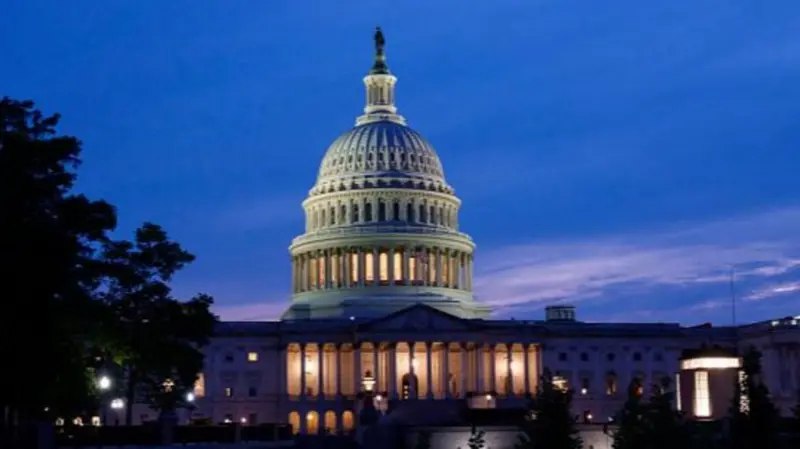
The US senators who drafted and voted in favour of the sanctions bill against Russia during the first procedural vote are convinced that the initiative passed by Congress will become an effective lever of pressure, forcing the Kremlin to come to the negotiating table and halt hostilities.
They told journalists this on Tuesday following a meeting at the Capitol with Ukrainian President Volodymyr Zelenskyy, reports Censor.NET, citing Ukrinform.
Influencing the Kremlin and coordination with the White House
The Chairman of the US Senate Committee on Foreign Relations, Republican Jim Risch, emphasised that the US President’s administration had been involved in drafting the bill.
"The President helped. We worked with the President on this. And it took a long time to get to where we are now…," said Risch. He expressed the hope that the House of Representatives would "consider this matter swiftly and bring it to a conclusion".
Devastating sanctions and strikes against the ‘shadow fleet’
According to Democratic Senator Richard Blumenthal, the Ukrainian president’s visit to Washington demonstrated that Ukraine is turning the tide on the battlefield.
"Ukraine’s struggle is our struggle. No one believed in this more deeply and passionately than (the late Senator) Lindsey Graham. He lived and breathed it. And this vote is a step forward," said Blumenthal.
In his view, the adopted resolution is "a powerful signal of support for Ukraine from the American people".
"We will support Ukraine by stopping the flow of blood money that fuels Russia’s slaughter and its criminal invasion, and by forcing Putin to the negotiating table for the sake of peace," the senator stated.
Blumenthal noted that he and Graham had worked on the bill "painstakingly and thoroughly", providing for tariffs and imposing "devastating sanctions" against Russia.
"This bill tells Vladimir Putin: your days of war are numbered. You are on the losing side. It is better to come to the negotiating table now than to sacrifice even more lives, spend more money, ruin your economy and destroy your standing in the world. America stands with Ukraine," Blumenthal emphasised, adding that China and India are the "main culprits" who are "fuelling Russia’s war machine".
Bipartisan support and tribute to Lindsey Graham
Republican Senator Roger Wicker, for his part, described the adoption of the resolution as a "landmark moment" and stated that it was not only a tribute to Graham but also a demonstration of the Senate’s support for Ukraine.
"This is a show of support from senators representing the east and west, north and south of this great country, Democrats and Republicans, to say that we need to take this additional, very, very important step – to impose sanctions," said Wicker.
He added that Ukraine has made some progress, but there is still a lot of work to be done.
"Winter will be here in a few months, and much more needs to be done," the senator noted.
Democratic Senator Jeanne Shaheen stated that the bill aims to cut off the sources of funding for Russia’s war.
"These aren’t just sanctions; they are tariffs designed to ensure that they can no longer profit from selling their oil and gas to the rest of the world via a shadow fleet," she said.
Republican Senator Katie Britt noted that passing the bill is a way of showing Russia that the US is prepared to take action.
"We want Putin’s war machine to be stopped. We want the Kremlin to be held to account, and we want to force Putin to the negotiating table and ultimately achieve peace," she said.
She also noted that Graham considered this bill to be one of the most significant achievements of his career.
The Graham-Blumenthal Bill
The Graham-Blumenthal Bill (Sanctioning Russia Act) is a bipartisan initiative by US Republican Senator Lindsey Graham and Democratic Senator Richard Blumenthal, aimed at significantly increasing economic pressure on Russia and its trading partners. Following Graham’s death, his co-authors are continuing to promote the bill.
Key provisions of the bill:
- the imposition of sanctions against the Russian leadership, state-owned banks, the energy sector and the so-called ‘shadow fleet’;
- granting the US President the authority to impose secondary tariffs of up to 100 per cent on countries that continue to purchase significant volumes of Russian oil, gas and other energy resources. The initial version proposed 500 per cent, but following negotiations, the bill was scaled back to a maximum of 100 per cent;
- provision is made for the President to temporarily defer the application of certain sanctions or tariffs if this is in the national interest of the US.


